

This guide covers contract disputes that Florida businesses commonly face. A contract dispute arises when two sides disagree about what their agreement requires, or whether one side kept its end of the deal. The answer depends on the contract’s wording, what each side actually did, and the time limits that apply. This guide covers those points for business owners in Tampa, Brandon, Riverview, Plant City, Temple Terrace, and across Hillsborough County. Ayala Law PA serves these clients from its only office, in Tampa, Florida.
What Makes a Contract Dispute in Florida
A contract dispute is a disagreement over whether a binding agreement exists, what it requires, or whether one side failed to perform. Most start with something ordinary. A vendor stops delivering, or a customer holds back payment on an invoice.
Agreements can be written, oral, or implied from conduct. A written contract is usually the easiest to prove. Oral and implied deals can still support a claim, but they make proof and deadlines harder to pin down. Keep every record from day one.
If a customer stopped paying an invoice or a contractor walked off your job, we can review your contract and walk you through the options you have. Talk it through with our team — we can walk you through how a situation like yours is usually handled and what your options are.
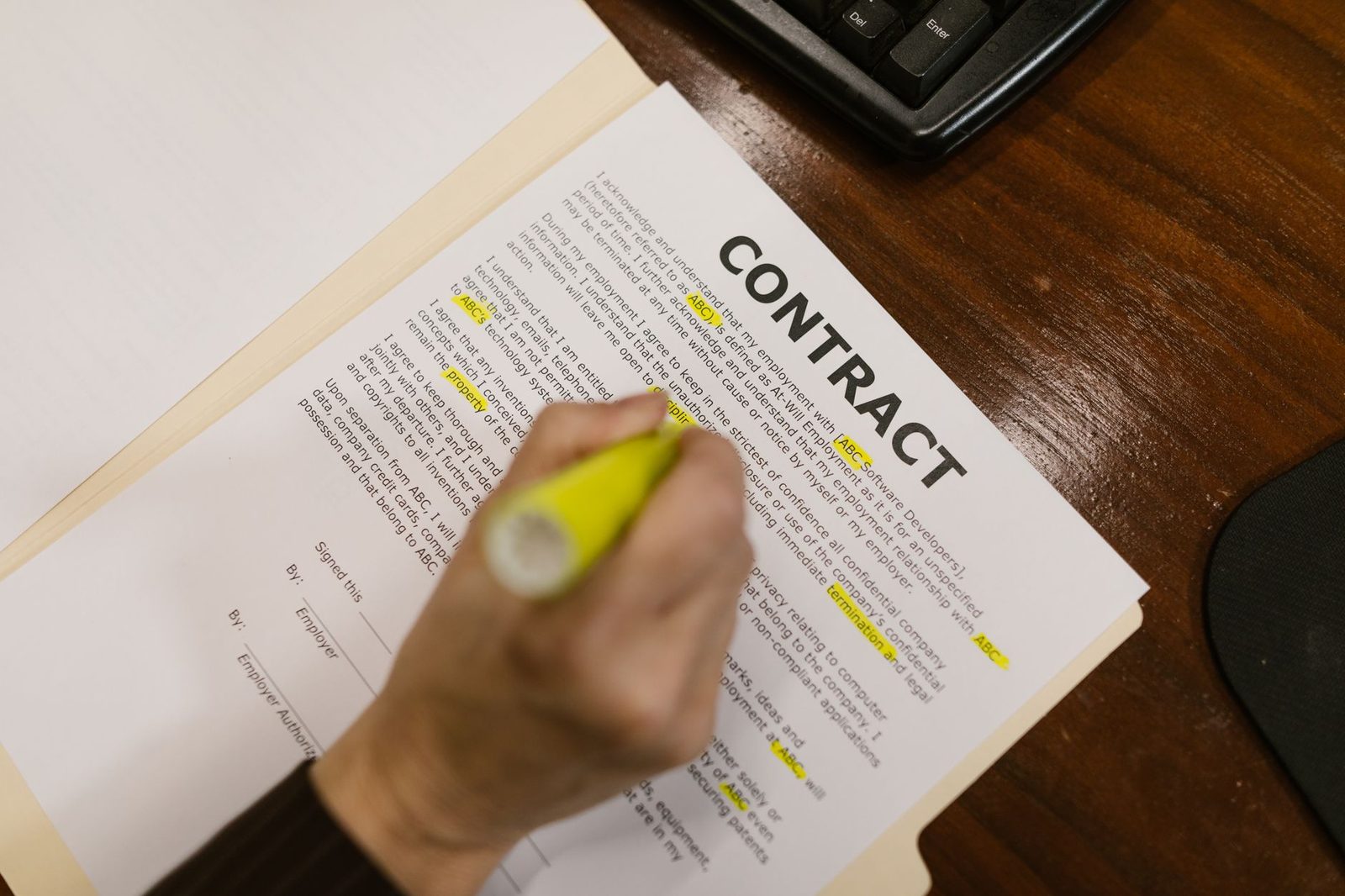
Common Business Contract Disputes in Hillsborough County
Most business contract disputes in Hillsborough County involve money, delivery, or ending a deal early.
Nonpayment is the most common problem. A customer may dispute an invoice, claim a change order was never approved, or ignore the payment terms in the contract.
Service and supply disputes often involve missed deadlines, goods that don’t match the order, or a termination that skipped the notice the contract required. For goods, a buyer who has accepted them must notify the seller of a breach within a reasonable time, or be barred from any remedy.
Construction disputes pit owners, general contractors, and subcontractors against each other over late payments or disagreements about the scope of work. Under Fla. Stat. § 95.11, an action founded on the design, planning or construction of an improvement to real property has its own limitation period, shorter than the general period for written contracts, and a separate statute of repose that can bar a claim even when a defect is discovered late, so the deadline for a particular construction claim depends on its facts and on when the time period began to run.
Commercial lease disputes can arise when a tenant stays past the lease term or a landlord and tenant disagree about repairs. Every example depends on the contract’s wording and the facts, so two similar disputes can end differently.
What Can Void or Limit an Enforceable Contract in Florida
Florida also has a statute of frauds, which requires certain agreements to be in writing. An agreement that cannot be performed within one year generally must be in writing and signed by the party being held to it.
Sales of goods priced at $500 or more follow a similar signed-record rule. Enforcement generally reaches only the quantity shown in the record. Under Fla. Stat. § 672.201, a contract for the sale of goods priced at $500 or more is not enforceable by way of action or defense unless there is a record sufficient to indicate that a contract for sale has been made and signed by the party against whom enforcement is sought or by that party’s authorized agent or broker.
Informal deals can still be enforceable. The bigger risk is unclear terms, which lead to fights over what was agreed.
Deadlines That Can End a Florida Contract Claim
Florida sets time limits for filing contract lawsuits. Missing one can end a claim even when the other side clearly breached.
Fla. Stat. § 95.11 sets the time periods for different types of actions. Under Fla. Stat. § 95.031, a claim’s clock generally starts when the last element of the claim occurs. That is not always the day the contract was signed.
A contract term that shortens the time to sue is a problem. Fla. Stat. § 95.03 says a contract term fixing a shorter period than the statute allows is void, so check vendor and customer terms closely.
The clock can also pause. Under Fla. Stat. § 95.051, the time to sue is tolled (paused) while an arbitration on the same dispute is pending.
Contracts may also require notice, a chance to fix the problem, or a particular claim process before suit. Skipping those steps can weaken a claim. Start preserving records now, including signed contracts, amendments, invoices, emails, texts, and delivery receipts.
Remedies and Damages Available for Breach of Contract
Depending on the contract, other remedies may fit.
Many contracts include an attorney’s fee clause. Under Fla. Stat. § 57.105, if a contract allows fees to a party that must enforce it, a court may also allow reasonable fees to the other side when that side prevails. The outcome depends on the contract and the facts.
Florida courts’ rulings on damages proof are published in Florida Supreme Court opinions.
Myths About Percentage and Timing Rules in Florida Contract Cases
Percentage and day-count rules that show up in online articles are not the test for most Florida contract claims.
You may see a 51% rule and a 33-day rule cited for contract cases. This guide does not rely on either one.
The timing rules that matter are the ones discussed earlier: when a claim accrued, and whether the contract tried to shorten the time to sue.
Is a breach of contract case hard to win? That depends. Results turn on the contract’s language, evidence that you performed, evidence of the other side’s breach, and the damages you can prove. No lawyer can promise how any case will turn out. Keep expectations grounded. A strong paper trail helps you present a case, but it does not decide one by itself.
Not sure what your next step is?
Talk it through with our team — we can walk you through how a situation like yours is usually handled and what your options are.
How a Florida Contract Dispute Is Resolved
Most contract disputes move through the same basic steps, and the contract often decides which ones apply.
A typical path starts with reviewing the contract. A written demand comes next, explaining the breach and what you want. Negotiation follows. If that fails, the dispute may go to mediation, arbitration, or a lawsuit.
Arbitration clauses matter. Under Fla. Stat. § 682.02, a written agreement to arbitrate existing or future disputes is generally valid and enforceable, unless a ground exists to revoke a contract. The court decides whether an agreement to arbitrate exists.
Under Fla. Stat. § 682.03, a court may not refuse to order arbitration just because the claim lacks merit. When a court orders arbitration, it must stay related court proceedings on that claim.
Mediation is also common. On one party’s request, a court must refer a filed lawsuit for money damages to mediation, unless an exception applies, such as an agreement to binding arbitration.
Venue, meaning where a case is filed, follows Fla. Stat. § 47.011. Actions are brought in the county where the defendant resides, where the cause of action accrued, or where the property in litigation is located. For many Hillsborough County disputes, that analysis can point to Hillsborough County.
Ayala Law PA is located in Tampa, at 1646 W Snow Ave. It does not have an office in the Tampa Bay communities it serves.
Does a Florida business contract have to be in writing?
Not always. Some contracts can be enforced without a writing, but agreements that cannot be performed within one year generally must be in writing.
Can a Florida court send a contract dispute to arbitration?
Often, yes. If the contract has a valid arbitration agreement and a party refuses to arbitrate, a court generally orders the parties to arbitrate.
What should a business do first when a customer stops paying?
Gather the signed contract, invoices, and delivery records, then send a written demand. Keep copies of everything.
Talk With Ayala Law PA About Your Contract Dispute
If a customer has stopped paying, a contractor walked off your job, or a partner stopped performing, you don’t have to sort out the deadlines and remedies alone.
Bring what you have: the signed contract, any amendments, correspondence, invoices, delivery records, and a short timeline of what happened and when. Those documents shape the first conversation about where the contract sends disputes and which deadlines may apply.
Eduardo A. Maura is the attorney responsible for this page. Clients are served from the firm’s Tampa office.
To talk through your dispute, call (305) 570-2208 or request a case evaluation.



