
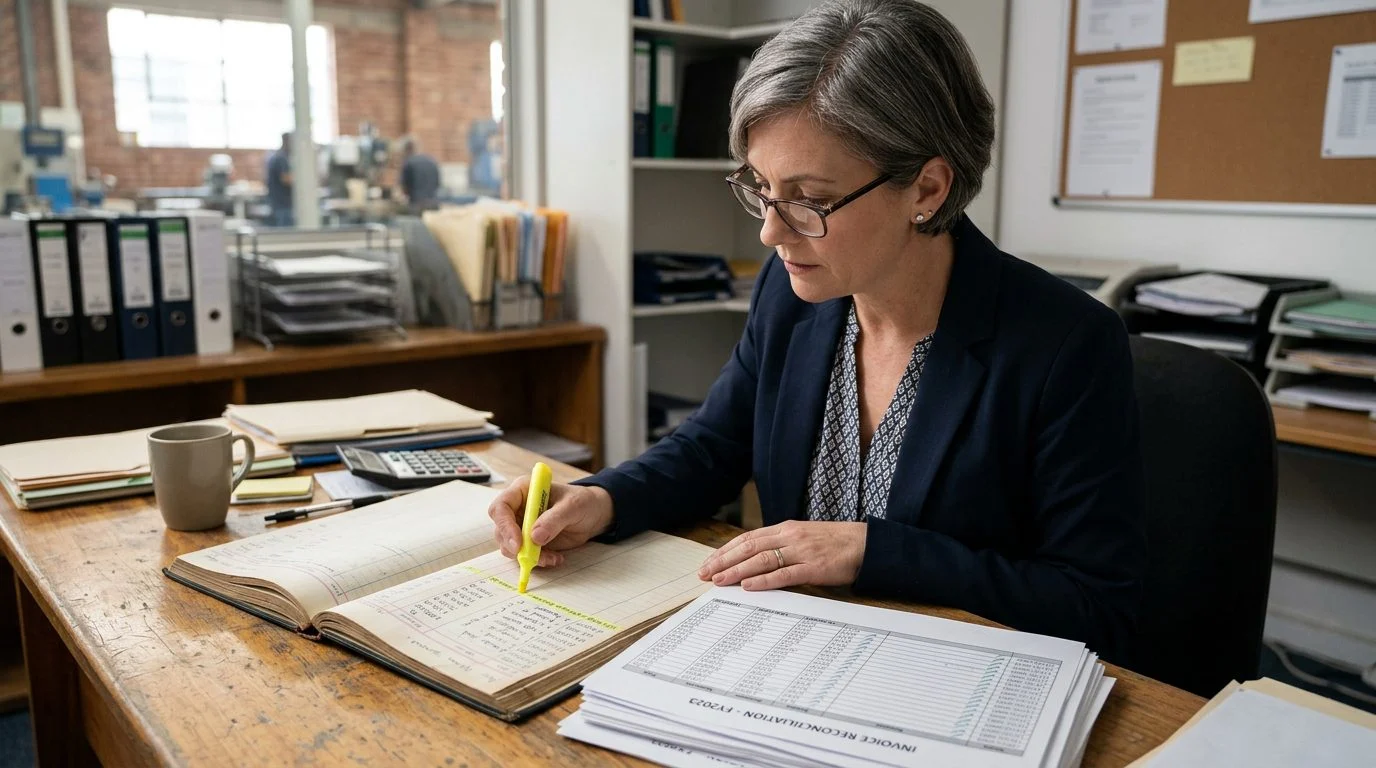
What Is Business Litigation for Plant City Companies?
Business litigation is a lawsuit or arbitration between companies, owners, partners, or contractors over money, a contract, or control of a business. Ayala Law PA is a business litigation law firm that serves companies in Plant City and Hillsborough County. Eduardo A. Maura is the lawyer responsible for this page.
Most business disputes start small. A customer stops paying. A subcontractor walks off a job. A partner gets shut out of decisions. When talks stall, a judge or an arbitrator may need to decide the dispute.
Where a case gets filed follows set rules. Under Fla. Stat. § 47.011, an action must be brought only in the county where the defendant resides, where the cause of action accrued, or where the disputed property is located; this section does not apply to actions against nonresidents. For many Plant City disputes, that points to Hillsborough County.
Our only office is in Tampa, at 1646 W Snow Ave. We handle matters for businesses in Plant City and Hillsborough County, with our only office in Tampa.
If an unpaid invoice, a shut-out partner, or a lien deadline has your Plant City business on edge, you don't have to face it alone. Call (305) 570-2208 to talk with our team. Talk it through with our team — we can walk you through how a situation like yours is usually handled and what your options are.

Which Business Disputes Does the Firm Handle?
The firm handles commercial, contract, shareholder, partnership, construction, real estate, and international trade disputes. In plain terms, the work covers the following.
- Commercial litigation: unpaid invoices, broken business agreements, and fights with vendors or customers.
- Contract disputes: written and oral agreements, performance problems, and termination fights. A court can refuse to enforce a contract term as unconscionable only when it finds both how the deal was made and how unfair the terms are. Basulto v. Hialeah Automotive sets out that test. Florida’s Third District has also held that claims arising from an express contract generally won’t support an unjust enrichment claim, as Williams v. Johnson explains.
- Shareholder and partnership disputes: voting fights, management disagreements, distributions, and duties owed between co-owners. A shareholder suing on behalf of a corporation must file a verified complaint. It must describe with particularity any demand made on the board. If a demand was made, it must also show either that the board refused, rejected, or ignored it within 90 days, or why waiting 90 days would cause irreparable injury or material waste to the corporation. If no demand was made, it must give the reasons, under Fla. Stat. § 607.0742.
- Construction litigation: contractor and subcontractor payment disputes, construction contract fraud, and lien foreclosure claims in Florida courts.
- Real estate and international trade litigation: disputes within those practice areas.
Some matters may be better handled by another lawyer or firm. If that’s the case, we’ll say so at the start.
How the Process Works, Step by Step
The process starts with your facts, then moves to documents, then to a plan. Expect these steps.
- Initial discussion. You describe the parties, the dispute, the key dates, and the money at stake.
- Document review. We read the contract, invoices, notices, change orders, and emails. We look for the claims, defenses, and deadlines they create.
- Written engagement terms. The firm sets out its engagement terms in writing before work begins.
- Early steps. Depending on the dispute, these can include demand letters, preservation notices, pleadings, or lien-related filings.
- Resolution path. Under Fla. Stat. § 44.102, a court must, on one party’s request, refer a filed civil action for money damages to mediation. Fla. Stat. § 44.102 reads: “(2) A court, under rules adopted by the Supreme Court: (a) Must, upon request of one party, refer to mediation any filed civil action for monetary damages, provided the requesting party is willing and able to pay the costs of the mediation or the costs can be equitably divided between the parties, unless: 1.” That applies when the requesting party is willing and able to pay the costs or the costs can be equitably divided between the parties. Under Fla. Stat. § 44.102, a court must, upon request of one party, refer a filed civil action for monetary damages to mediation, provided the requesting party is willing and able to pay the costs of the mediation or the costs can be equitably divided between the parties. This does not apply to listed exceptions, such as an action filed for the purpose of collecting a debt, a landlord and tenant dispute that does not include a claim for personal injury, a medical malpractice claim, an action governed by the Florida Small Claims Rules, or a case where the parties have agreed to binding arbitration. The statute lists exceptions, including actions filed for the purpose of collecting a debt and cases in which the parties have agreed to binding arbitration.
Timing is set by the court’s calendar, the claims, and how much discovery the case needs.
Why Timing Matters in Florida Business Disputes
Early review matters because some deadlines and contract steps start long before a lawsuit is filed. Acting early gives you more time to weigh your options.
- Construction claims. Under Fla. Stat. § 95.11, an action founded on the design, planning, or construction of an improvement to real property runs from the date the authority having jurisdiction issues a temporary certificate of occupancy, a certificate of occupancy, or a certificate of completion, or the date of abandonment of construction if not completed, whichever date is earliest. For a latent defect, the time runs from when the defect is discovered or should have been discovered with the exercise of due diligence. In any event, the action must be commenced within 7 years after the applicable date. That period generally runs from the earliest of the date the authority having jurisdiction issues a temporary certificate of occupancy, a certificate of occupancy, or a certificate of completion, or the date construction is abandoned if it is not completed. For latent defects, the period runs from when the defect is discovered or should have been discovered with due diligence, and in any event the action must be commenced within seven years of the triggering date. The clock runs from the earliest of the temporary certificate of occupancy, certificate of occupancy, certificate of completion, or abandonment date. Latent defects run from discovery, but suit must start within seven years of that date in any event.
- Contract claims. These have their own deadlines, which vary by claim. Review the agreement early.
- Lien rights. Lien claims have separate deadlines and steps, so confirm them early.
- Notice clauses. Many contracts require written notice of a breach or termination within a set window. Missing that step can hurt your position.
- Fee clauses. Under Fla. Stat. § 57.105(7), if a contract entered into on or after October 1, 1988 allows fees to a party forced to enforce it, a court may award reasonable fees to the other side when that side prevails.
- Records. Keep emails, texts, invoices, change orders, bank records, and meeting minutes. Don’t delete messages, even ones that look unhelpful.
Why Work With Ayala Law PA on a Plant City Dispute
As a business litigation law firm, Ayala Law PA focuses on commercial, contract, shareholder, construction, real estate, and international trade matters. Business disputes are the firm’s core work, from unpaid invoices to construction lien foreclosure.
- Responsible lawyer. Eduardo A. Maura is responsible for this page. Our lawyers and support staff handle intake, document review, and case files together.
- Plain explanations. We explain claims, options, costs, and next steps in writing, so you can decide with the facts in front of you.
- Office location. Our only office is in Tampa, at 1646 W Snow Ave; we also handle Plant City business matters.
- No promises. No outcome is promised or predicted here. Each dispute turns on its own contract and facts.
Common Questions About Business Litigation in Plant City
Do I need a lawyer for a small dispute?
The answer changes with the contract, the deadlines, and the risk involved. A review helps you see those points early.
Can a Miami firm handle a Plant City or Hillsborough County dispute?
Yes. The firm handles Plant City and Hillsborough County business disputes; its only office is in Tampa, and venue rules decide where a case is filed.
Does the firm charge for a case evaluation?
Fees and costs are explained in writing before work begins, including any filing and service fees you may owe.
Can a contract clause send my dispute to arbitration?
A written arbitration agreement is generally enforceable in Florida, except on grounds that exist to revoke any contract. Under Fla. Stat. § 682.02, a court decides whether an agreement to arbitrate exists.
How long does a business lawsuit take?
Timing is set by the court’s calendar, the claims, and how much discovery the case needs. The firm will explain the likely schedule once it reviews your file.
Will I have to go to court?
Some disputes settle or move to mediation or arbitration first. Others go before a judge. The firm will outline the likely path for your claims.
Not sure what your next step is?
Talk it through with our team — we can walk you through how a situation like yours is usually handled and what your options are.
Talk to Ayala Law PA About Your Plant City Dispute
If a customer has stopped paying, a partner has been locked out, or a subcontractor has put a lien deadline at risk, you don’t have to sort out the rules alone. Call (305) 570-2208 or request a case evaluation, and bring your contract, invoices, notices, and key emails.



