
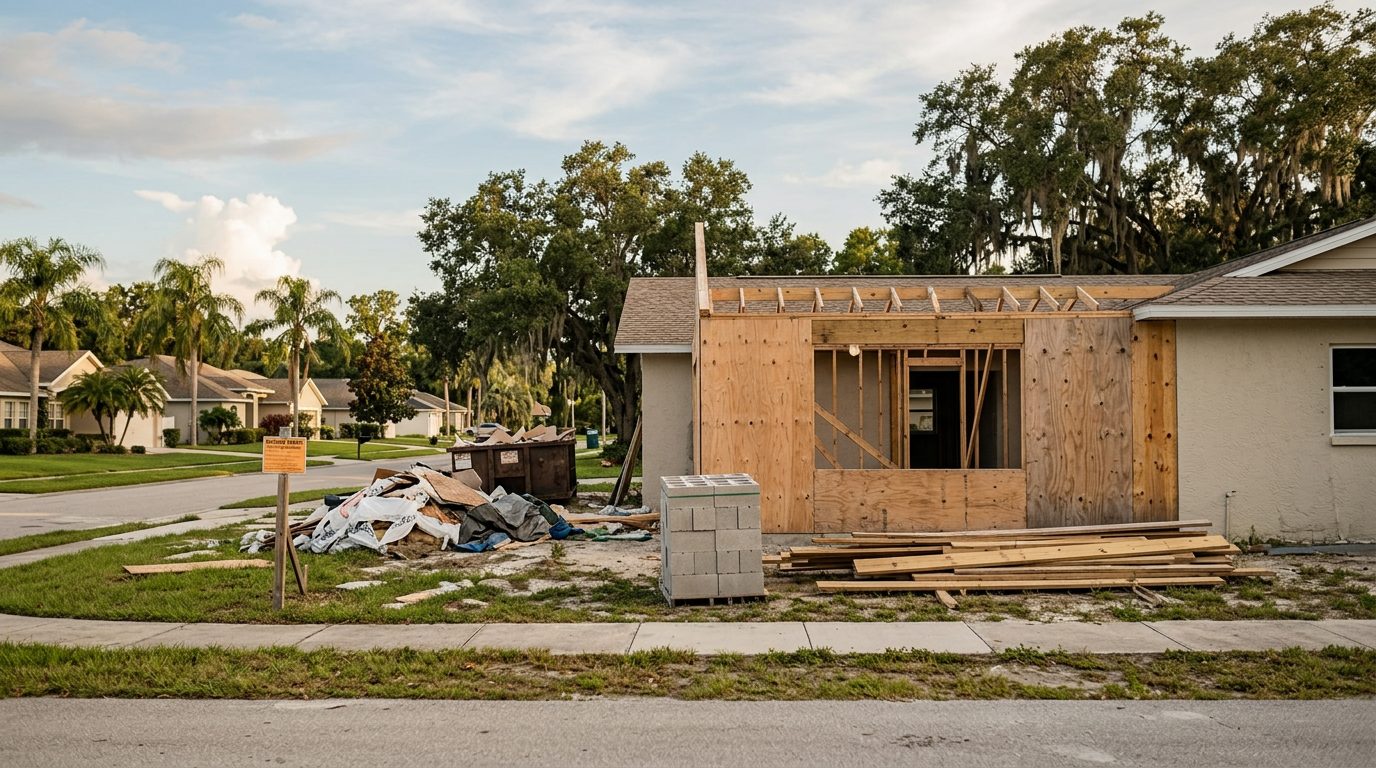
Your contractor stopped showing up, the money you paid may be gone, and your Tampa project still isn’t finished.
If a contractor walked away from your job, you may have a claim for the money paid, the cost of finishing the work, or both. Whether a claim is strong turns on the contract, the payments, and the paperwork.
What Abandoned Construction Project Litigation Covers in Tampa
Abandoned construction project litigation is a lawsuit over a job that a contractor or subcontractor stopped before finishing, without a valid reason under the contract. The job can be a home, an apartment building, or a commercial space in Tampa, Brandon, Riverview, Plant City, Temple Terrace, or elsewhere in Hillsborough County.
This type of case often involves:
- Homeowners and property owners who paid for work that was never finished
- Business owners and developers with a stalled build-out or renovation
- General contractors and subcontractors caught in a job that fell apart
A stalled job can leave an owner paying twice: once to the original contractor and again to finish the work. The contract is usually the starting point, along with the record of what was paid and when.
This page focuses on disputes between the parties to a construction project. Claims often arise from contractor disputes, subcontractor disputes, lien issues, and construction contract fraud.
Not sure what your next step is?
Talk it through with our team — we can walk you through how a situation like yours is usually handled and what your options are.
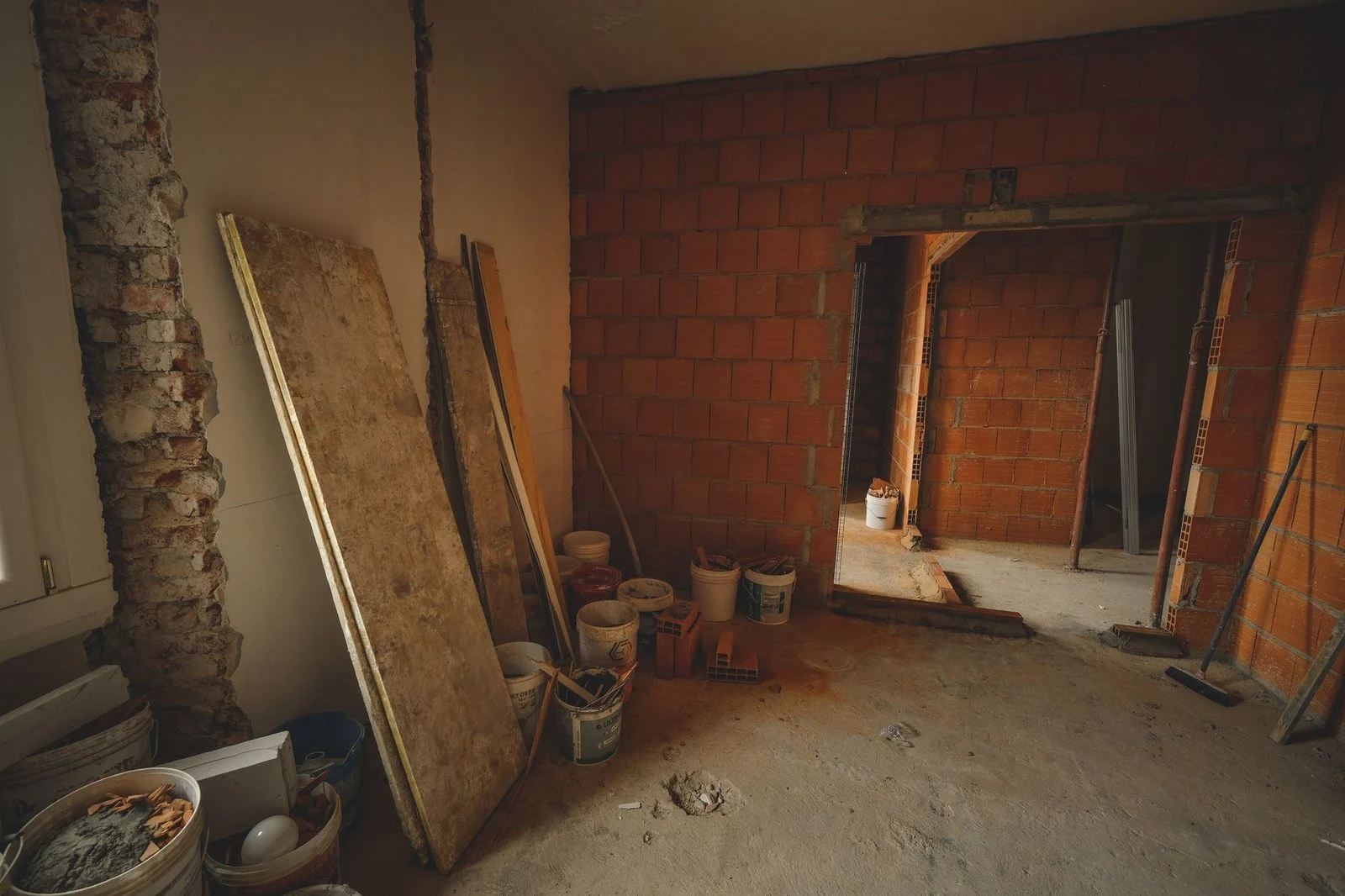
Which Claims Come Up in Stalled Construction Cases?
The most common claims are breach of contract, construction contract fraud, lien claims, and disputes over incomplete or defective work. Each one needs different proof, so the contract and records matter.
- Breach of contract. The contractor failed to perform, missed milestones, or walked off the job.
- Construction contract fraud. The contractor took deposits or progress payments but never did the promised work, or misstated licensing or materials. A promise to perform can count as fraud if the promisor never intended to perform, as the Third District recognized in Frutafino v. Dole Chile.
- Lien and payment claims. Subcontractors or suppliers who go unpaid may pursue liens against the property.
- Completion costs. You may seek the extra cost of having another contractor finish or repair the work.
Fraud claims can be harder to prove than a simple missed deadline. That is why the paperwork matters early.
What Are the Warning Signs a Project Has Been Abandoned?
A project is likely abandoned when work stops for a long stretch and the contractor stops answering calls and messages. Other warning signs often show up alongside that.
- The contractor stops showing up or stops answering calls, texts, and emails.
- Work halts right after a payment, with materials sitting unused or the crew gone.
- The contractor asks for more money before work resumes, often citing cost overruns.
- Permits expire, or inspections stop being scheduled.
- Subcontractors or suppliers call about unpaid bills or liens recorded against the property.
Start gathering records now. Collect the signed contract, change orders, payment records, texts and emails, photos of the site, and permit documents. Write down the date work stopped, because that date can matter for deadlines. Keep copies of everything, and don’t delete messages.
How Does the Process Work, and How Long Does It Take?
Most cases move from a document review to a written demand, then to negotiation or mediation, and then to a lawsuit if the matter isn’t resolved.
- Intake. The firm reviews the contract, payment history, and project timeline to identify the parties and possible claims. The review also checks for an arbitration clause. Under Fla. Stat. § 682.02, a written agreement to arbitrate is valid and enforceable, except on grounds that allow any contract to be revoked.
- Deadlines. Under Fla. Stat. § 95.11, an action founded on the design, planning, or construction of an improvement to real property must be commenced within four years, with the time running from the earliest of a temporary certificate of occupancy, a certificate of occupancy, a certificate of completion, or the date of abandonment of construction if it was not completed. When the action involves a latent defect, the time runs from when the defect is discovered or should have been discovered with the exercise of due diligence. In any event, the action must be commenced within 7 years after that earliest date. Fla. Stat. § 95.11 reads: “(3) WITHIN FOUR YEARS.— … (b) An action founded on the design, planning, or construction of an improvement to real property, with the time running from the date the authority having jurisdiction issues a temporary certificate of occupancy, a certificate of occupancy, or a certificate of completion, or the date of abandonment of construction if not completed, whichever date is earliest; except that, when the action involves a latent defect, the time runs from the time the defect is discovered or should have been discovered with the exercise of due diligence.” A contract clause that sets a shorter period is void under Fla. Stat. § 95.03.
- Written demand. A demand letter can ask the contractor to finish the work, repay money, or provide a written accounting.
- Resolution. The parties may negotiate, mediate, or arbitrate, depending on the contract. Resolution. Under Fla. Stat. § 44.102, a court must refer to mediation, upon one party’s request, many filed money-damage cases, provided the requesting party is willing and able to pay the costs of the mediation or the costs can be equitably divided between the parties, with listed exceptions. Fla. Stat. § 44.102 reads: “(2) A court, under rules adopted by the Supreme Court: (a) Must, upon request of one party, refer to mediation any filed civil action for monetary damages, provided the requesting party is willing and able to pay the costs of the mediation or the costs can be equitably divided between the parties, unless: 1.”
- Litigation. Under Fla. Stat. § 47.011, a suit must be brought in the county where the defendant resides, where the cause of action accrued, or where the property in litigation is located; this section does not apply to actions against nonresidents. For a Tampa property, that can include Hillsborough County.
Settlement offers have their own rules. Under Fla. Stat. § 45.061, a written offer to settle a claim remains open for 45 days unless it is withdrawn sooner by a writing served on the offeree before acceptance, and an offer that is neither withdrawn nor accepted within 45 days is deemed rejected. The statute states that it does not apply to causes of action that accrue after the effective date of this act. Fla. Stat. § 45.061 reads: “The offer shall remain open for 45 days unless withdrawn sooner by a writing served on the offeree prior to acceptance by the offeree.”
The timeline depends on the facts, the number of parties, and the court’s schedule.
Can You Get Your Money Back? What Recovery Depends On
Recovery turns on the contract terms, how much was paid, what work was finished, and what records exist.
Possible remedies can include money for completing or correcting the work, return of unearned payments, and clearing liens from the property. Collection is the next question, because a judgment is only as useful as the money or property behind it.
Under Fla. Stat. § 55.10, a judgment becomes a lien on real property in a county once a certified copy is recorded there with the lienholder’s address. Fla. Stat. § 55.10 reads: “(1) A judgment, order, or decree becomes a lien on real property in any county when a certified copy of it is recorded in the official records or judgment lien record of the county, whichever is maintained at the time of recordation, provided that the judgment, order, or decree contains the address of the person who has a lien as a result of such judgment, order, or decree or a separate affidavit is recorded simultaneously with the judgment, order, or decree stating the address of the person who has a lien as a result of such judgment, order, or decree.” Fla. Stat. § 55.10 reads: “A judgment, order, or decree does not become a lien on real property unless the address of the person who has a lien as a result of such judgment, order, or decree is contained in the judgment, order, or decree or an affidavit with such address is simultaneously recorded with the judgment, order, or decree.” For a copy recorded on or after July 1, 1994, that lien lasts an initial 10 years.
If a contractor moves assets to avoid paying, Fla. Stat. § 726.105 addresses transfers made to hinder, delay, or defraud a creditor.
If the contractor is a corporation, reaching its owner personally is harder. A claimant generally must show the owner dominated the company, the corporate form was used fraudulently or improperly, and the claimant was injured, as the Fourth District laid out in Wurtzebach v. Flooring Depot.
No outcome, amount, or timeline can be promised. Past matters don’t predict yours.
Why Work With Ayala Law PA on a Construction Dispute?
Ayala Law PA’s practice includes construction litigation, including contractor and subcontractor disputes, lien foreclosure, and construction contract fraud.
The firm’s office is in Tampa, Florida, at 1646 W Snow Ave. From that office, the firm serves Tampa and Hillsborough County clients in Florida courts and arbitration. Eduardo A. Maura is the responsible lawyer for this page.
Our team keeps your documents, deadlines, and options organized, so you know what comes next after each step. Clients can expect:
- Written updates on deadlines, options, and next steps
- A review of the contract and payment records before options are chosen
- A plain explanation of each dispute path, from mediation to court
Some matters may be referred to another lawyer or firm. We discuss fees when you contact us.
Not sure what your next step is?
Talk it through with our team — we can walk you through how a situation like yours is usually handled and what your options are.
Frequently Asked Questions
Here are short answers to common questions about abandoned construction projects in Florida.
Can I hire another contractor to finish the job and still pursue a claim?
Yes, you can hire another contractor, and you should keep records of every completion cost. Whether those costs can be recovered turns on the contract, your records, and the filing deadline: actions other than for recovery of real property shall be commenced within the time periods set by Fla. Stat. § 95.11.
How long do I have to act?
Florida deadlines can be short, so review the timeline early.
What if the contractor says the delay was my fault?
The contract, change orders, and payment records are the first documents to review. They often show who caused the delay.
Do I need to stop paying the contractor?
Review payments against the contract and any lien exposure before you change course.
What should I bring to a first conversation?
Bring the signed contract, payment records, correspondence, permits, and photos of the site.
If a contractor left your Tampa project unfinished and you’re weighing what to do next, request a case evaluation or call (813) 414-5715.



