

A co-owner property dispute happens when people who share title to property cannot agree on how to run it, pay for it or sell it. In Florida, the right route depends on how the property is held and what the owners’ documents say. Owners can resolve these disputes by agreement. If they can’t, a court can be asked to decide.
This guide explains the options in plain terms. It is written for business owners, LLC members, partners and family members who share commercial or investment property in Tampa, Hillsborough County, Brandon, Riverview, Plant City, Temple Terrace and the wider Tampa Bay area.
What Is a Co-Owner or LLC Property Dispute?
A co-owner property dispute is a disagreement among people who hold title to the same property. The owners cannot settle how it is used, managed, paid for or sold.
Co-owners can hold title in different ways. Joint tenants hold the property together. Tenants in common hold separate shares, which may be unequal.
Property is also often held inside an LLC or partnership. In that case, the entity’s paperwork matters most. Florida’s LLC law says the operating agreement governs relations among members and between members and the company, except where the statute provides otherwise (Fla. Stat. § 605.0105).
Common triggers include:
- A co-owner quits paying a share of taxes, insurance or repairs.
- A co-owner keeps rental income that belongs to everyone.
- An owner refuses to approve a sale or ignores a buyout offer.
- An heir wants out of inherited property, but the other heirs don’t.
If a co-owner has quit paying shares of expenses or refused a buyout, you may have options, and our team can review your documents with you at (305) 570-2208. Talk it through with our team — we can walk you through how a situation like yours is usually handled and what your options are.
What Are the Main Ways to Resolve a Co-Owner Dispute?
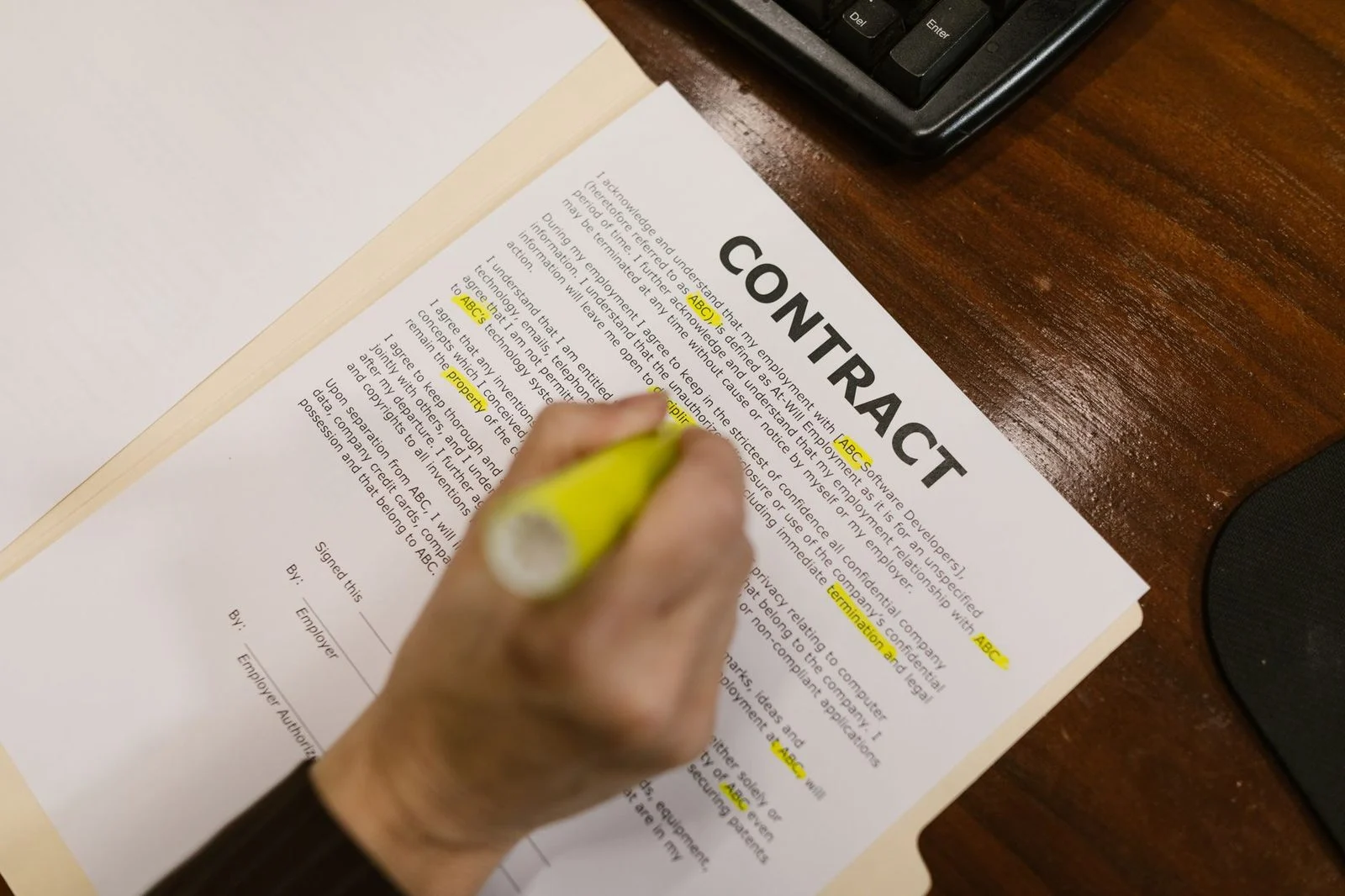
The main options are a negotiated buyout, a voluntary sale, or a lawsuit asking a court to divide or sell the property. Each option costs a different amount of time, control and money, so compare them before choosing.
- Negotiated buyout. One owner buys the others’ interests at an agreed or appraised value. Put the terms in writing.
- Voluntary sale. The owners sell the whole property and split the proceeds by ownership share.
- Partition action. This is a lawsuit asking a court to divide the property or order its sale when owners cannot agree.
- Related business claims. Disputes often include claims over rents, expenses and breaches of the operating agreement or partnership terms.
LLC operating agreements may include a deadlock sale provision. Under Florida law, that provision can resolve a deadlock before a court orders dissolution, if it is started first (Fla. Stat. § 605.0702).
In a member’s dissolution case, the company or other members may elect to buy the member’s interest at fair value. That election may be filed within 90 days after the petition, or later if the court allows (Fla. Stat. § 605.0706).
For partnerships, a partner who leaves without ending the business is owed a buyout. If no agreement comes within 120 days after a written demand, the partnership pays its own estimate in cash (Fla. Stat. § 620.8701).
Partition in Kind vs. Partition by Sale: What’s the Difference?
Partition in kind divides the physical property among the owners. Partition by sale has the whole property sold and the money shared.
Partition in kind usually fits land or a large parcel that can be split without losing much value. Partition by sale usually fits a single building or property that can’t be divided fairly.
Questions that often come up include:
- Can the property be divided without destroying its value?
- How large is each owner’s share?
- Do the owners agree on a sale or a buyout?
- Does one owner want to keep the property?
Co-owners who disagree about what to do with shared property often have different goals, and the options available depend on the specific facts involved. The facts decide which route fits.
How Does a Florida Co-Owner or LLC Dispute Move Forward?
These disputes often follow a set order. Talks come first, and a lawsuit comes only if talks fail.
- Review the documents. Gather the deed, LLC articles, operating agreement, leases and any co-ownership agreement.
- Record the facts. List payments, rent received, expenses paid, messages and any buyout or sale offers. If an LLC refuses a member’s records request, a circuit court may order inspection and copying at the company’s expense (Fla. Stat. § 605.0411).
- Negotiate or mediate. In a filed civil action for money damages, a court must refer the case to mediation if one party asks, unless a listed exception applies (Fla. Stat. § 44.102).
- File where venue allows. Florida law requires suit in the county where the defendant resides, where the claim arose, or where the property is located (Fla. Stat. § 47.011). For property in Hillsborough County, that location may support a Hillsborough County filing.
- Litigate. After filing, the case moves through service, pretrial steps, discovery, valuation if needed, and any court-ordered sale or distribution.
The timeline varies with the facts. It depends on whether the other owners contest, how many parties are involved and the court’s calendar.
What Situations Lead to These Disputes?
The situations below show how these cases often start.
- Inherited property. Heirs may hold shares together. One heir may want cash, while the others want to keep the property.
- Withheld rent or expenses. One owner collects rent or refuses to share repair bills. The others may need an accounting to see what is owed.
- A member who wants out. A member can leave an LLC, but the exit can be wrongful. A wrongful exit can make the member liable for damages caused to the company and other members (Fla. Stat. § 605.0601).
Why Work With Ayala Law PA on These Disputes?
Ayala Law PA focuses on business litigation, commercial litigation, contract disputes, shareholder and partnership disputes, construction litigation, real estate litigation and international trade litigation. The firm handles these matters in Florida courts and arbitration.
Eduardo A. Maura is the lawyer responsible for this page. The firm’s support staff help organize documents and communications.
The firm’s office is at 1646 W Snow Ave, Tampa, Florida. The firm represents businesses in Tampa, Hillsborough County and the Tampa Bay area from its Tampa office.
A first conversation focuses on your title, your entity documents and your business goals.
Not sure what your next step is?
Talk it through with our team — we can walk you through how a situation like yours is usually handled and what your options are.
Frequently Asked Questions
What should co-owners know about jointly owned property in Florida?
Co-owners who disagree about shared property may want to talk with a lawyer about their options before taking action. The result depends on the property and the facts.
How do you partition a co-owned property?
A partition action is a lawsuit filed in a county that venue law allows, such as where the property is located. Start by gathering the title and ownership records.
Can an LLC member be bought out if the operating agreement is silent?
If the operating agreement is silent, the LLC statute governs the matter. The answer turns on that statute and the facts.
Do I need a lawyer before negotiating a buyout?
Reviewing the title and entity documents first helps you understand your position before you discuss numbers.
Is a case evaluation paid?
Case evaluations are a paid service, and fees are discussed at the outset.
If a co-owner has quit paying, refused a buyout or proposed a sale you don’t want, you don’t have to sort it out alone. Call (305) 570-2208 or request a case evaluation to review your documents and options.



