
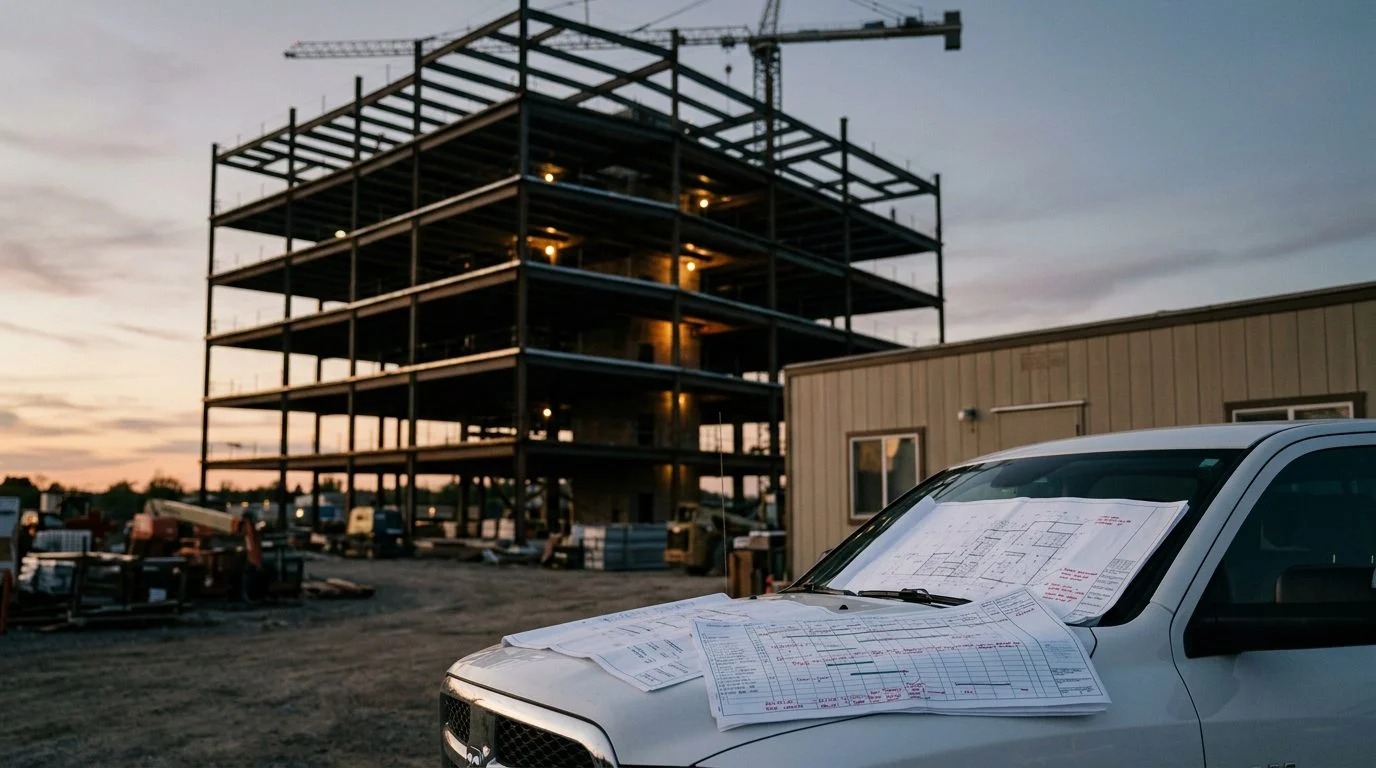
A construction lien is a claim against a property by someone who furnished labor, services or materials to improve it. If you own the property or work on the project and receive a lien, a notice or a foreclosure summons, you have options. Some deadlines start quickly, so read every paper as soon as it arrives. This page explains how Florida lien defense works, what the deadlines look like and what to expect from a business litigation firm. Eduardo A. Maura is the lawyer responsible for this page.
What Is a Florida Construction Lien, and Who Is This For?
A construction lien is a claim against real property by a person who supplied work or materials for its improvement.
A claim of lien is recorded against the property. A lien foreclosure is a lawsuit that asks a court to enforce that lien. The two steps are different, and the lawsuit comes with a response deadline you can’t miss.
This page is for property owners, developers, general contractors and subcontractors. You may have received a claim of lien, a notice or a foreclosure summons. A recorded lien can cloud title. That can slow a sale or refinancing, even before any lawsuit is filed.
If a claim of lien or a foreclosure summons just reached your Tampa-area property or project, our team can help you work through your response options. Talk it through with our team — we can walk you through how a situation like yours is usually handled and what your options are.
What Does Lien Defense Cover?
Lien defense covers three things: challenging the lien, answering the lawsuit and resolving the payment dispute behind it.
- Checking the claim of lien. We review its contents, recording dates, the amount claimed and whether the work was done on the property named.
- Answering a foreclosure complaint. We prepare the answer, defenses and counterclaims where the facts support them.
- Discussing a bond. A bond may clear a lien from the property so a sale or loan can move forward.
- Negotiating a release. Options include a full release, a payment schedule or a partial release tied to disputed work, change orders or back-charges.
- Resolving the contract dispute. Withheld payment for finished work is often the root issue behind a lien.
Contract arguments matter too. See Williams v. Johnson.
How Florida Lien Deadlines Work
Lien deadlines run on separate clocks, and the dates depend on the facts of each project.
- Missing one step can affect a claim.
- Notice of commencement and notice to owner. These Chapter 713 documents form the owner’s early paper trail. Check when each was recorded and served.
- Limitations period for design and construction claims. Under Fla. Stat. § 95.11, time for an action founded on the design, planning, or construction of an improvement to real property runs from the earliest of a temporary certificate of occupancy, a certificate of occupancy, a certificate of completion, or the date of abandonment of construction if not completed. Fla. Stat. § 95.11 reads: “(b) An action founded on the design, planning, or construction of an improvement to real property, with the time running from the date the authority having jurisdiction issues a temporary certificate of occupancy, a certificate of occupancy, or a certificate of completion, or the date of abandonment of construction if not completed, whichever date is earliest; except that, when the action involves a latent defect, the time runs from the time the defect is discovered or should have been discovered with the exercise of due diligence.” In any event, the action must be commenced within 7 years after that date. However, counterclaims, cross-claims and third-party claims that arise out of the conduct, transaction or occurrence set out in a pleading may be brought up to 1 year after that pleading is served, even if they would otherwise be time barred.
- Payment bond claims.
- Contracts can’t shorten it. Under Fla. Stat. § 95.03, a contract term that sets a shorter period than the statute allows is void.
- Arbitration pauses the clock. Under Fla. Stat. § 95.051, a pending arbitration on the same dispute tolls the limitations period.
A court summons sets its own response date. Calendar it the day the papers arrive. Gather the contract, payment history, change orders, recorded documents and every lien notice before the first conversation.
What to Expect: Step-by-Step Process
Expect five stages: intake, document review, options review, filings and resolution.
- Intake. Share the lien, notice or complaint along with the project papers. We identify the key dates first.
- Document review. We check the recorded lien, notices, contract scope, payment records and proof of work performed or not performed.
- Options review. We explain whether a contest, a bond, a negotiated release or a court defense fits your records, and what each path involves.
- Response and filings. We prepare the notices, bond papers or court answer and track every deadline.
- Resolution. A matter may end in a release, a dismissal, a settlement or trial. Timing varies with the court calendar.
Courts can also move a case toward settlement. Under Fla. Stat. § 44.102, a court must refer to mediation any filed civil action for monetary damages when one party asks, provided the requesting party is willing and able to pay the costs of the mediation or the costs can be equitably divided between the parties, subject to listed exceptions. Older claims may involve a written offer of settlement under Fla. Stat. § 45.061, which stays open 45 days unless withdrawn. That section does not apply to causes of action that accrue after its effective date.
Why Work With Ayala Law PA on a Construction Lien?
Ayala Law PA focuses on business and construction disputes. Eduardo A. Maura’s practice focuses on business litigation, commercial litigation, contract disputes, shareholder disputes, construction litigation, real estate litigation and international trade litigation.
The firm’s only office is at 1646 W Snow Ave in Tampa, Florida. Our office is in Tampa, and we represent businesses and property owners in Tampa, Hillsborough County, Brandon, Riverview, Plant City, Temple Terrace and the wider Tampa Bay area. Matters proceed in Florida courts and arbitration. Venue rules matter here. Under Fla. Stat. § 47.011, actions shall be brought only in the county where the defendant resides, where the cause of action accrued, or where the property in litigation is located; this section does not apply to actions against nonresidents.
Our team includes support staff who handle intake, scheduling and document organization. That keeps lien deadlines and filing records in one place. If a matter falls outside these practice areas, or is better handled by another lawyer or firm, we will tell you at the start.
Frequently Asked Questions About Construction Lien Defense in Florida
Short answers to the questions owners ask most about Florida liens.
Can I challenge a lien if I already paid my contractor?
Payment history matters a lot. What was paid, when it was paid and what the contract required all shape the answer.
Does bonding off a lien erase the debt?
A bond can clear a lien from the property. The underlying payment dispute can still be contested in court.
I received a foreclosure summons. What now?
Note the response date on the summons and contact our team right away. Waiting can cost you options.
Can a subcontractor lien my property if I paid the general contractor?
Owner payment and notice records are central to that question. Bring them to the first conversation.
Will I have to go to trial?
Some matters are referred to mediation under Florida law. The firm prepares each matter as if it could go to trial.
Not sure what your next step is?
Talk it through with our team — we can walk you through how a situation like yours is usually handled and what your options are.

Talk With Our Team About Your Lien or Foreclosure
Our team can review your lien, notices and deadlines before you decide how to respond. Case evaluations carry a fee, and the firm explains fees before any engagement.
If a claim of lien or a foreclosure summons just reached your Tampa-area property or project, don’t wait to sort out the dates. Call (305) 570-2208 or request a case evaluation, and bring your contract, notices and payment records.



