
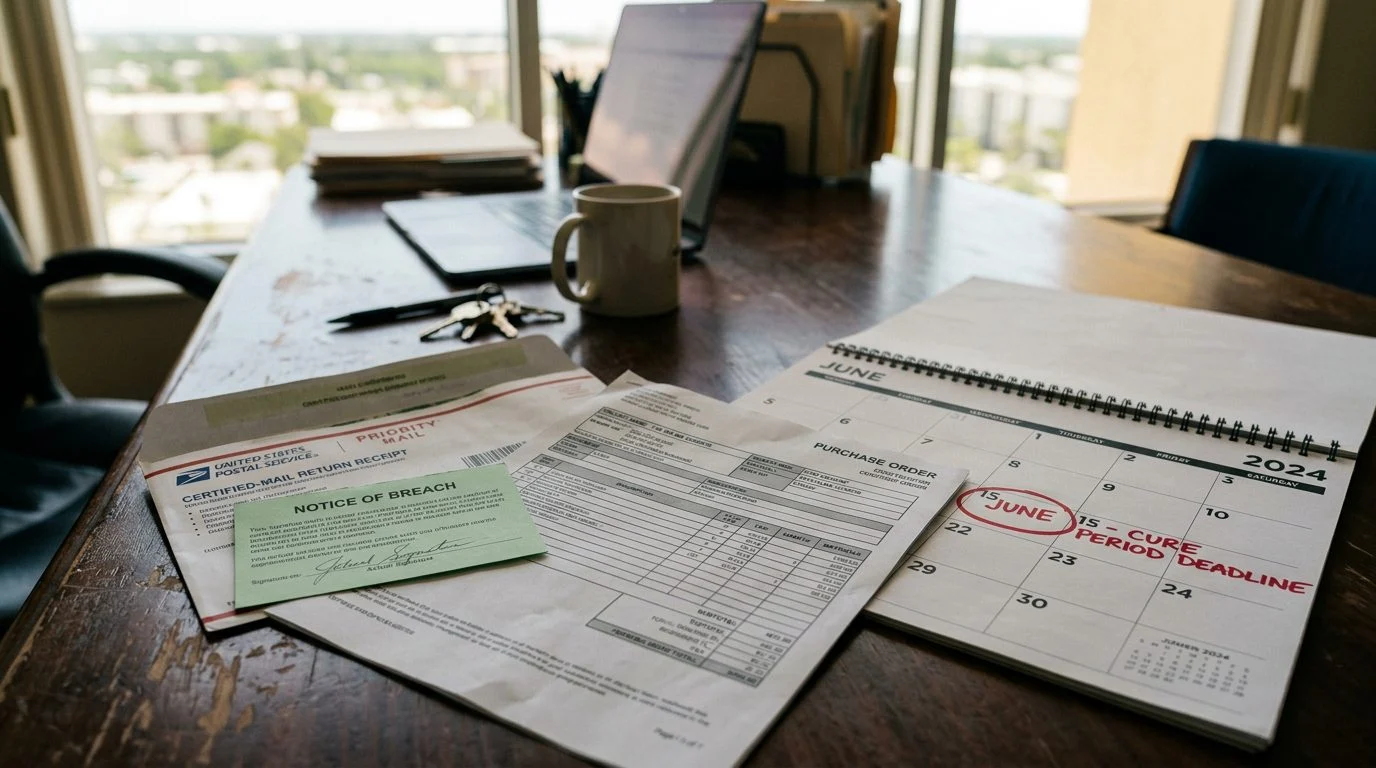
Why the Question Matters When a Construction Project Goes Wrong
A construction contract is void when it has no legal effect from the start. Owners and contractors often ask this after a stop-work order, a payment fight, or a job that is already partly built.
Three outcomes get mixed up. A terminated contract ends under its own terms, such as a termination clause after a default notice. Each one leads to a different next step.
The answer depends on the documents and the facts. This page gives general information about Florida law. It is not advice about your agreement.
If you're reviewing a construction agreement that has stalled, you don't have to sort out the grounds alone. Our team can talk through your contract and your deadlines with you. Talk it through with our team — we can walk you through how a situation like yours is usually handled and what your options are.
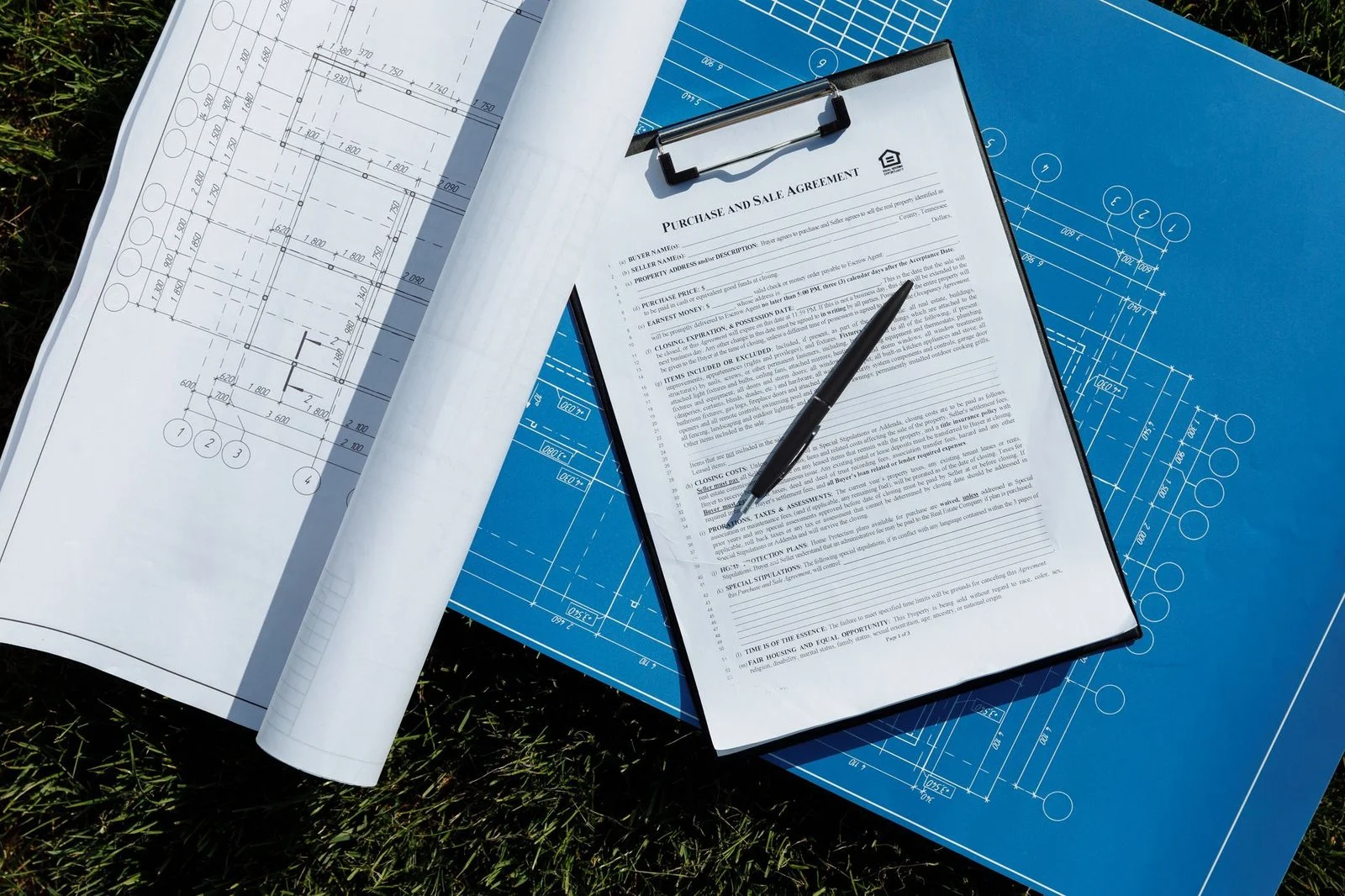
The Basic Elements a Florida Construction Contract Must Have
A construction contract needs the same basic parts as any contract: an offer, an acceptance, consideration, and essential terms stated clearly enough. Florida’s Supreme Court applies these basics even to oral deals (St. Joe Corp. v. McIver).
In construction fights, two terms come up most often: the scope of work and the price or payment method. If the parties never agreed on what work gets done or what it costs, a court may not be able to enforce the deal. Vague terms often create the dispute itself.
Both sides must also agree to the same terms. If the owner thought the contract covered one set of work and the contractor priced another, a court looks at what each side actually agreed to.
Signatures can be electronic. Under Fla. Stat. § 668.004, an electronic signature can sign a writing and carries the same effect as a handwritten one, unless another law says otherwise.
Contracts That Are Void From the Start
A void contract has no legal effect, so neither side can enforce it. The clearest example is a contract that breaks the law. Florida courts hold that a contract violating a constitution or statute “is void and illegal” and will not be enforced (Taboada v. Duarte).
A contract to build something a statute prohibits falls into this group.
Each case turns on its own facts.
Calling a contract void is a conclusion a court reaches. It is not a label a party gets to choose. That’s why the paperwork and the timeline both matter.
Licensing, Writing Requirements, and Other Statutory Problems
Some agreements must be in writing, and a missing signed writing can block enforcement. Florida law provides that no action can be brought on an agreement that is not to be performed within one year of its making, unless the agreement, or some note or memorandum of it, is in writing and signed by the party to be charged. The same rule covers contracts for the sale of land and leases longer than one year.
Oral changes cause trouble. Construction jobs change as they go. A verbal change order can seem minor, but it often becomes the center of a payment dispute. A written change order signed by both sides makes the agreed terms easier to prove.
Licensing is a separate issue. Check each party’s license status early. Licensing can shape each side’s position in a payment dispute, so keep records of what the license status showed and when.
Voidable Grounds: Fraud, Duress, Undue Influence, and Mistake
A voidable contract stays in force until a party chooses to cancel it. Fraud, pressure, and some mistakes can support that choice.
Florida’s Third District has held that a plaintiff may not recover in tort for a contract dispute unless the tort is independent of the breach (Frutafino, S.A.S. v. Dole Chile). A fraud claim needs its own footing.
Ratification occurs when a party entitled to rescind a voidable contract fails to do so after the discovery of facts that warrant a rescission. Flaherty v. Flaherty, 128 So. 3d 920 (Fla. 2d DCA 2013) When the pressure happened matters, and so does what the signer did afterward.
Mistake. Florida courts allow rescission for a mutual mistake only when the mistake is mutual and concerns a fact at the essence of the contract (Waterside at Boynton Homeowners’ Ass’n). Florida also allows rescission for a unilateral mistake in limited circumstances (DePrince v. Starboard Cruise Services).
Timing. A party who can cancel may lose that right by waiting. Ratification occurs when a party entitled to rescind fails to do so after learning the facts that warrant it (Flaherty v. Flaherty). This is a general rule, not an automatic result.
Void, Voidable, or Terminated: How the Distinction Changes the Next Steps
The label shapes what happens next. A termination usually follows the notice and cure steps written into the contract. A void or voidable finding is a different question altogether.
Breach is a separate issue. A valid contract can still be breached.
Deadlines matter. Time limits for construction-related claims depend on the facts of each matter and on the statutes that apply, so it is important to review them early. The clock runs from a certificate of occupancy, a certificate of completion, or abandonment, whichever is earliest. A latent defect can change the start date for a claim, so the timing of a dispute should be reviewed against the specific facts. A contract clause that shortens the time to sue is void under Fla. Stat. § 95.03.
Lien rights follow their own rules.
Keep the signed contract, change orders, invoices, payment records, and emails. These records shape how any ground gets argued.
Not sure what your next step is?
Talk it through with our team — we can walk you through how a situation like yours is usually handled and what your options are.

Talk With Ayala Law PA About Your Construction Agreement
If you’re reviewing a contract you didn’t draft, or handling a dispute for a company, the next step may not be clear yet. Ayala Law PA focuses on business litigation, construction litigation, contract disputes, and real estate litigation in Florida courts and arbitration. The firm serves businesses in Tampa, Hillsborough County, Brandon, Riverview, Plant City, Temple Terrace, and the Tampa Bay area.
The firm’s only office is at 1646 W Snow Ave in Tampa, Florida, and it serves businesses in Tampa and Hillsborough County. Eduardo A. Maura is the responsible lawyer for this page.
Your agreement’s terms, your deadlines, and your records will shape what comes next. To talk through your own construction contract, call (305) 570-2208 or request a case evaluation.



