

Short Answer: When Attorney’s Fees Are Recoverable in Florida
Are attorney’s fees recoverable in a breach of contract case? Generally, no. Under Florida law, each party usually pays its own attorney’s fees, even after winning (Price v. Tyler). Fees shift to the other side mainly when a contract clause or a statute allows it. Winning the breach claim and recovering fees are two separate questions. A fee award needs a legal basis, and the court or arbitrator decides it.
If a customer quit paying under a contract with a fee clause and you're weighing whether to sue, send a demand, or defend, our team can help you check your options. Talk it through with our team — we can walk you through how a situation like yours is usually handled and what your options are.
Contract Fee Clauses: How Prevailing-Party Language Works
A fee clause in the contract is the most direct route to recovering fees. A one-sided clause names only one party, such as a landlord or vendor, as the party who can recover fees. A prevailing-party clause lets whichever side wins the dispute recover reasonable fees.
Read the clause closely. Check these points:
- Who is covered. Does it name both parties, or only one?
- Which proceedings. Does it cover a trial, an appeal and arbitration?
- What “enforcing” means. Does it cover work done before a lawsuit, such as a demand letter?
- Any cap. Does the clause limit the amount that can be recovered?
A contract with no fee language usually leaves each side paying its own fees, unless a statute applies. The wording in your signed agreement decides what it covers. Bring the full contract, including any amendments, to your case review.
Florida’s Reciprocity Rule for One-Sided Fee Clauses
If a contract lets only one side recover fees, the other side may still recover them. Fla. Stat. § 57.105(7) says that when a contract allows fees to a party that must act to enforce it, the court may also allow reasonable fees to the other party if that party prevails. That works whether the other party was the plaintiff or the defendant. The rule applies to contracts entered into on or after October 1, 1988.
Consider a commercial lease where only the landlord can recover enforcement fees. If the tenant wins, the tenant can ask the court for fees under this rule. The word “may” matters. The court decides whether to award them.
The rule still changes the settlement picture. A party defending a contract claim should check it early, because it can change the stakes.
Statutes and Settlement Tools That Can Shift Fees
Other tools can shift fees, and each has its own rules and deadlines. The two main ones are a written settlement offer and sanctions for claims that lack support.
A defendant can serve a written offer of judgment in a civil damages case. The offer must be in writing, state that it is made under the statute, name the party making it and the party it is made to, state any amount offered to settle a punitive damages claim, and state its total amount (Fla. Stat. § 768.79). If the plaintiff does not accept the offer within 30 days, and the judgment is one of no liability or at least 25 percent less than the offer, the defendant is entitled to recover reasonable costs and fees incurred after the offer. A plaintiff’s demand works the same way when the judgment is at least 25 percent greater. The court may also find that an offer was not made in good faith and disallow fees.
Sanctions are a separate route. Under Fla. Stat. § 57.105, upon the court’s initiative or motion of any party, the court shall award a reasonable attorney’s fee, including prejudgment interest, to be paid to the prevailing party in equal amounts by the losing party and the losing party’s attorney on any claim or defense at any time during a civil proceeding or action in which the court finds that the losing party or the losing party’s attorney knew or should have known that a claim or defense, when initially presented to the court or at any time before trial, was not supported by the material facts necessary to establish the claim or defense or would not be supported by the application of then-existing law to those material facts, although the statute also limits when monetary sanctions may be awarded. Under Fla. Stat. § 57.105(1), a sanctions fee award may be made on the court’s own initiative or on the motion of any party.
These tools are time-sensitive and technical. Whether any of them fits your dispute depends on the facts and the deadlines.
Proving Fees: Reasonableness, Records and Deadlines
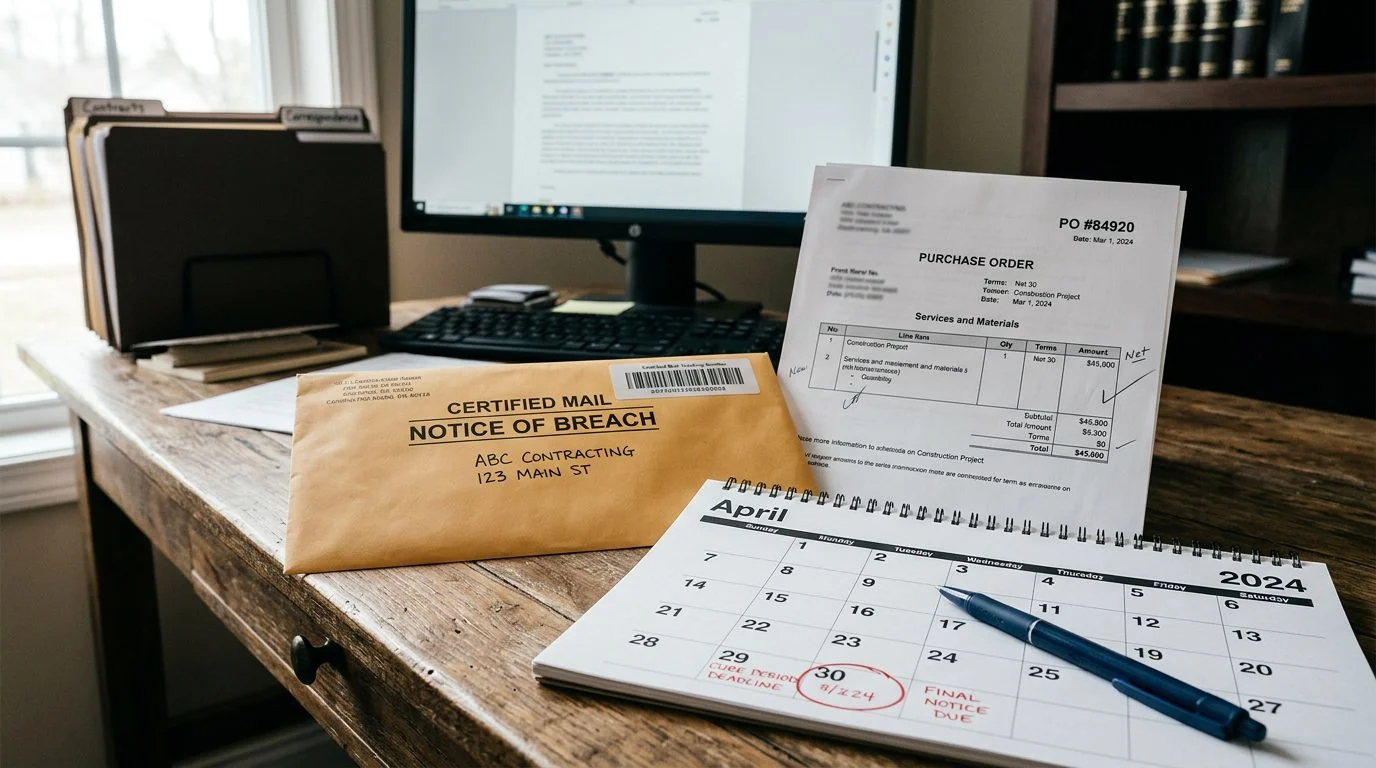
Recovering fees takes proof. You must show a legal basis for the award and that the amount is reasonable. The court looks at the work done and the records that show it.
Keep detailed time records from the start. Dated entries that describe the work, the hours and the rates make a fee request easier to support. Court costs and attorney’s fees are often treated as separate items. Filing fees and similar charges can follow different rules than a lawyer’s time.
Deadlines matter. A motion for fees under the settlement-offer statute must be made by the offeror within 30 days after judgment or dismissal (Fla. Stat. § 768.79). A sanctions motion gives the other side 21 days to fix the challenged filing (Fla. Stat. § 57.105). A missed deadline can cost you the request.
A fee award is never automatic.
What to Expect: From Case Evaluation to a Fee Request
A dispute usually moves through a few stages. Timing depends on the forum, the complexity of the dispute and whether the matter settles. Our team explains the likely stages during the evaluation.
- Review the paperwork. We look at the contract, notices, correspondence and payment history to find fee clauses and deadlines.
- Assess the claim. We weigh the breach claim, likely defenses and available fee routes before choosing a demand letter, lawsuit or arbitration.
- Send or answer a demand. A formal settlement offer may fit the situation, and it must meet strict form rules.
- Litigate or arbitrate. Time records are kept throughout the matter.
- File any fee motion on time. Support it with billing records and a showing that the fees are reasonable.
Many commercial contracts require arbitration, and some require mediation first (American Arbitration Association guidance). The arbitration clause decides the forum and whether fees are available there. A case evaluation is where your contract’s fee routes get checked against these steps.
Not sure what your next step is?
Talk it through with our team — we can walk you through how a situation like yours is usually handled and what your options are.
Why Work with Ayala Law PA on Business Contract Disputes
Ayala Law PA focuses on business litigation in Florida courts and arbitration. That includes commercial litigation, contract disputes, shareholder disputes, construction litigation, real estate litigation and international trade litigation. Construction matters include contractor and subcontractor disputes, lien foreclosure and construction contract fraud.
Eduardo A. Maura is the lawyer responsible for this page. Our team includes assistants and office staff who support the firm’s daily work.
The firm’s office is at 1646 W Snow Ave in Tampa, Florida. The firm serves businesses in Tampa, Hillsborough County and the Tampa Bay area. Fees for a case evaluation are explained when you contact the firm.
Frequently Asked Questions About Recovering Attorney’s Fees
Can I recover fees just because I won my breach of contract case?
Not automatically. Florida generally requires a contract clause or a statute that allows fees.
What if the contract only lets the other side recover fees?
Are fees recoverable in arbitration?
They can be, if the arbitration agreement or contract provides for them. Review the arbitration terms in your contract.
How soon must I ask for fees?
A fee motion under the settlement-offer statute generally must be made within 30 days after judgment or dismissal. Other requests follow different timing.
Does a settlement offer affect fees?
It can. In a civil action for damages in Florida courts, a defendant’s written offer of judgment that the plaintiff does not accept within 30 days can entitle the defendant to recover reasonable costs and attorney’s fees if the judgment is one of no liability or the judgment obtained by the plaintiff is at least 25 percent less than the offer.
How are fees calculated?
The court looks at whether the fee is reasonable and whether records support it. Keep billing records from the start.
If a customer quit paying under a contract with a fee clause, and you’re weighing whether to sue, send a demand or defend, call (305) 570-2208 or contact Ayala Law PA to talk through your options.



