

Does a business contract need to be in writing in Florida? Usually not. Most business deals can be formed by spoken words or by what the parties do, but a few kinds of deals need a signed writing before a court will enforce them. This page explains which deals those are, how emails and texts fit in, and what proof matters when terms are disputed.
Short Answer: Not Every Business Deal Must Be in Writing
Most business deals don’t have to be on paper to exist. An oral contract is subject to the basic requirements of contract law, such as offer, acceptance, consideration (something of value exchanged), and enough detail on essential terms. The Florida Supreme Court explained this in St. Joe Corp. v. McIver.
A smaller group of deals falls under the statute of frauds. That rule keeps certain deals out of court unless they are in a signed writing. The question matters most after a deal goes wrong and one side denies the terms. At that point, the paper trail often decides what can be proven.
If a deal was never put on paper and the other side now denies it, you don't have to sort it out alone. Call Ayala Law PA at (305) 570-2208 to talk through your records. Talk it through with our team — we can walk you through how a situation like yours is usually handled and what your options are.
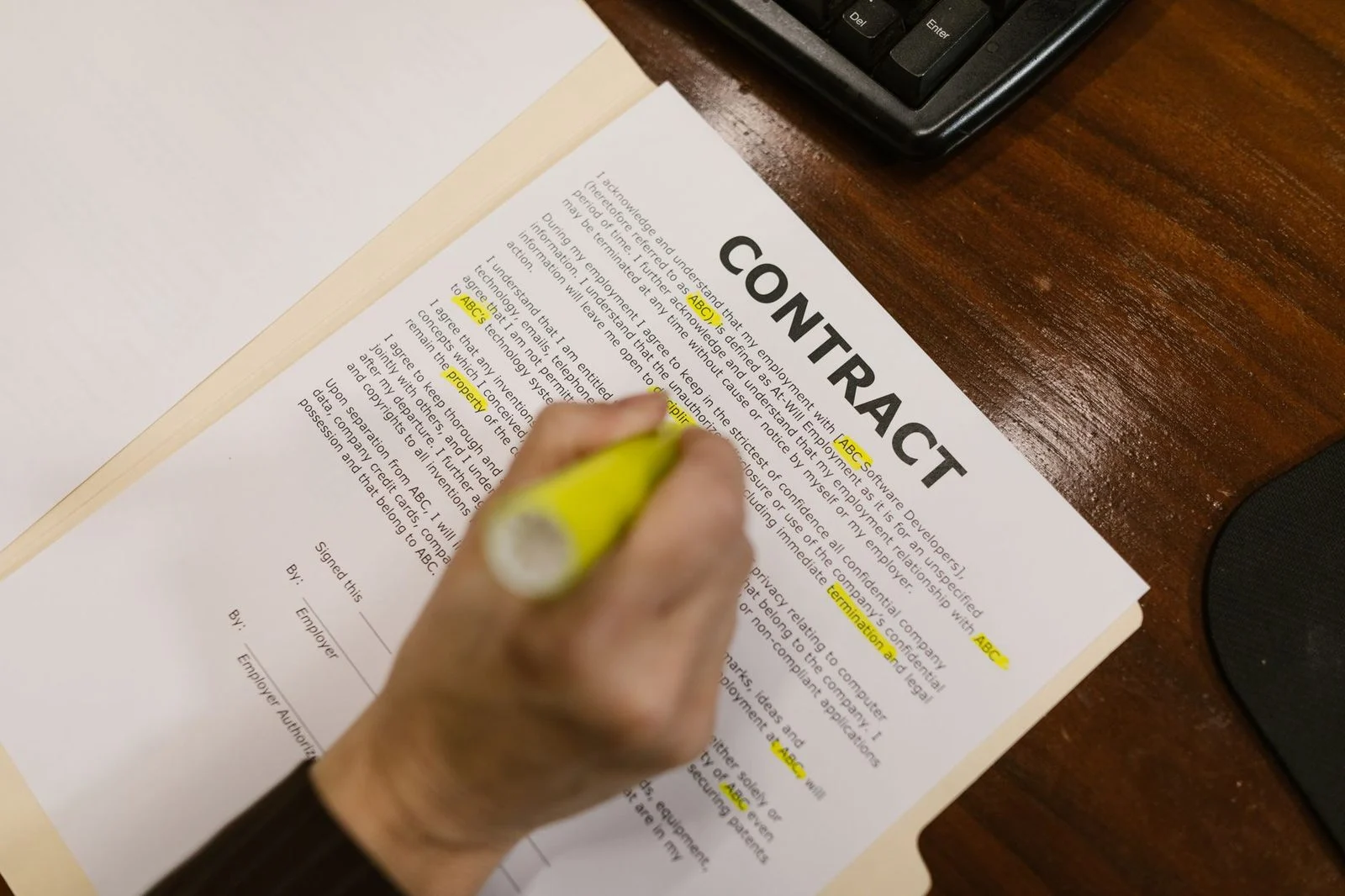
What the Florida Statute of Frauds Is
The statute of frauds is a rule about proof and enforceability. It doesn’t make every unwritten deal void. It limits which deals a court will enforce without a signed writing.
Florida law requires certain agreements, including those that cannot be performed within one year of being made, to be in writing and signed by the party to be charged. It covers agreements that cannot be performed within one year of being made, as well as other categories, such as promises to answer for another’s debt and contracts for the sale of lands, tenements or hereditaments. Unless the agreement, or a note or memorandum of it, is in writing and signed by the party to be charged, a court won’t hear the claim. The party to be charged is the person you want to hold to the deal.
Some people try a workaround. They argue that a promise should be enforced because the other side relied on it. The Florida Supreme Court rejected that approach in DK Arena, Inc. v. EB Acquisitions I, LLC. Promissory estoppel can’t be used to get around the statute’s writing requirement.
Contracts That Must Be in Writing for Commercial Deals
Four categories of commercial deals come up most often in this area of law. Each one needs a signed writing before a court will enforce it.
- Deals that can’t be finished within one year. Under § 725.01, these need a signed writing.
- Sales of goods priced at $500 or more. Under Fla. Stat. § 672.201, the deal is not enforceable unless a record shows it was made. The record must be signed by the party against whom enforcement is sought, or by that party’s authorized agent or broker. A record isn’t insufficient just because it leaves out or misstates a term. But under that subsection the deal is not enforceable beyond the quantity of goods shown in the record.
- It must be signed in the presence of two subscribing witnesses, unless it is a will or other testamentary appointment, or a lease of real property.
- Leases. A lease of land longer than one year falls under § 725.01. Fla. Stat. § 725.01 reads: “unless the agreement or promise upon which such action shall be brought, or some note or memorandum thereof shall be in writing and signed by the party to be charged therewith or by some other person by her or him thereunto lawfully authorized.” Under § 689.01, a lease of real property doesn’t need subscribing witnesses. Lease disputes often come down to the signed lease itself.
Do Contracts Always Have to Be in Writing?
No. Many oral business agreements are enforceable, especially service work that can be finished within a year. An oral deal is still a contract. The main problem is proof. Without a document, each side may tell a different story about scope, price, payment timing, and who was bound.
Two rules help when a writing is missing. First, sale-of-goods contracts can be made in any manner that shows agreement. That includes conduct by both parties that recognizes the contract (§ 672.204). Shipping, receiving, and paying can all show a deal existed.
Second, between businesses, a written confirmation can count against the person who receives it. Under § 672.201, between merchants, a record in confirmation of the contract that is sufficient against the sender satisfies the signed-record requirement against the recipient if it is received within a reasonable time and the party receiving it has reason to know its contents. It satisfies the signed-record requirement against the recipient unless that recipient gives notice in a record objecting to its contents within 10 days after receiving it. That 10-day window is a deadline to act on.
A missing writing doesn’t always end the claim. The same section lists three exceptions. Whether a particular deal fits depends on the facts.
Emails, Texts, and Electronic Signatures
An email or text can work as a signed writing when the sender meant to authenticate it. Florida gives an electronic signature the same force as a written signature, unless another law says otherwise (§ 668.004). An electronic signature is any letters, characters, or symbols adopted with intent to authenticate a writing (§ 668.003).
A typed name at the bottom of an email, or a click-to-sign step on an order form, may meet that test. The sender’s intent matters. The message should also identify the essential terms.
Many disputes start with unsigned drafts, vague messages, or missing key terms. The real question is often whether the messages show the parties agreed on the essential terms.
How the Statute of Frauds Shows Up in Real Business Disputes
Disputes usually turn on the written record, what each side admits, and whether the parties agreed on the same terms. Construction deals show this often. When scope of work, change orders, and payment terms exist only in texts or phone calls, each side may remember the deal differently.
Commercial leases show it too. When a dispute covers operating charges or common area maintenance costs, the written lease sets what the tenant owes. If the lease is silent or unclear, emails and billing history become key evidence.
Partnerships and shareholder arrangements are another source. The Florida Division of Corporations describes general partnerships as co-owned businesses. Partners have equal rights and responsibilities.
A signed document isn’t always the final word. A mistake is mutual when the parties agreed to one thing but a scrivener’s error or inadvertence wrote something different. The Fourth District laid out this point in Waterside at Boynton Homeowners’ Ass’n.
Not sure what your next step is?
Talk it through with our team — we can walk you through how a situation like yours is usually handled and what your options are.
Practical Steps If Your Business Deal Is Not in Writing
Start by collecting every record of the deal. That includes emails, text threads, quotes, invoices, purchase orders, delivery records, and payment records. Keep originals in the form they were sent. Don’t edit or delete them.
Write a timeline while details are fresh. Note who proposed what, when each side accepted, what each side did, and when the disagreement began. Exact dates and exact words often matter more than memory.
Hold off on signing new documents or sending written admissions about the terms until you understand your position. An admission in court can count under the exceptions in § 672.201. Procedural tools, such as a proposal for settlement, may also become relevant once a lawsuit is filed.
Talk Through Your Situation With Ayala Law PA
If a deal was never put on paper and the other side now disagrees, you may be unsure what you are bound to. Ayala Law PA handles business and commercial litigation, contract disputes, shareholder and partnership disputes, construction litigation, real estate litigation, and international trade litigation in Florida courts and arbitration.
Frequently Asked Questions
Some categories, such as deals that can’t be finished within one year, need a signed writing under § 725.01.
Is an oral contract enforceable in Florida?
It can be. An oral contract needs an offer, an acceptance, consideration, and enough detail on essential terms.
Does a lease need to be in writing in Florida?
A lease of land longer than one year must be in writing under § 725.01.
If you’re working out your position on an unwritten business deal, call Ayala Law PA at (305) 570-2208 or contact the firm online. Bring the messages, invoices, and any drafts you have.
Ayala Law PA charges for its case evaluations. This page is the responsibility of Eduardo A. Maura. The firm’s only office is at 1646 W Snow Ave, Tampa, Florida, and it serves businesses in Tampa and Hillsborough County.



