

If a buyer backed out of a business sale in Florida, the signed agreement decides whether they had the right to. Florida buyers and sellers have exit routes, but each one depends on the deal’s written terms, deadlines and notice rules.
What a business sale agreement dispute involves
A business sale dispute happens when a buyer or seller disagrees about a signed or pending deal to buy or sell a company. The deal may cover stock, membership interests, or business assets.
Common parties include:
- Buyers and sellers of the company
- Owners of closely held companies, which are small companies with few owners
- Sometimes lenders or escrow agents who hold money or documents
Disputes usually surface in three windows:
- During due diligence, when the buyer reviews the books and finds problems
- Between signing and closing, when one side wants out
- After the other side stops responding or stops performing
This page covers commercial deals. Residential home purchases follow different rules and fall outside this page’s focus.
If a buyer has walked away from your business sale, we can review your signed agreement, deadlines and deposit terms with you so you know where you stand. Talk it through with our team — we can walk you through how a situation like yours is usually handled and what your options are.
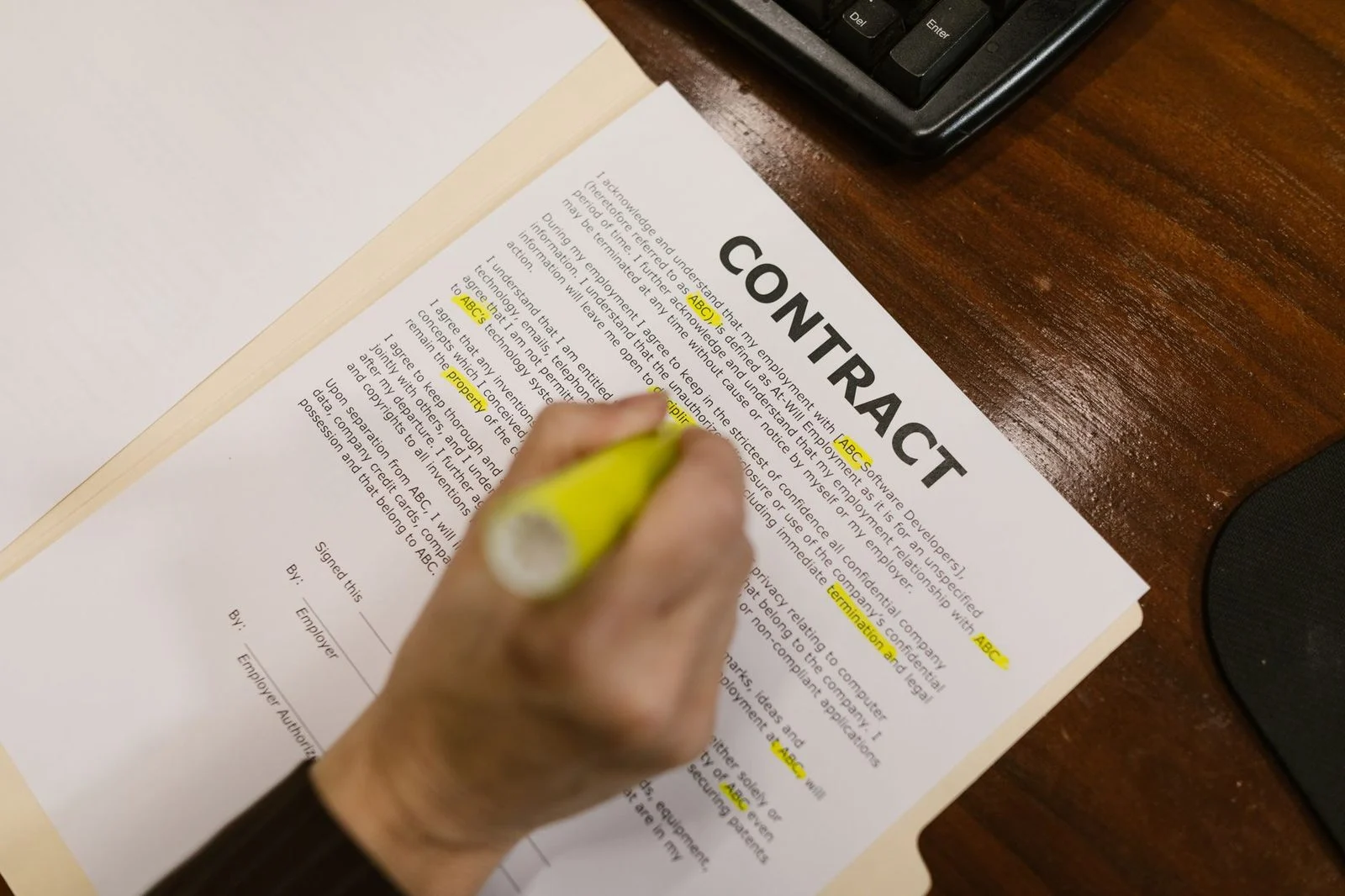
Whether a buyer or seller can walk away depends on the written agreement
Whether a buyer or seller can exit a real estate deal depends on the terms of the signed agreement and the facts of each situation. The paperwork comes first.
The signed purchase agreement controls the exit question. So do any binding letter of intent terms and every amendment. Check these exit routes:
- Due diligence or inspection periods, which let the buyer end the deal within a set time
- Financing or third-party consent conditions
- Representations and warranties, which are the seller’s written promises about the business
- Material adverse change clauses, which address major negative changes before closing
- Outside dates, which set the last day to close
Also check the clauses people often miss. These include integration clauses, which limit outside promises, and anti-assignment terms. Oral promises are hard to enforce. Florida courts will not use promissory estoppel to enforce an oral deal that must be in a signed writing, according to the Statute of Frauds ruling.
Earnest money depends on what the contract says
Earnest money is a deposit that shows the buyer is serious. The contract sets who holds it and when it can be released.
An escrow agent, which is a neutral third party, often holds the deposit. Sometimes the seller holds it. Read these parts first:
- The default clause, which says what happens if a party fails to perform
- The forfeiture language, which says when the deposit is kept
- Any liquidated damages clause, which sets a fixed amount agreed in advance as the remedy for a breach
- The release conditions, which say who must sign before money moves
Whether a deposit can be recovered depends on what the signed agreement says and what happened under it. Emails, signed notices, and closing statements are key proof. Keep them in one file, in date order.
Notice rules and cure periods can decide the outcome
Written notice and cure periods often decide whether a walk-away is valid. Most agreements say who must send notice, to whom, how, and by when.
- Notice method: Many contracts require a set delivery method, such as certified mail or a named email address.
- Cure period: This is a window for the other side to fix a problem before the right to terminate starts.
- Interim operating covenants: The seller usually must run the business normally until closing. Big changes in pay, debt, or key customers can become a breach.
Florida law also sets rules for notice to an LLC. Under Fla. Stat. § 605.0117, notice may go to any member of a member-managed LLC or any manager of a manager-managed LLC, to the registered agent at the registered office in Florida, or to the company’s principal office in Florida.
Texts and meeting notes can also show intent, waiver, or default. Keep them organized.
Remedies range from money damages to forcing the sale
The main remedies are money damages, specific performance, rescission, and return of a deposit. The right choice depends on what the buyer or seller wants.
- Money damages: Payment for losses caused by the breach
- Specific performance: A court order that makes the sale close
- Rescission: Undoing the deal and returning both sides to their starting points
- Injunctive relief: A court order protecting the business or assets while a case is pending, in limited cases
Rescission has limits. Rescission for mutual mistake applies only when the mistake is shared and goes to the essence of the deal, under the mutual mistake ruling. Florida also allows rescission for a unilateral mistake in limited circumstances, under the unilateral mistake ruling.
Deadlines matter. Florida law sets a deadline for filing suit on a written contract, and the deadline is different for contracts that are not in writing. A contract clause that sets a shorter deadline is void under Fla. Stat. § 95.03.
How a business sale dispute usually proceeds
A typical matter moves from document review to a demand letter, then to negotiation or mediation. If those steps fail, the matter goes to court or arbitration.
- Review the record. Go through the agreement, amendments, and the timeline of notices and messages.
- Identify each side’s exit claim. Note the deadlines that apply to each claim.
- Send a demand or response letter. Explore negotiation, mediation, or a settlement path.
- File or arbitrate if needed. Suit or arbitration follows the agreement’s terms. Timelines and outcomes vary with the facts.
Not sure what your next step is?
Talk it through with our team — we can walk you through how a situation like yours is usually handled and what your options are.
Ayala Law PA focuses on business and contract disputes
Ayala Law PA focuses on commercial litigation, contract disputes, shareholder disputes, construction litigation, real estate litigation, and international trade litigation. The firm handles these matters in Florida courts and arbitration.
- Responsible lawyer for this page: Eduardo A. Maura
- Support staff: Our team includes assistants and office staff who support the firm’s lawyers.
- Office location: 1646 W Snow Ave, Tampa, Florida. The firm, whose only office is in Tampa, represents businesses in Tampa, Hillsborough County, Brandon, Riverview, Plant City, Temple Terrace, and the wider Tampa Bay area.
Frequently asked questions
Can a buyer back out if financing falls through?
It depends on whether the agreement has a financing condition and whether the buyer met its notice deadline.
Can a seller keep the deposit if the buyer walks away?
Often, if the default and forfeiture language allows it. A liquidated damages clause may set the amount.
What if the buyer says the seller misrepresented the business?
The seller’s representations, warranties, and what the buyer reviewed during due diligence shape that claim.
How long do I have to sue over a broken business sale agreement?
Florida law sets a deadline for filing suit on a written contract, and the deadline is different for contracts that are not in writing. Acting early protects your position.
Do I have to go to arbitration?
The dispute clause decides the forum. Under Fla. Stat. § 682.03, a court generally must order arbitration when the agreement is enforceable.

Talk with Ayala Law about your business sale now
If a buyer has walked away from your deal, or a seller has stopped closing, gather the signed agreement, amendments, and recent notices. Call Ayala Law PA at (305) 570-2208 or request a case evaluation to review your options.



