
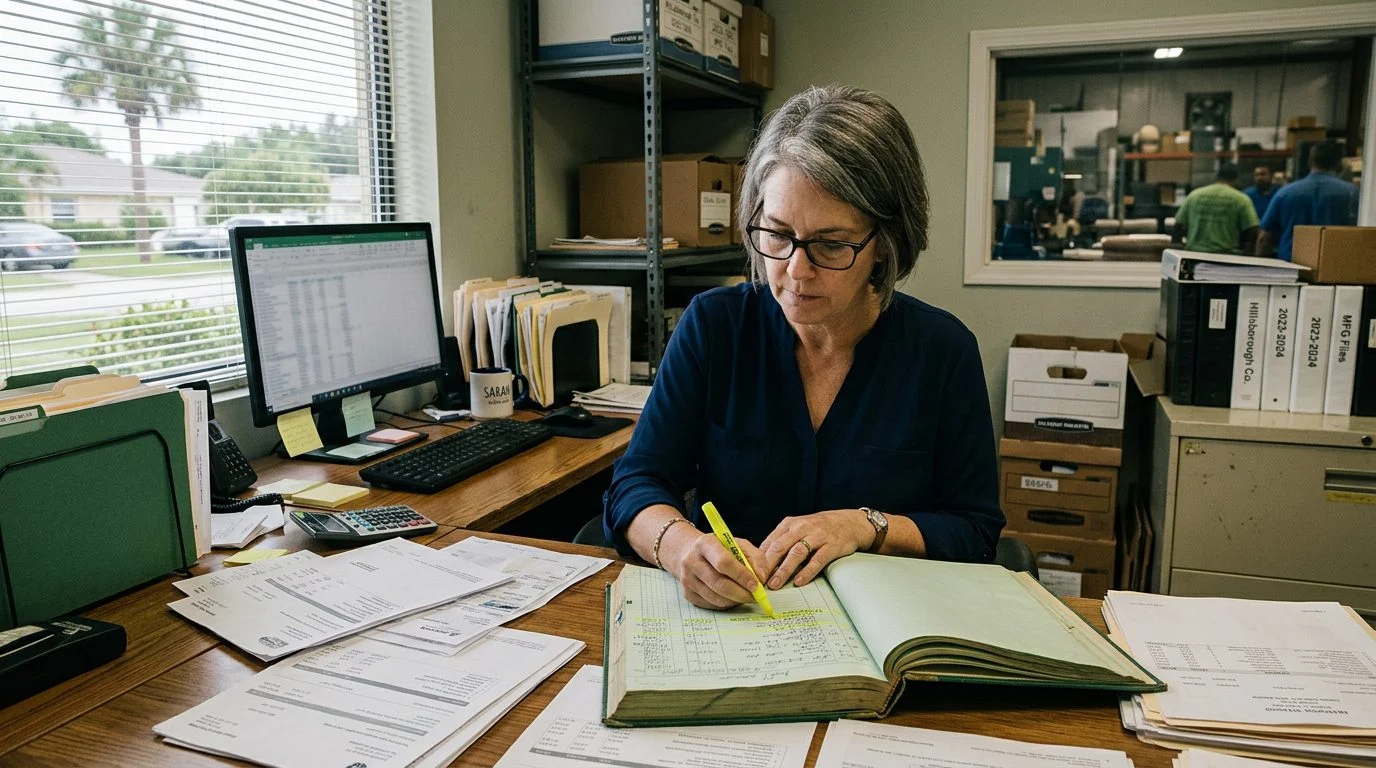
You did the work or supplied the materials, and the payment never came. A payment bond claim lawsuit in Florida asks a court to collect that unpaid amount through the bond that backed the project. For many of these claims, Florida law requires suit within one year after your last furnishing of labor, services or materials.
This guide explains who can file, how public and private projects differ, why dates control the claim, and what a lawsuit involves. The right steps depend on your contract, your dates and your project paperwork.
Who Can File a Payment Bond Claim in Florida?
Subcontractors, sub-subcontractors and material suppliers are often the parties left unpaid on a project. They furnished labor, services or materials to the construction job. When the contractor doesn’t pay, the bond may give you a second source of payment. The surety, the company that backed the contractor’s bond, becomes a central party in the case. If the contractor can’t pay, the bond may be your main route to the money.
Your claim usually seeks the unpaid balance on your contract or purchase order. A judgment can also carry interest. Under Fla. Stat. § 55.03, the rate is fixed when the judgment is entered and adjusted each January 1 until it is paid, unless a written contract sets its own rate.
If you're owed money on a project you finished or supplied, our team can talk through your dates and paperwork with you. Talk it through with our team — we can walk you through how a situation like yours is usually handled and what your options are.
Public and Private Projects: Which Bond Rules Apply
Florida’s one-year rule covers both private and public work, but it has exceptions for some claims. A public project is paid for by a government owner, such as a city, county or state agency.
The one-year rule applies to private work as well as public work. It does not cover every bond action, though. The same statute excludes actions governed by section 255.05(10), section 337.18(1) and section 713.23(1)(e). Those claims need a separate review, so don’t assume the one-year rule fits. Florida’s statute of limitations for many civil actions is set out in Fla. Stat. § 95.11. Florida’s rules are written by statute, so the exact text matters more than general rules of thumb.
Gather these items now:
- The project owner’s name, and whether it is a government agency.
- The original contract, purchase orders and any bond on the job.
- The names of the party that hired you and the party that paid you.
- Any clause in the contract that sets a deadline or a notice step.
Notices and Deadlines That Control Your Claim
Your deadline usually runs from the last date you furnished labor, services or materials. Under Fla. Stat. § 95.031, a cause of action accrues when its last element occurs, and the time to sue runs from that point.
For payment bond claims, Fla. Stat. § 95.11 measures the one-year period from your last furnishing. If the contractor is the principal on a bond on the same project, its last furnishing can count if it is later.
A contract cannot shorten the time to sue. Under Fla. Stat. § 95.03, a contract clause that sets a shorter period than the statute is void.
Time can also pause. Under Fla. Stat. § 95.051, a pending arbitration on the dispute tolls (pauses) the limitations period.
Missing the deadline can end the claim, even when the unpaid amount is clear. Write these dates down now:
- First and last delivery or work dates.
- Invoice and payment application dates.
- Any written payment demands and replies.
Keep copies of every notice you send and every reply you get. Read your contract and bond for notice language, since terms vary by project.
Filing a Lawsuit on the Bond and What to Expect
A bond lawsuit usually moves from document review to a written demand, then a filed complaint, then discovery and settlement.
- Document review. Collect the contract, purchase orders, invoices, delivery tickets, the bond and your correspondence.
- Written demand. Notify the contractor and surety in writing. This sometimes produces payment or narrows the dispute over amounts.
- Choosing the county. Under Fla. Stat. § 47.011, suit must be brought in the county where the defendant resides, where the cause of action accrued, or where the property in litigation is located. This rule does not apply to actions against nonresidents. For a Florida corporation, Fla. Stat. § 47.051 also allows suit where it has or usually keeps an office for its customary business.
- Defenses. The other side may argue the work was defective or that amounts should be offset.
- Discovery and settlement. Both sides exchange records. Fla. Stat. § 45.061 sets out an offer-of-settlement procedure with a 45-day acceptance window, but the section does not apply to causes of action that accrue after its effective date.
If your subcontract has an arbitration clause, a court first decides whether an agreement to arbitrate exists under Fla. Stat. § 682.02. Once arbitration is ordered, a court must stay related court proceedings under Fla. Stat. § 682.03.
Timelines vary by court, the defenses raised and the case itself. No particular result or timeline can be promised.
Why Businesses Bring Bond Claims to Ayala Law
Ayala Law PA focuses its practice on business litigation, including construction litigation for contractors and subcontractors. Its matters include contract and commercial disputes, lien foreclosure, real estate litigation, shareholder and partnership disputes, and international trade litigation.
The firm handles these matters in Florida courts and in arbitration. It represents businesses in Tampa, Hillsborough County, Brandon, Riverview, Plant City, Temple Terrace and the wider Tampa Bay area.
Eduardo A. Maura is the lawyer responsible for this page. Our office is at 1646 W Snow Ave in Tampa, Florida, and we represent businesses in Tampa and Hillsborough County.
Our team reviews notice dates, contracts and project records early. We then explain the claim’s strengths and risks in plain terms.
Florida generally follows the American Rule. Each side generally pays its own attorney’s fees unless a contract or statute provides otherwise, as Price v. Tyler explains. If your contract has a fee clause allowing a party to recover fees for enforcing the contract, Fla. Stat. § 57.105 allows a court to award reasonable fees to the other side when that side prevails on the contract. This applies to contracts entered into on or after October 1, 1988.
Frequently Asked Questions About Payment Bond Claims in Florida
Here are short answers to the questions readers ask most about payment bond claims.
Can a subcontractor or supplier make a payment bond claim?
Subcontractors and suppliers who were not paid are often the ones who bring these claims. The paperwork decides whether a particular claim fits.
How long do I have to file a payment bond claim lawsuit in Florida?
For many payment bond claims, Fla. Stat. § 95.11 sets one year from the last furnishing of labor, services or materials.
Can a contract shorten the deadline?
No. A contract clause that sets a shorter time to sue than the statute is void under Fla. Stat. § 95.03.
Does arbitration pause the clock?
Yes. Under Fla. Stat. § 95.051, a pending arbitration on the dispute tolls the limitations period.
Who pays the lawyers?
Generally, each side pays its own fees unless a contract or statute says otherwise, as Price v. Tyler explains.
What should I do first?
Gather your contract, invoices, delivery records and any notices, then list the dates in order.
Is there a charge for a case evaluation?
Ask the firm about fees when you call (305) 570-2208 or book a case evaluation.
Not sure what your next step is?
Talk it through with our team — we can walk you through how a situation like yours is usually handled and what your options are.
Talk With Ayala Law About an Unpaid Project Balance
An unpaid project balance is stressful, especially when your own crew and suppliers are waiting on their checks. You may be the one who finished the job or supplied the materials. You may also be handling this for a business owner who is dealing with it from a distance.
The dates in this guide, your contract and the bond will shape your next steps. Early review helps you see which deadlines may apply before time runs out.
Book a case evaluation or call (305) 570-2208 to talk through your unpaid balance and the deadlines that apply.



