
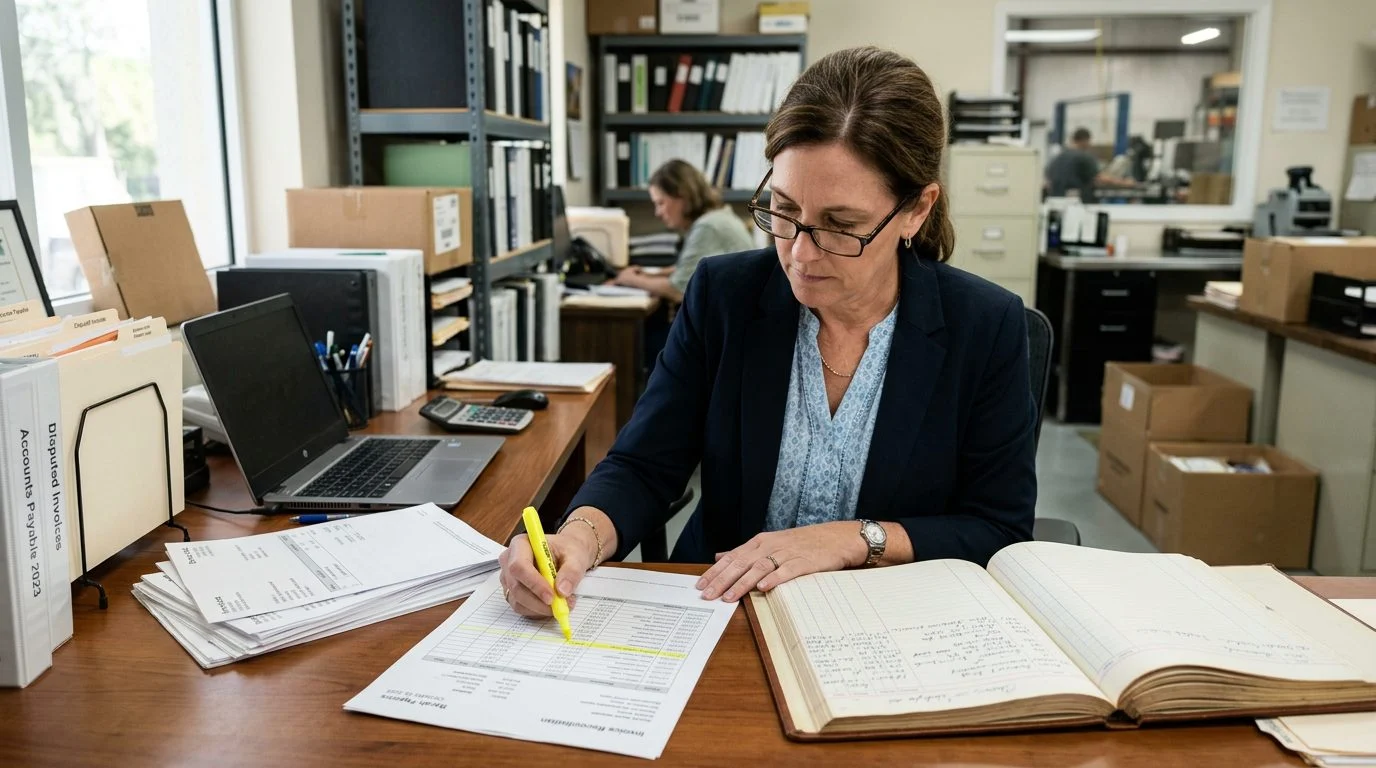
The main disadvantages of litigation for a business are cost, time, loss of privacy, disruption to daily operations, and results that no one can reliably predict. These downsides matter before you file or respond to a suit. This guide walks through what each one looks like in a Florida business dispute, and how arbitration and mediation compare. Ayala Law PA handles business, commercial, contract, shareholder, construction, real estate, and international trade disputes.
What a lawsuit involves from start to finish
A Florida business lawsuit moves through filing, service, responses, discovery, motions, possible mediation, trial, and sometimes an appeal. The case starts when a complaint is filed and served on the other side. Both sides then exchange information in discovery, and motions can be filed along the way. On one party’s request, Florida courts must refer many money damages cases to mediation, provided the requesting party is willing and able to pay the costs of the mediation or the costs can be equitably divided between the parties, subject to listed exceptions (Fla. Stat. § 44.102). Fla. Stat. § 44.102 reads: “(2) A court, under rules adopted by the Supreme Court: (a) Must, upon request of one party, refer to mediation any filed civil action for monetary damages, provided the requesting party is willing and able to pay the costs of the mediation or the costs can be equitably divided between the parties, unless: 1.” If a case reaches trial, a judge or jury decides it.
Where a case is filed also matters. This rule does not apply to actions against nonresidents (Fla. Stat. § 47.011).
Each claim type has its own path. A construction lien, a partner dispute, and a real estate claim each bring different steps. The path depends on the claim, and each stage takes time and input from the business.
If a payment dispute, lien, or partner conflict is already affecting your business, our team is ready to talk through your options with you. Contact us to start that conversation. Talk it through with our team — we can walk you through how a situation like yours is usually handled and what your options are.

Time: why business disputes often take longer than expected
Business lawsuits usually take longer than owners expect, because the court calendar and the other side’s pace shape the timeline. The biggest stretch is usually discovery. The other side can request emails, contracts, invoices, and internal messages. Each request can spark a fight over what must be handed over, and each fight can add weeks.
Depositions pull owners and managers out of daily work for hours at a time. That time comes out of the same week the business still has to run.
Delay hurts most when the business is waiting on the outcome. A stalled project, an unpaid receivable, or a deal that needs the dispute resolved can sit for months. An appeal after judgment adds more time, so a case can stay open well beyond trial.
What litigation costs a business
Litigation costs a business attorney fees, outside witness fees, court and records charges, and internal staff time. Attorney fees are usually the largest cost, and they build up across pleadings, discovery, motions, and trial preparation. Outside witnesses, such as engineers, accountants, or appraisers, often bill separately.
Court filing fees, deposition transcripts, records retrieval, and electronic document review add more. Staff time spent collecting documents never appears on an invoice, but it is a real cost.
A common mistake is assuming the other side will pay. Florida follows the American Rule, which means each party generally bears its own attorney’s fees unless a contract or statute provides otherwise (Price v. Tyler). Some commercial contracts include a fee clause. Under Florida’s enforcement statute, a court may allow reasonable fees to the other party when that party prevails on a contract that allows fees for enforcing it (Fla. Stat. § 57.105). Check your own agreements before counting on fee recovery.
Loss of privacy and control over information
Litigation can expose a business’s private information, and the business gives up control over how the dispute is decided. Lawsuits play out in open court, so the dispute can become visible to customers, competitors, and lenders. Discovery also means handing over internal records, and the other side reviews them. Sensitive material may need a protective order, which adds motion work and cost.
A judge or jury makes the final call. The business no longer decides how its story is told or when the matter ends.
Mediation keeps more private, but not completely. Florida keeps mediation communications confidential, with listed exceptions (Fla. Stat. § 44.405). A signed written agreement reached in mediation generally is not confidential unless the parties agree otherwise. Write those settlement terms with care.
Disruption to operations and business relationships
Litigation disrupts daily operations and can strain partner, supplier, and customer relationships while the case is pending. Owners, officers, and key staff spend hours on depositions, document review, and meetings with counsel. That time pulls them away from the work that keeps the business running.
Relationships can suffer too. A fight between partners or co-owners can stall decisions and make future cooperation harder. Subcontractors, suppliers, and customers may hold back while the case is open. In a construction dispute, a lien or payment fight can affect the job site and the next project.
Banks, lenders, and bonding companies may also ask questions once a lawsuit is on the record. An owner should plan for those conversations early.
Uncertain outcomes and the cost of appeals
A lawsuit’s outcome can’t be reliably predicted, and an appeal can add months after a decision. No one can say with confidence how a judge or jury will rule, so the result can differ from what the business expected at the start. A win at trial can still be appealed, which means more briefing, more fees, and more waiting.
Settlement offers carry their own deadlines and cost rules. Florida’s offer-of-settlement statute says a written offer stays open for 45 days unless it is withdrawn or accepted sooner, but by its own terms it does not apply to causes of action that accrue after its effective date (Fla. Stat. § 45.061). Florida’s offer-of-judgment statute can shift fees after a case is decided. If a defendant’s offer is not accepted within 30 days and the judgment is one of no liability or at least 25 percent less than the offer, the defendant can recover reasonable costs and attorney’s fees incurred from the date of filing of the offer (Fla. Stat. § 768.79). The same rule works in reverse for a plaintiff’s demand.
Read every offer closely before the deadline runs.
Not sure what your next step is?
Talk it through with our team — we can walk you through how a situation like yours is usually handled and what your options are.
Arbitration and mediation: the trade-offs
Arbitration and mediation trade some court protections for narrower review and different deadlines, and the contract often decides which applies. Arbitration can be private and can move faster than court. The review options are narrower, though. Under Florida’s offer-of-judgment statute, if a party is entitled to costs and attorney’s fees under that statute, a court may, in its discretion, determine that an offer was not made in good faith and disallow an award of costs and attorney’s fees. A motion to vacate generally must be filed within 90 days after the movant receives notice of the award; for an award procured by corruption, fraud, or other undue means, it must be filed within 90 days after the ground is known or by the exercise of reasonable care would have been known (Fla. Stat. § 682.13). Arbitrator fees are an added cost.
Mediation is a different tool. It ends in a binding result only if the parties sign a settlement. Florida’s court-ordered mediation rules and the state’s ADR resource handbook describe the court-ordered and voluntary options (Florida courts’ ADR handbook).
Many commercial and construction contracts require arbitration or mediation before suit. Read the dispute clause early. Construction contracts that use AAA arbitration follow AAA’s construction rules on filing, arbitrator selection, hearings, awards, and fees (American Arbitration Association construction rules).

Talking through your dispute with Ayala Law PA
Ayala Law PA handles business litigation, commercial and contract disputes, shareholder disputes, construction litigation, real estate litigation, and international trade litigation in Florida courts and arbitration.
What are the disadvantages of litigation?
Cost, time, loss of privacy, disruption to operations, and uncertain results are the main downsides. Appeals can extend the process after a judgment.
Who pays attorney’s fees in a Florida business lawsuit?
Each side generally pays its own, unless a contract or statute provides otherwise. Check your contract’s fee clause early.
How long does a business lawsuit take?
The timeline depends on the facts, the court’s calendar, and whether an appeal follows.
Eduardo A. Maura is the lawyer responsible for this page. Ayala Law PA’s office is at 1646 W Snow Ave in Tampa, and the firm serves businesses in Tampa and Hillsborough County from there. The firm serves businesses in Tampa, Hillsborough County, Brandon, Riverview, Plant City, Temple Terrace, and the wider Tampa Bay area. Fees are discussed when you reach out.
If a payment dispute, lien, or partner conflict is already affecting your business, you don’t have to sort out your options alone. Reach out to Ayala Law PA or call (305) 570-2208 to talk through your situation.



