
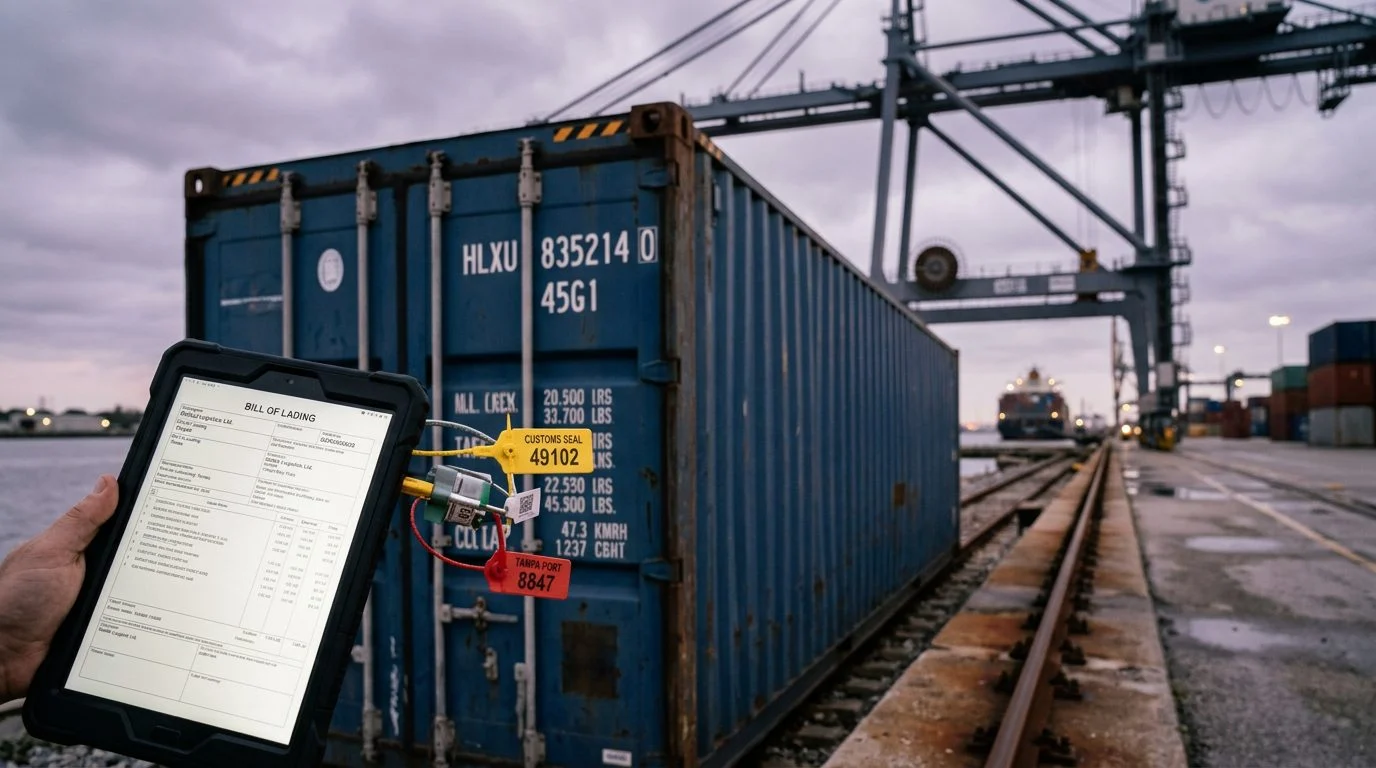
This guide covers international trade litigation Tampa Bay businesses should understand before a cross-border deal turns into a fight. A dispute like this usually goes to a Florida court or to arbitration. The contract’s dispute clause and its choice of law usually decide which path applies. Ayala Law PA focuses on business litigation, commercial litigation, contract disputes, shareholder disputes, construction litigation, real estate litigation and international trade litigation. The sections below explain how these cases move.
What Is International Trade Litigation in Tampa Bay?
International trade litigation is a legal fight over a deal that crosses a border. It covers contracts to buy, sell, ship and distribute goods, along with the payment terms in those contracts. A company in Tampa, Brandon, Riverview, Plant City or Temple Terrace can end up in one with a supplier, buyer or carrier in another state or country. Most of these cases turn on paperwork. The signed contract, the purchase orders and the shipping records show what was promised and what happened. A lawsuit is often not the first step. Many disputes start with a demand letter or a notice the contract requires.
If a foreign buyer has quit paying or a shipment has stalled, your contract deadlines may already be running, and our team can help you sort out the next step. Talk it through with our team — we can walk you through how a situation like yours is usually handled and what your options are.
What Kinds of Cross-Border Disputes Reach Litigation?
Most cross-border disputes fall into a few groups. Each one can start as a business disagreement and grow into a lawsuit or arbitration if the parties cannot settle.
- Nonperformance: a foreign supplier or buyer delivers late, ships short or sends goods that don’t match the contract.
- Unpaid invoices: the parties disagree on payment terms, or a letter of credit doesn’t pay as expected.
- Distributor and agent disputes: a sales agent or distributor is terminated, or the parties fight over exclusivity, territory or commissions.
- Shipment and customs problems: goods are lost or damaged in transit, or a customs hold leads to a fight over who pays. These claims are often framed as contract claims against the seller, carrier or freight forwarder.
Knowing which group your dispute fits into helps you read the contract correctly. It also tells you which records matter most.
Court or Arbitration: What Decides Where the Case Goes?
The dispute clause in your contract usually decides whether the case goes to court or to arbitration. Arbitration is a process where a neutral decision-maker hears the dispute instead of a judge. Parties to an international commercial dispute may agree in their contract to arbitrate rather than go to court.
Florida law works the same way. A court also may not refuse to order arbitration because the claim lacks merit, under Fla. Stat. § 682.03.
Read the clause before you do anything else. It may name the court, the arbitration body, the governing law and any steps you must take before filing.
How Choice of Law and Venue Shape the Case
Choice of law and venue decide which rules apply and where a case can be filed. Florida law lets parties pick Florida law for larger deals. That can apply even if the contract has no other connection to Florida.
Venue is a separate question. Under Fla. Stat. § 47.011, actions must be brought in the county where the defendant resides, where the cause of action accrued, or where the property in litigation is located. That section does not apply to actions against nonresidents.
Why the Seat of Arbitration Matters
The seat of arbitration is the legal place the arbitration is tied to. It can differ from the place where people actually meet for a hearing. Parties sometimes name a seat, a hearing location or both, so read the wording closely. Mixing the two up can cause confusion once a dispute starts.
If the court orders arbitration, Fla. Stat. § 682.03(7) directs it, on just terms, to stay any judicial proceeding that involves a claim subject to the arbitration, and if such a claim is severable, the court may limit the stay to that claim. Florida has a similar rule. Under Fla. Stat. § 682.03, a court that orders arbitration must stay the court case on the arbitrable claim, on just terms. How the seat plays out depends on the contract terms and the facts of the dispute.
Deadlines and Notice Rules to Check Early
A lawsuit on a written contract generally must start within five years under Florida law. Other claims carry their own time limits, so write down the date of each breach as soon as you spot it.
Contract language can’t shorten that window. Under Fla. Stat. § 95.03, a contract provision that sets a shorter time to sue than the statute allows is void.
Notice rules for goods can move faster. Under Fla. Stat. § 672.607, a buyer that has accepted goods must notify the seller of a breach within a reasonable time after discovering it or when it should have discovered it. Otherwise, the buyer may be barred from any remedy. The buyer also carries the burden to prove any breach in accepted goods.
Not sure what your next step is?
Talk it through with our team — we can walk you through how a situation like yours is usually handled and what your options are.
Documents to Gather Before You Contact a Lawyer
Gather the signed contract, every amendment and the records of performance before your first conversation. These papers show what was promised, what happened and when. Collect the following:
- The signed contract and all amendments
- Purchase orders and invoices
- Bills of lading and customs entry records
- Payment records, including wire confirmations and letter-of-credit paperwork
- Emails, letters and notices exchanged with the other side
Build a simple timeline. Note when performance was due, when problems began and when each notice was sent. Check the contract for notice requirements, cure periods and deadlines, since those may control your next steps. Keep the original files as they are. Don’t edit, annotate or reorder them. Working copies are fine for your own use.
How Tampa Bay Clients Work With Ayala Law PA
Eduardo A. Maura is the lawyer responsible for this practice and this page. Our office is located at 1646 W Snow Ave in Tampa, Florida. Clients in Tampa and across Hillsborough County are served from that Tampa office. It serves businesses in Tampa, Hillsborough County, Brandon, Riverview, Plant City, Temple Terrace and the wider Tampa Bay area.
This practice has support staff, and our team can help you schedule a conversation. Some matters may be referred to another lawyer or firm. If that happens, the firm will tell you. Any fee for an engagement or for an initial consultation is discussed with you directly.
Take the Next Step on Your Cross-Border Dispute
If a foreign buyer has quit paying or a shipment is stuck, your contract and its dates may already be moving. Call (305) 570-2208 or request a case evaluation to talk through your next step.
No result can be promised in any dispute. This page has not been reviewed or approved by The Florida Bar.
Can a cross-border contract dispute be heard in Florida?
It can be.
Is arbitration binding?
Arbitration is one option for resolving international commercial disputes outside of court, when the parties’ contract provides for it.
How long do I have to sue on a written contract in Florida?
Florida law generally allows five years to bring an action on a contract founded on a written instrument.



