
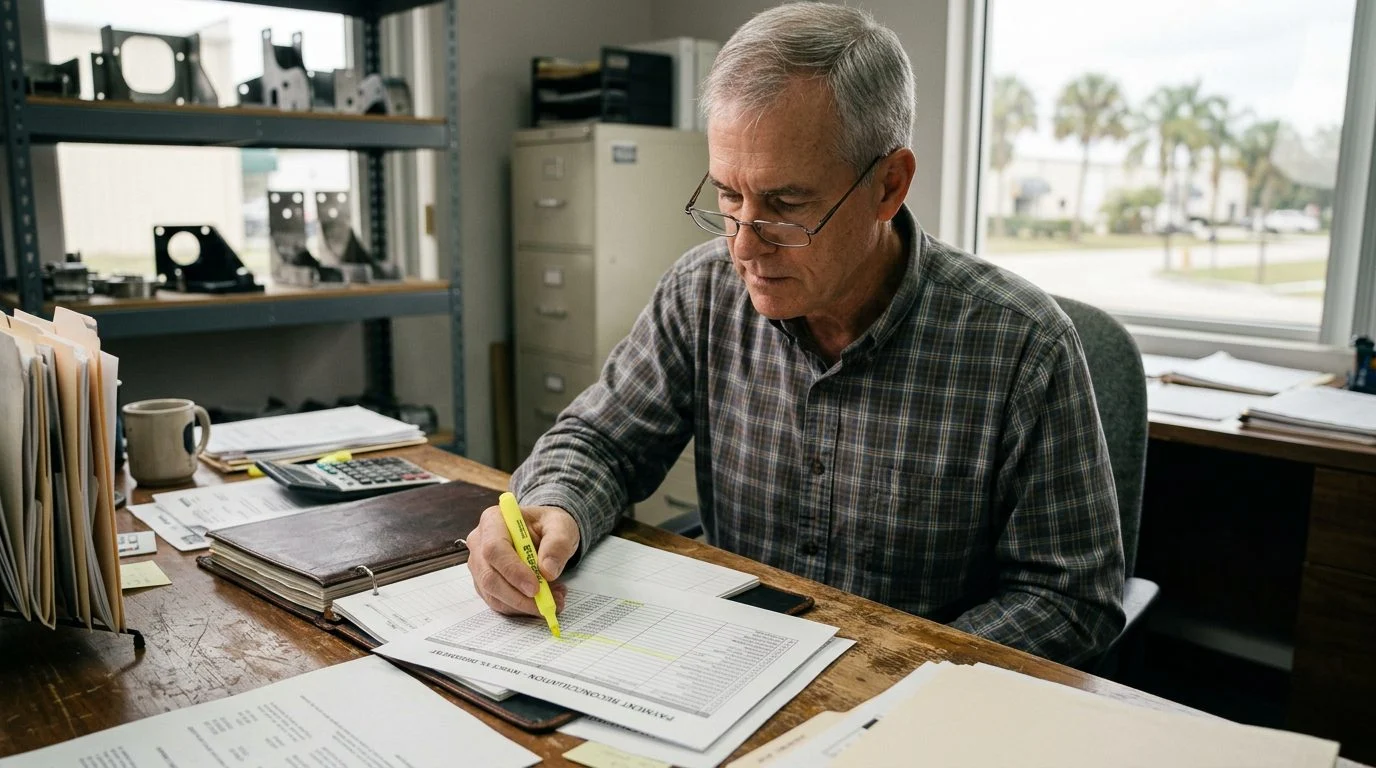
If a contractor or subcontractor just sent you a back charge, or cut a payment, you want to know whether it holds up. A back charge is an amount one party deducts from, or bills against, money owed under a construction or commercial contract. Whether it is valid usually turns on the contract terms, the work actually done and the written record behind it.
Florida has payment, lien and notice rules that can set short deadlines. Ayala Law PA focuses its practice on construction and commercial disputes from its Tampa office at 1646 W Snow Ave, Tampa, FL 33606.
What a back charge is and who it affects
A back charge is money one party takes out of a payment, or bills back, for work or costs it says the other party owes. It often appears on a pay application, a progress statement or a final invoice.
In Tampa and Hillsborough County, three groups see back charges most often:
- General contractors that withhold money from subcontractors.
- Subcontractors that see deductions from progress payments.
- Owners and businesses that get billed for work they say was defective, incomplete or never ordered.
Florida expects a licensed contractor to pay its subcontractors and suppliers. A licensed contractor must pay within 45 days after it receives payment, unless there is a bona fide dispute over the amount or the contract sets its own timing (§ 489.1295). This page covers construction and commercial contract disputes.
If a back charge has your payments on hold in the middle of a job, you don't have to sort out the contract and the deadlines alone, and our team is ready to talk. Talk it through with our team — we can walk you through how a situation like yours is usually handled and what your options are.
Why back charges start and what the paperwork should show
Back charges usually start with a claim about the work, the schedule or the costs. Common triggers include:
- Alleged defective or incomplete work.
- Cleanup and temporary-work charges.
- Delay costs tied to the schedule.
- Material overages.
- Rework that another trade had to perform.
Whether a charge holds up usually turns on four things: the contract’s scope, the change-order process, the notice requirements and the job records. Those records include daily logs, photos, pay applications and written messages.
Find the dispute and notice clauses first, because they often set the steps and timing you must follow.
Florida’s construction lien law adds its own deadlines. If construction ceases or the direct contract is terminated before completion and the owner wants to recommence, the owner must record and post a notice of commencement for the recommenced construction before recommencing (§ 713.07). Lien timing is fact-specific, so the dates on your job need a close review.
How to get a refund from a contractor
Start with a written, dated response. Dispute the specific charge and cite the contract provision you rely on. Vague emails are easy to ignore.
Build one dispute file that holds:
- The signed contract and every change order.
- Invoices, pay applications and lien waivers.
- Photos, daily logs and inspection notes.
- Text and email threads, saved in full.
- A running timeline of events and dates.
Next, send a written demand for payment or release of withheld funds. Florida law lets an owner, or a lienor contracting with or employed by the other party to a contract, demand in writing a copy of the contract and a statement of the amount due (§ 713.16).
Silence can also matter. Florida defines waiver as the voluntary and intentional giving up of a known right (Raymond James Financial v. Saldukas). Paying under protest or withholding payment both carry contract and lien consequences, so review those choices before you act.
How a civil back-charge dispute moves forward
A civil dispute usually moves from document review to a demand letter, then to negotiation or mediation. If those steps fail, it moves to court or arbitration, depending on the contract.
Several rules shape that path:
- Under § 713.346, a person who receives payment must pay undisputed contract obligations. If those undisputed amounts stay unpaid for 30 days after the work or materials were furnished and payment came due, or 30 days after the payment for that work was received, whichever is later, the statute’s procedures can apply.
- The statute’s remedies do not reach a bona fide dispute over any part of the contract price.
- The prevailing party can recover costs, including a reasonable attorney’s fee, at trial and on appeal.
- A lawsuit must be filed in the county where the defendant resides, where the cause of action arose, or where the property is located, but this rule does not apply to actions against nonresidents (§ 47.011).
- Fla. Stat. § 682.02 reads: “(1) An agreement contained in a record to submit to arbitration any existing or subsequent controversy arising between the parties to the agreement is valid, enforceable, and irrevocable except upon a ground that exists at law or in equity for the revocation of a contract.” The American Arbitration Association publishes construction arbitration procedures.
- Fla. Stat. § 44.102 reads: “(2) A court, under rules adopted by the Supreme Court: (a) Must, upon request of one party, refer to mediation any filed civil action for monetary damages, provided the requesting party is willing and able to pay the costs of the mediation or the costs can be equitably divided between the parties, unless: 1.”
No single timeline fits every case. Timing depends on the court calendar, the contract’s dispute clause and the number of parties. Costs can include filing fees, service of process, deposition and transcript costs, and site-inspection or witness fees when they are needed. Fees depend on the matter and are explained before any engagement.
Criminal referrals and civil claims: how they differ
A civil claim asks a court or arbitrator to order payment of money owed. The two run on separate tracks with separate timelines.
Florida treats one kind of nonpayment as a crime. Intent and the undisputed amount are the facts that matter there.
Liens also have a clock. A lien does not last longer than one year after it is recorded unless an action to enforce it starts within that year (§ 713.22). An owner can record a notice of contest of lien. The lienor who does not sue within 60 days after service of that notice loses the lien automatically.
Why Ayala Law PA for back charge disputes
Ayala Law PA focuses its practice on business litigation, commercial and contract disputes, and construction litigation. For this topic, that means contractor and subcontractor disputes and lien foreclosure in Florida courts and arbitration.
The firm’s only office is at 1646 W Snow Ave, Tampa, FL 33606. Tampa, Hillsborough County and Tampa Bay matters are served from that Tampa office.
Eduardo A. Maura is the responsible lawyer for this page. Our lawyers and office staff work from that same Tampa office, and our team handles scheduling and document organization alongside the legal work.
The work is described here by subject and process, from the contract through the court or arbitrator. It is not described by rankings or outcomes.
Not sure what your next step is?
Talk it through with our team — we can walk you through how a situation like yours is usually handled and what your options are.
Common questions about back charge disputes
Short answers to the questions people ask most often about back charges in Florida:
How do I get a refund from a contractor in Tampa?
Respond in writing, organize the contract and payment records, and send a written demand. Review lien and dispute-resolution options before you file anything.
How much does it cost to file a lawsuit against a contractor?
Costs include court filing fees, service fees and discovery expenses, and they vary by court and by matter.
How do I report a bad contractor in Florida?
Criminal conduct can go to the State Attorney’s Office, while a civil claim for money owed goes through court or arbitration.
What is the most common reason for back charges?
There is no single cause. Back charges often involve disputed workmanship, cleanup, delay costs and change orders.
Talk with Ayala Law PA about your back charge
A back charge often lands in the middle of a project, when crews, payroll and deadlines already press hard. Sometimes a partner or family member is handling the paperwork while you keep the job moving.
Call (813) 414-5715 or request a case evaluation to review your contract, the charge and the deadlines with our Tampa team at 1646 W Snow Ave, Tampa, FL 33606. No outcome can be promised, and each dispute has its own facts to review.



