
Contract Reformation Lawyer in Tampa | Ayala Law PA
You signed a contract, and later found it says something other than the deal you made. The price, the payment schedule, or the property description may be wrong on paper. Florida courts can reform a written contract when a mutual mistake means the document does not match the agreement.
This page explains how a contract reformation lawsuit works, what evidence matters, and how to protect your business while a dispute is pending. Ayala Law PA is a business litigation firm that serves Tampa-area clients, including contract reformation matters.
Not sure what your next step is?
Talk it through with our team — we can walk you through how a situation like yours is usually handled and what your options are.
What a Contract Reformation Lawsuit Is and Who It Is For
A contract reformation lawsuit asks a court to rewrite a signed written agreement so it matches the terms the parties actually agreed to. The request keeps the deal and corrects the words.
The Florida Supreme Court has said a court can reform a written instrument when a mutual mistake means the document does not accurately express the parties’ true agreement (Tobin v. Michigan Mutual).
Reformation is different from two other paths:
- Enforcement holds each side to the written words, even if the words are wrong.
- Rescission cancels the contract entirely. It undoes the deal instead of fixing the paper.
This path fits owners, contractors, subcontractors, shareholders, and partners who signed paperwork that misstates the deal. Partners can sue to enforce their rights under a partnership agreement (Fla. Stat. § 620.8405).
Situations Where Florida Courts Consider Reformation
Reformation fits cases where both sides meant one thing and the signed paper says another.
Florida courts describe a mutual mistake this way. The parties agree to one thing, but a scrivener’s error (a drafting or typing slip) or inadvertence leads the written document to say something different (Waterside at Boynton).
Common business examples include:
- A construction change order or subcontract with the wrong contract sum.
- A commercial lease or purchase agreement that misdescribes the parcel.
- A shareholder buy-sell formula that does not match what the owners agreed.
- A party name, payment schedule, or scope of work that differs from the negotiated deal.
Reformation has limits. Contract terms can carry significant weight once a dispute begins. It closes the gap between the deal and the paper. Rescission needs a mistake about a fact that goes to the essence of the contract.
What the Lawsuit Covers and What Evidence Matters
The complaint identifies the signed document, the terms the parties agreed to, the mistake, and the corrected language. It often includes related claims, such as breach of contract or a request to enforce the corrected agreement.
Evidence that often matters includes:
- Drafts and redlines that show the agreed terms.
- Term sheets, bids, and proposals.
- Emails and text messages about the deal.
- Meeting notes and prior dealings between the parties.
- Invoices and payment records that match the agreed terms.
Timing matters too. Florida’s limitations statute sets different time limits for different claims (Fla. Stat. § 95.11). A contract clause that sets a shorter time to sue than the statute allows is void (Fla. Stat. § 95.03). Delay can also hurt. Florida courts have said a party that can undo a voidable contract may ratify it by failing to act after learning the facts (Flaherty v. Flaherty).
How the Reformation Process Works
The process moves in stages. Timing depends on the court calendar, the complexity of the paperwork, and whether the other side disputes the mistake.
- Case evaluation. We review the signed agreement, the negotiation history, and what needs fixing.
- Evidence preservation. Drafts, messages, and records get secured before they disappear.
- Demand or negotiation. Sometimes a written demand or a signed amendment resolves the problem. Whether that works depends on the facts and the other side’s response.
- Filing. The case goes to the proper Florida court or to arbitration. Florida venue rules generally place a case in the county where the defendant resides, where the cause of action accrued, or where the property in litigation is located, but this section does not apply to actions against nonresidents (Fla. Stat. § 47.011).
- Discovery and resolution. The parties exchange documents and take depositions, then move toward mediation, trial, or a hearing.
Two rules shape step five. On one party’s request, a Florida court must refer many filed money-damage cases to mediation, if the costs can be paid or divided (Fla. Stat. § 44.102). If the contract requires arbitration, Florida’s arbitration statute generally makes that agreement enforceable, unless a ground exists to revoke a contract (Fla. Stat. § 682.02).
Protecting Your Business While the Dispute Is Pending
Keep performing carefully, keep complete records, and get a review before you sign anything new about the disputed terms.
- Keep a file of every invoice, delivery, change request, and payment tied to the contract.
- Put key messages in writing and keep them factual. Don’t describe what the contract “really” meant until a lawyer has reviewed the file.
- Check the contract for an attorney’s fee clause. Under Florida law, for any contract entered into on or after October 1, 1988 that gives fees to the party enforcing it, the court may allow reasonable fees to the other party when that party prevails (Fla. Stat. § 57.105).
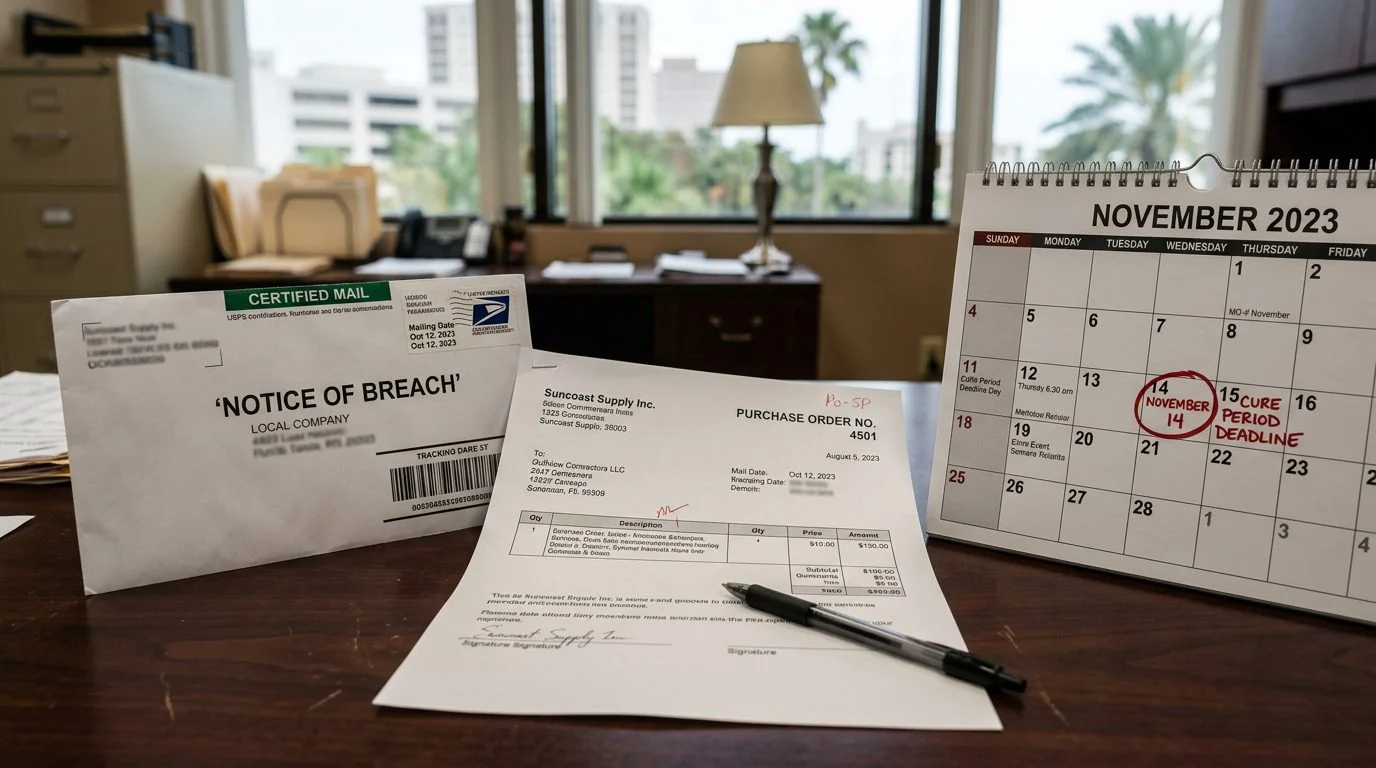
- Keeping a careful written record of the dates that appear in a contract can help when a dispute arises. Raise questions early, not after a deadline has passed.
Not sure what your next step is?
Talk it through with our team — we can walk you through how a situation like yours is usually handled and what your options are.
Why Work With Ayala Law PA on Contract Reformation
Ayala Law PA focuses on business litigation, commercial litigation, contract disputes, shareholder disputes, construction litigation, real estate litigation, and international trade litigation in Florida courts and arbitration.
Eduardo A. Maura is the responsible lawyer for this page. The firm’s lawyers handle these matters with support from office staff.
Our office is at 1646 W Snow Ave in Tampa. We serve businesses in Tampa, Hillsborough County, Brandon, Riverview, Plant City, Temple Terrace, and the wider Tampa Bay area.
Early file review lets a business check its records against the evidence list above before deciding on a filing. Outcomes depend on the facts, the evidence, and the court. No lawyer can promise a particular result in a contract dispute.
Common Questions About Contract Reformation in Florida
What does a contract reformation lawyer do?
A contract reformation lawyer handles contract and commercial disputes in Florida courts and arbitration. The lawyer works to correct the written terms so they match the agreed deal.
Is reformation the same as rescission?
No. Reformation corrects the written terms, while rescission cancels the agreement.
Can a contract be changed without a lawsuit?
Sometimes. A written amendment or settlement can fix the paper, but only when both sides agree.
How long do I have to act?
Florida sets different time limits for different claims, so the deadline depends on the type of claim.
Are there other costs besides the lawyer’s fee?
Yes. Filing fees and other court costs are separate items you may owe.
Next Step: Bring Your Signed Agreement to Ayala Law PA
If the signed contract no longer matches the deal your business made, you don’t have to sort out the paperwork alone. Bring the signed agreement, any drafts, emails, bids, change orders, and payment records. Call (305) 570-2208 or request a case evaluation with Ayala Law PA.



