
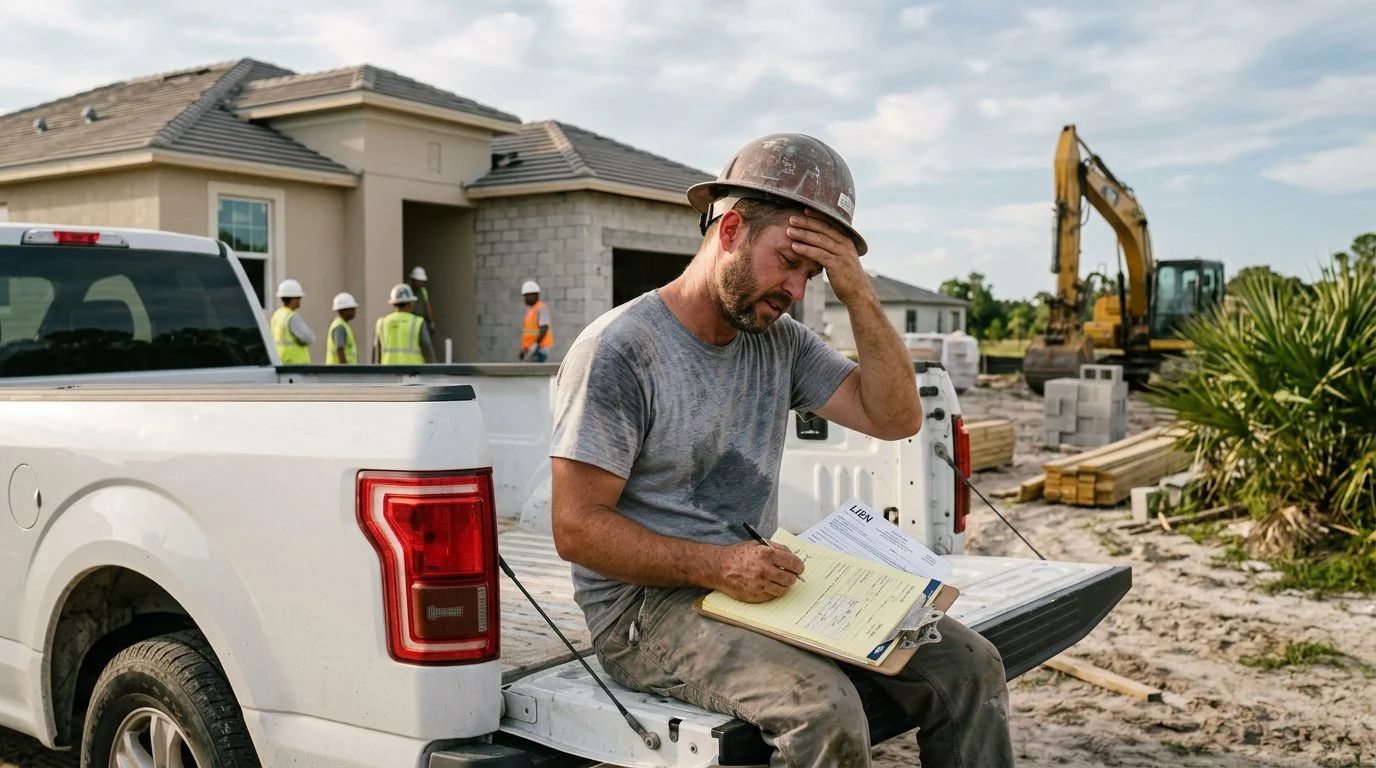
If you finished construction work in Tampa and the bill is still unpaid, you probably want to know whether you can still collect and how fast you need to act. A construction lawyer can review your contract, notices, and payment records, then pursue payment or protect a lien.
Florida’s lien and filing rules are short and depend on the facts of each project. This page explains the basics for contractors, subcontractors, suppliers, and the owners who receive lien claims.
Who This Page Covers and What a Construction Lawyer Handles
A construction lawyer can help unpaid contractors, subcontractors, and suppliers, and owners facing a lien or payment demand on a Tampa or Hillsborough County project.
This page is for:
- Contractors and subcontractors owed for completed work
- Material suppliers with unpaid invoices
- Property and business owners who received a lien claim or payment demand
Matters a construction litigation lawyer may handle include:
- Lien foreclosure lawsuits
- Breach of contract claims over unpaid work
- Payment disputes under the construction contract
Ayala Law PA focuses on construction litigation, contract disputes, and commercial litigation.
If unpaid work has left you facing a lien or payment demand you did not expect, our team can review your documents and deadlines with you whenever you're ready to talk. Talk it through with our team — we can walk you through how a situation like yours is usually handled and what your options are.
Florida Lien Deadlines That Control Your Options
A delay can shrink your options.
Court deadlines matter too. Under § 95.11 of the Florida Statutes, an action to enforce an equitable lien for labor, services, or material on real property must be brought within one year. A claim on a payment bond whose principal is a contractor, subcontractor, or sub-subcontractor has a one-year limit. It runs from the last furnishing of labor, services, or materials, or from the contractor’s last furnishing if the contractor is principal on a bond on the same project, whichever is later. Actions governed by s. 255.05(10), s. 337.18(1), or s. 713.23(1)(e) are excepted.
Actions founded on the design, planning, or construction of an improvement to real property are subject to a four-year limit under Fla. Stat. § 95.11(3)(b), with the start date tied to a certificate of occupancy, a certificate of completion, or abandonment. Fla. Stat. § 95.11 reads: “(3) WITHIN FOUR YEARS.— … (b) An action founded on the design, planning, or construction of an improvement to real property, with the time running from the date the authority having jurisdiction issues a temporary certificate of occupancy, a certificate of occupancy, or a certificate of completion, or the date of abandonment of construction if not completed, whichever date is earliest; except that, when the action involves a latent defect, the time runs from the time the defect is discovered or should have been discovered with the exercise of due diligence.” Note the dates of any temporary certificate of occupancy, certificate of occupancy, certificate of completion, or abandonment of construction. Under § 95.11(3)(b), the four-year period generally runs from whichever of these dates is earliest, not from the dates of first or last work.
How a Construction Lawyer Works Through a Payment Claim
A construction lawyer usually starts with your documents, then sends a demand before anyone files a lawsuit.
- Gather documents. Collect the contract, change orders, invoices, payment history, notice of commencement, lien waivers, and permits.
- Confirm notices. Check which notices were sent, when, and whether any were missed.
- Send a demand. Send a demand letter and open settlement talks with the other side.
- Protect the lien. Record or preserve a claim of lien, and calendar every deadline.
- File if needed. If talks fail, file suit or proceed to arbitration if the contract requires it.
Venue is the place a case is filed. Under § 47.011 of the Florida Statutes, an action must be brought in the county where the defendant resides, where the cause of action accrued, or where the property in litigation is located, but this section does not apply to actions against nonresidents.
Timing and costs vary from case to case. No one can predict how long a payment dispute will take.
Contract Terms, Arbitration, and Licensing Questions
Contract terms and the other party’s licensing status can change what you can recover.
- Arbitration: Under § 682.02 of the Florida Statutes, a written agreement to arbitrate is generally valid and enforceable. A court decides whether the agreement exists.
- Written contract: When an express contract covers the same work, an unjust enrichment claim generally will not succeed, as Williams v. Johnson explains.
- Tort claims: The Third District Court of Appeal has said a party generally cannot recover in tort for a contract dispute unless the tort is independent of the breach. See Frutafino v. Dole Chile.
- Licensing: A contract that violates a statute can be void and will not be enforced, as Taboada v. Duarte quotes. Whether licensing rules affect your contract depends on the facts. Florida’s construction industry licensing pages set out the requirements.
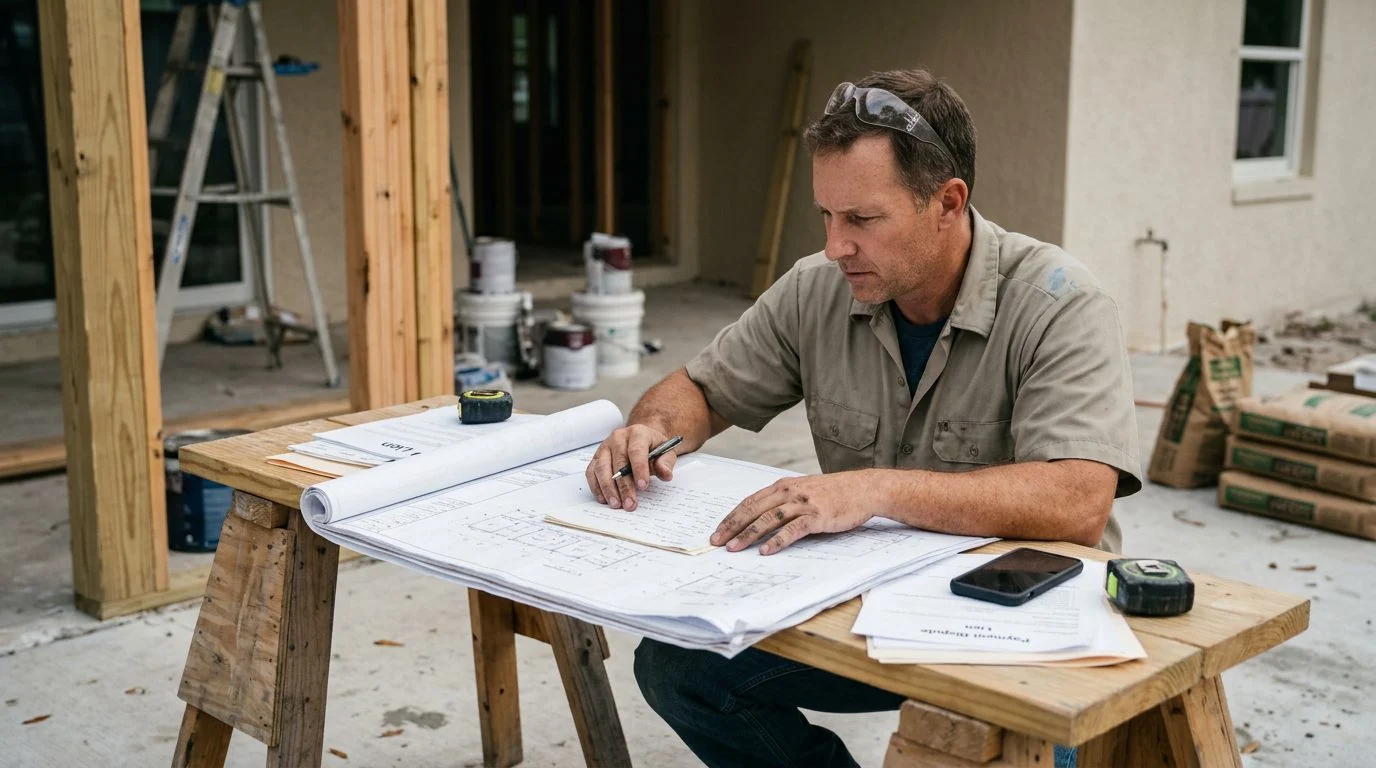
If You Received a Lien or Payment Demand as an Owner
An owner who receives a lien claim should review it before any deadline or foreclosure filing arrives.
Start with three checks:
- Was the lien tied to work actually done on your property?
- Was it served and recorded on time?
- Do your payment records match what the lien claims is owed?
Depending on the answers, options can include negotiating a payoff, disputing the amount, or challenging a defective lien. Each choice depends on your contract and payment history.
Why Ayala Law PA for Tampa Construction Payment Disputes
Ayala Law PA focuses on construction litigation, commercial litigation, contract disputes, shareholder disputes, and real estate litigation.
- Office location: The firm’s office is at 1646 W Snow Ave, Tampa. Businesses in Tampa and Hillsborough County may contact the firm at (813) 414-5715 to discuss a matter.
- Responsible lawyer: Eduardo A. Maura is the responsible lawyer for this page.
- Support: The firm’s support staff help with document handling and scheduling.
- Fees: Fee terms are explained before any engagement.
Our team works through each step with you, from the first document review to any filing.
Not sure what your next step is?
Talk it through with our team — we can walk you through how a situation like yours is usually handled and what your options are.
Common Questions About Unpaid Contractor Claims
Most questions come down to timing, paperwork, and the contract language.
Can I still file a lien if I missed a notice deadline?
It depends on the timing and facts of your project. A lawyer can review which notices and deadlines apply to your work.
Can I sue the general contractor or only the property owner?
Disputes between a contractor and the party that hired it can involve several kinds of claims, and which ones apply depends on the facts of each project. The right route depends on your contract and the facts.
How long does a construction payment dispute take?
Timing varies with the court, the contract, and how the other side responds. No one can predict the timeline.
What should I gather before I call?
Gather the contract, change orders, invoices, payment records, and messages about the work.
If you’re holding unpaid invoices and a lien notice you didn’t expect, request a case evaluation or call (813) 414-5715.



