
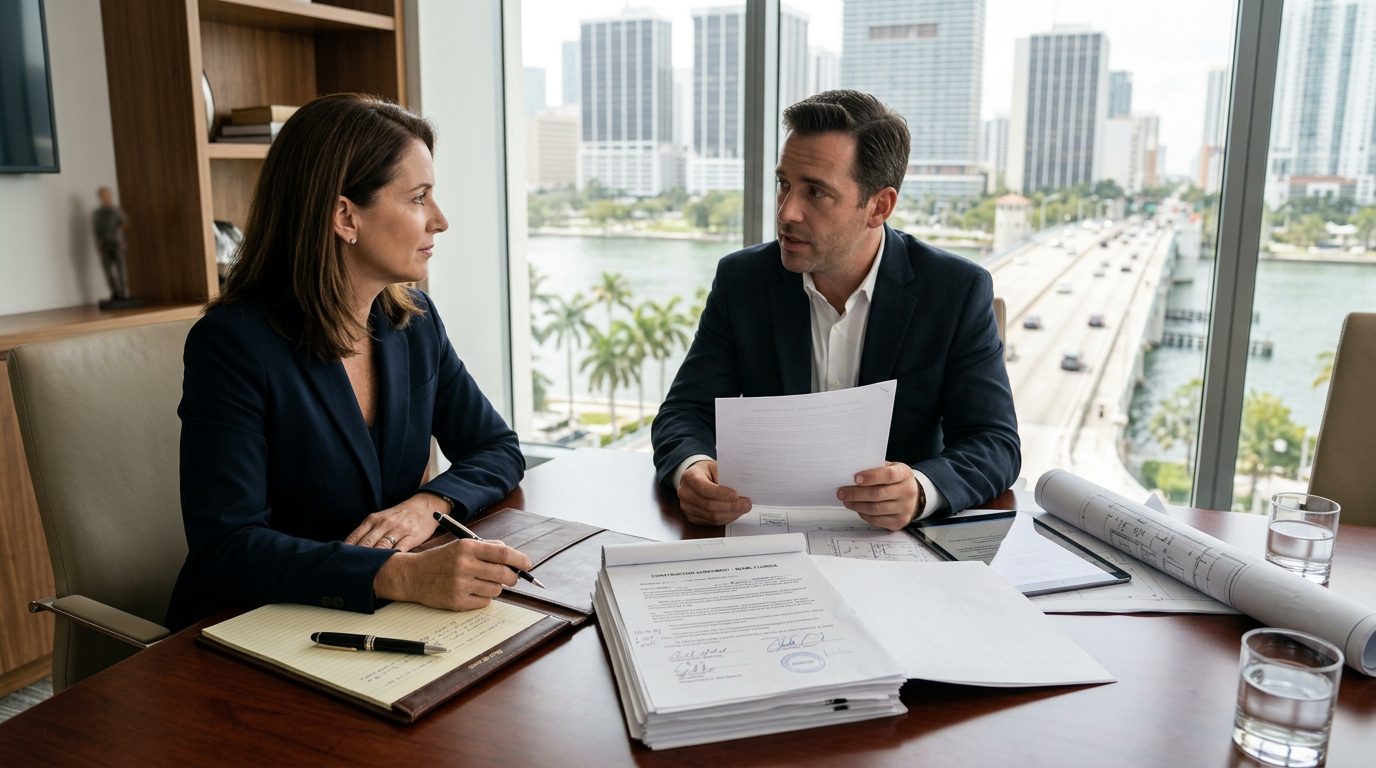
How long do I have to sue for breach of contract in Florida? For most business agreements, Florida generally allows five years on a written contract and four years on an oral one. The exact deadline depends on the type of agreement, when the claim began, and what the contract says. This page explains how those pieces fit together for businesses in Tampa Bay. It is general information, not legal advice about your own dispute.
The Short Answer: Florida’s Deadline for Breach of Contract Claims
Florida’s time limit for filing a contract claim is called a statute of limitations. Section 95.11 of the Florida Statutes sets a five-year period for bringing a legal or equitable action on a contract, obligation, or liability founded on a written instrument, except for actions to enforce a claim against a payment bond and actions for a deficiency judgment, which are governed by other provisions. An action on an oral contract generally must be brought within four years. If you file after that window closes, the court can dismiss the case even when the breach was real. Many owners assume the clock starts when they first feel the harm. In fact, the start date is tied to when the claim legally arose, so the facts matter as much as the calendar.
If a broken agreement has your business unsure how much time remains to act, our team can review your contract and timeline through our contact page. Talk it through with our team — we can walk you through how a situation like yours is usually handled and what your options are.
Written vs. Oral Contracts: Why the Type of Agreement Matters
Written agreements generally get the longer five-year period, while oral agreements generally get four years. The label matters because it decides which period applies from the start. A signed contract with clear terms gives you the strongest proof of what was promised. An oral deal, a handshake arrangement, or terms pieced together from texts can be harder to prove in court. Mixed deals are common. A signed purchase order that refers to terms from a phone call can leave both sides arguing about which period applies. Save drafts, invoices, emails, and texts that show the terms. Keep them organized from day one, because those records shape which terms a court sees as agreed.
When the Clock Starts: Accrual and Discovery
Under Fla. Stat. § 95.031, a cause of action accrues when the last element constituting the cause of action occurs. Some claims follow a discovery rule. An action founded upon fraud, including constructive fraud, runs from when the facts were discovered or should have been discovered with due diligence. Even then, it must be begun within 12 years after the fraud was committed. Contracts paid in installments raise a practical question.

Deadlines That Differ: Goods, Construction, and Other Special Rules
Sale-of-goods and construction claims can follow their own rules, so they need a separate review. For a sale of goods priced at $500 or more, Florida generally requires a signed record before the contract can be enforced, under Fla. Stat. § 672.201. A buyer who accepts goods also has a notice duty. Under Florida’s commercial code for sales of goods, the buyer must notify the seller of a breach within a reasonable time after discovering it, or be barred from any remedy. That notice rule can end a claim even when the general filing window is still open.
Construction is another special area. Filing deadlines apply to construction disputes in Florida, so timing matters and a dispute should be raised with counsel promptly. That period generally runs from the earliest of a certificate of occupancy, a certificate of completion, or abandonment of unfinished work. Latent defects follow a discovery rule, and the action must be commenced within 7 years in any event. Real estate and shareholder or partnership disputes can involve other statutes, so the agreement and claim type should be identified early.
How the Contract Itself Can Change the Deadline
A contract cannot shorten the deadline below what the statute allows. Under Fla. Stat. § 95.03, a contract provision that sets a shorter time to sue is void. Some events pause the clock, though. Under Fla. Stat. § 95.051, a payment of part of the principal or interest on a written obligation tolls the period. A pending arbitration over the same dispute does too. Treat a pause as a limited exception, not a plan, because the rules for when it applies are specific. If your agreement requires arbitration, Florida law generally enforces that promise under Fla. Stat. § 682.02. A written provision in a contract evidencing a transaction involving commerce to settle by arbitration a controversy arising out of that contract is valid, irrevocable, and enforceable, save upon grounds that exist at law or in equity for the revocation of any contract, as stated in federal arbitration law. Some contracts require written notice or a cure period before suit. Those steps can affect when you can file, so read them closely. A contract that allows attorney’s fees to the party forced to enforce it may also let the court award fees to the other side if that side prevails, under Fla. Stat. § 57.105.
What to Do Now If You Think a Deadline Is Approaching
Start by gathering the signed agreement, any amendments, invoices, emails, payment records, and written notice of the breach. Write down the date each breach occurred, and note who was told and when. Waiting can narrow your options. Evidence fades, and notice or cure steps in a contract have their own timing.
How long do I have to sue for breach of contract in Florida if the agreement is oral?
The start date still depends on when the claim accrued.
Does arbitration stop the clock?
Under Fla. Stat. § 95.051, a pending arbitration over the same dispute tolls the limitations period.
Can a contract set a shorter deadline?
Under Fla. Stat. § 95.03, a shorter contract deadline is void.
Ayala Law PA focuses on business litigation, including commercial litigation and contract disputes, shareholder and partnership disputes, construction litigation, real estate litigation, and international trade litigation. Eduardo A. Maura is the lawyer responsible for this page. The firm’s only office is in Tampa, at 1646 W Snow Ave, and it serves businesses in Tampa, Hillsborough County, Brandon, Riverview, Plant City, and Temple Terrace from that Tampa office. If a broken agreement has your business unsure how much time is left, reach out through our contact page to talk through your timeline.



