
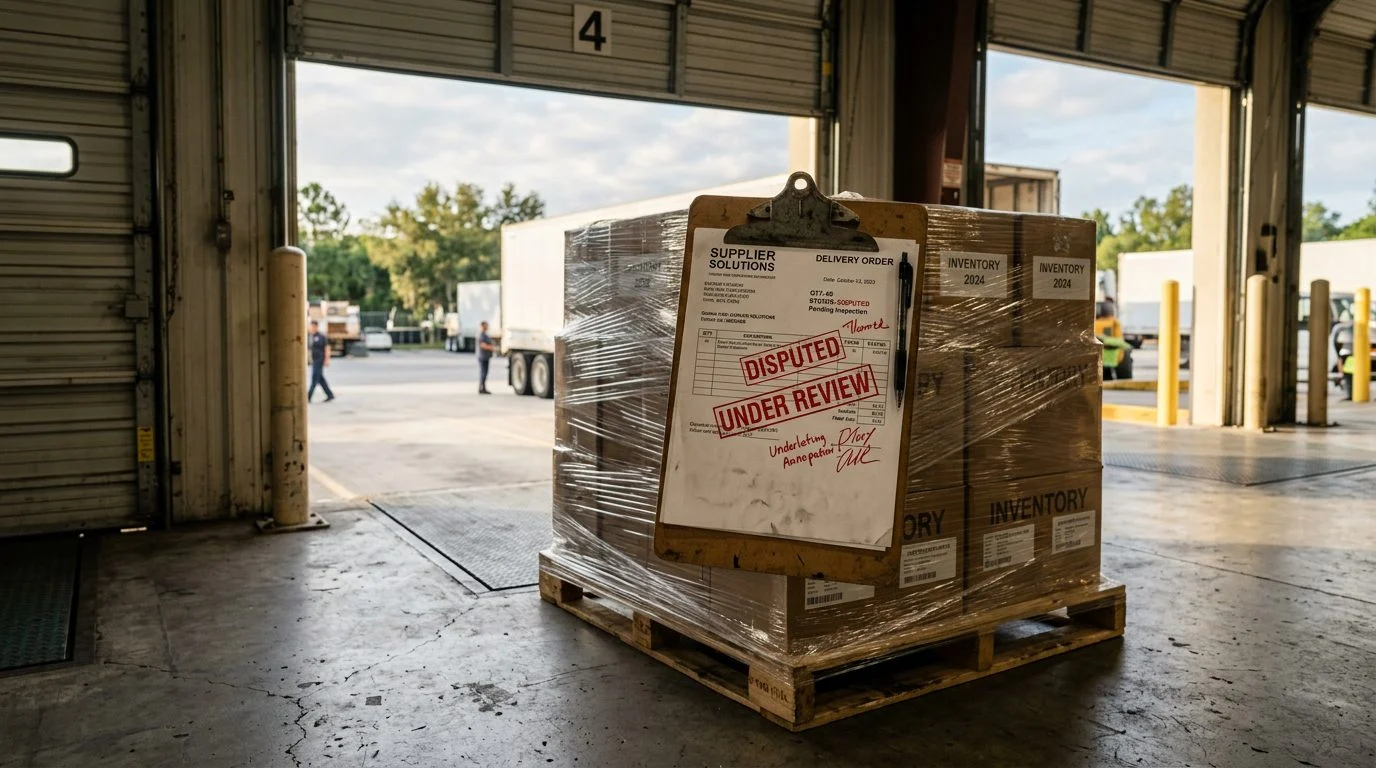
To enforce a commercial property purchase agreement in Florida, you ask a court to make the other side follow the signed contract. Or you ask for money to cover the harm the breach caused. The two main paths are specific performance (a court order to finish the sale) and money damages. Which path fits depends on the contract, the notices exchanged and the record. This page explains the options, the steps and the Florida deadlines that matter most.
What It Means to Enforce a Commercial Property Purchase Agreement in Florida
Enforcing the agreement means asking a court to hold the other party to the deal they signed. Commercial purchase agreements cover business property, such as office buildings, retail space, warehouses, land and apartment buildings. They usually run longer than a home contract. They often include due-diligence periods, financing conditions, environmental reviews and title and survey steps.
Buyers, sellers and business owners all need enforcement help. The most common situations include:
- A buyer whose seller will not close.
- A seller whose buyer walks away or has gone silent.
- Partners or managers who disagree about whether the deal should go forward.
Common triggers include a missed closing date, a refusal to cooperate on title or survey work, and a dispute over the earnest money deposit (the money a buyer puts down to show commitment). Undisclosed conditions and a contingency period that ended before a problem was fixed also cause trouble.
Florida treats an electronic signature the same as a written one, unless the law says otherwise (Fla. Stat. § 668.004). A deal signed electronically carries the same weight as a paper one.
If a signed commercial deal has stalled and a closing date has passed, you may have a claim worth reviewing, and our team can look at it with you. Talk it through with our team — we can walk you through how a situation like yours is usually handled and what your options are.

Remedies Available When a Purchase Agreement Is Breached
- Losses need clear records, such as documented offers, carrying costs and lost financing terms.
- The contract’s deposit and default terms control this issue.
- Reformation: rewriting a document that does not match what both sides agreed. Florida courts can reform a written contract when a mutual mistake means the document does not reflect the true agreement (Tobin v. Michigan Mutual Insurance Co.).
- Rescission: undoing the contract. Rescission for mutual mistake is available only if the mistake is mutual and goes to the essence of the deal (Waterside at Boynton Homeowners’ Ass’n).
Florida follows the American Rule. Each side generally pays its own attorney’s fees unless a contract or statute provides otherwise (Price v. Tyler). Where a contract entered into on or after October 1, 1988 contains a provision allowing attorney’s fees to a party that must take action to enforce the contract, Fla. Stat. § 57.105(7) allows the court to also award reasonable attorney’s fees to the other party when that party prevails in any action, whether as plaintiff or defendant, with respect to the contract. Review that clause early.
How Specific Performance Works for Commercial Property
Specific performance asks a court to order the other side to close the sale the contract describes. Courts look at the written contract, the notices exchanged and how each side acted. The request turns on that record, so documents and timing matter from the start.
Expect the other side to raise defenses. One common argument is that a term is unfair and should not be enforced. Florida courts look for both unfair dealing in how the deal was made and unfair terms, weighed together (Basulto v. Hialeah Automotive).
Another issue is ratification. A party who can undo a voidable contract may lose that right by failing to act after learning the key facts (Flaherty v. Flaherty). Waiting can hurt a claim, so act once the key facts are known.
How the Enforcement Process Typically Unfolds
Most enforcement cases move from document review to a written demand, a lawsuit, and then discovery, mediation or arbitration, and a resolution.
- Document review. Gather the purchase agreement, amendments, notices, inspection reports, title commitments and deposit records.
- Written demand. Send notice that follows the contract’s notice clause. Defective notice can weaken a later claim.
- Filing. Florida law says actions go in the county where the defendant resides, where the claim arose, or where the property is located (Fla. Stat. § 47.011). This rule does not apply to actions against nonresidents. For property in Hillsborough County, a Hillsborough court may be a proper place to file.
- Mediation. Under Fla. Stat. § 44.102, as amended by ch. 2026-16, a court must refer most civil actions for money damages to mediation when one party asks. The requesting party must be willing and able to pay the mediation costs, or the costs must be able to be equitably divided between the parties. Fla. Stat. § 44.102 reads: “(2) A court, under rules adopted by the Supreme Court: (a) Must, upon request of one party, refer to mediation any filed civil action for monetary damages, provided the requesting party is willing and able to pay the costs of the mediation or the costs can be equitably divided between the parties, unless: 1.” Statutory exceptions apply.
- Resolution. The case may settle, go to trial, or go to arbitration if the contract requires it.
Timing varies with court calendars, the number of parties and whether the property is contested. Plan around the steps, not a fixed date.
Florida Deadlines and Issues That Affect Your Claim
- Shorter contract deadlines are void. Under Fla. Stat. § 95.03, a contract term that sets a shorter time to sue than the statute allows is void.
- The clock starts when the claim accrues. Under Fla. Stat. § 95.031, a cause of action accrues when its last element occurs. That may be later than the signing date.
- Arbitration pauses the clock. Under Fla. Stat. § 95.051, the limitations period is tolled while an arbitral proceeding on the dispute is pending.
- Dispute clauses matter. Under Fla. Stat. § 682.02, a written arbitration agreement is valid, enforceable and irrevocable, except upon a ground that exists at law or in equity for the revocation of a contract. The court decides whether the agreement exists.
- Entity authority. Under Fla. Stat. § 605.04074, a manager’s act for apparently carrying on in the ordinary course of the company’s activities and affairs binds a manager-managed LLC unless the manager had no authority to act for the company in the particular matter and the other party knew or had notice of that lack of authority.
- Contingency dates. Financing, environmental, zoning and due-diligence dates can change your rights if missed.
Why Work With Ayala Law PA on Commercial Purchase Agreement Disputes
Ayala Law PA focuses on business and commercial disputes in Florida courts and arbitration, including contract and real estate matters.
- Practice areas: business litigation, commercial litigation, contract disputes, shareholder disputes, construction litigation, real estate litigation and international trade litigation.
- Responsible attorney for this page: Eduardo A. Maura. The firm’s lawyers and support staff handle matters in these practice areas.
- Office location: 1646 W Snow Ave, Tampa, Florida. The firm represents businesses in Tampa, Hillsborough County, Brandon, Riverview, Plant City, Temple Terrace and the wider Tampa Bay area in Florida courts and arbitration.
- Fees: Fees depend on the scope of your matter and the work it requires.
- What we can do: Review your purchase agreement, explain the remedies and deadlines that may apply, and discuss realistic paths to resolution.
Not sure what your next step is?
Talk it through with our team — we can walk you through how a situation like yours is usually handled and what your options are.
Common Questions About Enforcing a Commercial Purchase Agreement
Short answers to the questions buyers and sellers ask most are below.
Can I sue if the seller changed their mind?
It turns on the contract’s terms, the notices given and whether the required conditions were met.
Do I need a lawyer to send a demand letter?
A demand letter should follow the contract’s notice clause. Errors can weaken a later claim.
Will I get my deposit back?
Recovery depends on the deposit and default terms in your contract and on how the breach happened.
Can an LLC bring this claim?
An LLC acts through its managers and members. Fla. Stat. § 605.04074 sets out when their acts bind the company.
Is an electronic signature valid?
Yes. Under Fla. Stat. § 668.004, an electronic signature has the same force as a written one unless the law says otherwise.
Who pays the attorney’s fees?
Under Price v. Tyler, each side generally pays its own fees unless a contract or statute provides otherwise.

Talk With Our Team About Your Purchase Agreement
If a signed commercial purchase agreement has stalled, Ayala Law PA can review the contract with you. You may be facing a closing date that has passed, a deposit the other side won’t release, or a partner who has gone silent. Sorting out the contract, the notices and the deadlines at the same time is a lot to handle.
Bring the purchase agreement, amendments, notices and closing correspondence. Our team can look at how they fit together and explain your options. Call (305) 570-2208 or request a case evaluation.



