
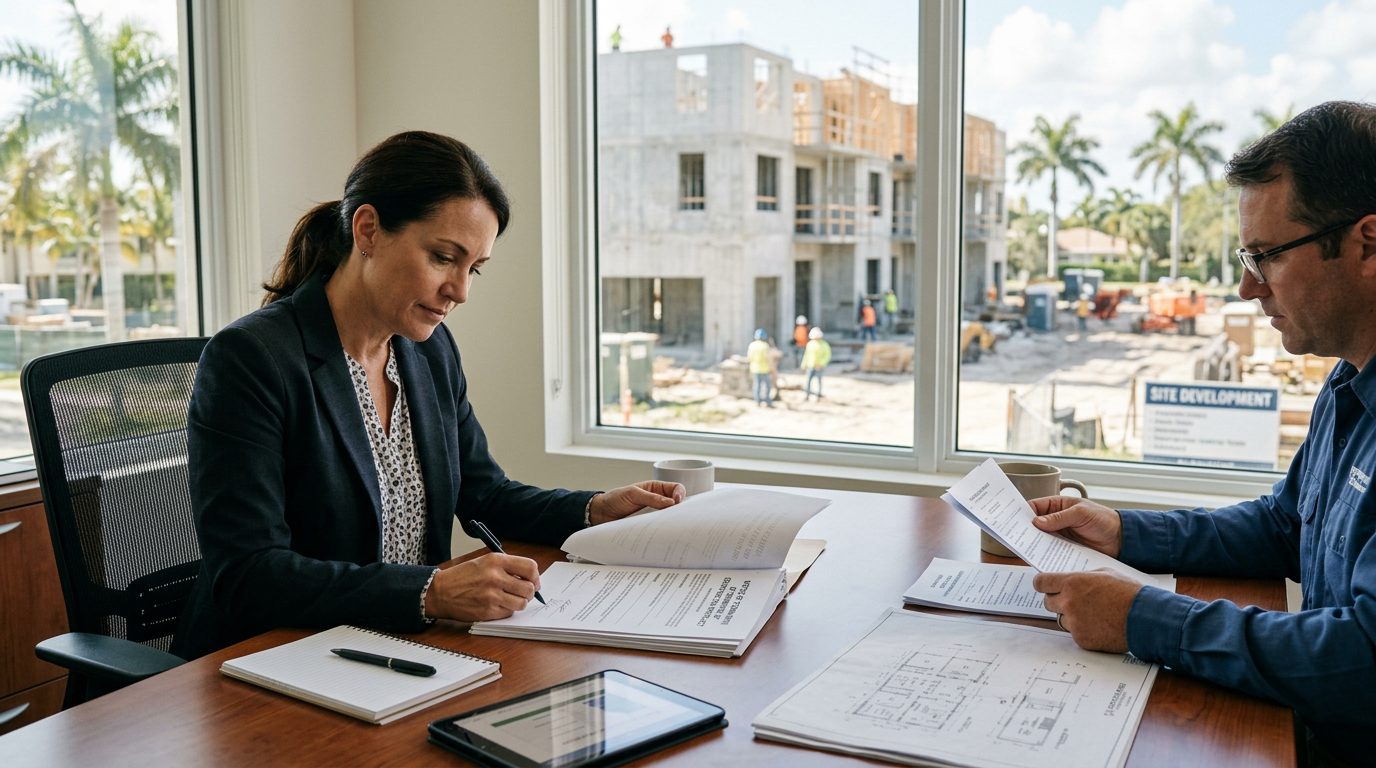
Ending a construction contract is a decision that deserves careful thought before you act. Done right, it protects your project. Done wrong, it can make you the party in breach. Owners, developers, and general contractors usually follow the same sequence: confirm a valid default, give written notice, allow the cure period, document the site, bring in a replacement, and then pursue the added cost. This page walks through each step in plain terms. It is written for Tampa and Hillsborough County businesses. Ayala Law PA’s only office is in Tampa, and clients across the Tampa Bay area are served from there.
What Terminating a Construction Contract Means in Florida
Termination for default ends a contractor’s right to keep working because the contractor failed to perform. Termination for convenience lets an owner end the work for its own reasons, but only if the contract allows it.
The difference matters because each route needs different proof. A default termination depends on the contractor’s failures. A convenience termination depends on the contract’s language.
This page is for owners, developers, and general contractors facing a contractor or subcontractor that is behind schedule, has left the job, or is not performing. Each of these situations calls for careful steps.
A termination the contract does not support can turn the owner into the party in breach. Instead of pursuing a claim, the owner may end up defending one.
Not sure what your next step is?
Talk it through with our team — we can walk you through how a situation like yours is usually handled and what your options are.
Confirming You Have a Valid Basis to Terminate
You need a basis in both the contract and the facts before you end a contractor’s work. Start by listing what went wrong, then check each item against the contract.
Common default triggers include:
- Abandoning the job or stopping work for an extended period
- Repeatedly failing to supply enough workers or materials
- Not paying subcontractors or suppliers
- Work that does not follow the plans or building codes
- Missing milestones the contract sets
Next, read the termination clause, any cure periods, and the notice provisions. Check the plans, specifications, and change orders the contract includes, because they often matter too.
Ask whether the failure is serious enough to matter under the contract. Review whether owner-caused delays or design problems played a part. A delay you caused can weaken your default claim.
Following Required Notice and Cure Steps
Follow the contract’s notice and cure steps exactly, in the order it sets out. A skipped step gives the contractor an easy argument.
- Draft a written notice that names each deficiency and cites the contract section it violates.
- Serve it by the method the contract requires, such as certified mail to a named address. Keep proof of delivery.
- Let the full cure period run, and record what the contractor did or did not do.
- Terminate in writing only after those steps are complete. State the effective date and which obligations remain.
If the contractor is an LLC, notice rules matter too. Florida law sets out who may receive notice for a limited liability company, including its registered agent Fla. Stat. § 605.0117.
Protecting the Project: Documentation, Site Control, and Payments
Protect the project by documenting the work, securing the site, and reviewing payments before you withhold anything. Good records often decide later disputes.
- Inventory completed work, stored materials, and equipment with dated photos and written reports.
- Secure the site, collect keys, and confirm who holds access rights.
- Track permits and inspections so the replacement contractor can continue without delay.
- Review payment applications, retainage, and amounts owed before you hold back money.
- Confirm lien waivers and whether subcontractors have been paid.
Payment decisions on a construction project can have lasting effects, so it helps to think them through before you act.
Have questions about what happened?
Ask our team directly. Tell us what you are dealing with and we will explain how the process works from here.
Hiring a Replacement Contractor and Recovering Costs
You can recover added completion costs when the contract and your records support them. Start by defining the remaining work in writing.
- Get written bids or proposals from replacement contractors for the same scope.
- Compare the replacement price with the remaining contract balance to estimate the cost to complete.
- Review bonds, warranties, and any surety obligations that may apply to finishing the work.
- Document excess completion costs, delay costs, and other losses you can prove.
Recovery depends on the contract terms and the evidence. It is never automatic.
Timing matters too. The clock often runs from a certificate of occupancy, a certificate of completion, or abandonment of construction, whichever comes first. A contract clause that shortens the filing period is void under Fla. Stat. § 95.03.
Some contracts allow the winning side to recover attorney’s fees. If a contract allows attorney’s fees to only one party, Fla. Stat. § 57.105(7) lets a court award reasonable fees to the other party when that party prevails.
Common Questions About Terminating and Replacing a Contractor
Most owners should complete the contract’s notice steps before terminating. The answers below cover questions owners often ask.
Can I terminate without a written default notice?
Usually not. The contract’s notice terms typically control, so check them first.
What if the contractor disputes the termination?
The dispute may move to negotiation, mediation, arbitration, or a Florida court, depending on the contract. On request, a Florida court must refer many filed money damage cases to mediation, if the requesting party can pay its share Fla. Stat. § 44.102. Florida law generally treats a written arbitration agreement as valid and enforceable Fla. Stat. § 682.02.
Can a subcontractor file a lien after I terminate?
Lien rights depend on Florida’s construction lien law and the timing of the work and payments. Chapter 713 sets those rules.
Where would a construction dispute be filed?
Generally, an action must be brought in the county where the defendant resides, where the cause of action accrued, or where the property in litigation is located Fla. Stat. § 47.011. For a Hillsborough County project, that can mean a local court.
Do I need the replacement lined up first?
Planning the replacement early limits downtime. The notice steps still come first.
Why Work With Ayala Law PA on a Construction Termination
Ayala Law PA focuses on business litigation, including construction disputes. Our practice covers contractor and subcontractor disputes, construction lien foreclosure, and construction contract fraud. We also handle commercial and contract disputes in Florida courts and arbitration.
Eduardo A. Maura is the lawyer responsible for this page. Our support staff helps with case administration.
Our only office is at 1646 W Snow Ave in Tampa. Ayala Law PA maintains its office in Tampa. We serve clients in Tampa, Hillsborough County, Brandon, Riverview, Plant City, Temple Terrace, and across the Tampa Bay area from our Tampa office.
We cannot predict how any dispute will turn out. Some matters may be referred to another lawyer or firm, and we will tell you if that applies.
If a contractor has walked off your job or fallen far behind schedule, the next move matters. Call (305) 570-2208 or request a case evaluation to talk through your contract and the notice steps.



