
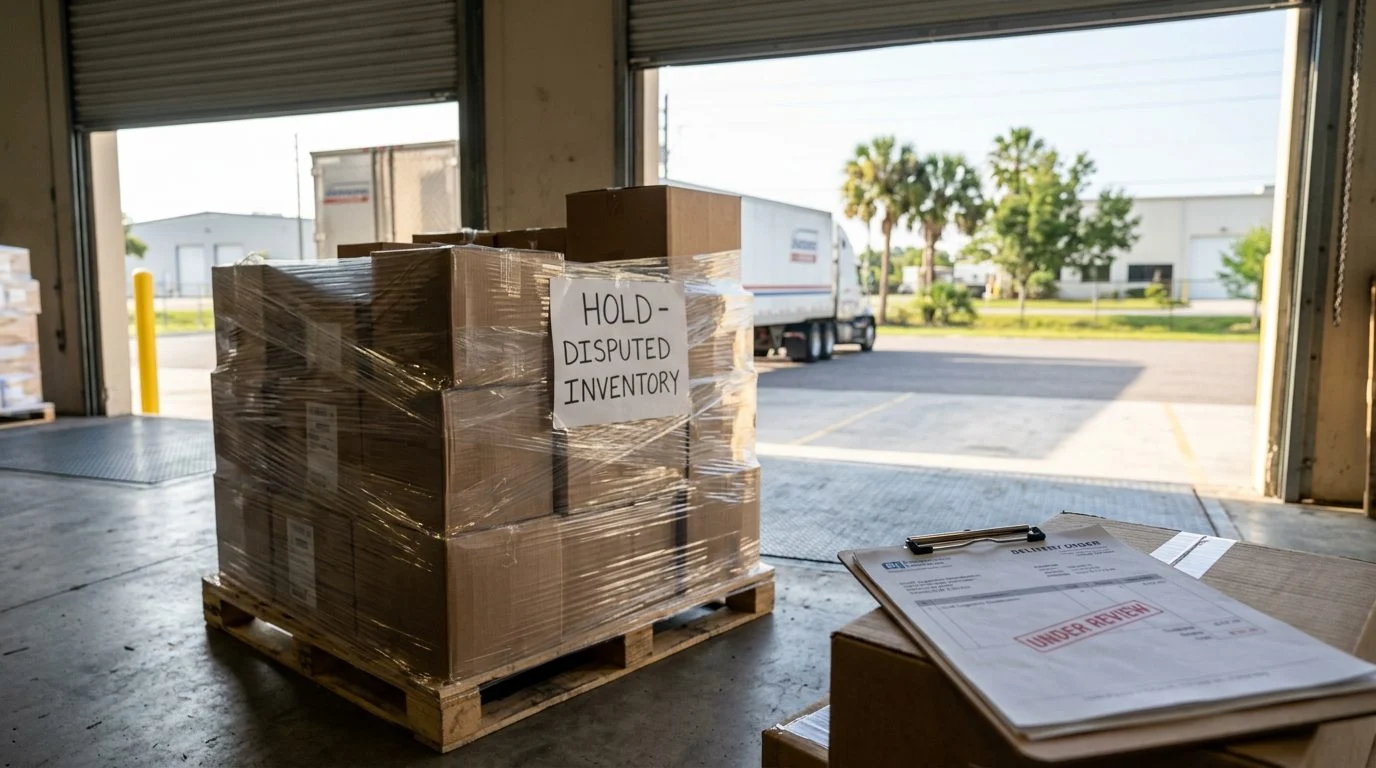
A lis pendens blocking a commercial closing in Tampa can stall a deal days before the money moves. If you just learned that a notice sits on your property’s title, you probably have a closing date, a lender, and a lot of questions.
The short answer: a lis pendens is a recorded notice that a lawsuit affecting a property is pending. Title insurers and lenders often hold off on funding while it stays open. Here is what the notice does, what to check, and what to do first.
What a Lis Pendens Is and What It Does to Commercial Property
A lis pendens is a notice, recorded in the public records, that a lawsuit involving a property is pending. Under Fla. Stat. § 48.23, a lawsuit operates as a lis pendens on property only when the notice is recorded in the official records of the county where the property is located. For Tampa property, that county is Hillsborough County.
The notice must name the parties, identify the action by the date it was filed, the date of the clerk’s electronic receipt, or the case number, name the court, describe the property, and state the relief sought for that property. Fla. Stat. § 48.23 reads: “(2) A notice of lis pendens is not effectual for any purpose beyond 1 year from the commencement of the action and will expire at that time, unless the relief sought is disclosed by the pending pleading to be founded on a duly recorded instrument or on a lien claimed under part I of chapter 713 against the property involved, except when the court extends the time of expiration on reasonable notice and for good cause.” The notice does not decide who is right. It warns anyone who searches the records that the title could change. A short filing can change who can sell, borrow against, or close on the property. Because the notice attaches to the property, it can reach people who never signed anything with the parties in the lawsuit. That is why a notice from one dispute can affect a later buyer or lender.
If a recorded notice has your commercial closing or refinance on hold, our team can review the recording, the lawsuit and your deadlines with you. Talk it through with our team — we can walk you through how a situation like yours is usually handled and what your options are.
Why a Recorded Notice Can Hold Up a Commercial Closing or Refinance
A recorded notice can derail a closing or refinance because the people funding the deal check the public records first. Title insurers and lenders usually search those records before they fund. A recorded notice often shows up as an issue they will not insure over until it is resolved.
The escrow agent may hold funds while the issue is open, and the closing date can slip with them. A fixed closing date leaves little room, so even a short delay can strain the deal. Lenders generally want clear title before they fund a refinance, so the same notice can block a loan just as it blocks a sale.
Florida law also reaches interests that were not recorded at the time. Under § 48.23(1)(d), except for the interest of persons in possession or easements of use, a valid recorded notice can bar enforcement against the property of unrecorded interests and liens. The exception is narrow: the holder must move to intervene within 30 days after recording, and the court must ultimately grant that motion. How a specific lender or insurer treats the notice depends on its own rules for your deal, so ask them directly.
Review the Recording and the Lawsuit Before You Respond
Start by pulling the recorded notice and the lawsuit it is based on. Then compare the two line by line. You need the recording information from the county’s official records, the complaint, the case number, and the court docket.
Check whether the notice names the same property, the same owner or entity, and the same court as the complaint. Then check the relief sought. Florida requires a notice to list those items, so a mismatch is worth raising with a lawyer. Also note who the notice names. If your company holds title in its own name, a notice against a different party may still need a closer look.
Ask whether the lawsuit is really about the land. Under § 48.23(1)(b)1., a case filed for specific performance, or one not based on a duly recorded instrument, has no effect on title or liens, except between the parties, unless a notice has been recorded and has not expired or been withdrawn or discharged. That means a recorded notice can turn a money or contract dispute into a title problem for your deal.
If the case is in federal court, the Tampa Division covers Hillsborough County, and its federal local rules govern filings.
First Steps in the Days After You Learn About the Notice
Respond to the lawsuit on time, and put your deal partners on written notice. Those steps come first.
Never ignore a summons or a complaint.
Write to your title company, escrow agent and lender. Explain the recorded notice and how it affects your closing date. Keep copies.
Pull your purchase contract or loan commitment. Look for the closing date, any extension rights, earnest money terms, and notice requirements. Then read any notice-and-cure language closely. Florida’s Fourth District Court of Appeal has said that courts do not favor reading a term as a condition precedent unless plain, unambiguous language or necessary implication requires it.
Keep a dated file of every call, email and letter with the other side, the title company and the lender. A clear timeline matters if the dispute turns on who did what, and when. If the other side has a lawyer, tell that lawyer in writing that you are reviewing the notice and need dates confirmed.
Ways a Lis Pendens Can Be Challenged or Removed in Florida
A notice stops operating when it expires, or when it is withdrawn or discharged. Each path works differently, so timing matters.
The biggest clock is the one-year limit. Under § 48.23(2), a notice is not effectual beyond one year from the commencement of the action and expires at that time, unless the relief sought is founded on a duly recorded instrument or on a chapter 713 lien, or the court extends the time on reasonable notice and for good cause. The clock starts when the lawsuit starts, not when the notice was recorded. The notice does not end just because the case is slow, so calendar that one-year date now.
The one-year limit does not apply the same way to claims based on a duly recorded instrument or on a construction lien under chapter 713. The court can also extend the time on reasonable notice and for good cause.
Under Fla. Stat. § 48.23, a notice of lis pendens operates on the property only if it has not expired under subsection (2) and has not been withdrawn or discharged. Fla. Stat. § 48.23(1)(d) reads: “(d) Except for the interest of persons in possession or easements of use, the recording of such notice of lis pendens, provided that during the pendency of the proceeding it has not expired pursuant to subsection (2) or been withdrawn or discharged, constitutes a bar to the enforcement against the property described in the notice of all interests and liens, including, but not limited to, federal tax liens and levies, unrecorded at the time of recording the notice unless the holder of any such unrecorded interest or lien moves to intervene in such proceedings within 30 days after the recording of the notice and the court ultimately grants the motion.” The arguments turn on what the lawsuit claims and what the notice says, so both must be reviewed together.
How Long Removal Can Take and How It Affects Your Deadlines
Timing turns on the court’s calendar, the one-year clock and whether the other side fights the change. No one can promise a timeline, because the court and the other side control much of it.
Your closing date and contract remedies run on their own schedule. If the closing date passes while the notice remains, the contract’s extension or default terms may decide what happens next. Read those terms before you respond. Calendar any deadline to respond to a default notice, too.
Florida’s Fourth District defines a condition precedent as an act or event that must occur before a party has a right to immediate performance and before a breach occurs. A Florida appellate court has described conditions precedent as acts or events that occur after a contract is made and must happen before there is a right to immediate performance and before there is a breach of contractual duty (Land Co. of Osceola Cnty., LLC v. Genesis Concepts, Inc.). Whether it does turns on the contract’s exact words.
Ask the title company, in writing, what it requires to insure the transaction over or around the notice. Its answer will show what the closing needs.
Not sure what your next step is?
Talk it through with our team — we can walk you through how a situation like yours is usually handled and what your options are.
Working With Ayala Law PA in Tampa
Ayala Law PA handles business litigation, commercial litigation, contract disputes, real estate litigation and related matters in Florida courts and arbitration.
Eduardo A. Maura is the responsible lawyer for this page. The firm’s only office is at 1646 W Snow Ave, Tampa, FL 33606. The firm serves Tampa, Hillsborough County and the Tampa Bay area from that office.
Our team includes support staff who handle scheduling and document intake. Our team reviews the recording, the lawsuit and the transaction documents together, so the dates can be compared side by side. You can share the notice, the complaint and your contract, and our team will walk through what each one means for your closing.
Fee terms are discussed with you before any engagement begins.
Take the Next Step on Your Closing or Refinance
Compare the notice with the lawsuit and your deal documents before you decide anything. That single comparison shows how far the notice reaches.
Can a lis pendens hold up a commercial closing?
It can. Title insurers and lenders often hold off on funding while a recorded notice stays open.
How long does a lis pendens last in Florida?
Under § 48.23, a notice generally expires one year after the lawsuit starts, unless an exception applies or the court extends it.
Can a lis pendens block a commercial refinance?
It can, when the lender requires clear title and the notice remains in the public records.
If a recorded notice has your commercial closing or refinance on hold, you don’t have to sort through the record and the deadlines alone. You can request a case evaluation or call (813) 414-5715 to talk through your timeline.



