
Real estate litigation is a court or arbitration case over property rights that a business owner cannot settle through talks or demand letters. It covers disputes over title, boundaries, mortgages, leases, property deals and co-owner conflicts. This guide explains each type, the Florida rules that often shape them, and the decisions a business owner faces.
Ayala Law PA focuses on business litigation in Florida, including commercial litigation, contract disputes, shareholder disputes, construction litigation and real estate litigation. Eduardo A. Maura is the responsible lawyer for this page. The firm’s only office is at 1646 W Snow Ave in Tampa, Florida. The firm works with businesses in Tampa, Hillsborough County, Brandon, Riverview, Plant City, Temple Terrace and the wider Tampa Bay area from its Tampa office at 1646 W Snow Ave.
What Real Estate Litigation Covers for Business Owners
Real estate litigation starts when a property dispute moves past negotiation into a filed lawsuit or a demand for arbitration. Litigation means one side files a claim, the other side responds with its defenses, both sides exchange records, and a judge or arbitrator decides the dispute.
Transactional work is different. A lawyer drafting a purchase agreement or handling a closing works to get a deal done. A litigator steps in when one side says the deal, the lease or the title is broken.
Most property disputes fall into a few groups: title, boundary and easement, deed restriction, mortgage, lease, deal, co-owner and property manager. Each group has its own facts and rules. A business owner may face more than one at a time, such as a lease default tied to a disputed driveway.
If a tenant won't leave your space or a title defect has stalled your sale, we can talk through the property facts with you. Talk it through with our team — we can walk you through how a situation like yours is usually handled and what your options are.
Title Disputes and Clouded Ownership
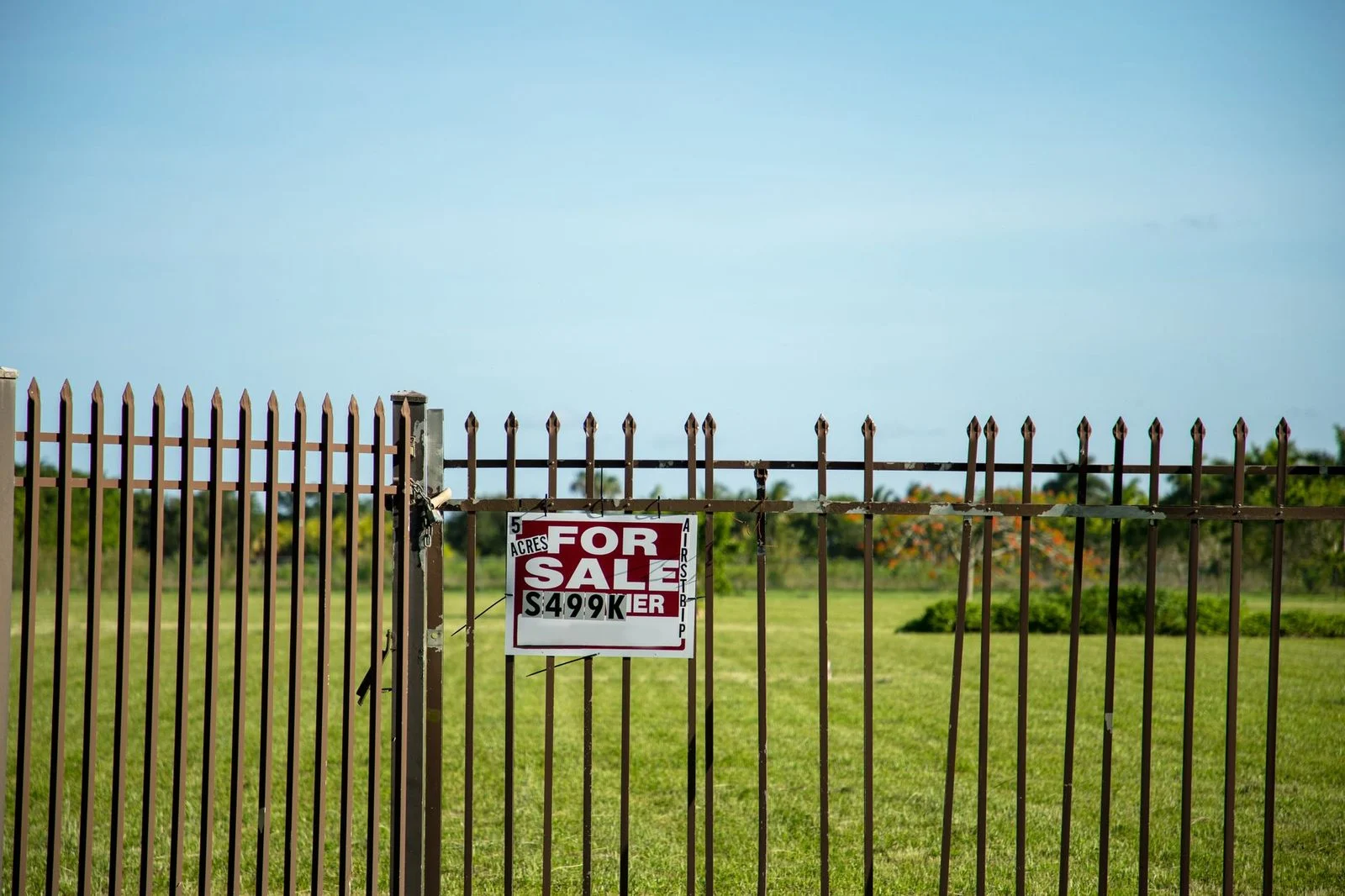
A title dispute happens when two people or companies claim the same right in a property. Title problems can include recorded liens, errors in the chain of ownership, or a deed that was not signed the right way. These defects often surface when a business tries to sell, refinance or lease property. A defect can stop a closing until it is resolved.
Florida sets time limits for these claims. Under Fla. Stat. § 95.12, no action to recover real property or its possession can be maintained unless the person suing, or a predecessor or grantor, held the property within 7 years before the action began. The dates of every transfer should be gathered early.
Florida also requires most transfers of real estate to use a signed written instrument. Under Fla. Stat. § 689.01, the instrument must be signed in the presence of two subscribing witnesses, unless it is a will or similar appointment. Fla. Stat. § 689.01 provides: (1) No estate or interest of freehold, or for a term of more than 1 year, or any uncertain interest of, in, or out of any messuages, lands, tenements, or hereditaments shall be created, made, granted, transferred, or released in any manner other than by instrument in writing, signed in the presence of two subscribing witnesses by the party creating, making, granting, conveying, transferring, or releasing such estate, interest, or term of more than 1 year, or by the party’s lawfully authorized agent, unless by will and testament, or other testamentary appointment, duly made according to law; and no estate or interest, either of freehold, or of term of more than 1 year, or any uncertain interest of, in, to, or out of any messuages, lands, tenements, or hereditaments, shall be assigned or surrendered unless it be by instrument signed in the presence of two subscribing witnesses by the party so assigning or surrendering, or by the party’s lawfully authorized agent, or by the act and operation of law; provided, however, that no subscribing witnesses shall be required for a lease of real property or any such instrument pertaining to a lease of real property. No seal shall be necessary to give validity to any instrument executed in conformity with this section. Corporations may execute any and all conveyances in accordance with the provisions of this section or ss. 692.01 and 692.02. (2) For purposes of this chapter: (a) Any requirement that an instrument be signed in the presence of two subscribing witnesses may be satisfied by witnesses being present and electronically signing by means of audio-video communication technology, as defined in s. 117.201. Under s. 117.201, a witness is an individual whose electronic signature is affixed to an electronic record to attest or subscribe to a principal’s signature on that record. Being “in the presence of” someone can mean being physically present or being able to see, hear, and communicate with them by audio-video communication technology. Fla. Stat. § 689.01 reads: “unless by will and testament, or other testamentary appointment, duly made according to law; and no estate or interest, either of freehold, or of term of more than 1 year, or any uncertain interest of, in, to, or out of any messuages, lands, tenements, or hereditaments, shall be assigned or surrendered unless it be by instrument signed in the presence of two subscribing witnesses by the party so assigning or surrendering, or by the party’s lawfully authorized agent, or by the act and operation of law; provided, however, that no subscribing witnesses shall be required for a lease of real property or any such instrument pertaining to a lease of real property.”
A title case often asks a court to decide who holds the valid interest. One option is a quiet title action (a court case that settles competing ownership claims). The records and the facts shape which path makes sense.
Boundary, Easement and Deed Restriction Disputes
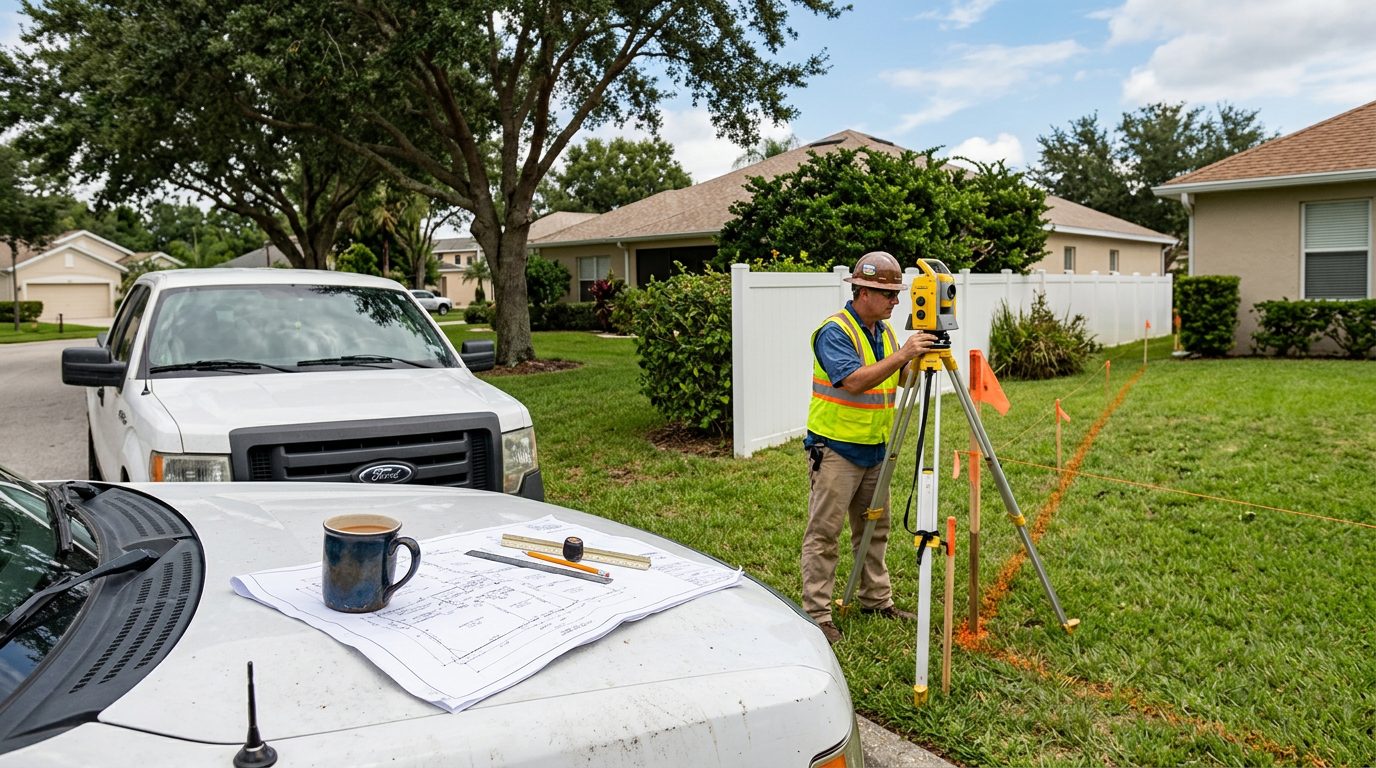
A boundary dispute is a disagreement over where one property ends and another begins. Commercial parcels often clash over survey lines, fences, parking areas or a building that crosses a line. A current survey and the recorded plat usually drive the first review of these cases.
An easement dispute is a fight over a right to use land owned by someone else. Common examples involve access to a loading dock, shared parking, drainage across a lot, or a utility line. These fights affect operations fast. A blocked driveway can stop deliveries the same day.
Deed restriction disputes involve rules written into a deed or a recorded declaration. Restrictions can limit use, set architectural standards or require certain operating conditions. Neighbors or an owners’ association may try to enforce them. The recorded wording is the starting point for any claim, so the business owner should pull those papers first.
Mortgage and Secured Property Disputes
A mortgage dispute arises when a borrower and a lender disagree about default, payments or what the recorded mortgage requires. Business owners often see these disputes when a payment is rejected, a late charge is posted, or a notice says the loan is in default.
The analysis depends on the documents. The mortgage, the note, the notices and the payment history set the scope of the dispute. From the borrower’s side, the questions are often practical. Was the notice given the way the loan papers require? Were payments credited correctly? Does the lender have the right it claims? The answers can change which options are open.
Lenders have contract remedies, and the loan documents spell them out. A court reads the contract and the record together. Keeping complete payment records and every letter from the lender helps frame the dispute clearly from the start.
Commercial Lease Disputes
A commercial lease dispute usually starts with unpaid rent, a disputed charge, or a tenant who stays past the end of the lease. Lease disputes often turn on notices, payment records and the exact wording of the lease.
When a tenant refuses to give up possession at the end of the lease, Florida law gives the landlord a remedy. Under Fla. Stat. § 83.06, the landlord, the landlord’s agent, attorney, or legal representatives may demand double the monthly rent and may recover it at the end of each month. The same statute says all contracts for rent bear interest from the time the rent becomes due.
If a landlord sues for possession and unpaid rent, the tenant has a deadline to act. Whether a tenant who fails to pay as the court orders loses the right to raise defenses depends on the facts of the case and the governing statute.
Before a dispute escalates, gather the signed lease, any amendments, all notices, the payment history and the correspondence.
Purchase, Sale and Development Deal Disputes
A deal dispute is a disagreement over whether a buyer, seller, developer or investor kept the promises in a written contract. Common fights involve a failed closing, a disputed earnest money deposit, a contingency that was not met, or claims that one side misstated facts about the property.
The written contract is the first document a court or arbitrator reads. Emails, term sheets and closing papers can also matter. Oral promises are much harder to enforce. Under DK Arena, Inc. v. EB Acquisitions I, LLC, promissory estoppel (a promise-based claim) may not be used to get around the Statute of Frauds. As we explained in Tanenbaum, application of the Statute of Frauds is a matter of legislative prerogative; the judicial doctrine of promissory estoppel may not be used to circumvent its requirements. (DK Arena, Inc. v. EB Acquisitions I, LLC, 112 So. 3d 85 (Fla. 2013))
Sometimes a party wants to undo a deal, which is called rescission. Rescission for mistake has limits. Under Waterside at Boynton Homeowners’ Ass’n v. Southern Homes of Palm Beach, LLC, rescission for mutual mistake is available only when the mistake is mutual and the fact is of the essence of the contract.
Timing matters too. A party who learns the key facts and does not act to rescind may give up that right. Flaherty v. Flaherty describes this as ratification, which occurs when a party entitled to rescind a voidable contract fails to do so after discovering the facts. Ratification occurs when a party entitled to rescind a voidable contract fails to do so after the discovery of facts that warrant a rescission. (Flaherty v. Flaherty, 128 So. 3d 920 (Fla. 2d DCA 2013))
Not sure what your next step is?
Talk it through with our team — we can walk you through how a situation like yours is usually handled and what your options are.
Joint Venture and Co-Owner Disputes
A joint venture or co-owner dispute is a disagreement among partners over how property is run, funded, shared or sold. Typical fights involve capital contributions, who makes management decisions, how profits are split, and how an owner can exit.
The governing paper matters most. For an LLC, the operating agreement generally controls the relations among members and between members and the company. Under Fla. Stat. § 605.0105, the operating agreement governs those relations. Where the agreement does not address a matter, the chapter’s default rules govern it.
Owners are generally shielded from the company’s debts. This “showing of improper conduct” requires proof that “the corporation was actually organized or used to mislead creditors or to perpetrate a fraud upon them.” (Wurtzebach v. Flooring Depot FTL, Inc.)
A co-owner who says a deal is unfair may still be bound by the written deal. Under Williams v. Johnson, where an express contract covers the same subject matter, claims arising from that relationship will not support a claim for unjust enrichment (getting a benefit without paying for it).
When co-owners cannot agree, the usual paths are negotiation, mediation, arbitration if the agreement requires it, or a court action.
Property Manager and Agent Conduct Disputes
A property manager dispute usually concerns money or authority. Owners raise questions about rent collected but not sent, security deposits, repair decisions, or a manager who acted beyond the management contract.
The management agreement sets the scope of the manager’s work and the terms for ending the relationship. Monthly ledgers show rents collected and expenses paid. Owner emails and approvals show what the owner knew and agreed to. These records often become the central evidence.
Business owners should keep their own copies of the agreement, statements and messages. Notice terms in the agreement should be checked before any termination. A written timeline of problems, with dates and amounts, helps organize the facts from the start.
Court or Arbitration: Where These Disputes Are Resolved
Most real estate disputes are heard in Florida courts or in arbitration, depending on the contract. The dispute clause in the contract often decides which path applies, so it should be reviewed early.
Venue rules decide the county for a court case. Under Fla. Stat. § 47.011, an action must be brought in the county where the defendant resides, where the cause of action accrued, or where the property in litigation is located. This venue rule does not apply to actions against nonresidents. A dispute over Hillsborough County property can therefore be brought where that property sits.
Arbitration follows its own rules. Under Fla. Stat. § 682.02, an agreement in a record to arbitrate existing or later disputes is valid, enforceable and irrevocable, except on a ground that exists at law or in equity for revoking a contract. Under Fla. Stat. § 682.03, a court may not refuse to order arbitration because the claim lacks merit.
Some court cases must go to mediation first. Under Fla. Stat. § 44.102, on one party’s request a court must refer a filed civil action for monetary damages to mediation, provided the requesting party is willing and able to pay the costs of the mediation or the costs can be equitably divided between the parties, unless an statutory exception applies. Exceptions include a landlord and tenant dispute without a personal injury claim, and cases where the parties agreed to binding arbitration.
In plain terms, a typical case moves from a demand letter to a filing or arbitration demand, then to responses, exchange of records, and mediation or a hearing.
Documents to Gather and Talking With a Litigator
Bring the documents that show what was promised, what was paid and what was sent. Useful records include deeds, title reports, surveys, leases, purchase agreements, mortgages, notices, payment records and correspondence. Keep originals and copies in one place.
Initial questions can be raised by phone, and the contact details appear at the end of this guide. Ayala Law PA does not offer a consultation at no charge. Fees and costs are disclosed before representation begins.
Clients in Tampa and Hillsborough County are handled from the firm’s Tampa office at 1646 W Snow Ave, and the firm does not maintain a Tampa office.

Contact the Firm About Your Property Dispute
A business owner facing a stalled sale, a tenant who won’t leave, or a boundary fight over a shared lot is deciding whether litigation is the next step. The right first move depends on what the documents say and what each side has already sent.
What does litigation mean in real estate?
Litigation means a filed lawsuit or started arbitration over a property dispute. Both sides then exchange records and a judge or arbitrator decides the case.
Does a real estate dispute go to court or arbitration?
The contract’s dispute clause usually decides it. Florida law treats an arbitration agreement contained in a record as valid and enforceable, except on a ground that exists at law or in equity for revoking a contract, under Fla. Stat. § 682.02.
How long do I have to bring a claim to recover property?
Florida’s real property statute bars an action to recover property unless the person suing, or a predecessor, held it within 7 years before the action begins.
If a tenant will not leave your space, or a title defect has stopped your sale, bring the papers to Ayala Law PA. Call (305) 570-2208 or request a case evaluation to talk through the property facts.



