
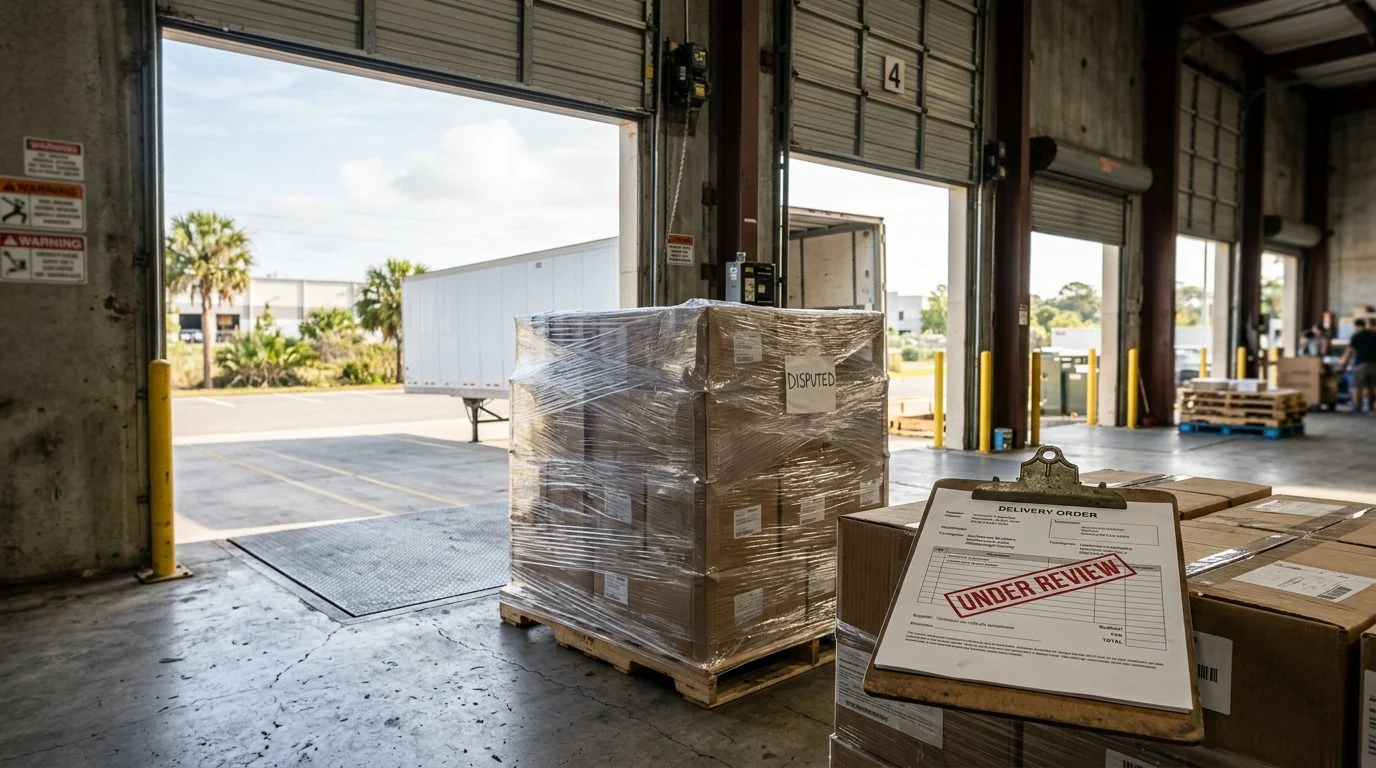
A gate closed across a shared driveway, or a loading dock cut off without notice, can stop a business in its tracks. A commercial easement is a legal right to use part of someone else’s property for a business purpose, such as access, parking, or utilities. When that right is blocked or disputed, the recorded documents and the history of use usually decide what comes next.
What a Commercial Easement Dispute Involves
A commercial easement dispute is a disagreement over whether a business can use another owner’s land, and how. The property that gets the benefit of the right is the dominant estate. The land that carries the burden is the servient estate.
Picture a warehouse that needs a shared drive to reach the street. The warehouse owner holds the right. The neighbor owns the drive.
Common purposes include access, parking, loading, drainage, and utility lines. A dispute can raise several questions at once. Does the right exist? Where does it run, and how wide is it? Who pays to keep it usable?
This page is written for commercial owners, tenants, developers, and property managers whose operations depend on a route or shared area. If trucks, customers, or staff can’t reach your door, the problem becomes urgent fast. Tenants often find their rights in a lease, so the lease terms matter as much as the deed.
Not sure what your next step is?
Talk it through with our team — we can walk you through how a situation like yours is usually handled and what your options are.
How Easement Rights Arise Under Florida Law
Each source needs different proof, so the category shapes the whole case.
An express easement is written. It appears in a deed, a recorded plat, or a recorded agreement. Florida law requires an estate or interest of freehold, a term of more than 1 year, or any uncertain interest in land to be created by an instrument signed in the presence of two subscribing witnesses by the party or its lawfully authorized agent, unless made by will. The statute excludes lease-only requirements, so leases are handled differently. The statute excludes lease-only requirements, so leases are handled differently. Fla. Stat. § 689.01
Other routes exist.
Recorded documents, plats, and use history often decide which category applies. The answer depends on the facts of each parcel, so document review usually comes first.
Common Commercial Access Disputes in Hillsborough County
Most access fights start with a physical change: a gate, a barrier, a parked truck, or a new fence. Common disputes include:
- Blocked or gated driveways and cross-access roads shared by neighboring commercial parcels.
- Shared parking, loading docks, and delivery routes that affect how a tenant runs its operation.
- Utility, drainage, or sign-access conflicts where the easement’s location or width is unclear.
- Disagreements about who pays for paving, repairs, or snow and debris removal on a shared route.
Can a property owner block an easement in Florida? That depends on what the recorded document says and how the route has been used. Blocking a route that a valid easement protects can lead to a court dispute.
Under Florida law, actions shall be brought only in the county where the defendant resides, where the cause of action accrued, or where the property in litigation is located. This section does not apply to actions against nonresidents. Fla. Stat. § 47.011
Cost disputes need a close look at the contract. Where a written maintenance or cost-sharing agreement covers the subject, a separate unjust enrichment claim generally won’t work. Williams v. Johnson
Documents to Gather and Why Timing Matters
Start with the paperwork you already have, because it often decides the first move. Gather anything that shows the easement’s source, scope, and history.
- Deeds, plats, and easement agreements. Recorded documents can be searched in the official records kept by the Hillsborough County Clerk of Court.
- Surveys, site plans, and dated photos showing the route and how it has been used.
- Letters, notices, and written demands to stop or change the use, plus records of maintenance costs.
- Leases, purchase contracts, and title insurance policies, which may describe access rights.
Timing matters. Florida’s deadlines to sue generally start when the last element of the claim occurs. Fla. Stat. § 95.031 Waiting can cost you options.
A notice of lis pendens is a recorded notice that a lawsuit involves a property. Once recorded in county records, it can affect later buyers and lenders while the case is pending. It generally expires one year after the action begins, unless the relief sought is founded on a duly recorded instrument or a lien claimed under part I of chapter 713, or the court extends the time on reasonable notice and for good cause. Fla. Stat. § 48.23
How the Process Works, Step by Step
Most easement matters move from intake and document review to a written demand, then to mediation, arbitration, or court. The early steps often shape the later ones.
- Intake. We discuss the access problem, the parties, and the documents you have. Fees and costs are discussed at intake, before any work begins.
- Document and title review. We confirm the easement’s source, scope, and recorded status, and we note gaps in the record.
- Demand and negotiation. A written demand, a proposed access or maintenance agreement, or a settlement approach may fit your goals. Whether a notice or cure provision must be followed before a claim can proceed depends on how the contract is written, so those terms are worth reviewing early. Covelli Family, L.P. v. ABG5, L.L.C.
- Dispute resolution. Under Florida law, an agreement contained in a record to submit any existing or subsequent controversy to arbitration is valid, enforceable, and irrevocable, except upon a ground that exists at law or in equity for the revocation of a contract. Fla. Stat. § 682.02
- Litigation in Hillsborough County. The relief a party seeks depends on the facts of each dispute.
Simple disputes can sometimes settle in weeks through negotiation. Contested court cases commonly take many months. No timeline is promised.
Why Work With Ayala Law PA on an Easement Matter
Ayala Law PA concentrates in business and real estate disputes from its Tampa office. Our only office is at 1646 W Snow Ave, Tampa, FL 33606. We serve Hillsborough County and Tampa Bay clients from that location.
The firm concentrates in business litigation, commercial litigation, contract disputes, shareholder and partnership disputes, construction litigation, real estate litigation, and international trade litigation in Florida courts and arbitration.
Eduardo A. Maura is the lawyer responsible for this page. Our team includes assistants and office staff who support each matter.
Our approach is plain: careful document review, business-focused planning, and clear talk about options and costs. We cannot promise an outcome, and results in other matters do not predict the result of yours. This matter may be referred to another lawyer or firm where appropriate.
Not sure what your next step is?
Talk it through with our team — we can walk you through how a situation like yours is usually handled and what your options are.
Frequently Asked Questions About Commercial Easement Disputes
Can a property owner block an easement in Florida?
It depends on the recorded terms and how the route has been used. Blocking a route that a valid easement protects can lead to a court dispute.
How do you win a property line dispute?
Outcomes turn on survey evidence, recorded documents, and the legal elements that apply. We cannot promise a result, but careful document review is a common first step.
What is the law on easements in Florida?
Easements can come from a signed written grant, past use, necessity, or long, open use. Florida requires written instruments to create interests in land, with the lease exception noted above.
Who is responsible for maintaining an easement?
Where a written agreement covers the subject, it generally controls over a separate unjust enrichment claim.
Do I need a lawyer if the other side is willing to talk?
A negotiated access deal still needs review of the recorded documents before you sign. We can talk through your options first.
Talk Through Your Access Problem With Our Tampa Team
If a blocked drive or cut-off loading dock is hurting your business, you don’t have to sort out the documents alone. You may be a business owner, a tenant, or a manager handling a property you didn’t choose to fight over.
Bring what you have: the deed, the lease, the photos, and the written notices. Call (813) 414-5715 or reach out through our contact page. Our Tampa office at 1646 W Snow Ave can help you talk through the access issue and whether your documents support the next move.



