
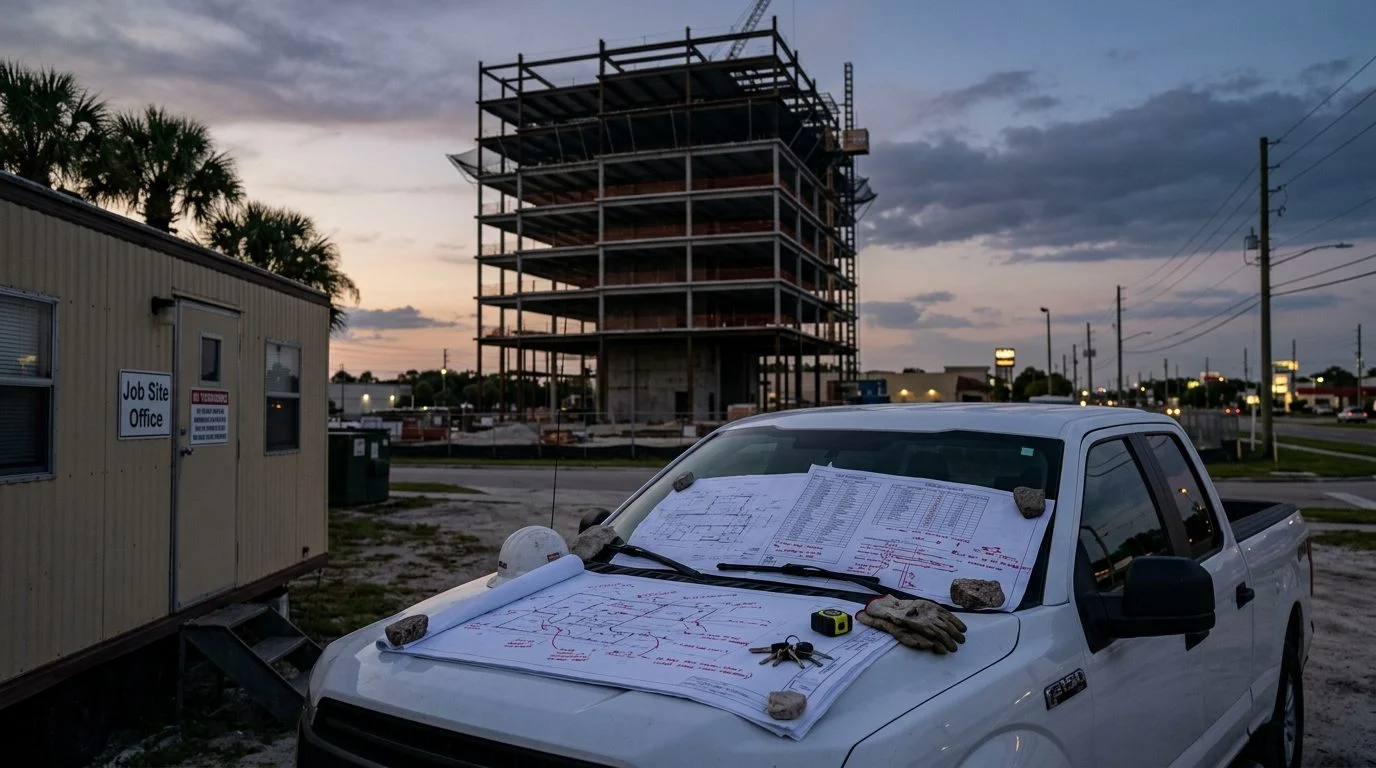
Cracks, water stains, or a shifting slab that appear once work starts next door can leave a commercial building owner with real problems. Whether a claim works depends on how the damage happened and what the building looked like beforehand.
Short Answer: Yes, a Neighbor’s Construction Can Cause Legally Recognized Damage
Excavation, pile driving, vibration, demolition, and changes to drainage are the kinds of nearby work that most often damage a building. A claim usually turns on three questions. Who controlled the work? Did it follow the permit and the building code? What was the building’s condition before the work started? The Florida Building Code law governs how public and private buildings are designed, built, and repaired, so code compliance is often a central point. Acting early matters. Records of the building’s condition are easiest to gather while the damage is new.
If cracks, water, or shifting started when work began next door, you may have a claim worth reviewing, so call Ayala Law PA at (813) 414-5715 or reach out to our team today. Talk it through with our team — we can walk you through how a situation like yours is usually handled and what your options are.
Common Ways Neighboring Construction Damages Commercial Buildings
Most damage falls into four groups: cracking, lost support, water intrusion, and intrusion onto your property. Each one leaves different evidence behind.
Cracking from vibration or soil movement. Pile driving and heavy equipment send vibration through the ground. Walls, slabs, and masonry can crack as the soil shifts beneath them. Hairline cracks that widen over weeks should be photographed and dated.
Loss of lateral support. Excavation next door can remove soil that holds up a footing or wall. Without that support, a building can settle or lean. This problem is different from surface cracks, and it usually needs a technical review to explain the cause.
Water intrusion and debris. Changed grading, runoff from a neighbor’s roof, or cut drainage can send water into a building. Materials falling onto your property can damage roofs, windows, and signs.
Entry without permission. Placing equipment, anchors, or materials across the property line can raise questions about who is allowed to use that space.
What Legal Claims Can Apply Under Florida Law?
Disputes like this one can involve more than one legal theory. Each one fits a different kind of harm.
Ignoring permit conditions or building code requirements can become part of that proof.
Trespass. This claim covers unauthorized entry or intrusion onto your land, even when the damage is small.
Lateral support. This claim concerns ground next door that no longer holds up your building.
Some claims against a contractor for construction defects fall under Chapter 558. That chapter covers claims for damage to real or personal property caused by an alleged construction defect, but not personal injury claims. See the Chapter 558 definitions for the full list of terms.
What Evidence Should You Gather Right Away?
Start with dated photos and video of every damaged area and the surrounding conditions. Take them before any repair work begins.
- Prior records. Gather inspection reports, engineering reports, and any condition records made before the work started.
- Permits and job-site information. Building departments keep these records, often the City of Tampa or Hillsborough County.
- Written messages. Save emails and texts with the neighbor, the contractor, or their representatives. Write down the date and time of every phone call.
- Money records. Keep repair estimates, invoices, and records of lost rent or business interruption.
Chapter 558 also sets a document exchange. If a party makes a written request that cites Fla. Stat. § 558.004 and includes an offer to pay the reasonable costs of reproduction, the claimant and any person served with notice must exchange, within 30 days after service of the request, design plans, specifications, and as-built plans; photos and videos of the alleged defect; technical reports that describe any defect upon which the claim is made; subcontracts; purchase orders for the claimed defective work; and maintenance records and other related documents, subject to any valid privilege claim.
How Should You Give Notice and Involve Your Insurer?
Notify your own property insurer promptly, and send the neighbor or contractor written notice of the damage. Keep copies of everything you send and receive.
Under Fla. Stat. § 558.002, service can be made by certified mail to the last known address of the addressee, with a Postal Service record of evidence of delivery or attempted delivery, by hand delivery, or by courier with written evidence of delivery. Use one of those methods.
Ask in writing for access to inspect the damage, and ask the other side to stop any harm that is still happening. Record every response.
Avoid permanent repairs until the damage is documented, unless you must act to stop more harm. Keep receipts for any emergency work. If you rent the building, review your lease, because it may control who sends notices and how.
Timing, Deadlines, and How These Disputes Usually Unfold
Negligence claims generally must be filed within two years under Fla. Stat. § 95.11. The clock starts when the last element of the claim occurs, which may be earlier than the day you first notice a crack, under Fla. Stat. § 95.031.
A contract clause that sets a shorter time to sue than the statute allows is void, under Fla. Stat. § 95.03.
Lawsuits generally must be filed in the county where the defendant resides, where the claim arose, or where the property is located, under Fla. Stat. § 47.011. This venue rule does not apply to actions against nonresidents. For a building in Hillsborough County, the property location is one such county. If a contract requires arbitration, Florida law generally enforces that agreement, under Fla. Stat. § 682.02.
Most disputes move through documentation, a written demand, and negotiation with the other side and its insurer. A lawsuit or arbitration comes later if needed. Florida courts generally do not favor treating a contract step as a condition unless the contract’s words require it.
Not sure what your next step is?
Talk it through with our team — we can walk you through how a situation like yours is usually handled and what your options are.
How Ayala Law PA Handles These Disputes
Ayala Law PA focuses on business litigation, including commercial, contract, shareholder, construction, real estate, and international trade disputes in Florida courts and arbitration. The firm represents businesses, entrepreneurs, and property owners in these matters.
Eduardo A. Maura is the responsible lawyer for this page. The firm’s lawyers and support staff serve clients from the Tampa office at 1646 W Snow Ave, Tampa, FL 33606.
The firm serves Hillsborough County clients, including those in Brandon, Riverview, Plant City, and Temple Terrace, from that Tampa office. Fee terms are discussed directly with you when you contact the office. A matter may be referred to another lawyer or firm where appropriate. No outcome can be promised.
Talk With Ayala Law PA About Your Building’s Damage
If cracks, water, or shifting began when work started next door, now is the time to act. Call (813) 414-5715 or request a case evaluation through the Ayala Law PA contact page. Bring your photos, permits, and written notices so the team can review your building’s condition and deadlines. The office is at 1646 W Snow Ave, Tampa, FL 33606.



