
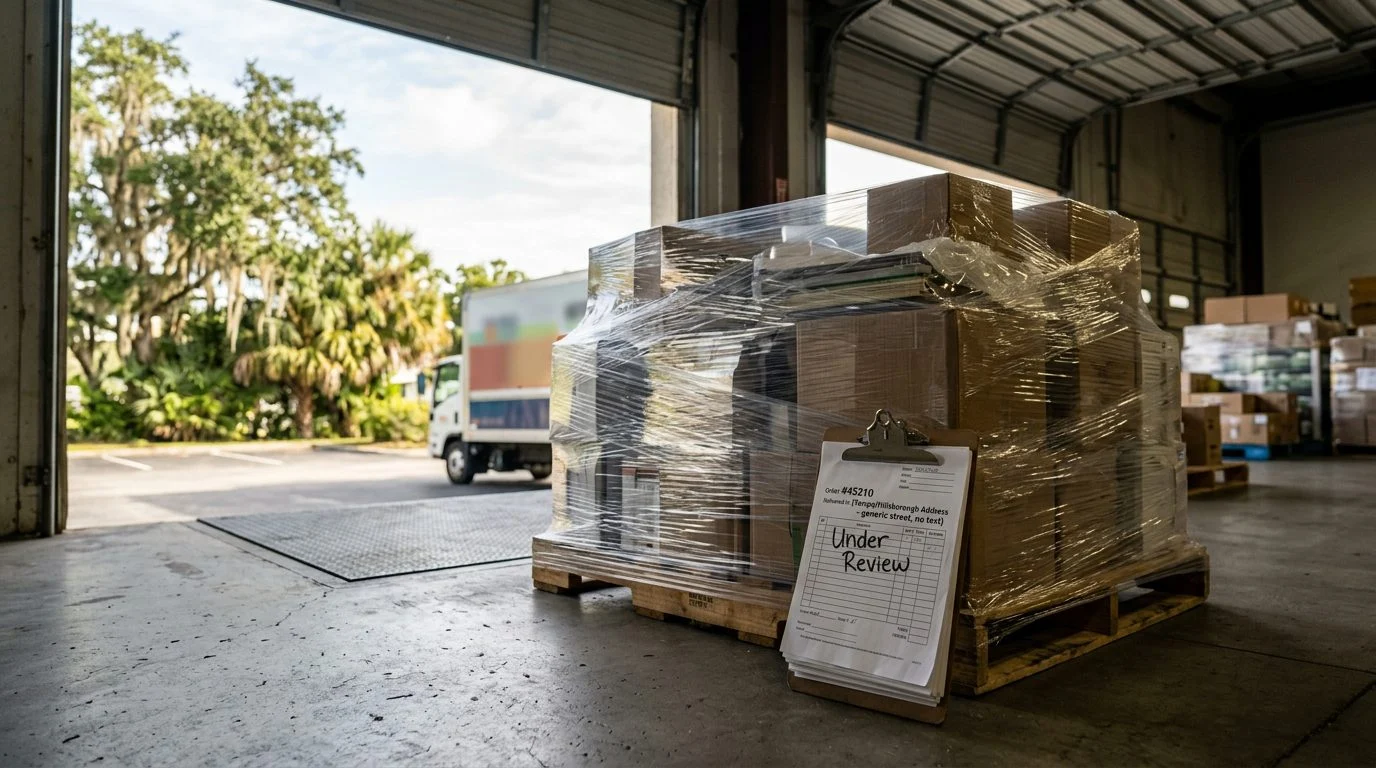
A neighbor’s truck, fence or dumpster on your commercial lot can cost you parking, deliveries and customers. The first step is to prove where your line is and record what’s happening. If the neighbor won’t stop, Florida courts offer several remedies. This guide walks through that sequence for a neighbor encroaching on commercial property in Tampa.
What Is a Neighbor Encroaching on Commercial Property?
Encroachment means a neighbor’s vehicles, fence, dumpster, sign or structure sits on land you hold title to. It can start small and grow over months. In Tampa, it often shows up on shared strip-center lots, older parcels with unclear lines, and side areas a neighbor has begun treating as its own.
The harm is a business problem. Customers can’t find parking, trucks can’t reach the loading area, and tenants or lenders start asking questions. This guide covers commercial lots. The steps below follow the order most owners consider them.
Not sure what your next step is?
Talk it through with our team — we can walk you through how a situation like yours is usually handled and what your options are.
Start With the Deed and a Current Survey
Your recorded deed and a current boundary survey show where your line runs. Pull the deed and its legal description from the Hillsborough County public records kept by the clerk of the circuit court. Then compare those boundaries with what is on the ground: fence posts, curbs, parking stripes and old markers.
A licensed Florida surveyor can stake the line and prepare a boundary survey. A neighbor’s opinion about where the line should be is not a survey. Also check the plat, any prior survey and a title commitment. Keep all deeds, surveys and old site plans in one file.
Document the Encroachment Before You Send Anything
Dated evidence is the first thing a judge or opposing lawyer will ask about. Take photos and video of each vehicle, fence section or structure. Include a boundary marker in the frame so the location is clear.
Keep a simple log with dates, times and how long each episode lasted. Write down what the neighbor says about who owns the land or why they use it. Pull business records too, such as lost sales, missed deliveries and customer complaints tied to the blocked area.
Avoid self-help. Get advice on the next step before you act.
Send a Written Demand Before You File
A written demand tells the neighbor where your line is and asks them to remove the encroachment by a set date. A useful letter names the parcel, cites the survey, describes exactly what is on your land and states what you want done. It also creates a written record. If the dispute reaches court, that record shows when you objected and what you asked for.
If you have a lease, easement or parking agreement with the neighbor, read its notice and cure terms closely. Whether a step in a contract is treated as a condition that must come first depends on the language the parties used. Have the letter reviewed before you send it.
Why Timing Matters: Florida’s Seven-Year Adverse Possession Clock
Under Florida law, a neighbor who keeps possession of land for seven years may, in some cases, claim it through adverse possession. The rules have two paths. Under Fla. Stat. § 95.16, property is held adversely when an occupant entered possession under a claim of title exclusive of any other right, founded on a written instrument as a conveyance of the property, or on a decree or judgment, and has for 7 years been in continued possession of the property included in that instrument, decree, or judgment; for adverse possession commencing after December 31, 1945, the instrument must first be recorded in the office of the clerk of the circuit court of the county where the property is located before the possession counts as adverse under color of title.
A separate rule, Fla. Stat. § 95.12, says no action to recover real property or its possession can be maintained unless the person seeking recovery or that person’s ancestor, predecessor, or grantor was seized or possessed of the property within 7 years before the action begins. Under Fla. Stat. § 95.031, the clock generally starts when the last element of the claim occurs. Delay matters for both sides. Whether a particular use meets these rules depends on the facts, including how the land was used and for how long.
Court Options for an Encroaching Neighbor in Florida
Florida courts can order a neighbor off your land through several kinds of cases. An injunction is a court order telling the neighbor to stop parking on or fencing your lot.
To put buyers and lenders on notice, a notice of lis pendens can be recorded in the official records of the county where the property is located; under § 48.23, an action operates as a lis pendens only if such a notice is recorded. Under Fla. Stat. § 48.23, that notice must be recorded in the official records of the county where the property sits.
Federal cases in the Tampa Division follow the Middle District of Florida local rules. Many disputes start with negotiation or mediation. The right path depends on the facts, the neighbor’s response and the evidence you have.
Not sure what your next step is?
Talk it through with our team — we can walk you through how a situation like yours is usually handled and what your options are.
Contact Ayala Law PA About Your Tampa Commercial Lot
If a neighbor is parking on or fencing your Tampa commercial lot, the next step is a review of your own records. Ayala Law PA focuses on business litigation, commercial litigation, contract disputes, shareholder disputes, construction litigation, real estate litigation and international trade litigation. The firm serves Tampa, Hillsborough County and the Tampa Bay area from its only office, 1646 W Snow Ave, Tampa, FL 33606.
Frequently Asked Questions
Questions about parking on a commercial lot in Tampa often depend on the facts and on the documents that govern the property. Which one fits depends on the facts, the survey and the neighbor’s response.
Does a neighbor’s long use of my land give them ownership in Florida?
Not automatically. Florida requires 7 years of possession, and without color of title, specific steps such as paying taxes and filing a return.
Can I remove the fence or tow the car myself?
It’s safer not to. Self-help steps like these can create liability of their own.
Eduardo A. Maura is the responsible lawyer for this page. Fees and costs are discussed directly with prospective clients. This page is informational and does not promise any particular outcome. Lawyer advertising.
If a neighbor’s vehicles or fence now sit on your Tampa lot, you don’t have to sort out the deed, survey and demand alone. Reach out to Eduardo A. Maura and the firm’s business litigation team at our contact page or call (813) 414-5715 to talk through your facts.



