
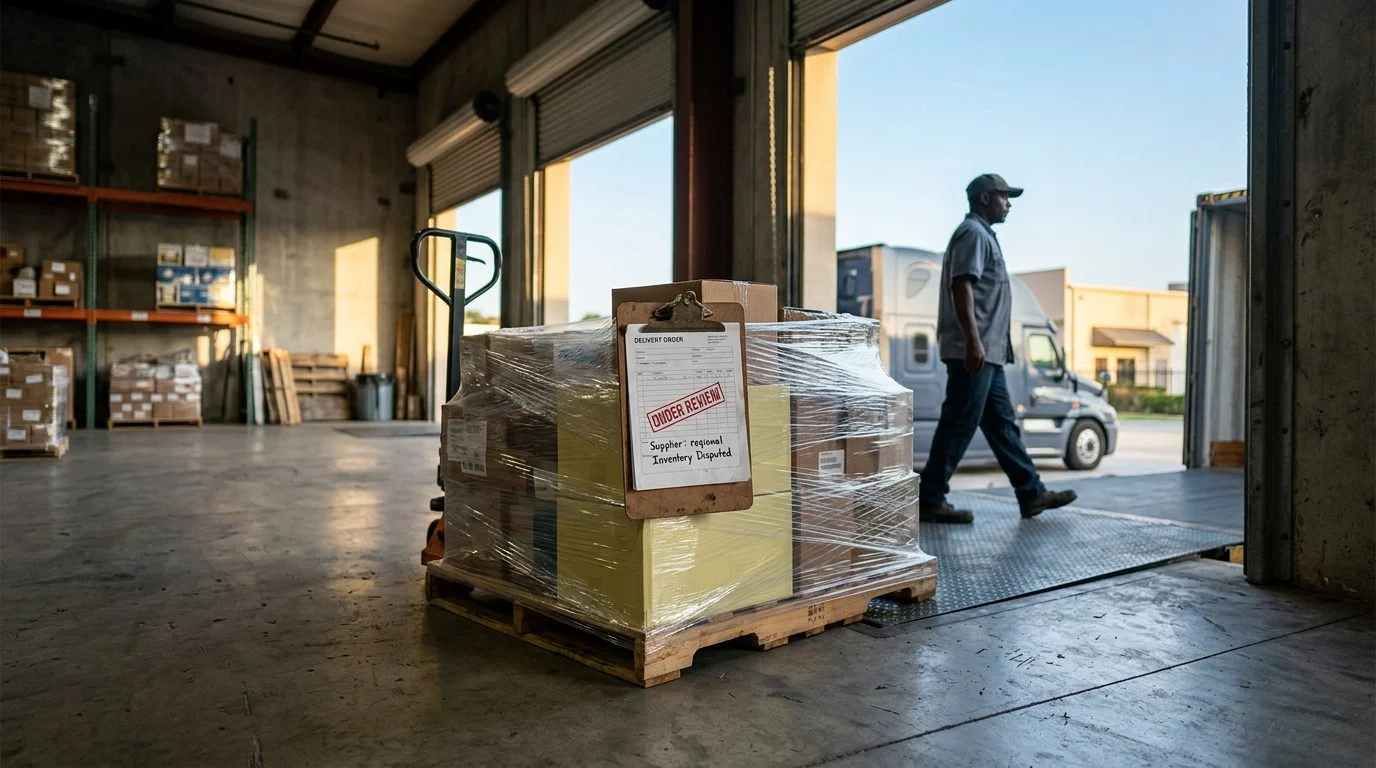
It asks a Florida court to divide the property or order it sold, so the owners can split the value and move on.
This page explains how a partition lawsuit for co-owned commercial property in Tampa works, what shapes the result, and where owners often get stuck.
What a Partition Lawsuit Is and Who It Is For
Co-owners of commercial property include LLC members, business partners who bought a lot together, and siblings who inherited a building. Most cases start with one of three problems:
- One owner wants to sell, and another refuses.
- Owners disagree about leasing the space or paying for major repairs.
- One owner has stopped paying shared taxes, insurance, or mortgage payments.
Florida circuit courts handle these disputes. Under Fla. Stat. § 26.012, circuit courts have exclusive original jurisdiction in all cases in equity and in all actions involving the title and boundaries of real property.
Start with the deed. Fla. Stat. § 689.15 reads: “The doctrine of the right of survivorship in cases of real estate and personal property held by joint tenants shall not prevail in this state; that is to say, except in cases of estates by entirety, a devise, transfer or conveyance heretofore or hereafter made to two or more shall create a tenancy in common, unless the instrument creating the estate shall expressly provide for the right of survivorship; and in cases of estates by entirety, the tenants, upon dissolution of marriage, shall become tenants in common.” Florida doesn’t assume survivorship, so the exact wording matters.
For more on property disputes, see our real estate litigation resources.
Not sure what your next step is?
Talk it through with our team — we can walk you through how a situation like yours is usually handled and what your options are.

Partition in Kind vs. Partition by Sale
Partition in kind divides the property into separate pieces, while partition by sale orders the property sold and the money split among the owners.
Partition in kind usually fits land that can be split into separate parcels. A single commercial building often can’t be divided in a practical way, so a sale is a common result. The judge looks at the property and each owner’s interest to decide which form fits.
The difference matters for a business. A sale ends shared ownership and divides the cash. A division may let owners keep part of the property in use.
Owners sometimes agree to a buyout, where one owner keeps the whole property and pays the others their shares. A buyout can end the case before a sale happens. That path comes up again in the defenses section below.
How a Florida Partition Case Typically Moves
A partition case usually starts with a complaint in circuit court and ends with a settlement or a court-ordered division or sale.
- Complaint. The suit names each co-owner and states that owner’s interest in the property.
- Lis pendens. A notice of lis pendens tells the public the property is in litigation. Under Fla. Stat. § 48.23, an action operates as a lis pendens on the property only if the notice is recorded in the county’s official records.
- Responses. Owners answer and may dispute ownership shares, liens, or whether a sale is needed.
- Valuation. The property’s value is set so each share can be figured.
- Sale or division. The court orders a sale or division, or the owners settle.
- Distribution. Money goes out after liens and costs are paid.
Except for the interest of persons in possession or easements of use, a recorded notice can bar enforcement of unrecorded interests and liens against the property. That bar doesn’t apply to the interest of persons in possession or easements of use, and it doesn’t apply if the holder moves to intervene within 30 days after recording and the court ultimately grants the motion. The notice also expires after one year, unless the claim rests on a recorded instrument or a qualifying lien. The court can extend it on reasonable notice and for good cause.
Timing varies. An agreed resolution moves far faster than a contested case with valuation or sale fights.
Costs, Improvements, and Who Pays What
In a partner buyout dispute, Florida law lets a court award attorney’s fees against a party it finds acted arbitrarily, vexatiously, or not in good faith. See Fla. Stat. § 620.8701.
Other money questions often come up:
- Money put into the property. Co-owners often disagree about who paid for upkeep or upgrades, so gathering receipts, invoices and bank records early can help keep that conversation grounded in documents.
Ayala Law PA explains its fee arrangement directly with you. The total cost of a partition case often depends on whether the owners agree.
Can a Partition Suit Be Dismissed? Common Defenses
Common defenses include:
- Ownership. An owner challenges the shares listed on the deed or in the company records.
- Written agreement. A buyout or use agreement may govern instead of a court order. For an LLC, Florida LLC operating agreement law provides that, except as otherwise provided in subsections (3) and (4), the operating agreement governs relations among members, and the chapter governs any matter the operating agreement does not otherwise provide for.
- Timing. An owner argues a sale is premature.
Buyouts are the main alternative to a court-ordered sale. For an LLC, when a member petitions to dissolve the company under s. 605.0702(1)(b), Fla. Stat. § 605.0706 lets the company, or other members if the company does not, elect to buy the petitioning member’s entire interest at fair value. That election generally must be filed within 90 days after the petition, unless the court allows a later time.
For partners, Fla. Stat. § 620.8701 provides that when a partner is dissociated from a partnership without resulting in a dissolution and winding up of the partnership business, and no agreement for the purchase of the dissociated partner’s interest is reached within 120 days after a written demand for payment, the partnership shall pay or cause to be paid that partner in cash the amount it estimates to be the buyout price and accrued interest, reduced by any offsets and accrued interest under subsection (3).
Which defense applies depends on the documents.
Why Work With Ayala Law PA in Tampa
Ayala Law PA is a Tampa business litigation firm that also handles real estate litigation.
The firm’s only office is at 1646 W Snow Ave, Tampa, FL 33606. It serves Tampa, Hillsborough County, and the Tampa Bay area from that office.
The firm focuses on business litigation, commercial litigation, contract disputes, shareholder and partnership disputes, construction litigation, real estate litigation, and international trade litigation in Florida courts and arbitration.
Eduardo A. Maura is the lawyer responsible for this page. The firm starts with the deed, title records, and any operating agreement, then reviews the options with you in plain language.
If a property line question sits alongside the co-ownership issue, see this guide on commercial property line disputes.
Not sure what your next step is?
Talk it through with our team — we can walk you through how a situation like yours is usually handled and what your options are.
Frequently Asked Questions
How much does a partition lawsuit cost in Florida?
Costs depend on how many owners are involved and whether the case is contested. Valuation and sale steps add to the total.
Can a partition suit be dismissed?
Which one applies depends on the documents.
How long does a partition lawsuit take?
Timing varies. Agreed cases move faster than cases with valuation or sale disputes.
Who pays for a partition action?
In a partner buyout dispute, a court may award fees against a party it finds acted arbitrarily, vexatiously, or not in good faith.
Can one co-owner force a sale of a commercial building?
The court then decides whether division or sale fits the property.
Does a lis pendens stop a sale?
A recorded notice can bar enforcement of unrecorded interests and liens against the property, except for the interest of persons in possession or easements of use. It expires one year after the action is commenced unless the relief sought is disclosed by the pending pleading to be founded on a duly recorded instrument or on a lien claimed under part I of chapter 713 against the property involved, or the court extends it on reasonable notice and for good cause.
Talk Through Your Situation With Our Tampa Office
A co-owner who won’t sell, lease, or pay shared costs can leave a commercial building, and your business plans, on hold.
If you’re reading this for a business partner or a family member, you may be the one deciding what comes next.
If you want to talk it through, call Ayala Law PA at (813) 414-5715 or request a case evaluation to review the deed and the disagreement.



