
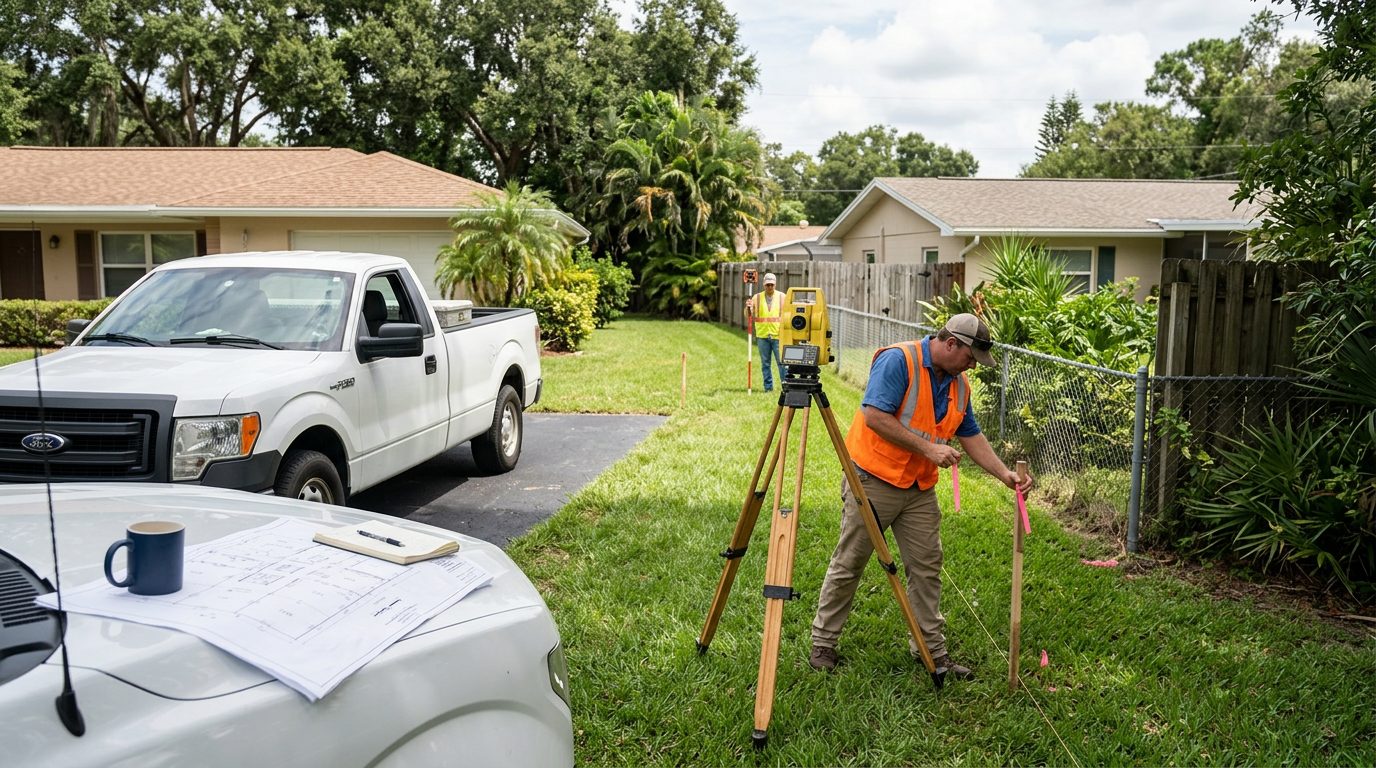
A neighbor’s fence, a parking lot that runs over the line, or a recorded claim that doesn’t match your land can stop a commercial project cold. The core question is where the legal line actually sits. The answer starts with the recorded deed, a current survey, and how the land has really been used. This page explains how a property line dispute in Tampa and Hillsborough County usually works, which claims a Florida court may consider, and the early steps that matter most.
What a Commercial Property Line Dispute Is
A commercial boundary dispute is a disagreement over where one business parcel ends and the next begins. An encroachment is anything that reaches onto someone else’s land, such as a wall, paving, a sign, or a regular use of the other lot.
The starting documents are the deed, the recorded plat, and a current survey. A fence or an old use doesn’t automatically control the legal line, even if it has stood for years. Ground markers and the recorded description can differ, and that gap is where many disputes begin.
This page is written for owners of retail, office, industrial, and mixed-use parcels. It also covers landlords, tenants with rights to part of a site, and developers working in Tampa and Hillsborough County.
If a neighbor's wall, fence, or parking area crosses the line on your commercial lot, you may have a claim, and our team can review your survey and records with you. Talk it through with our team — we can walk you through how a situation like yours is usually handled and what your options are.
Situations That Often Lead to an Encroachment Claim
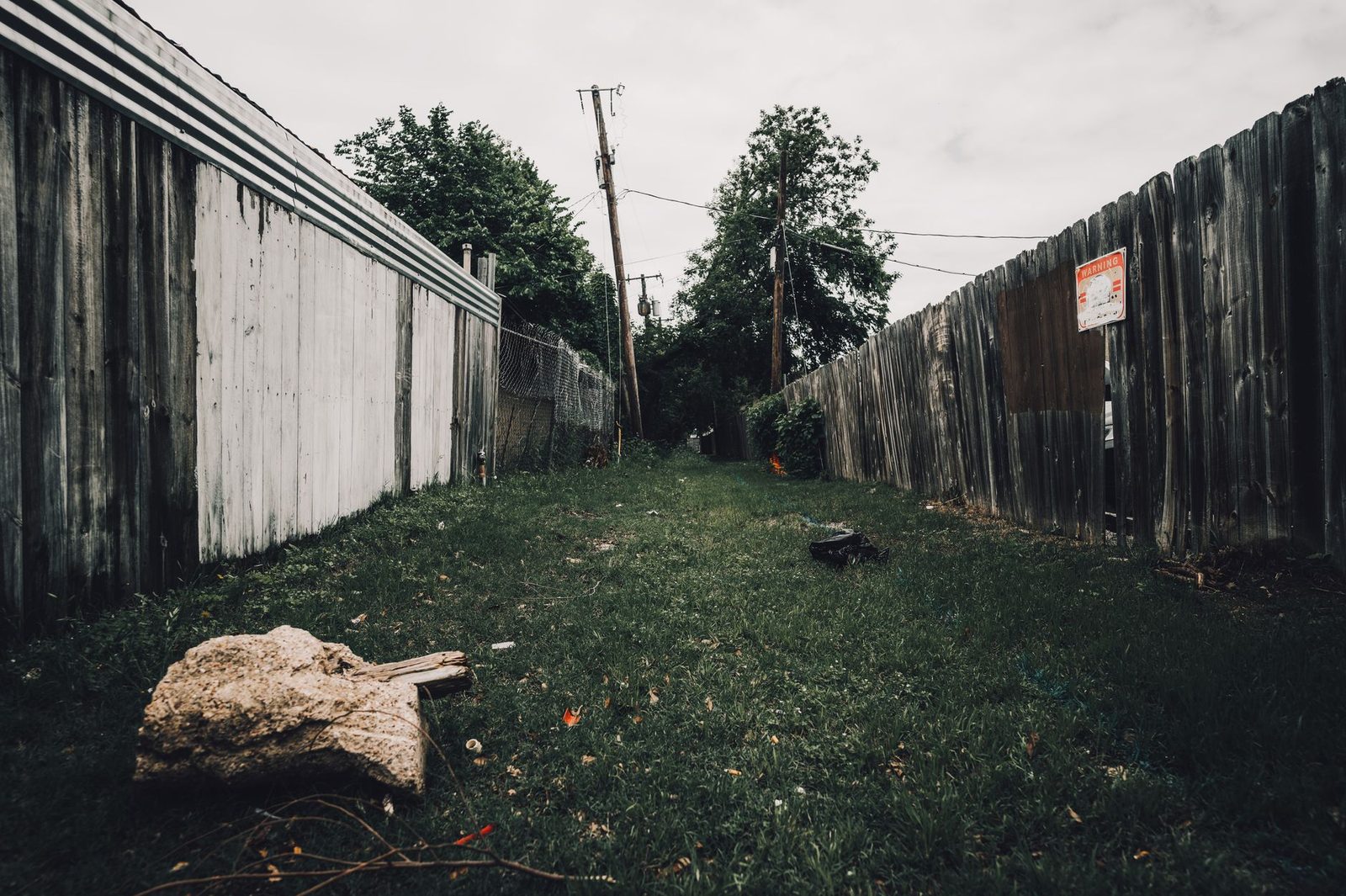
Most commercial encroachment claims start with something built, paved, or placed on the wrong side of a surveyed line. Common examples include:
- A building addition, loading dock, or wall that sits over the line.
- Parking, drive aisles, dumpster pads, or signs on a neighbor’s lot or a shared area.
- A fence or hedge set by a prior owner that conflicts with a new survey.
- Overlap between the boundary and a recorded access or utility easement.
- A recorded document or claim that appears to describe your land incorrectly.
Each situation calls for a different first step, so the survey and the paper trail come before any letter. Construction that spills onto a site can raise a related issue, covered in our neighbor construction damage page.
Claims and Remedies a Florida Court May Consider
A Florida court may be asked to decide where the line lies, to stop continued use, or to award money for harm. The claims below are the usual starting points.
- Boundary determination. When the parties disagree, a court can be asked to decide where the line runs, with a current survey as key evidence.
- Trespass. This is a claim that someone is on or using part of your parcel without permission. Under Fla. Stat. § 95.11, an action for trespass on real property falls in the four-year category.
- Adverse possession. A neighbor may claim part of your land. Under Fla. Stat. § 95.18, a claim without color of title (a claim not based on a written document) requires 7 years of actual continued possession under a claim of title exclusive of any other right. The claimant must also pay all outstanding taxes and matured installments of special improvement liens on the property within 1 year after taking possession, and keep paying all taxes and matured special improvement lien installments for all remaining years necessary to establish a claim of adverse possession. The claimant must also file a return, on the uniform form required by the statute, with the property appraiser of the county where the property is located, describing the property by proper legal description, within 30 days after paying the outstanding taxes and liens.
- Color of title. Under Fla. Stat. § 95.16, possession under a written instrument, decree, or judgment for 7 years can count. For adverse possession that began after December 31, 1945, the instrument must be recorded with the clerk of the circuit court in the county where the property sits.
- Recovery time limit. Under Fla. Stat. § 95.12, an action to recover real property or its possession requires that the person seeking recovery, or a predecessor, held the property within 7 years before the action began.
- Money and orders. Damages for lost use or repair costs, and an order requiring removal of an encroaching structure, may be requested where the facts support them.
Which remedy fits turns on the survey, the documents, and how long the condition has existed.
How the Process Usually Unfolds
Most property line matters move from document review to a survey, then a written demand, and only then to a lawsuit if talks stall.
- Gather records. Collect the deed, recorded plat, title commitment or policy, any survey, leases, easements, photos, and every letter with the neighbor or city.
- Compare the survey. Order or review a current boundary survey and match it against the recorded description.
- Send a written demand. State the claimed line, the fix you want, and a date for a response.
- Negotiate. Explore a boundary agreement, relocation, an easement, or a corrected record where the other side is willing.
- File if needed. Under Fla. Stat. § 47.011, an action is brought in the county where the defendant resides, where the claim arose, or where the property is located, but this section does not apply to actions against nonresidents. A Tampa parcel sits in Hillsborough County, so that county is one proper place to file.
Once a suit is filed, a court can send money-damage cases to mediation. Under Fla. Stat. § 44.102, a court generally must refer a filed civil action for money damages to mediation on request, if the requesting party is willing and able to pay the costs of the mediation or the costs can be equitably divided between the parties, unless a listed exception applies. A recorded notice of lis pendens (a notice that a suit affects the property) under Fla. Stat. § 48.23 generally expires 1 year after the action starts. Exceptions include claims founded on a recorded instrument or a chapter 713 lien, and the court can extend the time for good cause.
Timing varies with the survey, the number of parties, and court schedules. Our team gives a realistic estimate after reviewing the file.
Common Mistakes That Weaken a Property Position
The costly errors are usually acting on a disputed line before checking the records, and letting a letter sit unanswered.
- Building, paving, or removing anything on the disputed strip before a survey and legal review.
- Assuming a long-standing fence sets the line. Under color of title rules in Fla. Stat. § 95.16, a substantial enclosure counts only for land the recorded instrument describes.
- Ignoring demand letters, which can narrow your options and set response dates.
- Relying on a verbal promise to move a structure or share an area. Under Fla. Stat. § 689.01, creating or transferring an estate or interest of freehold, or for a term of more than 1 year, generally requires a signed written instrument witnessed by two people, and leases of real property do not require witnesses.
- Overlooking a contract’s notice or cure step.
- Waiting after you learn a survey was wrong.
Why Work With Ayala Law PA in Tampa
Ayala Law PA is located at 1646 W Snow Ave, Tampa, FL 33606, and serves Tampa, Hillsborough County, Brandon, Riverview, Plant City, Temple Terrace, and the wider Tampa Bay area from that office.
The firm concentrates in business litigation, commercial and contract disputes, shareholder and partnership disputes, construction litigation, real estate litigation, and international trade litigation in Florida courts and arbitration.
Eduardo A. Maura is the responsible lawyer for this page. Our team, which includes the firm’s lawyers and support staff, reviews the survey, title documents, and correspondence together before discussing next steps.
No result can be promised in a property matter. Each file turns on its own documents and facts, so the review comes first.
Not sure what your next step is?
Talk it through with our team — we can walk you through how a situation like yours is usually handled and what your options are.
Questions Business Owners Ask Before Calling
Most owners ask whether an old survey, a fence, or a verbal promise settles the line. None of those settles it alone.
Can I use the survey from my purchase?
An older survey may not show current conditions. A current survey is usually the first document reviewed.
Can my neighbor’s fence become the legal line?
Not automatically. Florida’s adverse possession statutes set specific tests, such as 7 years of continued possession.
Should I stop work while a dispute is open?
Talk with counsel before building, removing, or filing anything. Timing can affect your options.
Will this end up in court?
Many boundary disputes resolve through agreement or mediation. Others need a lawsuit when the other side won’t move.
Not Sure What Your Next Step Is? Talk With Ayala Law PA
Your next step is a review of the survey and records that control your line. If a neighbor’s wall, a parking area, or a recorded claim has put your commercial line in doubt, call (813) 414-5715 or request a case evaluation and have your survey and documents reviewed at 1646 W Snow Ave in Tampa.



