
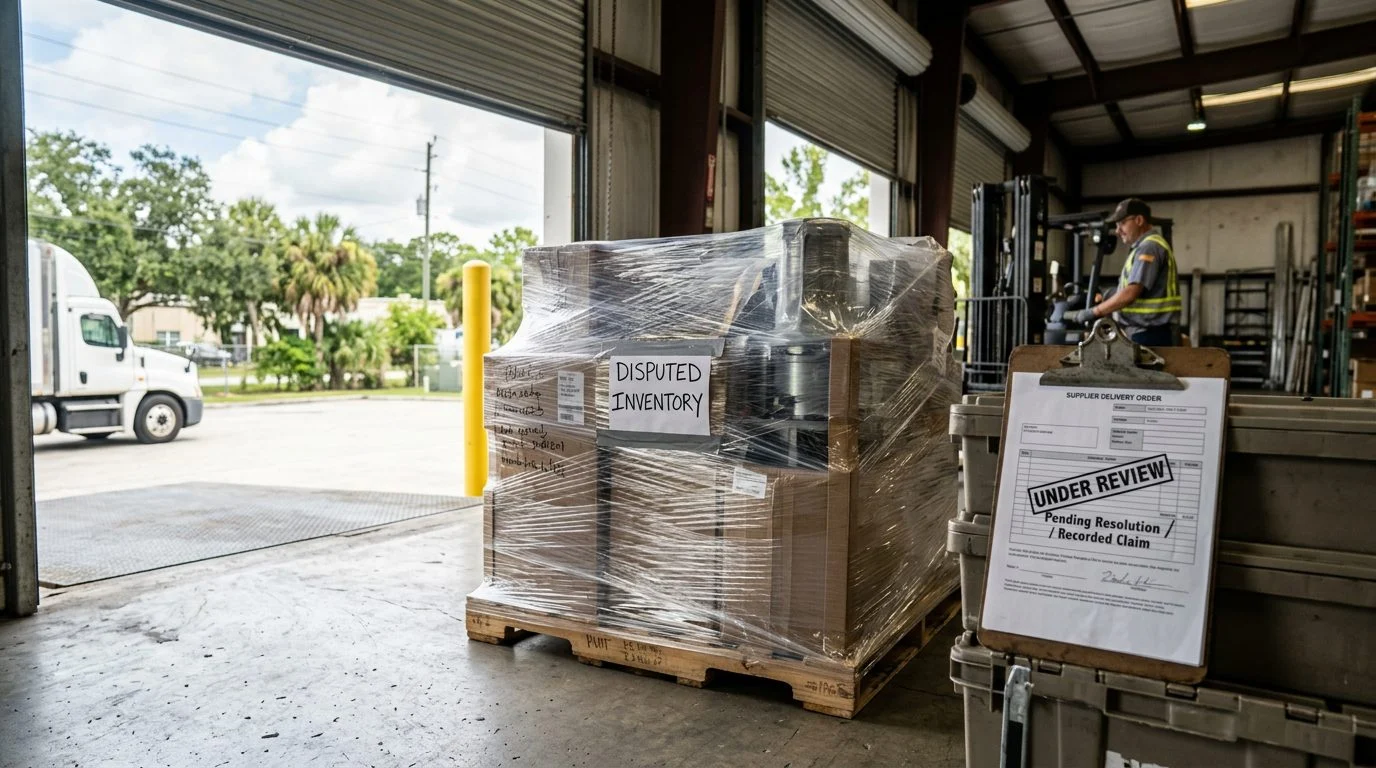
A commercial sale is under contract in Tampa, and then a notice shows up in the county’s public records. Can the deal still close?
Often, yes, but only after the recorded claim is dealt with. A recorded claim can block a commercial sale in Tampa, but it does not end the deal on its own. It has to be cleared, bonded, released or removed to a title company’s satisfaction. The first practical step is finding out exactly what was recorded and by whom.
What a Recorded Claim Against Commercial Property Means
A recorded claim is a document filed in the county’s official records that asserts a right, debt or interest in a property. Recording gives notice to everyone. Florida law says recording a claim of lien is constructive notice to all persons of its contents and effect (Fla. Stat. § 713.08). That is why future buyers and lenders see it during a commercial sale.
Recording does not mean the claim is valid or that the claimant will win. It means the claim must be addressed before title can pass cleanly. Some claims are properly filed and still unpaid. Others are overstated, were paid but never released, or name the wrong property.
Three common types are construction claims of lien under Chapter 713, notices of lis pendens under Chapter 48, and judgment liens under Chapter 55 of the Florida Statutes. Each works differently. Each needs a different response, so the details matter.
If a recorded claim has surfaced on a commercial property you're selling or buying in Tampa, we can review the documents with you before your next deadline. Talk it through with our team — we can walk you through how a situation like yours is usually handled and what your options are.
Why a Title Company May Stop a Commercial Closing
A title company generally will not insure a buyer or lender when a recorded claim is still open. The title search is how the problem surfaces. The title commitment lists recorded documents as exceptions to coverage.
Lenders have their own rules. If a claim affects a lender’s lien position, the lender may hold off on funding. Lenders and title companies both want the record clean before they release money.
A notice of commencement is different. Recording it does not create a lien. It gives constructive notice that claims of lien may be recorded and may take priority (Fla. Stat. § 713.13).
So what does the buyer do? That turns on the purchase contract. A buyer may decide to close, negotiate an extension, or ask the seller to resolve the item first. Each choice carries its own timing and cost effects.
Step One: Identify the Recorded Instrument
Start by getting a copy of every item listed in the title commitment. Read the recording date, the claimant’s name, the amount claimed, and the property description. Check the court file too if a lawsuit is listed.
Dates matter. A construction lien also lasts no longer than 1 year after recording, or 1 year after an amended claim of lien showing a later final furnishing date is recorded, unless an action to enforce it starts within that time (Fla. Stat. § 713.22).
A judgment becomes a lien on Florida real property when a certified copy is recorded in that county, if the address requirement is met. For recordings made on or after July 1, 1994, the initial lien period is 10 years (Fla. Stat. § 55.10).
A lis pendens works differently. It has effect only while it is recorded and has not expired, been withdrawn or been discharged (Fla. Stat. § 48.23). Unless the lawsuit rests on a recorded instrument or a Chapter 713 lien, it generally expires 1 year after the action starts. The court can extend that time on reasonable notice and for good cause (Fla. Stat. § 48.23).
A common mistake is treating every recorded item the same way. A lis pendens and a construction lien need different responses.
Common Ways a Recorded Claim Is Cleared Before Closing
Most recorded claims are cleared in one of a few ways:
- Payment and release: the claimant is paid and records a satisfaction or release.
- Escrow or holdback: money is held at closing until the claim is resolved.
- Court order or dismissal: a court removes the claim, or the claimant drops the suit.
- Negotiated agreement: the parties sign a settlement with a recordable release.
Bonding deserves a closer look. Under Fla. Stat. § 713.24, any person having an interest in the real property or the contract under which the lien is claimed may transfer a lien to security by depositing money or filing a bond from a surety insurer licensed to do business in Florida. The amount equals the claim, plus interest at the legal rate for 3 years, plus $5,000 or 25 percent of the amount demanded, whichever is greater. Once the certificate of transfer is filed, the property is released from the lien. The bond cost is real, so price it before you choose this route.
Owners can also push the timeline. Under Fla. Stat. § 713.22, an owner or the owner’s attorney may record a notice of contest. The lienor must sue within 60 days after service of that notice, or the lien is extinguished automatically.
A construction lien can also be discharged by a recorded satisfaction, by the lienor’s failure to sue in time, by court order, or by a recorded certified judgment (Fla. Stat. § 713.21). Which route fits depends on the instrument, the amounts and the title company’s requirements.
How a Recorded Claim Affects the Purchase Contract and Closing Date
The purchase contract sets the rules for what happens next. Review the title-objection deadline, any cure period, the seller’s duty to deliver marketable title, and closing extension rights. A buyer who objects in time keeps more options. A missed deadline can narrow them.
Wording matters. Florida courts do not favor treating a contract step as a condition precedent. A notice-and-cure step may or may not gate the other side’s rights, so read the exact words.
Earnest money needs attention too. An escrow agent may need written direction from both parties before releasing a deposit. Don’t assume the money moves on its own. Calendar every date the moment you see the recorded item.
No one can promise a timeline. How fast the claimant responds, whether a court gets involved and what the title company requires all shape the schedule.
When to Talk With a Tampa Real Estate Litigation Attorney
A recorded claim tied to a lawsuit, an unpaid construction bill, a disputed contract, or a claim you believe is invalid often needs a court filing to clear. Those are the situations where a lawyer’s review matters most.
Ayala Law PA focuses on business litigation, commercial litigation, contract disputes, construction litigation and real estate litigation in Florida courts and arbitration. The firm serves Tampa and Hillsborough County from its Tampa office at 1646 W Snow Ave, Tampa, FL 33606. Eduardo A. Maura is the lawyer responsible for this page.
If a matter falls outside what the firm handles, it may be referred to another lawyer or firm. For the wider court process, read the real estate litigation overview.
If a recorded notice has appeared on a commercial property you’re buying or selling in Tampa, call (813) 414-5715 or send your details through the contact page before the next contract deadline.
Common Questions
Can a commercial sale close with a recorded claim?
It can, once the claim is cleared, bonded, released or removed to the title company’s satisfaction.
How long does a construction lien stay on Florida property?
Under Florida law, it generally lasts no more than 1 year after recording, unless an action to enforce it starts in that time.
What is a lis pendens?
It is a recorded notice that a lawsuit affecting the property is pending. It only has effect while it stays recorded and unexpired.



