
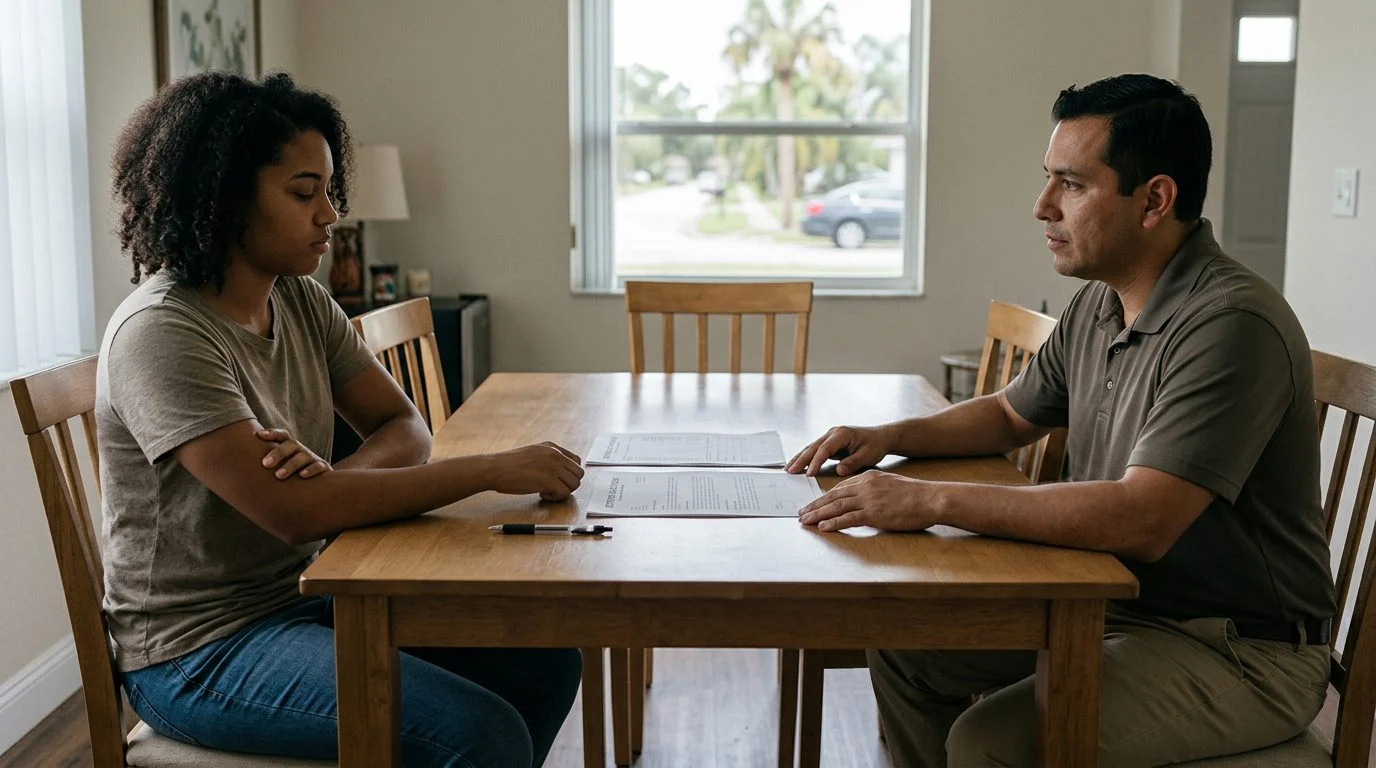
A tenant who won’t sign an estoppel certificate can stall a sale or loan at the worst possible moment. The short answer is this: check the lease, send a written request you can prove was delivered, and keep a clear record. If the tenant still refuses, the next step turns on the lease’s dispute terms and the facts.
Below, we explain what the certificate is, what it confirms, and what a Florida business can do while the issue is open.
What a Tenant Estoppel Certificate Is
A tenant estoppel certificate is a written statement from a tenant that confirms facts about the lease as of a specific date. People also call it an estoppel letter or a tenant estoppel.
Owners usually ask for one when they sell the property or refinance it. Buyers and lenders ask for one during their due diligence review. They want written confirmation of the lease before money changes hands.
Timing is the hard part. The certificate often arrives late in the deal, when the closing schedule is already tight. A tenant’s delay can push back the whole transaction.
If a lease deadline has passed and your sale or loan is waiting on a signed certificate, our team can talk through your lease and your options at (305) 570-2208. Talk it through with our team — we can walk you through how a situation like yours is usually handled and what your options are.
What the Certificate Usually Confirms
A typical certificate confirms the basic lease facts a buyer or lender needs. Common items include:
- The lease is in effect, and copies of the lease and all amendments are attached.
- The current rent, and the date it has been paid through.
- The security deposit amount.
- The start and expiration dates.
- Any renewal or purchase option.
- Whether the landlord is in default, and whether the tenant knows of any default.
- Any offsets the tenant claims, and any landlord work the tenant says is unfinished.
Accuracy matters. A buyer or lender may rely on the certificate when deciding whether to close or fund a loan. An incomplete or wrong statement creates risk for everyone in the deal, including the landlord who asked for it. That is why a tenant may hesitate to sign a form with claims it cannot confirm.
Start With the Estoppel Clause in the Lease
The lease’s estoppel clause is the first place to look. It sets out the tenant’s duty to sign, and whether that duty exists at all.
Read the clause closely. Look for:
- The deadline, often a set number of days after a written request.
- Whether the tenant must use the landlord’s form or may use its own.
- The address or method for delivery.
- Any stated consequence if the tenant does not respond.
The lease language controls the obligations between landlord and tenant. Similar leases can give very different rights, so the exact wording matters. If the lease has no estoppel clause, the analysis changes. Part I of Chapter 83 of the Florida Statutes applies to nonresidential tenancies, so a commercial lease generally falls within it.
Why a Tenant May Refuse or Stall
Most tenants who stall have a reason, even if they never say it. The reason shapes the right response.
Common reasons include:
- Disputed CAM charges (common area maintenance costs).
- An open repair complaint.
- A claimed landlord default.
- Renewal or buyout talks that are still underway.
- Uncertainty about what the form commits them to.
A tenant who disputes a charge needs a different approach than one who simply missed the form in a stack of mail. The first has a disagreement to resolve. The second needs a clear, dated reminder.
Keep your own messages neutral and factual. If the tenant states an objection, write it down. Reply in writing with what the lease says.
Send a Written Request and Build the Record
A written request, sent by a method you can prove, is the strongest starting point you control. Your request should identify:
- The lease, by date and parties.
- The date of the request and the deadline the lease sets.
- The enclosed form, if the lease calls for one.
Certified mail or a tracked courier leaves a delivery record. Keep copies of everything you send.
Log every follow-up call or email with the date and a short summary. A clear record shows what was asked, when, and how the tenant responded. That record matters if the issue later reaches a court or an arbitrator.
Protect the Sale or Financing While the Issue Is Open
Tell the buyer, lender, and title company early and in writing. Share the date of your request and what you asked for.
Buyers and lenders often set their own deadlines. Some will not close until they receive a signed certificate. A holdup you report early is easier to plan around than one that surprises everyone on closing day.
Review the sale or loan agreement too. It may have its own estoppel or closing provisions with separate deadlines. Read those alongside the lease, since the two documents may not line up.
Avoid promising the buyer that the tenant will sign. You may not control that. Describe what you requested and when.
Not sure what your next step is?
Talk it through with our team — we can walk you through how a situation like yours is usually handled and what your options are.
When a Refusal May Move Toward Litigation
A refusal can lead to a dispute over the lease, but a refusal alone does not decide the outcome.
If the lease requires delivery and the tenant does not comply after a proper written demand, the landlord may have a breach-of-lease claim. Where a case is filed matters. Under Fla. Stat. 47.011, actions must be brought only in the county where the defendant resides, where the cause of action accrued, or where the property in litigation is located, but this section does not apply to actions against nonresidents.
Some leases send disputes to arbitration. Under Fla. Stat. 682.02, a written arbitration agreement is generally enforceable, except on grounds that exist to revoke a contract.
Losses tied to a failed sale or loan are a separate question. Recovering them turns on the lease terms, the facts, and what can be proven. No general explanation can predict how a particular matter will come out.

Talk With a Business Litigation Lawyer About Your Situation
Eduardo A. Maura is the lawyer responsible for this page. Ayala Law PA’s only office is at 1646 W Snow Ave in Tampa. The firm handles matters for businesses in Tampa, Hillsborough County, and the Tampa Bay area.
You may be the owner with a closing on hold. You may be a manager handling the matter for an ownership group you don’t control. The lease deadline may have passed, the buyer may be asking questions, and the tenant may have gone silent or raised an objection. Those facts shape the next step.
Can a tenant be forced to sign an estoppel certificate?
If the lease requires one, the duty comes from that clause. Whether it is enforced turns on the lease wording and the facts.
Does the tenant have to use the landlord’s form?
Only if the lease says so. Check the estoppel clause for any form requirement.
What should I do first if the tenant won’t respond?
Check the lease deadline, then send a written request by a method you can prove.
For more on related disputes, see our real estate litigation page. If your lease deadline has passed and a closing is waiting, call (305) 570-2208 or request a case evaluation.



