
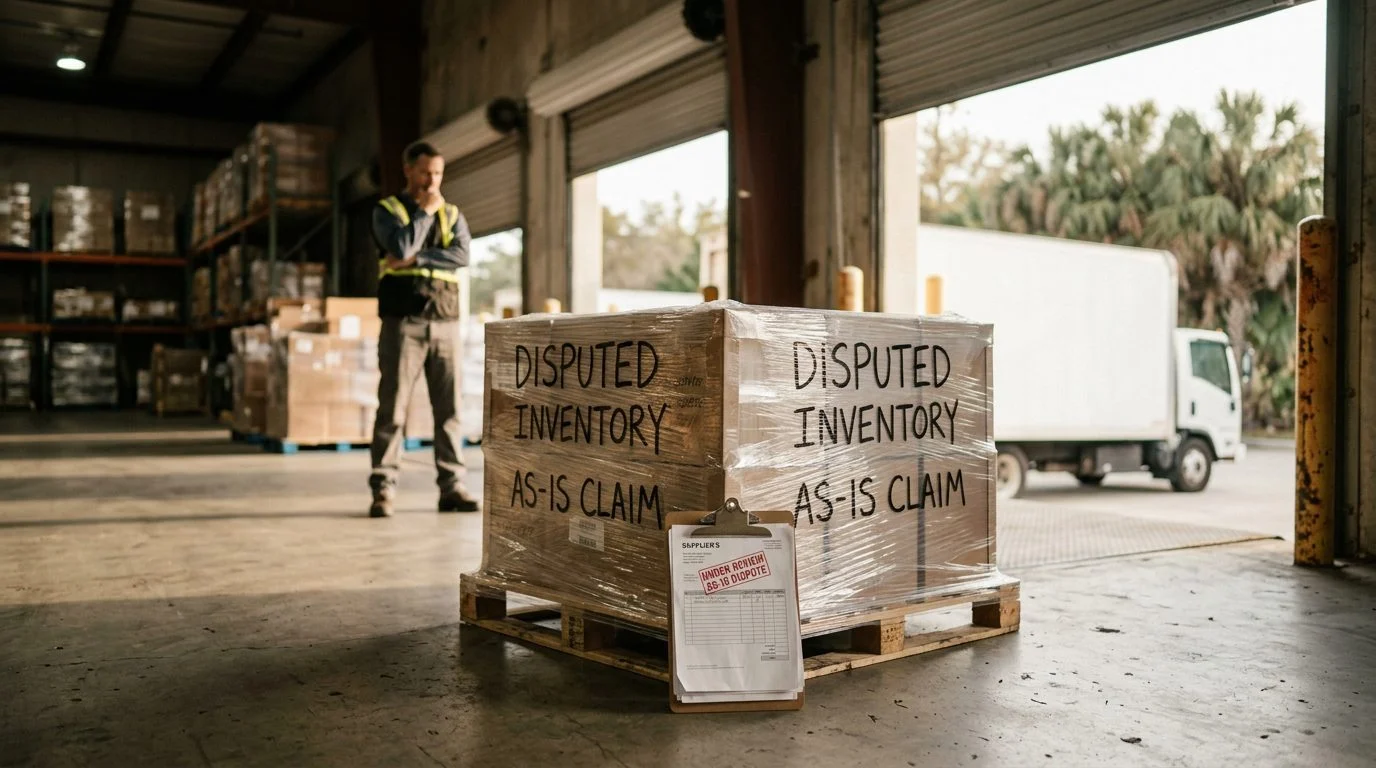
You sold a commercial building in Tampa with an as-is clause, and now the buyer says you hid a problem. When a buyer sues over a commercial property sale in Florida, the as-is clause usually becomes a central issue. Short answer: it can limit a seller’s risk for problems the buyer knew about or could have found, but it does not by itself block a fraud claim.
What does an as-is clause do in a Florida commercial sale?
The seller does not promise repairs or a condition beyond what the contract states.
In practice, the clause moves the risk of visible or discoverable defects to the buyer. A leaking roof the buyer saw during a walkthrough is one example. A parking lot with cracks that an inspector could have flagged is another. A buyer who agreed to inspect and then bought the property has a harder time calling those conditions a surprise.
Parties often use the clause because the price reflects the property as it stands. That is the clause’s real job. It is not a blanket immunity.
Not sure what your next step is?
Talk it through with our team — we can walk you through how a situation like yours is usually handled and what your options are.
How do Florida courts read as-is language in a purchase contract?
Courts read the as-is wording together with the rest of the contract. They do not read it alone.
Inspection periods, disclosure schedules, and seller promises all matter. Suppose the seller wrote that the building had no open code violations. That written promise can sit next to the as-is language and create a fight over which one controls.
Some contracts carve out specific items, such as title, environmental status, leases, or compliance with laws. A carve-out means the seller still stands behind that item.
Florida courts can also refuse to enforce a term they find unconscionable, meaning unfair. Basulto v. Hialeah Automotive requires a court to find both procedural unfairness, in how the deal was made, and substantive unfairness, in the terms. The Florida Supreme Court concluded that both the procedural and substantive aspects of unconscionability must be present, although not necessarily to the same degree, and that both should be evaluated interdependently rather than as independent elements (Basulto v. Hialeah Automotive).
When can an as-is clause fail to protect a seller?
An as-is clause gives little protection when the seller hid a problem or made a false statement about it. Fraud works differently from an unknown defect.
Under Butler v. Yusem, justifiable reliance is not a necessary element of fraudulent misrepresentation. The buyer does not have to prove that its reliance was justifiable.
Courts also look at what the seller knew at the time of the sale. A seller with a repair invoice in the file who says nothing faces a different question than a seller who never saw the problem.
Active steps count too. Covering a water stain before a walkthrough is an active step. So is a misleading answer during due diligence. Those steps can undermine the clause even when the contract says as-is.
What are common examples of misrepresentation in business property sales?
Common examples include a repair history that leaves out major work, undisclosed water intrusion, and a rent roll that overstates income. Calling a fire-damaged wall “cosmetic” when a repair report says structural is another. Inaccurate statements about open code violations also come up often in these disputes.
The line between silence and a false statement matters. A seller who does not know about a defect is in a different position from a seller who knew and said otherwise. Silence and active concealment are not the same thing.
Marketing sheets, emails, and financial summaries can also serve as evidence. This holds even when the purchase agreement does not mention them. Keep copies of every document the buyer received.
Which facts and documents usually decide these disputes?
The executed purchase agreement, every amendment, and the as-is and inspection provisions come first. Those papers set the rules for the deal.
Next, pull the records that show what the buyer was told and when. These usually include:
- Seller disclosure forms and any disclosure schedules
- Inspection and engineering reports
- Due diligence emails, texts, and call notes
- Leases and estoppel certificates
- Prior repair invoices and permits
- Code enforcement notices
- Closing statements
Keep a dated record of what was disclosed, when, and in what form. The order of disclosures often matters as much as the final contract.
How long does a buyer have to sue over a Florida commercial sale?
Fraud claims generally must be filed within four years under Fla. Stat. § 95.11. The same four-year period applies to an action on a contract not founded on a written instrument.
Claims tied to the design or construction of an improvement to real property follow a different rule. Fla. Stat. § 95.11 reads: “(3) WITHIN FOUR YEARS.— … (b) An action founded on the design, planning, or construction of an improvement to real property, with the time running from the date the authority having jurisdiction issues a temporary certificate of occupancy, a certificate of occupancy, or a certificate of completion, or the date of abandonment of construction if not completed, whichever date is earliest; except that, when the action involves a latent defect, the time runs from the time the defect is discovered or should have been discovered with the exercise of due diligence.” Under the same statute, the time generally runs from the earliest certificate of occupancy, certificate of completion, or abandonment date. For a latent defect, the time runs from when the defect is or should have been discovered.
Actions for specific performance of a contract have a one-year period under the same statute. Which deadline applies depends on how the claim is pleaded and when it began. Waiting can narrow your options, so check the dates early.
Not sure what your next step is?
Talk it through with our team — we can walk you through how a situation like yours is usually handled and what your options are.
How does a commercial real estate purchase dispute usually move forward?
Most disputes start with a written demand and negotiation. They move to court or arbitration only if talks fail.
A demand letter describes the problem and the remedy the buyer wants. If the parties cannot agree, the next step depends on the contract. Under Fla. Stat. § 682.02, an arbitration agreement in a record is enforceable except on grounds that exist to revoke any contract. A court decides whether an agreement to arbitrate exists.
Fla. Stat. § 44.102 requires a court, at one party’s request, to refer a filed civil action for monetary damages to mediation if the requesting party can pay the mediation costs or the costs can be fairly split, with exceptions that include cases where the parties have agreed to binding arbitration.
Rescission for mutual mistake is limited. The mistake must be mutual and concern a fact that goes to the essence of the contract, as Waterside at Boynton Homeowners’ Ass’n explains.
Timing matters on the buyer’s side too. Under Flaherty v. Flaherty, ratification occurs when a party entitled to rescind a voidable contract fails to do so after discovering facts that warrant rescission. As one Florida appellate court explained, ratification occurs when a party entitled to rescind a voidable contract fails to do so after the discovery of facts that warrant a rescission (Flaherty v. Flaherty).
Related reading on Florida commercial property disputes
Our real estate litigation overview covers the wider range of commercial property disputes we handle. For a closer look at specific issues, these pages may help:
- real estate litigation overview
- buyer misrepresentation in business sales
- Florida deadlines for commercial property suits
- commercial purchase contract disputes
Frequently asked questions about as-is clauses in Florida commercial sales
An as-is clause limits some claims, but it does not bar fraud claims. The answers below cover the questions that come up most often.
Can a seller be sued after an as-is sale in Florida?
Yes. An as-is clause limits some claims but does not bar fraud or intentional misrepresentation claims.
Does the buyer’s inspection change the result?
It can. Inspection rights often shape what the buyer knew or should have known, and that bears on the claim.
Does an as-is clause cover problems the seller never knew about?
It may. The contract wording and the rest of the record control the outcome.
Does the clause affect a lender or title insurer?
Lender and title requirements are separate from the as-is allocation between buyer and seller. Review them in the transaction file.

Talk with our team about your commercial sale or dispute
If a buyer is now blaming you for a problem that surfaced after closing, our team can review your purchase agreement and disclosure record with you. Call (305) 570-2208 or send a request through our contact page to talk about your sale.
Eduardo A. Maura is the responsible lawyer for this page. Ayala Law PA’s office is at 1646 W Snow Ave in Tampa, Florida. Ayala Law PA represents businesses in Tampa and Hillsborough County in Florida courts and arbitration.



