
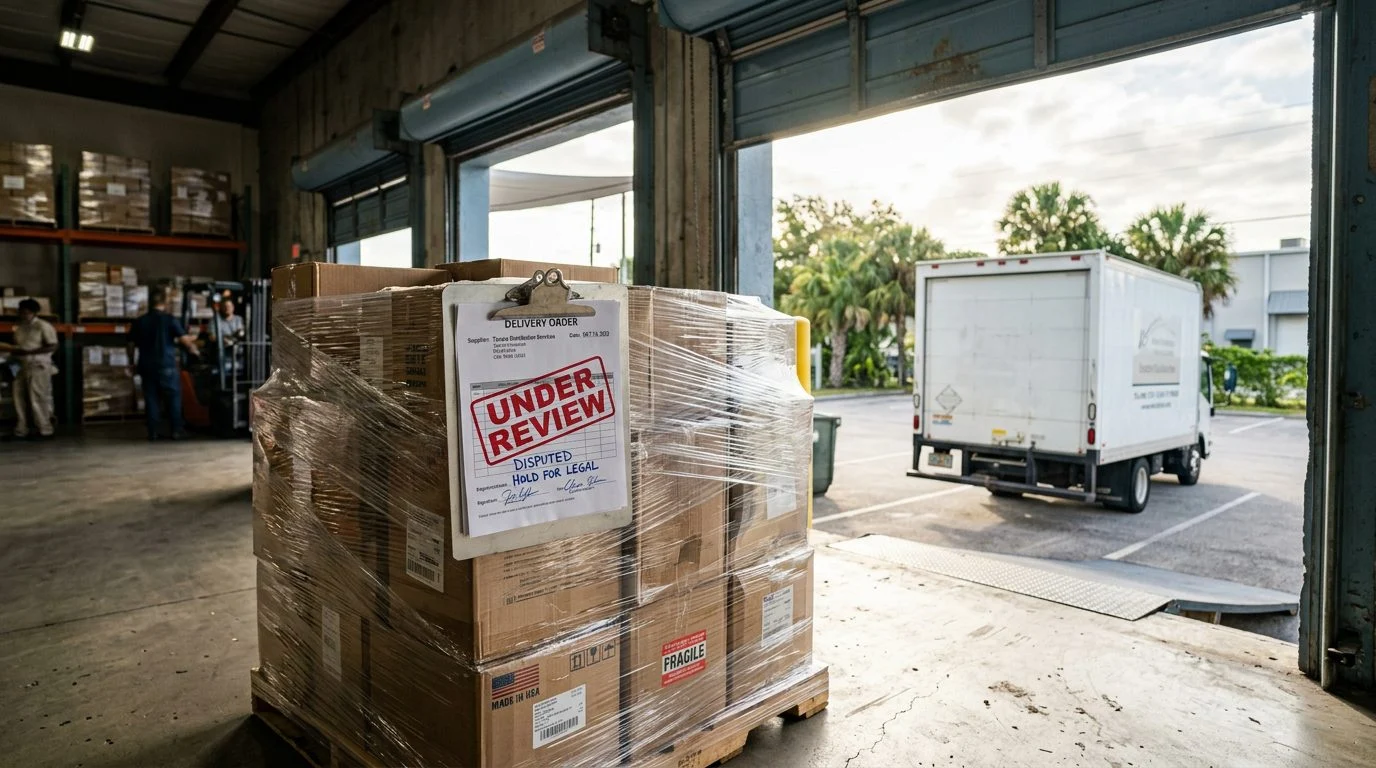
A dispute over a commercial building, a shared driveway or a lien on business property can stall a deal fast. If you’re looking for an attorney for property disputes in Tampa, it helps to understand how these cases work before you decide what to do next.
Commercial real estate litigation is a lawsuit or arbitration over business or income-producing property. The documents behind the dispute, such as deeds, recorded liens, leases and contracts, often shape the path and the deadlines.
Who Commercial Property Litigation Is For
Commercial real estate litigation covers disagreements over business, investment or income-producing property, not a single home sale. It usually involves commercial landlords and tenants, property owners, developers, business owners, and partners or family members who share business real estate.
These disputes often start quietly. A co-owner stops cooperating, a tenant questions a lease term, or a lender asks about a recorded claim. By the time a lawyer is involved, the clock may already be running, so early review of the paperwork matters.
Ayala Law PA focuses on business and commercial litigation, including contract disputes, shareholder and partnership disputes, construction litigation, real estate litigation and international trade litigation. The firm serves Tampa, Hillsborough County and the Tampa Bay area from its only office, at 1646 W Snow Ave, Tampa, FL 33606. Eduardo A. Maura is the responsible lawyer for this page.
If a blocked driveway, a recorded claim or a boundary problem has you stuck, our team at Ayala Law PA can talk through your options with you. Talk it through with our team — we can walk you through how a situation like yours is usually handled and what your options are.
Common Commercial Property Disputes the Firm Handles
Commercial property disputes can involve several recurring issues, including access, recorded claims, boundaries and construction payments.
- Easement and access disputes. A loading area is blocked, a shared driveway is closed or parking rights are contested.
- Recorded claims against property. A lien or judgment recorded against a building can cloud ownership and financing.
- Survey and encroachment disputes. A fence, wall or paving crosses a property line.
- Construction payment disputes. A contractor, subcontractor or supplier says it has not been paid for work on a commercial building.
Construction claims run on strict timing. As a general rule, a claim of lien must be recorded no later than 90 days after the final furnishing of labor, services or materials (Fla. Stat. § 713.08). Early termination of the contract can change that count, so check the dates carefully.
Contract and lease disputes tied to property, such as sale terms or disagreements between co-owners, round out the list.
How a Property Dispute Usually Moves Forward
Most property disputes move through document review, a written demand and negotiation before anyone files a case. That order is common, but each case differs.
- Review the paperwork. Deeds, title records, surveys, leases and notices show who holds which rights.
- Send a demand and negotiate. Some disputes can be resolved before a lawsuit is filed when both sides engage in discussion.
- Read the contract’s steps. Some contracts require notice or a chance to cure before a party may sue. Whether those steps are treated as conditions precedent depends on how the contract is written.
- Choose court or arbitration. A written agreement to arbitrate is generally valid and enforceable in Florida (Fla. Stat. § 682.02).
- Discovery and motions. After filing, both sides exchange information and ask the court to decide key issues.
The mistake that costs the most is waiting. Deadlines keep running while a dispute is discussed, and a lien can expire if no enforcement action starts in time.
What to Expect: Courts, Timelines and Deadlines
Florida law generally requires filing in the county where the defendant lives, where the claim arose or where the property is located. That rule does not apply to actions against nonresidents (Fla. Stat. § 47.011).
Property suits often bring a notice of lis pendens, a recorded notice that a case affects the property. A lis pendens generally expires one year after the action begins, unless an exception applies or the court extends it for good cause (Fla. Stat. § 48.23). Fla. Stat. § 48.23 reads: “(2) A notice of lis pendens is not effectual for any purpose beyond 1 year from the commencement of the action and will expire at that time, unless the relief sought is disclosed by the pending pleading to be founded on a duly recorded instrument or on a lien claimed under part I of chapter 713 against the property involved, except when the court extends the time of expiration on reasonable notice and for good cause.”
Timelines depend on the facts, the court’s calendar and whether the other side is willing to negotiate. No particular result can be promised, but a clear plan helps you make decisions.

Documents and Information to Gather Before You Call
Gather the deed, any recorded liens or notices, the contract or lease, and a dated timeline before you reach out. Having these ready makes the first conversation more useful.
- Deeds and title records. Include any title commitment or title report you already have.
- Recorded instruments. Liens, judgments, notices of commencement or lis pendens notices.
- Surveys and site plans. Photos of the condition in question help too.
- Contracts and leases. Purchase agreements, easements, construction contracts and change orders.
- Correspondence. Demand letters, default notices and any replies.
- A dated timeline. Key events in order help a lawyer see deadlines faster.
One rule shows why paperwork matters. Under Fla. Stat. § 689.01, a deed or other instrument that creates or transfers a freehold interest, or an interest for a term of more than one year, in real property is generally required to be signed in the presence of two subscribing witnesses, though leases of real property are exempt from that witness requirement, wills and testamentary appointments are treated separately, and witnesses may be present through audio-video communication technology.
Ayala Law PA in Tampa and Hillsborough County
Ayala Law PA handles business and property disputes for the Tampa area from one office, its Tampa location at 1646 W Snow Ave. Clients in Hillsborough County, including Brandon, Riverview, Plant City and Temple Terrace, are served from that office.
- One Tampa office. Clients in Tampa, Hillsborough County and the Tampa Bay area are served from that location.
- A named responsible lawyer. Eduardo A. Maura is the responsible lawyer for this page.
- A focused practice. The firm’s lawyers focus on business, commercial, contract, shareholder and partnership, construction and real estate litigation.
- Support staff. Assistants and office staff handle administrative work, scheduling and document handling.
- Plain-language pages. This page explains the process in everyday terms so business owners can weigh their options.
Not sure what your next step is?
Talk it through with our team — we can walk you through how a situation like yours is usually handled and what your options are.
Frequently Asked Questions About Property Dispute Attorneys in Tampa
What type of lawyer do I need for property disputes?
Ayala Law PA focuses on commercial real estate litigation and related contract and business disputes. Many property problems mix title, contracts and court procedure.
Do I need to file a lawsuit right away?
Not always. Many disputes start with a demand, but some deadlines, including the one-year period that can apply to construction liens, run quickly.
Can a property dispute go to arbitration instead of court?
Yes, if the parties’ written agreement provides for it. Florida law generally enforces those agreements.
Does the firm handle property disputes outside Tampa?
Ayala Law PA serves Tampa, Hillsborough County and the Tampa Bay area from its Tampa office. Clients in Brandon, Riverview, Plant City and Temple Terrace are served from that same location.
Call (813) 414-5715 or request a case evaluation with Ayala Law PA in Tampa.



