
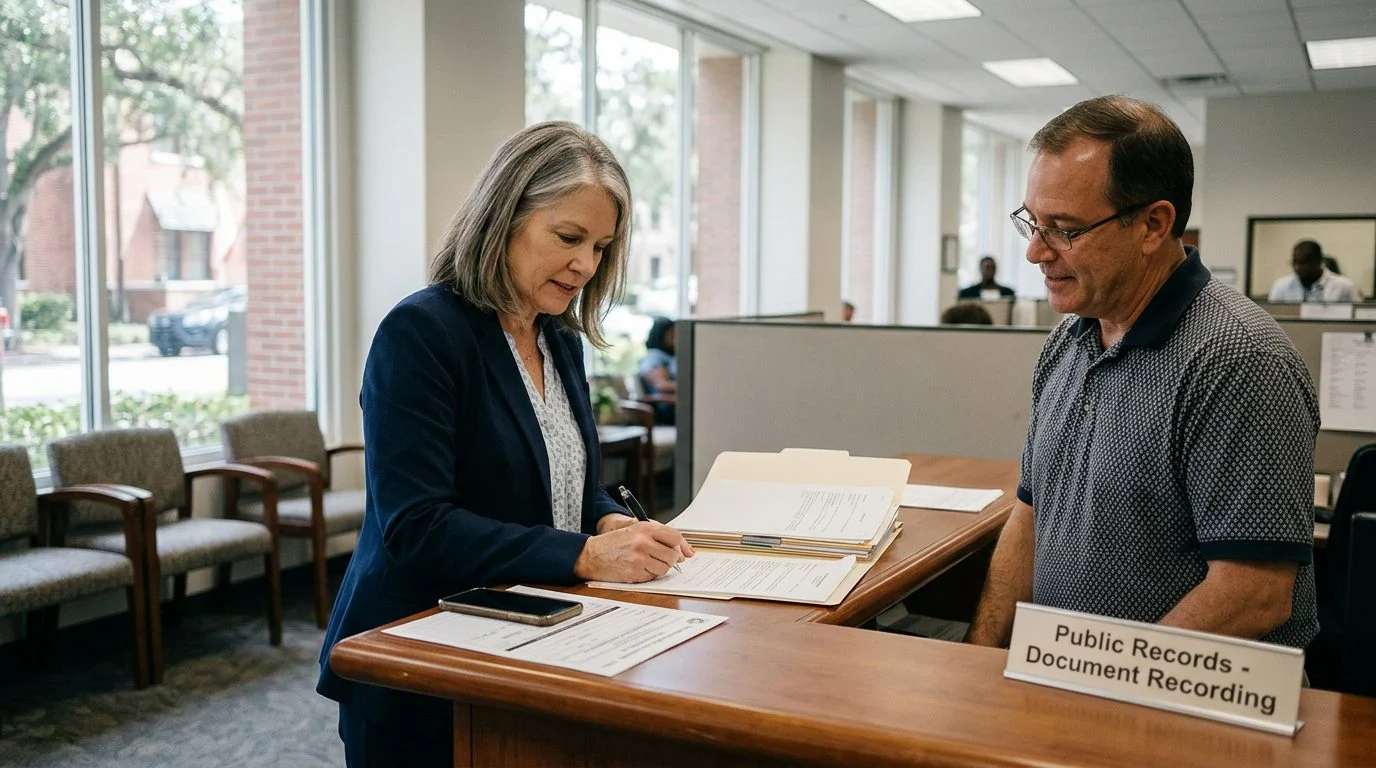
If you’re trying to sell, refinance, or finish a construction project, a lis pendens can stop you cold. When a lawsuit affecting a specific property is pending, that fact can appear in the public record through a recorded notice called a lis pendens. To file one in Tampa, you need a pending lawsuit that really affects the property, a notice with the required details, and recording in the official records of Hillsborough County. Here’s how that works and where filings go wrong.
What is a notice of lis pendens, and why does it matter in Tampa?
A notice of lis pendens tells the public that a case involving a specific piece of property is underway. In Florida, a lawsuit works as a lis pendens on property only if the notice is recorded in the official records of the county where the property is located, and the notice has not expired, been withdrawn, or been discharged (Fla. Stat. § 48.23). For a Tampa property, that county is Hillsborough.
Why does this matter? Anyone who searches the public records will see the notice. A buyer may walk away from a closing. A lender may pause a refinance. A business that owns the building it works in can feel the same pressure, even when the owner had no say in the lawsuit. Owners may first learn about the notice from a title company, a lender, or a closing agent.
If a recorded notice has stalled your sale, loan, or project, you don't have to sort out the court records alone. Ayala Law PA can talk through your property dispute with you. Talk it through with our team — we can walk you through how a situation like yours is usually handled and what your options are.
When does Florida law allow a lis pendens?
Florida allows a notice when the lawsuit involves the property itself or property that the case would affect. The statute draws a line between kinds of claims. An action for specific performance, or one not based on a duly recorded instrument, has no effect on title or on any lien unless a notice has been recorded and is still in effect, except between the parties (§ 48.23).
Real estate disputes can take many forms, such as a challenge to a deed, a disagreement over a contract to sell a property, or a dispute over an easement that gives access across a parcel.
A notice is a poor fit when a case asks only for money and does not touch the property. Under the statute, when the pleading does not show a recorded instrument or chapter 713 lien, or when the action no longer affects the property, the court controls and discharges the notice the same way it would grant and dissolve injunctions (§ 48.23). Whether a particular claim qualifies depends on the facts, so review the pleading before recording.
How do you file a lis pendens in Hillsborough County?
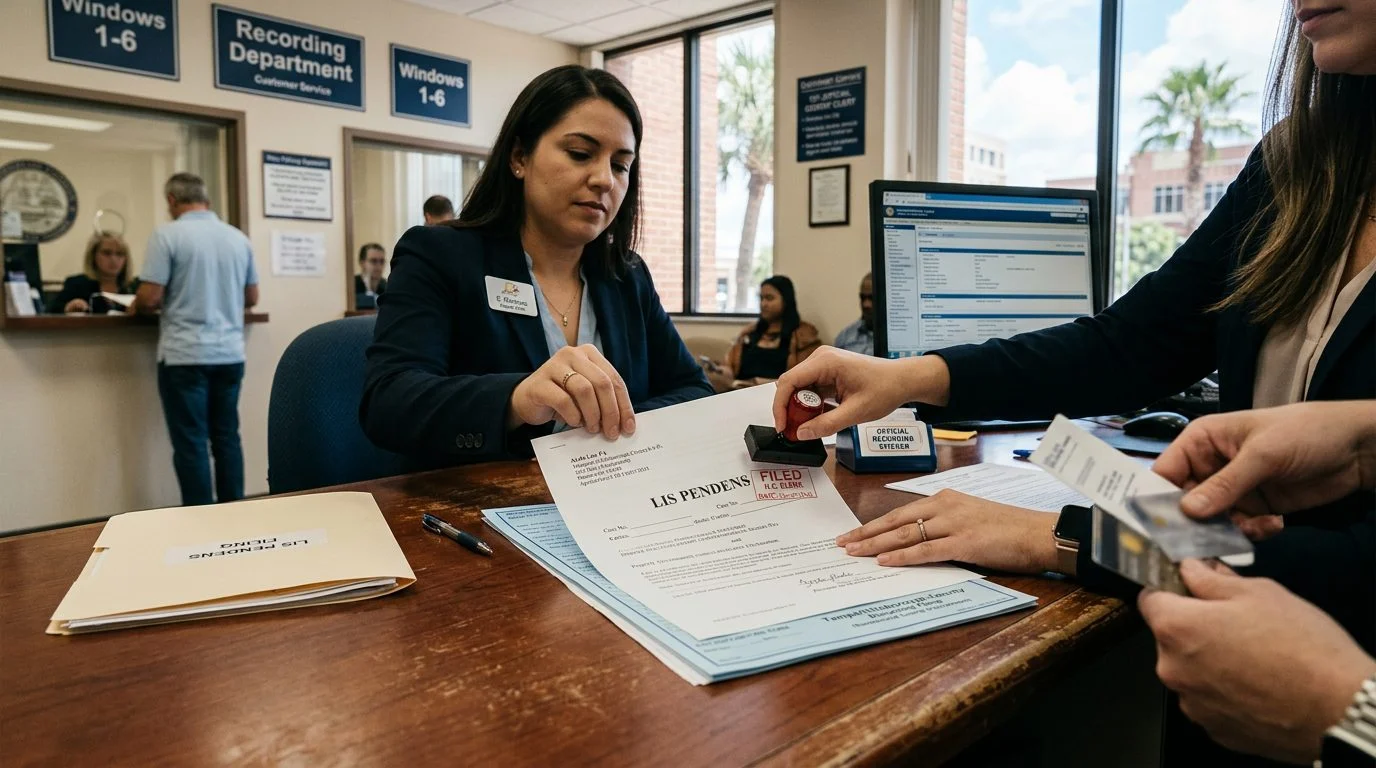
To file one, record a notice with the required details in Hillsborough County’s official records, once a lawsuit affecting the property is pending. The notice points to a pending case, so the lawsuit comes first. Then follow these steps.
- Confirm the claim ties to the property, using the test above.
- Prepare the notice with the names of the parties, the name of the court where the case is pending, the date the action was instituted, the date of the clerk’s electronic receipt, or the case number, a description of the property, and a statement of the relief sought as to the property (§ 48.23).
- Check the legal description against the deed. A wrong description or an old parcel number from a prior deed can cause problems later.
- Record the notice in the official records of Hillsborough County, where the Tampa property sits.
- Calendar the one-year limit explained in the next section.
How long does a lis pendens last, and where is the case filed?
A notice generally expires one year after the case starts, unless an exception applies. The statute says the notice is not effectual beyond that point unless the pending pleading itself shows that the case is founded on a duly recorded instrument or a chapter 713 lien. The court can also extend the time on reasonable notice and for good cause (§ 48.23).
That exception matters for construction disputes. A lien claim under chapter 713 may fall within the exception, so the one-year clock is not the whole story.
On venue, § 47.011 says actions must be brought in the county where the defendant resides, where the cause of action accrued, or where the property in litigation is located. That rule does not apply to actions against nonresidents.
What mistakes lead to a challenge to a lis pendens?
Challenges usually target the notice itself or the claim behind it. Watch for these common errors.
- Filing for a claim that asks only for money and does not affect the property.
- Using a wrong legal description or an old parcel number.
- Leaving out a party’s name, the court’s name, or the property description.
- Recording a notice for a claim the filer knew or should have known was unsupported.
That last error carries a cost. Under § 57.105, a court shall award a reasonable attorney’s fee, paid in equal amounts by the losing party and its attorney, on a claim or defense the losing party or its attorney knew or should have known was not supported by the material facts or by then-existing law. There are exceptions: no sanction for a claim first presented as a good faith argument to extend, modify, or reverse existing law, with a reasonable expectation of success; none against an attorney who acted in good faith on the client’s representations of fact; none against a represented party for a claim unsupported by then-existing law; and none on the court’s initiative under subsections (1) and (2) unless sanctions are awarded before a voluntary dismissal or settlement of the claims made by or against the party that is, or whose attorneys are, to be sanctioned. The motion also cannot be filed until 21 days after service if the claim is not withdrawn or corrected. A quick check of the claim before recording is worth the time.
What happens after a lis pendens is recorded?
The notice stays in the records until it expires, is withdrawn, or is discharged. An owner who believes the notice should not be there can ask the court to act. The route turns on the pleadings and the property records.
Buyers and lenders take their own risk. Under the statute, recording a valid notice bars enforcement against the property of unrecorded interests and liens, except the interest of persons in possession or easements of use, unless the holder moves to intervene within 30 days after recording and the court grants the motion (§ 48.23).
Fees are a separate issue. In Florida, a party typically recovers attorney’s fees from the opposing side only when a contract or a statute allows it. Section 57.105 is one statute that can shift those fees.
For related property disputes, see our real estate litigation page.
Frequently asked questions
What does a notice of lis pendens mean?
It is a notice recorded in the county’s official records that a lawsuit affecting a specific property is pending.
How long does a lis pendens last in Florida?
Generally one year from the start of the action. It does not expire at one year if the pending pleading discloses that the relief sought is founded on a duly recorded instrument or on a chapter 713 lien claim against the property, and the court can extend the time on reasonable notice and for good cause.
Can a lis pendens be filed for money damages only?
A notice is a poor fit when a case asks only for money and does not affect the property.
Where is a lis pendens recorded in Tampa?
It is recorded in the official records of Hillsborough County, where the property is located.
Not sure what your next step is?
Talk it through with our team — we can walk you through how a situation like yours is usually handled and what your options are.
Which Tampa disputes most often bring a lis pendens into play?
A notice usually shows up when a claim reaches the property itself. The following are examples of matters this practice handles.
Construction lien foreclosure. A contractor or subcontractor on a Tampa project may sue to enforce a lien.
Florida foreclosure generally begins with a complaint and a lis pendens.
Commercial easement and access disputes. A fight over access across a parcel can put the property itself into the case.
Each situation turns on its own facts. Don’t assume a notice is or isn’t appropriate without reviewing the claim and the property records.
Talk with Eduardo A. Maura about your Tampa property dispute
If a recorded notice has stalled your sale, loan, or project, you can contact Ayala Law PA to talk through your case. You may be facing a closing that won’t happen, a lien on a job site, or a notice you never expected to find in the records. Those are stressful situations, and you don’t have to sort out the paperwork alone.
Call (813) 414-5715 or use the contact form. Ayala Law PA is located at 1646 W Snow Ave, Tampa, FL 33606, and serves Tampa and Hillsborough County from that office. The firm focuses on business, commercial, contract, shareholder, construction, and real estate litigation. Eduardo A. Maura is the responsible lawyer for this page.
Ask Ayala Law PA about fees when you call.
This page is general information, not legal advice. Results in any case depend on its facts.



