
You bought a Tampa property, and now you’ve found an old lien, a bad deed, or a boundary problem nobody mentioned at closing. Title defects can arise in many different ways, and each situation depends on its own facts. Fraud claims have four years, and negligence claims have two. For some claims, the clock starts when you discover the problem, not on closing day.
This page walks through how those time limits work, so you know which questions to ask and what to gather now. It covers the main claim types, the policy and contract terms that can change the picture, and how a lawsuit can affect the property itself.
What Counts as a Title Defect on Tampa Property
A title defect is a problem in the ownership record that clouds who owns a property or what rights come with it. Think of the public record as a chain of documents. A break in that chain is a defect, even if no one has noticed it yet.
Common examples include:
- A mortgage or lien that was paid but never released in the county records.
- A prior deed that was forged, signed by the wrong person, or never properly recorded.
- A co-owner or heir whose signature is missing from an earlier sale.
- An easement, such as a utility or access right, that the seller never disclosed.
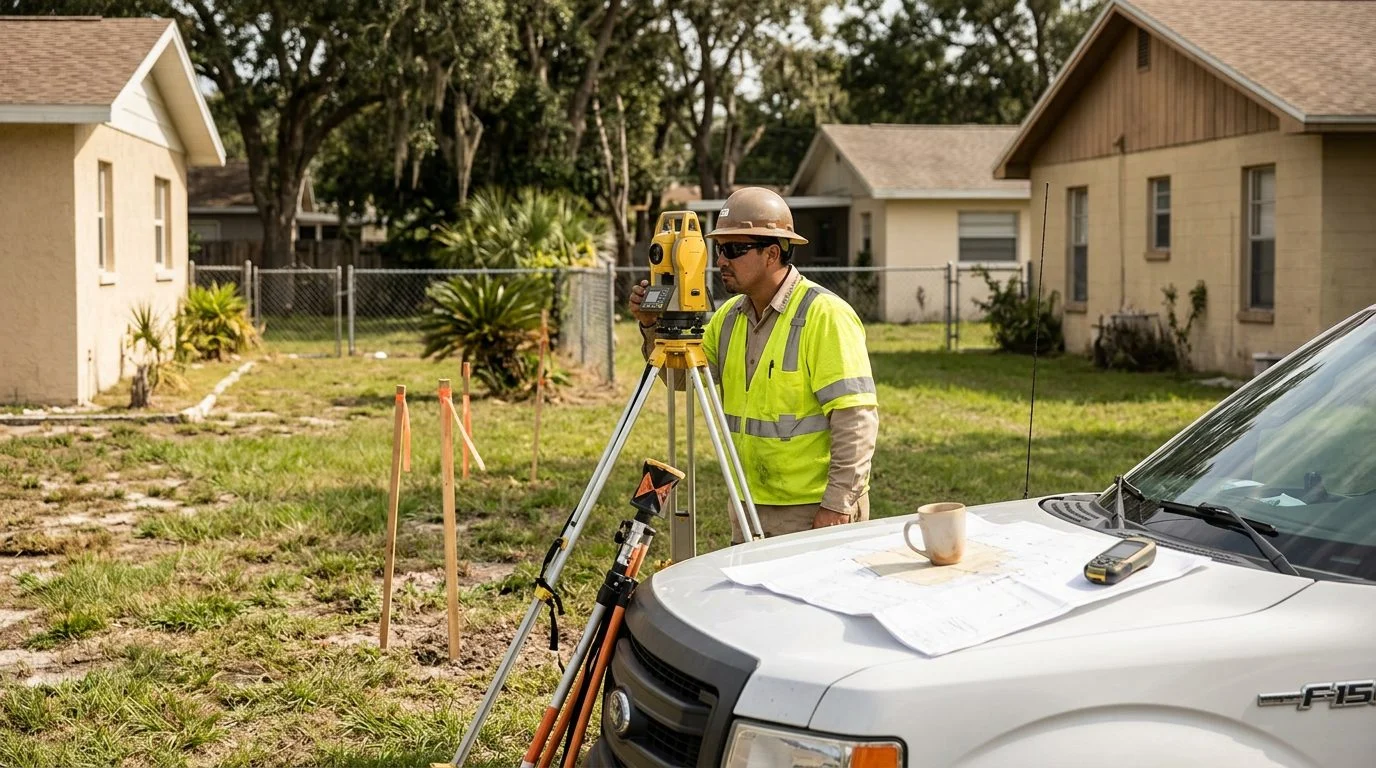
- A boundary error that means the land is not the size or shape the buyer expected.
Many defects sit quietly for years. An owner may close, pay the taxes, and build on the land before a lender, a neighbor, or a survey turns up the problem. That gap matters. The deadline may not start on the day you bought the property.
If an unreleased lien or a defective deed turned up on your Tampa property after closing, you don't have to sort out the deadlines alone; our team can talk through your options with you. Talk it through with our team — we can walk you through how a situation like yours is usually handled and what your options are.

Why the Start Date Matters More Than the Closing Date
Under Florida law, a claim generally starts running when its last required element occurs, not automatically at closing. Fla. Stat. § 95.031 says a cause of action accrues when the last element of that cause of action occurs.
Discovery matters most in fraud cases. For fraud, the period runs from when the facts were discovered, or should have been discovered with due diligence. Still, the action must begin within 12 years after the fraud was committed, even if no one found it sooner. Fla. Stat. § 95.051 lists the events that toll the running of time under any statute of limitations, except ss. 95.281, 95.35, and 95.36, and provides that a disability or other reason does not toll the limitations period except as specified.
The key question is when you learned the facts. Keep a dated record. Write down when you first saw the problem, who told you, and what they said. Save emails, title commitments, and survey reports with their dates.
Waiting after you learn the facts can cost you, too. Under Florida case law, ratification occurs when a party entitled to rescind a voidable contract fails to do so after discovering the facts that warrant rescission. See Flaherty v. Flaherty. That is a general rule, not an automatic result, so act promptly once you know the facts.
Florida Time Limits for the Main Claim Types
Florida sets separate time limits by claim type, and the right one depends on how your claim is built. These are the main categories for title problems.
- Negligence. A negligence claim must be started within two years under Fla. Stat. § 95.11.
- Contract. A claim on a contract runs on its own clock. Any contract clause that fixes a shorter time than the statute allows is void under Fla. Stat. § 95.03.
- Possession. Fla. Stat. § 95.12 reads: “No action to recover real property or its possession shall be maintained unless the person seeking recovery or the person’s ancestor, predecessor, or grantor was seized or possessed of the property within 7 years before the commencement of the action.”
- Quiet title. A quiet title action asks a court to settle competing ownership claims. Its timing depends on the claim underneath it.
The right period depends on the facts, the documents you signed, and when you learned of the problem. One deadline cannot fit every title case.
Delay can also bar a claim. Fla. Stat. § 95.11 reads: “(7) LACHES.—Laches shall bar any action unless it is commenced within the time provided for legal actions concerning the same subject matter regardless of lack of knowledge by the person sought to be held liable that the person alleging liability would assert his or her rights and whether the person sought to be held liable is injured or prejudiced by the delay.” The other side does not need to know you would assert your rights. A valid claim can be lost through delay.
Fla. Stat. § 95.051 lists the pendency of an arbitral proceeding on the dispute as a tolling event.
Can You Sue a Title Company in Florida?
A dispute with a title insurance company starts with the owner’s policy, and that policy sets its own notice and claim rules. Read it before you send anything. Several parties may be involved. The title agent who handled the closing, the title insurer that issued the policy, and the seller who gave disclosures each have different roles. Identify who did what before you decide where a claim belongs.
The Florida Department of Financial Services describes what title insurance covers, common title defects, and the policy exclusions that can affect a claim or denial. See the Florida title insurance overview.
Notice and claim-filing terms can run apart from the statute of limitations, so check both. As a general rule, Florida courts do not favor conditions precedent and will not read a contract provision as one unless plain, unambiguous language or necessary implication requires it. Florida courts do not favor reading a step as a condition precedent, meaning a step that must happen first. They treat it as one only when plain, unambiguous language or necessary implication requires it. See Covelli Family v. ABG5.
Routes That Often Run Alongside a Lawsuit
Title problems are often handled through a policy claim, a court action, or both at once. The right mix depends on the defect and on what you want to happen to the property.
- Policy claim. How an owner’s policy relates to court action depends on the policy’s terms and the facts involved.
- Quiet title action. This is a court request to settle competing ownership claims and clear the record.
- Lis pendens. A lawsuit that affects property can be recorded as a notice. Under Fla. Stat. § 48.23, the action works as a lis pendens on the property only if the notice is recorded in the official records of the county where the property is located.
A recorded notice has real effects. It bars enforcement against the property of unrecorded interests and liens, except the interests of people in possession and easements of use. The notice also expires one year after the case starts, unless the case rests on a duly recorded instrument or a construction lien. The court can extend it for good cause.
For a sale or refinance, this means a buyer or lender can find the notice in the public record while the case is pending.
What to Gather Before You Contact a Lawyer
Gather your owner’s title policy, your closing file, the deed, and every release or lien record you can find, with dates. Having these in hand makes the timeline easier to map.
- The owner’s title insurance policy and any endorsements.
- The closing statement and the recorded deed.
- The title search or title commitment, the purchase contract, and any seller disclosures.
- Mortgage, lien, and release documents, including any satisfaction records.
- Every email, letter, and call note with the seller, title agent, title company, or lender, with dates.
- Copies of recorded documents pulled from the official records of Hillsborough County, with the recording information.
The dates matter most. Your first sign of the defect, your first written notice to a title company, and the date you learned of the problem help place the timeline.
Not sure what your next step is?
Talk it through with our team — we can walk you through how a situation like yours is usually handled and what your options are.
Talk With Ayala Law PA About Your Tampa Property
Ayala Law PA focuses on real estate litigation and related commercial disputes from its Tampa office. For a broader look at commercial title claims, see the Tampa commercial title defect guide.
Eduardo A. Maura is the responsible lawyer for this page. The firm also handles business litigation, contract disputes, shareholder disputes, construction litigation, and international trade litigation. The firm serves Tampa, Hillsborough County, and the Tampa Bay area from its office at 1646 W Snow Ave, Tampa, FL 33606.
To learn how Ayala Law PA works with clients, including any questions about fees, call (813) 414-5715 or book a case evaluation.
Is there one deadline for every title defect in Florida?
There isn’t. Each claim type has its own time limit, and some clocks start at discovery rather than closing.
Does a title claim start when I close?
Not always. A claim generally starts when its last required element occurs, and fraud claims run from discovery.
How long does a lis pendens last?
A notice of lis pendens generally expires one year after the case starts, unless the relief sought is disclosed by the pending pleading to be founded on a duly recorded instrument or on a lien claimed under part I of chapter 713 against the property involved. The court can extend it for good cause.
If an unreleased lien or a defective deed turned up on your Tampa property, reach out to Ayala Law PA at (813) 414-5715, or send a message through the contact page to talk through your timeline.



