
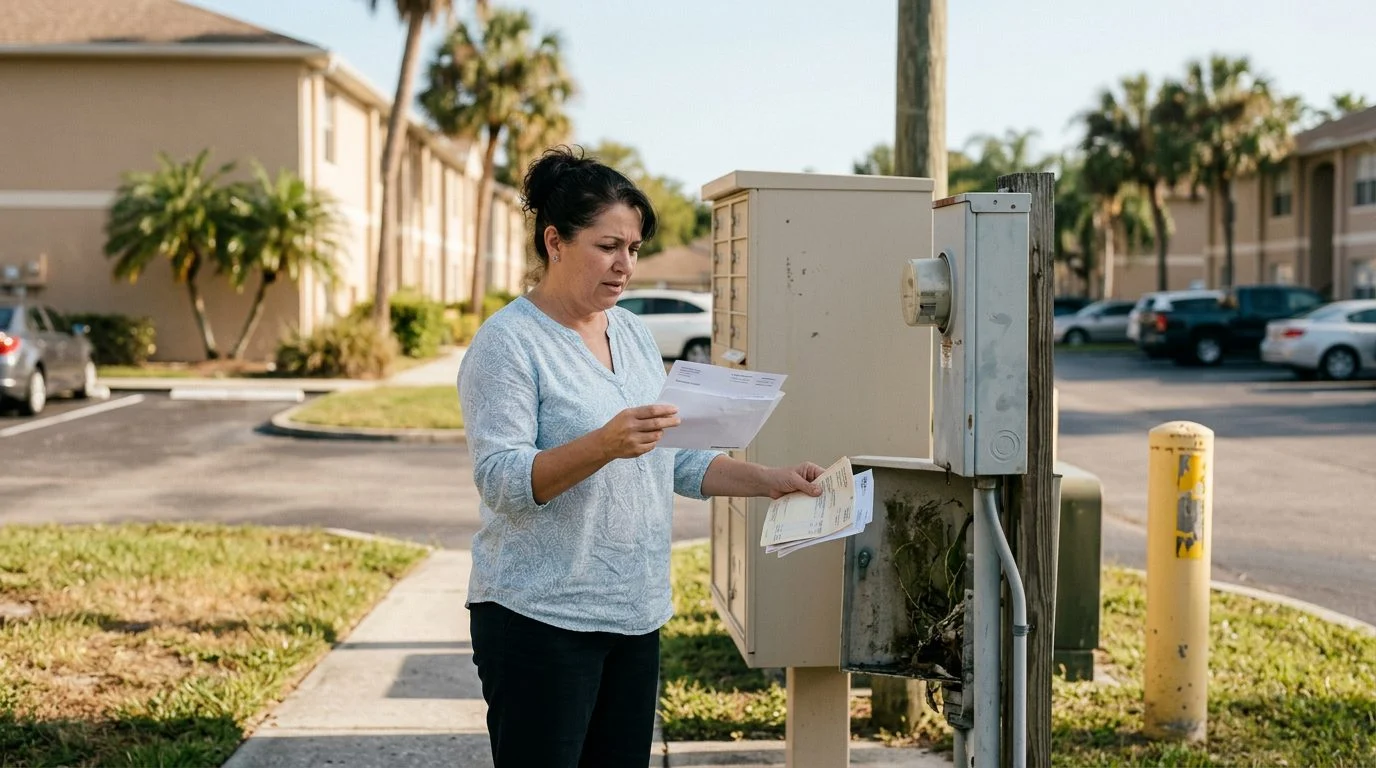
Your business received a common area maintenance (CAM) bill that seems too high, and you want to know whether the landlord can charge it. Yes, a commercial landlord can overcharge for common area maintenance in Florida when the amount billed goes beyond what the lease allows.
The lease controls that question more than any general rule does. This page covers where overcharges usually start, which lease terms matter most, how to request records, and which deadlines to watch. It describes common issues, not how any specific bill will turn out.
Yes, a Landlord Can Overcharge CAM When Billing Goes Beyond the Lease
A landlord overcharges CAM when it bills more than the lease allows. A charge the lease never permits is an overcharge, even if the statement looks official.
Think of the lease as the rulebook and the bill as the score. If the score doesn’t follow the rules, the bill needs a closer look. Many tenants assume a formal statement must be correct. It can still include charges the lease doesn’t allow.
Florida’s rules for commercial tenancies sit in Chapter 83, Part I. Fla. Stat. § 83.001 says that part applies to nonresidential tenancies and all tenancies not governed by part II of this chapter. That gives the general framework, but the lease language usually does most of the work.
Tenants often hope the implied covenant of good faith and fair dealing will fix an unfair bill. Florida’s high court has limited that argument. Under QBE v. Chalfonte, a good-faith claim fails when applying it would contradict the contract’s express terms. Start with the lease wording, then test the bill against it.

What CAM Charges Usually Cover
CAM charges pay for the upkeep of shared areas that every tenant uses. Typical items include parking lots, hallways, lobbies, landscaping, lighting, and security for common spaces. Whether a cost counts depends on how the lease defines it, not on the label on the invoice.
Your share is usually your leased square footage divided by the building’s rentable area. That percentage drives each monthly estimate you pay during the year. Some leases use a fixed CAM amount instead, so check which method yours uses before you compare numbers.
At year end, the landlord prepares a reconciliation statement. It compares the estimates you paid with the actual costs. If you paid too little, you owe the difference. If you paid too much, the lease should say how the difference is handled.
Read the reconciliation next to the lease. Many tenants start with the total and miss the line items that carry the real problem.
Common Ways CAM Charges Become Overcharges
Overcharges usually come from excluded costs, capital items, fees above a cap, share errors, and misplaced charges. Each one breaks a different lease term, so sort the bill by category.
- Excluded costs. Expenses for leasing vacant space, marketing, or the landlord’s own financing, when the lease leaves them out.
- Capital improvements. Major building work billed as an operating expense, when the lease excludes it or limits it to an amortized amount.
- Fees above the cap. Management or administrative charges over the lease’s limit, or charged on costs already covered.
- Share errors. The wrong building square footage, space that isn’t rentable, or a percentage that differs from the lease.
- Misplaced charges. Prior-year costs billed now, or one item billed to several tenants.
Pick one year and test it line by line. A single item that breaks the lease definition can be enough to start a real conversation. Small errors repeat every year when nobody checks them.
Lease Provisions That Decide the Dispute
The definition of operating expenses and its list of exclusions usually decide the dispute. Start there, then check the rest.
Look at any gross-up provision next. It changes how your share is calculated, so work through the formula step by step. Many gross-up clauses adjust variable costs as if the building were fully occupied.
Review any cap on annual increases, the base year or expense stop (a starting cost level above which you pay increases), and any limit on administrative fees. Each one can change the amount you owe.
Check the timing terms too. Some leases require the landlord to send reconciliation statements within a set period after year end. Note when your statement arrived and compare the date to that requirement.
Some leases also ask you to sign an estoppel certificate, which confirms amounts owed as of a set date. Read it closely before you sign. For more on that issue, see our page on tenant estoppel certificates.
Requesting Records and Using Audit Rights
Ask the landlord in writing for the reconciliation statement and the records behind it. A written request sets a clear date and shows exactly what you asked for.
Request invoices, general ledger detail for the CAM pool, and the calculation of your share. Ask which square footage was used and how shared costs were allocated. Keep copies of every request and every reply.
A commercial lease may include an audit right. The audit clause sets the notice window, the procedure, and sometimes who pays for the audit if a large overcharge turns up. Follow the clause exactly as written.
Calendar the audit window the day the statement arrives. A missed notice deadline can damage your position, even if the bill was wrong.
Remedies, Deadlines, and Withholding Risks
An overcharge is usually pursued as a breach of the lease. Florida law also sets the outer time limit for suing, and a lease cannot shorten it.
For an action on a written contract, Fla. Stat. § 95.11 sets a five-year period. A contract clause that fixes a shorter time to sue is void under Fla. Stat. § 95.03.
Under Fla. Stat. § 95.031, a cause of action accrues when its last element occurs.
Lease notice and audit windows are a separate matter. They are procedures in the contract, and missing them can cause problems even when the bill was wrong. Under Williams v. Johnson, an express contract covering the same subject generally will not support a separate unjust enrichment claim.
Can I withhold CAM payments while I dispute a bill?
Withholding payments without following the lease can put you in default. Read the default and cure terms before you change how you pay.
Can a landlord charge costs the lease doesn’t mention?
When the Building Changes Hands
A commercial lease usually continues after the building sells, so a new owner typically inherits the same CAM terms. The reconciliation duties usually carry over with it.
A new owner’s first reconciliation can include costs from the prior owner’s period. Confirm which costs fall in which period. Compare the statement’s dates with the date the sale closed.
Ask for a breakdown by period. If the bill includes a large item, ask what it was and when the work happened. Keep the sale documents and billing records together.
For more on how leases carry over after a sale, see our page on commercial leases after a building sale.
Talk With Ayala Law About Your CAM Bill
Ayala Law PA can review your lease language and billing records with you. You may be reading this for a business you run, or for an employer whose property team sent the bill, and a reconciliation statement can arrive at a hard time.
Ayala Law PA focuses on business litigation, including commercial, contract, and real estate litigation. Fee terms are explained before any engagement.
Call (305) 570-2208 or reach out through the contact page. The firm’s office is in Tampa, at 1646 W Snow Ave, and it represents businesses in Tampa, Hillsborough County, and the Tampa Bay area from that office. Eduardo A. Maura is the lawyer responsible for this page.



