
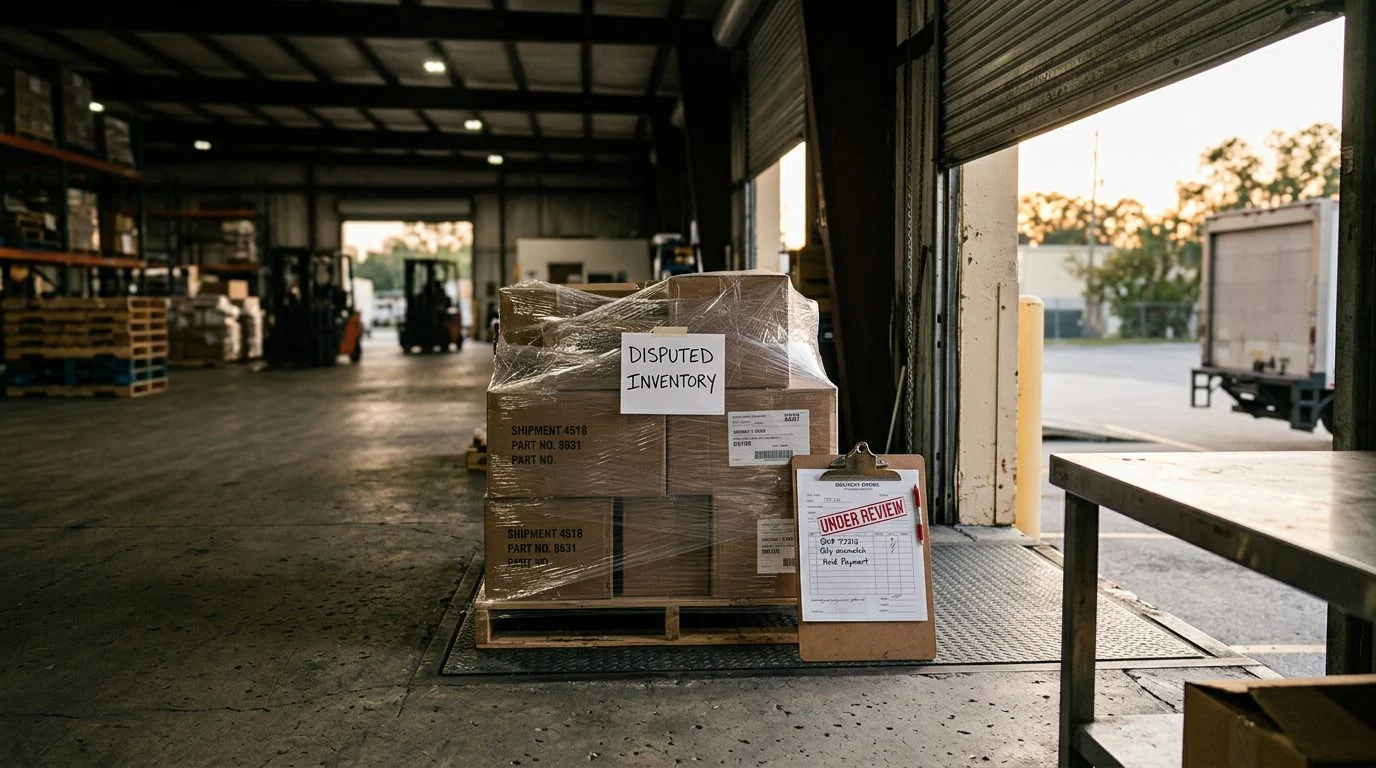
You put earnest money down on a commercial property, and now the deal has stalled. The escrow agent won’t release the deposit, or the seller says it’s theirs to keep.
In most Florida commercial deals, the buyer posts the deposit with a neutral holder, and the written purchase agreement decides who gets it. If the sides disagree, the money usually stays with the holder until both sides sign a release or a court or arbitrator rules. Here is how that works for businesses in Tampa and Hillsborough County.
Who Posts Earnest Money and Who Holds It?
The buyer usually posts earnest money, and a neutral holder keeps it until closing. The holder is often an escrow agent, a title company, or a broker named in the purchase agreement.
- It shows commitment. Earnest money tells the seller the buyer is serious. In many contracts, it counts toward the price at closing.
- The contract sets the rules. It names the holder and the deadline to post the funds. Check those lines first, because a late deposit can create its own problem.
- The holder follows the contract. The holder acts on the written agreement and instructions from both sides.
Disputes usually start in one of three places. The sides disagree about whether a condition was met, whether someone defaulted, or whether a termination notice was valid. The deposit is often the first money at stake, so a demand for it may come before any lawsuit.
If a deposit on your commercial deal is stuck with an escrow agent, or a seller says the money is theirs, our team can talk through your contract with you. Talk it through with our team — we can walk you through how a situation like yours is usually handled and what your options are.
Can a Buyer Get Earnest Money Back if They Walk Away?
Refund rights come from the written purchase agreement, so the contract’s own terms decide the result. Florida does not apply one statewide rule to every deposit.
- Inspection or due diligence period. A buyer who ends the deal inside this window usually has a stronger position than one who leaves later.
- Financing, zoning, title, and environmental conditions. Each may carry its own deadline and notice method.
- Default and liquidated damages clauses. These may let the seller keep the deposit as the agreed remedy. Exact wording decides whether the clause helps or hurts you.
- Mutual mistake. Florida courts allow rescission for a mutual mistake only if the mistake is mutual and goes to the essence of the contract. See the Waterside mutual mistake ruling.
- Timing after you learn the facts. Under a general rule, ratification happens when a party who may rescind fails to do so after discovering the facts that warrant rescission. See the Flaherty ratification ruling. This is a general rule, not an automatic result.
Your result turns on the contract language and the timing of each notice. Gather the agreement, every amendment, and every notice before you decide anything.
What Are the Common Earnest Money Disputes on Tampa Commercial Deals?
Most disputes fall into a few patterns: a holder who won’t release funds, a seller who claims default, a failed contingency, or a notice that was late or sent the wrong way.
- The holder won’t release the money. The holder may insist on both signatures. The deal stalls when one side refuses to sign.
- Competing default claims. The seller says the buyer defaulted. The buyer says a contingency such as title, survey, environmental, or financing failed.
- Notice problems. The dispute is whether a termination or objection notice arrived on time and by the method the contract requires.
- Changed terms. A closing extension or amendment changed the deal after the deposit was posted. Each side may remember the change differently.
- Construction issues. A lien or permit problem found during due diligence can stall both the deposit and the closing, especially when title is involved.
How Does an Earnest Money Dispute Usually Move Forward?
Most disputes move from document review to written demands, then to negotiation, and then to court or arbitration if talks fail.
- Review the file. Read the purchase agreement, addenda, deposit receipt, and every notice sent to the other side or the holder.
- Map the deadlines. Note each contract deadline and the notice method it requires. A missed deadline can shift who holds the stronger position.
- Send a written position. State your claim and the contract language behind it. Copy the holder where the contract calls for it.
- Negotiate or mediate. Work toward a release agreement. If a suit for money damages is filed, Florida law requires the court to refer it to mediation on request, if the requesting party can pay or the costs can be split fairly. Fla. Stat. § 44.102 reads: “(2) A court, under rules adopted by the Supreme Court: (a) Must, upon request of one party, refer to mediation any filed civil action for monetary damages, provided the requesting party is willing and able to pay the costs of the mediation or the costs can be equitably divided between the parties, unless: 1.” Exceptions apply, including an agreement to binding arbitration. See Florida court-ordered mediation law.
- File the right case. Under the Florida venue statute, a suit must be brought where the defendant resides, where the claim arose, or where the disputed property is located. That statute does not apply to actions against nonresidents. If the contract calls for arbitration, Florida arbitration law generally enforces that agreement. Fla. Stat. § 682.02 reads: “(1) An agreement contained in a record to submit to arbitration any existing or subsequent controversy arising between the parties to the agreement is valid, enforceable, and irrevocable except upon a ground that exists at law or in equity for the revocation of a contract.”
Timelines vary with the contract, the court’s calendar, and how quickly the other side responds.

What Remedies Can Buyers and Sellers Pursue Over a Deposit?
- Recovery of the deposit. This fits when the buyer believes a contingency failed or the seller breached, and the refund language supports the claim.
- Defense to a forfeiture claim. The buyer can argue the default or liquidated damages clause does not fit the facts.
- Breach of contract damages. These may cover losses beyond the deposit, subject to the contract’s terms and limits.
Fees can also be part of the picture. If the contract allows attorney’s fees to the party that must enforce it, the court may also allow reasonable fees to the other side when that side prevails, for contracts entered into on or after October 1, 1988. See the Florida attorney’s fee statute. Florida’s offer of settlement statute sets rules for written settlement offers, but by its own terms it does not apply to causes of action that accrue after the effective date of the act that created it, so it is unlikely to govern a current deposit dispute.
No particular result can be promised. Each remedy rests on the notices, the contract language, and the evidence of who performed what.
Why Work With Ayala Law PA on a Commercial Deposit Dispute?
Ayala Law PA focuses on business litigation, commercial litigation, contract disputes, real estate litigation, and construction litigation for clients in Tampa, Hillsborough County, and the wider Tampa Bay area.
- Responsible lawyer. Eduardo A. Maura is the responsible lawyer for this page. The firm’s lawyers and support staff handle matters in these practice areas.
- Office location. The firm’s only office is at 1646 W Snow Ave in Tampa. It represents Tampa and Hillsborough County businesses in Florida courts and arbitration.
- Practical work. The work includes reviewing purchase contracts, sending written demands, handling escrow disputes, and litigating in Florida courts and arbitration.
- Referrals. If a matter will be referred to another lawyer or firm, the firm will tell you that at the start.
Not sure what your next step is?
Talk it through with our team — we can walk you through how a situation like yours is usually handled and what your options are.
Frequently Asked Questions About Earnest Money Deposit Disputes
Who is responsible for depositing earnest money?
Generally the buyer does, within the timing and to the holder the purchase agreement names.
Is earnest money refundable if the buyer backs out?
It turns on the contract’s contingency, default, and notice terms. A buyer who ends the deal inside a written contingency window usually has a stronger position.
Can an escrow agent release earnest money without both signatures?
Usually not, unless the contract or a court provides for it.
Can a court decide who gets disputed earnest money before closing?
How much earnest money is required on a commercial deal?
The purchase agreement sets the amount, and the parties negotiate it.
How much does a case evaluation cost?
Fee terms are discussed with you before any engagement.
If your deposit is stuck right now, you’re likely juggling deadlines, notices, and a holder or seller waiting on an answer. Call (813) 414-5715 or reach out through the Ayala Law PA contact page to talk through your contract.



