
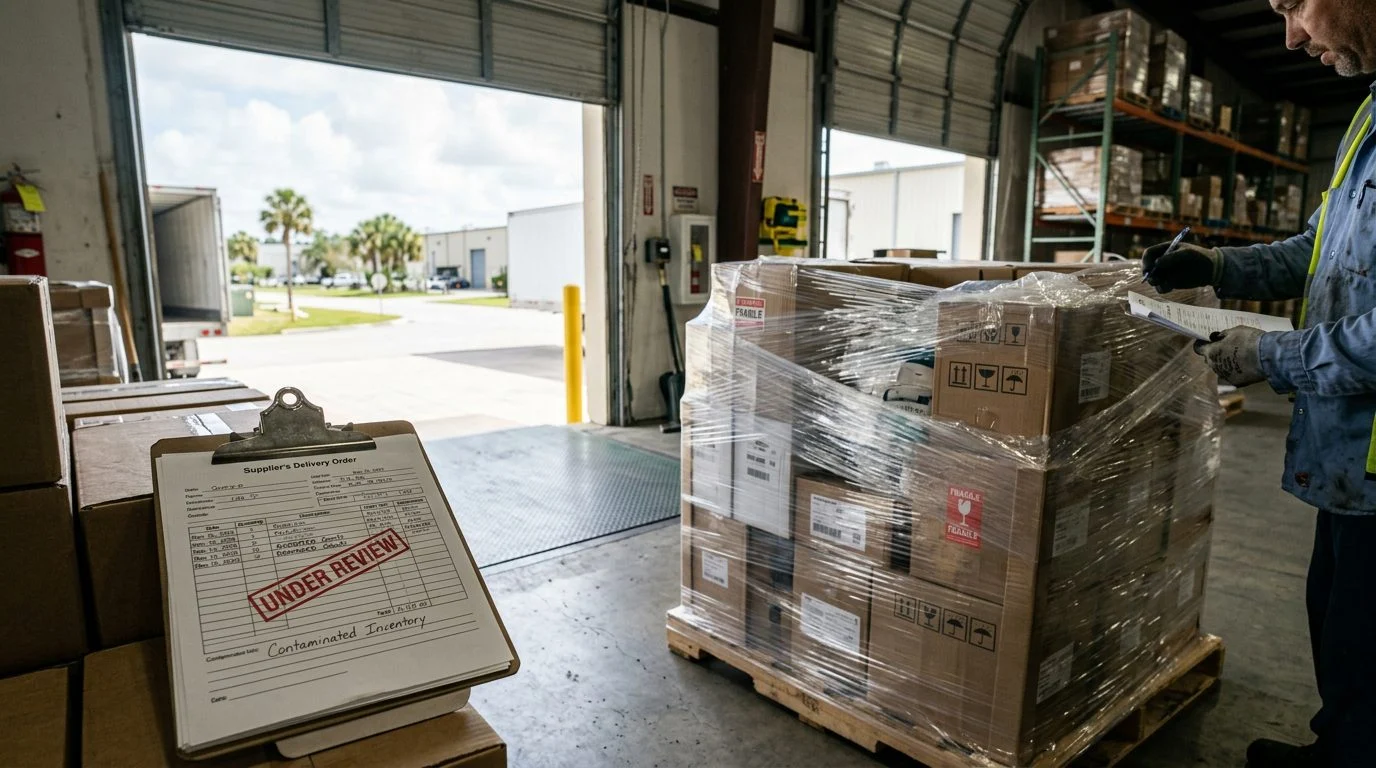
If you bought commercial property in Tampa and later found contamination in the soil, groundwater or building materials, you may be asking whether you can sue the seller. In many cases a buyer may have a claim, but the answer turns on what the seller knew, what the seller said, and what the purchase contract promised.
A buyer’s claim usually rests on one of three things: a hidden defect the seller didn’t reveal, a false statement, or a broken promise in the contract. Courts and arbitrators sort out which theory fits your facts. Here is how that works in plain terms.
What Counts as a Hidden Defect in a Commercial Sale?
A hidden defect is a problem with the property that a normal inspection would not reveal and that the seller did not disclose. Contamination can fit that description. Soil and groundwater pollution can trace back to past fuel storage, dry cleaning or industrial use on the same site.
The seller’s knowledge matters. If the seller knew about the contamination and stayed quiet, the claim may center on concealment or misrepresentation. If the seller didn’t know, the claim often turns on what the contract promised about the property’s condition. Either way, the seller’s words are evidence. Look at disclosure forms, answers to condition questions, listing materials and negotiation emails, because they show what the seller represented.
If contamination turned up after you closed on a Tampa commercial building, our team can talk through your purchase contract and test results and help you see where you stand. Talk it through with our team — we can walk you through how a situation like yours is usually handled and what your options are.
Does an As-Is Clause Stop a Claim?
Read the clause alongside the rest of the contract, including addenda, warranties and written statements from the seller. Those documents show what the seller actually promised.
A claim based on fraud or active concealment is judged differently from a claim that the building was simply in worse shape than expected. A common mistake is reading only the as-is line and skipping the addenda.
How Due Diligence Records Affect a Buyer’s Claim
Due diligence records can help a buyer or weaken a claim, depending on what they say and when the buyer received them. A Phase I environmental site assessment is a report many buyers order before closing. If that report flagged a condition, the buyer may have a harder time arguing it relied on the seller’s statements. If the seller withheld what was known, that gap can support the buyer’s position.
Federal rules add another layer for owners of nearby land. Keep the contract, addenda, inspection reports, emails, listing materials and seller disclosures in one place so you can review them together.
What Money Can a Buyer Seek?
What a buyer can recover depends on the legal claim, the contract terms and the proof. These disputes often involve money for cleanup or testing, a drop in the property’s value, or losses tied to the property. Each amount needs support, such as consultant cost estimates and appraisals.
Rescission is another path. Florida courts require a rescission claim to allege, among other things, that the buyer rescinded the contract and notified the seller, and that the buyer offered to return benefits received where that is possible (Waterside at Boynton Homeowners’ Ass’n). Mutual mistake is narrower. It applies only when the mistake is truly mutual and concerns a fact at the essence of the contract, according to the same decision.
Common Questions Before You Call a Lawyer
Start by checking whether the contract requires notice or a chance to fix the problem before you can sue. Florida courts do not favor treating those steps as conditions. They usually need plain contract language or a clear implication. Florida courts generally disfavor conditions precedent and will not read a contract term as one unless plain, unambiguous language or necessary implication requires that reading, as the Fourth District Court of Appeal explained in Covelli Family.
Timing matters too. A contract clause that sets a shorter time to sue than the statute allows is void under Fla. Stat. § 95.03. A cause of action generally accrues when its last element occurs, but for a fraud claim the time runs from when the facts were discovered or should have been discovered with due diligence, and in any event within 12 years of the alleged fraud, under Fla. Stat. § 95.031. Don’t assume you have time to wait. Ratification can also undercut rescission. It occurs when a party who could rescind fails to do so after learning the facts that justify it, as Flaherty v. Flaherty explains.
Think before you send demands or talk to the seller directly. Those messages become evidence and can affect deadlines. Regulatory cleanup is a separate track that may require environmental professionals or other counsel. This firm may coordinate or refer those parts of a matter where appropriate.
Can I sue the seller if I find contamination after buying commercial property in Florida?
A buyer may have a claim. Whether one exists depends on the contract wording and what the seller knew and said.
Where would a lawsuit over Tampa property be filed?
Under Fla. Stat. § 47.011, actions must be brought only in the county where the defendant resides, where the cause of action accrued, or where the property in litigation is located; this rule does not apply to actions against nonresidents. Hillsborough County is one possible location for Tampa property.
How a Commercial Defect Dispute Usually Unfolds
Most of these disputes follow the same path: gather records, get testing, send written notice, negotiate, then file in court or start arbitration if the contract requires it. Collect the purchase contract, closing file and any consultant reports before you do anything else.
Discovery often involves seller disclosure records, the site’s prior ownership and use history, and test data. Timelines vary widely, and no particular result can be predicted at the start.
If the contract has an arbitration clause, Florida law makes a written agreement to arbitrate enforceable, except on grounds that exist for revoking any contract (Fla. Stat. § 682.02). A court also may not refuse to order arbitration because the claim lacks merit (Fla. Stat. § 682.03). Federal law treats arbitration clauses in contracts involving interstate commerce the same way (9 U.S.C. § 2).
Early settlement offers can carry cost consequences. In a damages lawsuit filed in Florida courts, a defendant’s offer of judgment that the plaintiff does not accept within 30 days can shift costs and attorney’s fees if the judgment is one of no liability or the plaintiff’s judgment is at least 25 percent less than the offer, although the court may disallow such an award if it determines the offer was not made in good faith (Fla. Stat. § 768.79).
Not sure what your next step is?
Talk it through with our team — we can walk you through how a situation like yours is usually handled and what your options are.
Talking Through Your Tampa Property Situation
If you bought a commercial building or parcel in Tampa or Hillsborough County and a test later found contamination, you’re probably weighing whether to pursue the seller. Bring the purchase contract, closing file, inspection reports and seller emails. Our Tampa hidden defects guide covers related as-is and disclosure issues.
To discuss your dispute, call (813) 414-5715 or reach out through the contact page. The firm’s real estate litigation practice can review your contract and test results with you.
Why Ayala Law PA for a Tampa Commercial Property Dispute?
Ayala Law PA focuses on business and commercial litigation in Florida courts and arbitration. That includes contract disputes, real estate litigation, construction litigation, shareholder and partnership disputes, and international trade litigation.
Eduardo A. Maura is the responsible lawyer for this page. The firm serves Tampa, Hillsborough County and the Tampa Bay area, including Brandon, Riverview, Plant City and Temple Terrace, from its office at 1646 W Snow Ave, Tampa, FL 33606. Our support staff handle client intake and file organization.



