
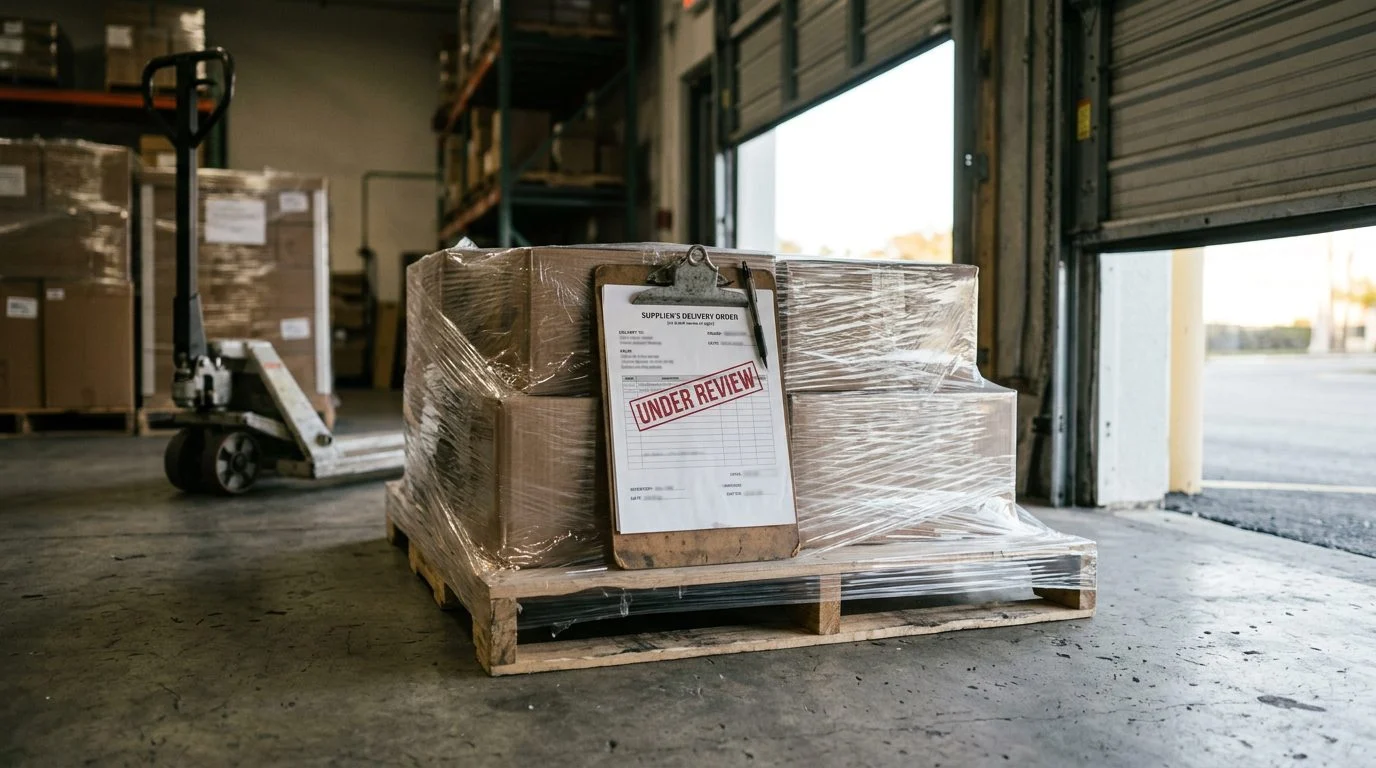
A neighbor blocking access to commercial property in Florida can shut down deliveries, customer visits, and staff entry in a single day. A business owner in that spot may be able to pursue an easement, which is a legal right to use part of someone else’s land for a set purpose. Whether that right exists turns on your deed, your recorded documents, and how the route has been used.
Can a Florida business owner get an easement when a neighbor blocks access?
A business owner may be able to pursue an easement, but the right depends on how the access was created. Three routes come up most often. The first is an access right tied to how the land was once owned and divided. The second is a written easement in a deed or recorded document. The third is a right that can grow out of long, continuing use of a route.
Each route needs different proof, so start by finding out which one fits your property. Many owners assume a route exists because a driveway is on the ground. A driveway you can see does not prove a legal right to use it.
Blocked curbs, gates, and shared paths can stop deliveries and customer traffic quickly. That makes the question urgent. For broader background on property disputes, see our real estate litigation page.
If a neighbor's gate, fence, or parked vehicles have cut off your business, you may have a claim worth reviewing, and Ayala Law PA can talk through it with you at (305) 570-2208. Talk it through with our team — we can walk you through how a situation like yours is usually handled and what your options are.
Does an easement by necessity help a landlocked commercial parcel?
The history of the land matters as much as its current layout.
To test this, pull the chain of title. That is the series of deeds showing who owned each parcel and when. Look for the point where the parcels were separated. Then ask whether a route existed at that time and whether it still serves the property.
Commercial use adds practical weight. A storefront or warehouse may need trucks, staff, and customers in ways a single home does not. That need should show up in your records, such as delivery logs and business operations. Keep copies of prior deeds, recorded plats, and any old surveys. These documents show how the parcels were split, and they are often the first records anyone reviews.
How must a written easement be signed in Florida?
A written easement generally has to be signed in the presence of two witnesses. If that step was skipped, the interest may not have been validly created.
No subscribing witnesses are required for a lease of real property. For a tenant business, this matters because the lease itself may give you a right to use shared space. The lease document becomes the key record.
Check the signature pages, the witness names, and the notary blocks. Then confirm whether the document was recorded in the public records of the county where the land sits.
Can long use of a route create an access right?
Sometimes, and the proof comes down to history. Gaps matter too. If the route was gated or closed for a period, note when that happened.
Gather dated evidence. Aerial photos from different years, dated photos, and delivery and vendor records can show the route in use. Statements from drivers, vendors, and former employees can fill in details the documents leave out.
Permission is a key issue. Before you ask the neighbor for anything, write down who used the route, how often, for what purpose, and whether anyone ever asked for permission.
What can a business recover when a neighbor blocks its customers?
A business may be able to sue for interference with its present or prospective customers, but the claim has limits. Florida law allows a claim for interference with present or prospective customers. It does not allow a claim for interference with a business’s relationship to the community at large, as the court explained in Ozyesilpinar v. Reach PLC.
The relationship must be shown by an actual and identifiable understanding or agreement. That agreement must in all probability have been completed if the defendant had not interfered. Lost orders from identified customers, or delivery arrangements you can document, carry more weight.
Where a written contract covers the same subject, a separate unjust enrichment claim is not allowed on the same facts, as Williams v. Johnson explains. Removing a barrier yourself can also create a separate dispute. Keep your communications with the neighbor factual and in writing.

What evidence should a business keep for an access dispute?
Keep the property records, the physical evidence, and a log of what the blockage cost. Start with these core items:
- The vesting deed and the prior deeds in the chain of title.
- Any recorded plat, easement, or declaration.
- A title commitment, which is the title company’s report of recorded interests.
- A boundary survey showing the route, the barrier, and both properties.
- Dated photos and video of the blockage and of the route before it.
- Delivery logs, vendor and customer messages, and any lost order records.
- Copies of demand letters and the neighbor’s replies.
Keep originals and a dated copy of each item. Write a running log with the date, the time, what was blocked, and what it cost, such as a refused delivery or a canceled appointment. A log written at the time is far more useful than a memory reconstructed months later.
Not sure what your next step is?
Talk it through with our team — we can walk you through how a situation like yours is usually handled and what your options are.
Where would an access case be filed in Florida?
A case is generally filed in the county where the defendant lives, where the claim arose, or where the property is located. Under Fla. Stat. § 47.011, actions must be brought in one of those counties. For land in Hillsborough County, the property’s location is one option. That section does not apply to actions against nonresidents.
Timing matters too. Under Fla. Stat. § 95.12, no action to recover real property or its possession may be maintained unless the person seeking recovery, or the person’s ancestor, predecessor, or grantor, was seized or possessed of the property within the 7 years before the action began. Whether that limit applies to your claim turns on what you ask the court to do, so review the timing early.
Frequently Asked Questions About Blocked Access to Commercial Property in Florida
Can a neighbor block a driveway that serves my business in Florida?
A route your business has a legal right to use is different from one a neighbor only allows. Whether you hold that right turns on your deed, any recorded easement, and how the route has been used.
Is an unrecorded easement valid in Florida?
Witnessing is only one formality for an instrument creating or transferring an interest in real property, such as an easement, and it does not by itself answer how that easement is treated against third parties. Check the signing and recording before you rely on the document.
Can a business sue a neighbor for damages from blocked access?
A business may sue for interference with its present or prospective customers. Florida law does not allow a claim for interference with its relationship to the community at large.
Should I remove the barrier myself?
Removing a barrier yourself can create a separate dispute. Document the blockage first, and review your options before you act.
Talk With Ayala Law PA About Your Access Problem
If a neighbor’s gate, fence, or parked vehicles have cut off your business, you may have a claim worth reviewing. Bring your deed, survey, and delivery records. Call Ayala Law PA at (305) 570-2208 or use the contact form to discuss your situation.
Fees for a case evaluation are discussed directly with you when you reach out.
Ayala Law PA’s only office is at 1646 W Snow Ave in Tampa, Florida. The firm represents businesses in Tampa and Hillsborough County. The firm focuses on business litigation, commercial litigation, contract disputes, shareholder disputes, construction litigation, real estate litigation, and international trade litigation.
Eduardo A. Maura is the responsible lawyer for this page. Your matter may be referred to another lawyer or firm.



