
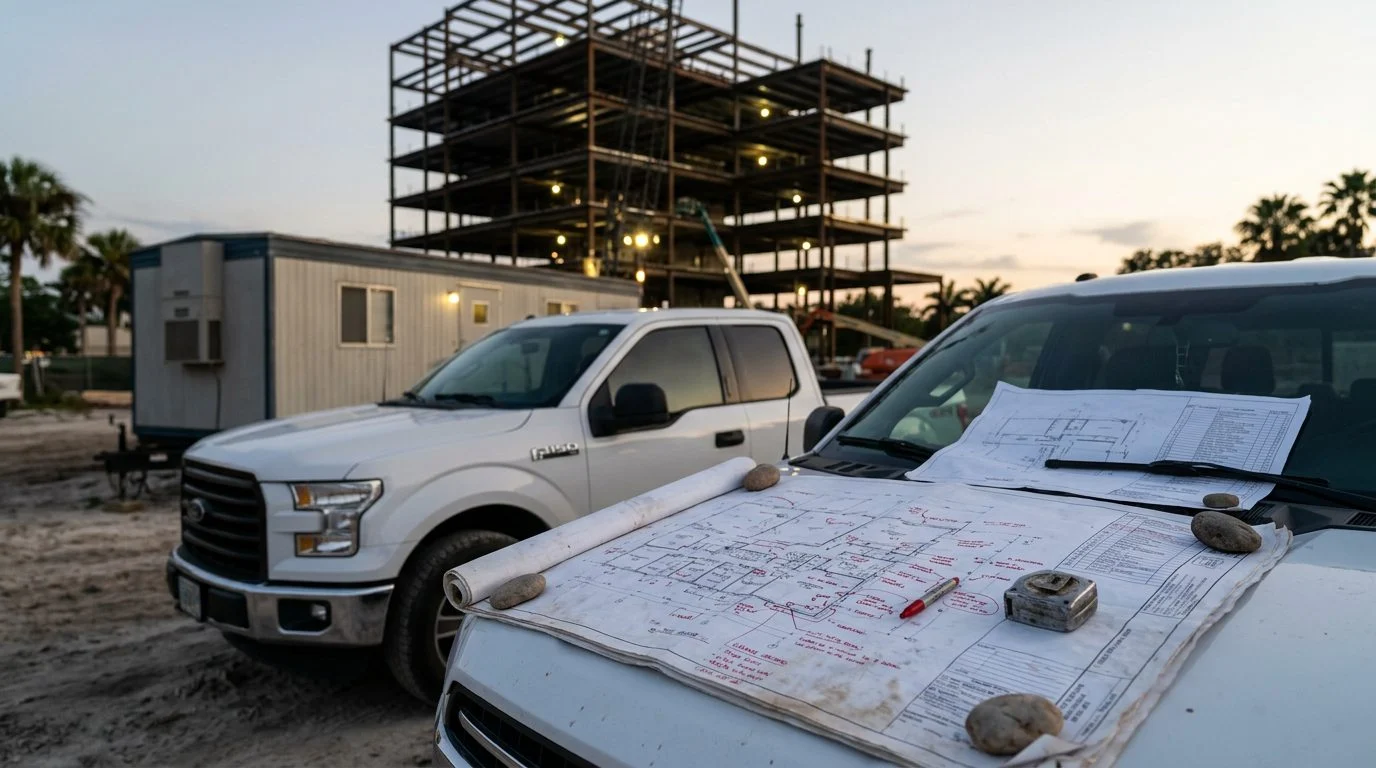
A construction lien on your commercial property can block a sale or a loan, but you usually have ways to challenge it. Receiving a lien notice or foreclosure summons for a building you own or manage in Tampa can disrupt operations and raise urgent questions.
When a construction lien is filed against commercial property in Tampa, a defense usually turns on three points: timing, notices, and the amount claimed. This page explains each one in plain terms, plus the options and steps that follow.
What a Construction Lien on Commercial Property Means for Owners
A construction lien is a claim recorded against your property by someone who says they weren’t paid for work or materials.
Once it’s recorded, it shows up in a title search.
A recorded lien can cloud your title. That can block a sale, delay a refinance, or lead to a lawsuit to foreclose the lien against the building.
Owners often assume they’re protected because they paid the general contractor. That can matter, but whether it protects the property turns on the notices served and the dates.
A recorded lien is a claim, not a court ruling.
This guide is for owners, landlords, property managers and business owners in Tampa and Hillsborough County who got a lien they didn’t expect or think is wrong.
If a lien notice or foreclosure summons has arrived for your Tampa building, you don't have to work through the deadlines alone, and our team is ready to review it with you. Talk it through with our team — we can walk you through how a situation like yours is usually handled and what your options are.
Common Grounds for Challenging a Construction Lien
- Late filing. Florida sets deadlines for construction claims. The timing rules are covered below.
- Missing notices. Reviewing whether the notices in a lien file are complete is one part of evaluating the lien.
- Wrong amount. Charges for work not done, duplicate billing, unapproved change orders, or payments already made can all reduce a lien.
- Wrong property or owner. A lien that names the wrong parcel or owner, or covers work never done there, can be challenged.
Ask whether the owner actually agreed to the disputed work. Florida applies basic contract rules to oral deals too, as the Florida Supreme Court held in St. Joe Corp. v. McIver.
Fee shifting also matters.
Options for Defending or Removing the Lien
A lien can be removed or reduced through a release, a negotiated payment, a bond, or a court challenge.
- Negotiated release. The lienor signs a full or partial release once the claim is corrected or paid.
- Bond. In some cases, a bond can be posted in place of the property. Ask about this route early, because it can help a sale or loan move forward.
- Court challenge. Disputes over a construction lien may end up before a court, and our team can discuss how that process could apply to your situation.
- Response to a foreclosure suit. A foreclosure suit has court deadlines for a response, and it can hold up a closing while it’s pending.
A judgment can also create a lien. A judgment becomes a lien on real property when a certified copy is recorded in that county, provided the judgment contains the lienholder’s address or a separate affidavit with that address is recorded simultaneously, and under § 55.10 it lasts an initial 10 years from recording.
The right route turns on the lien’s dates, the amount in dispute, and whether you plan to keep, sell or refinance.
How a Construction Lien Defense Typically Works
A lien defense usually moves through five steps, from reviewing the record to a court response if talks fail.
- Review the record. Pull the lien, the contract, payment records, notices and a title search.
- Calendar the deadlines. Under Florida’s limitations statute, actions such as those founded on a statutory liability generally have four years.
- Send a written dispute. Identify each defect and attach the records that support it.
- Negotiate. Seek a full or partial release, or a bond, if part of the claim is valid or you need relief fast.
- Respond in court if needed. File the response or challenge, then handle discovery and motions.
Under § 47.011, a suit must be filed where the defendant lives, where the cause of action accrued, or where the property is located, though this rule does not apply to actions against nonresidents. For a Tampa building, that includes Hillsborough County.
Simple disputes settled by letter can move quickly. Contested foreclosure cases follow the court’s schedule and can take longer. Put each step in writing so the record shows what was asked and answered. For more on the sequence, see the Florida construction lien dispute steps guide.
Why Work With Ayala Law PA on a Tampa Commercial Lien
Ayala Law PA focuses its practice on business litigation, including construction and real estate disputes for businesses and property owners.
- Construction litigation. This covers contractor and subcontractor disputes, lien foreclosure and construction contract fraud in Florida courts and arbitration.
- Related work. Real estate and contract disputes sit in the same practice, so a lien review can cover the contract and the title.
- Responsible lawyer. Eduardo A. Maura is the lawyer responsible for this page. Our team includes assistants and office staff.
- Where we are. The firm’s only office is at 1646 W Snow Ave in Tampa. It represents clients in Tampa and Hillsborough County.
No outcome can be promised for any lien, because each file turns on its own records.
Questions Owners Ask About Defending a Construction Lien
These are questions owners often ask when a lien first appears on their property.
Does a lien mean I owe the contractor?
Not always. The contract, your payments and the notices decide that, and the lien amount can be challenged.
Can I sell or refinance with a lien recorded?
A title company will usually flag it and may require a release, bond or resolution before closing.
What if I already paid the general contractor?
Payment can help, but whether it protects the property turns on the notices and dates.
How long can a judgment lien stay on the property?
A judgment lien recorded in a county lasts an initial 10 years and can be extended for another 10 years by rerecording a certified copy before it expires and recording an affidavit with the current address, subject to the limit in § 55.10 tied to § 55.081.
Should I respond to a lien notice myself?
Every lien is different, so a careful review of the lien is a sensible first step, and our team can discuss it with you.
Not sure what your next step is?
Talk it through with our team — we can walk you through how a situation like yours is usually handled and what your options are.
Talk With Ayala Law PA About Your Tampa Commercial Property Lien
If a lien notice or foreclosure summons has reached your commercial property, talking with our team early helps you keep more options open.
A pending sale or refinance won’t wait on a lien dispute, so timing matters. Waiting until a closing date leaves less time to negotiate a release. Call (813) 414-5715 or send your details through the contact page to ask for a case evaluation of your recorded lien and the deadlines that apply. Bring the lien, the contract and any notices you received.



