
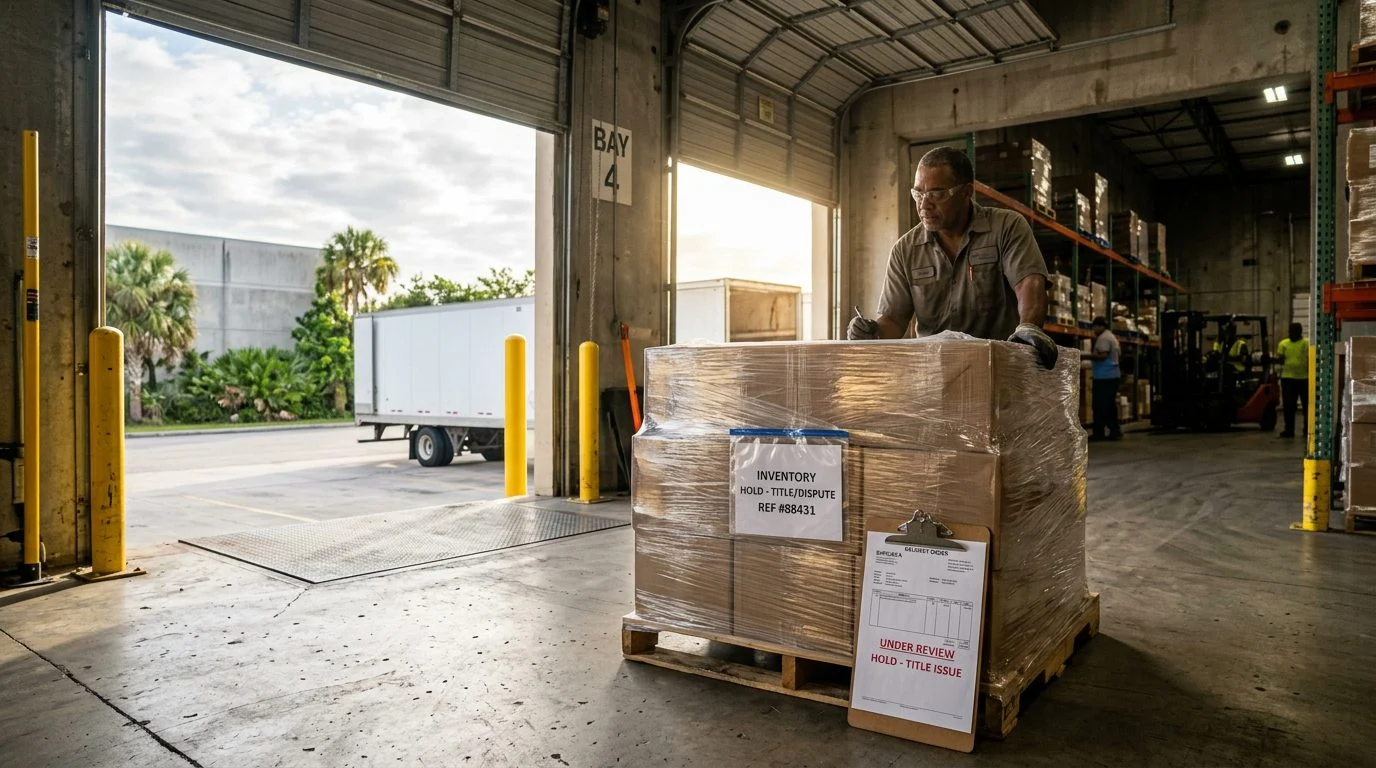
If a title problem is holding up a sale, a loan or a plan for your commercial building, you need a straight answer. Does title insurance cover commercial property in Tampa? Generally, an owner’s title policy covers defects in title that existed at closing and are not excluded by the policy.
Which defects are covered comes down to the policy itself. Its Schedule B exceptions and exclusions control the answer, so the details matter more than the general rule.
What an Owner’s Title Policy Generally Covers
An owner’s title policy generally covers defects in your ownership that existed at closing and that the policy does not exclude. The Florida Department of Financial Services describes title insurance as protecting the buyer, or policyholder, against loss or damage from defects in the title.
Title insurance is not property insurance. It deals with who owns the property and what rights are recorded against it. It does not pay for fire, storm or other physical damage to a building. Those losses fall under a separate property insurance policy.
Eduardo A. Maura is the lawyer responsible for this page. Ayala Law PA serves clients from its Tampa office at 1646 W Snow Ave, Tampa, FL 33606, including businesses in Hillsborough County, Brandon, Riverview, Plant City and Temple Terrace.
If an insurer has denied your title claim or a recorded lien is blocking a sale or loan on your Tampa commercial property, our team can talk through the policy with you at (813) 414-5715. Talk it through with our team — we can walk you through how a situation like yours is usually handled and what your options are.

What a Commercial Title Policy Typically Covers
A commercial title policy typically covers losses from covered defects. Common examples include hidden liens, defective prior deeds and recording errors. A title search aims to catch these problems, but a search can miss them.
Florida law sets rules for how real estate is transferred. Under Fla. Stat. § 689.01, an estate or interest in real estate of freehold or for a term of more than 1 year must be created or transferred by a written instrument signed in the presence of two subscribing witnesses by the party or the party’s lawfully authorized agent, unless by will and testament or other testamentary appointment duly made according to law. Leases are the exception to the witness rule. A flaw in how a prior deed was signed or witnessed is the kind of defect a title policy may address.
Commercial owners often hold two different policies. The owner’s policy protects you as the owner of the property. A lender’s policy protects the lender that holds the mortgage. If you buy with a loan, you may have both, and each one protects a different interest.
Commercial deals also tend to involve more parties, more recorded documents and more endorsements than a home purchase. The policy amount sets how much is protected. Endorsements can add or change coverage for specific risks, so read each one carefully.
Schedule B: The Exceptions and Exclusions That Control the Answer
Schedule B lists the exceptions and exclusions that limit what your policy covers. These are matters the policy does not cover, such as recorded easements, third-party rights and other recorded interests. General exclusions also apply, including government regulations like zoning. A matter you created or knew about and did not disclose is generally not covered either.
Use this checklist when you receive your policy:
- Read every Schedule B item, line by line.
- Pull the recorded document each item references from the county records.
- Flag any item that affects how the property can be used or how it gets access.
- Compare the flagged items with any denial letter you have.
An item excluded from coverage is generally not covered, even if you later dispute it. That is why the Schedule B review comes first, before you file a claim.
How Title Defects Surface: The Title Search, Closing and Escrow
The title search, done before closing, is the main way prior defects are found. It reviews the public records for deeds, mortgages, liens and judgments. Its results appear in the title commitment, which lists what must be cleared before the policy issues.
The closing agent and escrow handle the money and the paperwork. They collect payoffs, record documents and issue the final policy. Recording matters. Under Fla. Stat. § 713.13, it is the recording of a notice of commencement, not the statute itself, that provides constructive notice of the lien claims this part allows and their potential priority under s. 713.07.
A defect the search missed, or one never disclosed, can still surface later. Owners often find these problems when they refinance, sell or start a building project. Keep the closing package, the commitment and the final policy together in one place.
What Title Insurance Does Not Cover
Title insurance does not cover every problem tied to a commercial property. The main gaps include Schedule B items, zoning and land-use limits, environmental conditions, and defects you knew about and did not disclose.
Later problems are harder to sort out. Consider a contractor’s lien recorded after your policy date. Whether the policy responds depends on the facts: the policy terms, the timing and the claim itself. Florida also sets clock rules for construction liens. Under Fla. Stat. § 713.08, a claim of lien must be recorded no later than 90 days after the final furnishing of labor, services or materials, or, if the original contract is terminated under s. 713.07(4), within 90 days of the termination or the final furnishing, whichever comes first. Under Fla. Stat. § 713.22, a recorded lien does not continue for longer than 1 year after recording unless an action to enforce it is started within that year.
A policy may also not pay for lost rent or business income caused by a defect. Read the policy text to see what it covers. The policy text, not a summary, defines coverage.
Who Usually Pays for Title Insurance in Florida
The purchase contract decides who pays for title insurance in a sale. It can assign the costs of the owner’s policy and the lender’s policy in ways you might not expect, so read the contract before closing.
Next, check the closing statement. Look for each premium, endorsement charge and agent fee. Endorsements add cost, but they can change what is covered, so ask the closing agent what each one does before you sign.
Confirm that the name on the policy matches the owner named in the vesting deed. If a line item confuses you, ask the closing agent to explain it in writing. Asking before closing is easier than disputing a charge afterward.
Not sure what your next step is?
Talk it through with our team — we can walk you through how a situation like yours is usually handled and what your options are.
Practical Steps Owners Should Take Now
Start by gathering the policy, the commitment, the Schedule B documents, any survey, the closing statement and every letter about the defect. Put them in date order so the timeline is clear.
Send written notice of the claim to the insurer promptly. Include the policy number and describe the defect in plain terms. Keep a copy and proof of delivery.
Your claim package should include:
- A description of the defect and where it appears in the records
- Copies of the recorded documents the defect relates to
- Photos or a survey that show the condition
- The date you discovered the problem and when you believe the loss began
If a construction lien is involved, an owner may record a notice of contest of lien. Under Fla. Stat. § 713.22, that notice limits the time to sue to 60 days from service. A lienor who does not sue within that period loses the lien automatically. Fla. Stat. § 713.22 reads: “(1) A lien provided by this part does not continue for a longer period than 1 year after the claim of lien has been recorded or 1 year after the recording of an amended claim of lien that shows a later date of final furnishing of labor, services, or materials, unless within that time an action to enforce the lien is commenced in a court of competent jurisdiction.” Fla. Stat. § 713.22 reads: “A lien that has been continued beyond the 1-year period by the commencement of an action is not enforceable against creditors or subsequent purchasers for a valuable consideration and without notice, unless a notice of lis pendens is recorded.” Timing matters, so act early. Before you make repairs or sign any settlement with a third party, check with the insurer and keep records of every call and letter.
When a Claim Denial Should Be Reviewed by a Lawyer
A denial deserves a lawyer’s review when its stated reasons don’t match the policy language or the recorded documents the insurer cites. The usual sequence is an insurer investigation, a coverage position, and then a written denial or partial denial with reasons.
Read the letter against the specific policy language and each Schedule B item it cites. A reason that points to an item you never checked deserves a closer look. Keep the denial letter, the policy and your claim package together, and note the date you received the letter.
If the parties cannot resolve the coverage question, the dispute can move into a Florida court. Civil cases in Florida courts follow the Florida Rules of Civil Procedure, which govern pleadings, discovery and procedure. For more on that path, read our guide to title insurance claim lawsuits in Florida.
Some matters may be referred to another lawyer or firm. Ayala Law PA focuses on business litigation and real estate litigation, and Eduardo A. Maura is responsible for this page.
Is a Title Policy the Same as a Survey?
No. A title policy addresses ownership and recorded interests. A survey shows physical features, such as boundaries, buildings, encroachments and access routes. The two answer different questions.
A survey can reveal an encroachment, like a fence or building that crosses a property line, that a title search may not show. Whether the policy covers a survey-type matter turns on the policy language and its endorsements.
Ask your closing agent whether a current survey was reviewed before closing. Compare the survey’s legal description with the one in your deed and your policy. A mismatch is worth raising before closing. If a survey shows a problem, include it in your claim package.
What If the Defect Was in the Public Record?
A recorded defect listed in Schedule B is generally excluded. A recorded defect the search missed may be covered under the policy terms. Pull the records yourself from the Hillsborough County Clerk’s official records to confirm what was recorded and when.
Recording dates matter. Fla. Stat. § 55.10 reads: “(1) A judgment, order, or decree becomes a lien on real property in any county when a certified copy of it is recorded in the official records or judgment lien record of the county, whichever is maintained at the time of recordation, provided that the judgment, order, or decree contains the address of the person who has a lien as a result of such judgment, order, or decree or a separate affidavit is recorded simultaneously with the judgment, order, or decree stating the address of the person who has a lien as a result of such judgment, order, or decree.” For a judgment first recorded on or after July 1, 1994, that lien lasts an initial 10 years from the date of recording.
Priority also matters. Under Fla. Stat. § 713.07, a conveyance or encumbrance recorded before a construction lien attaches has priority over that lien. A lawsuit that affects title can be recorded as a notice of lis pendens. Under Fla. Stat. § 48.23, that notice is not effective beyond 1 year from the start of the action, with exceptions, including a court extension for good cause.
Talk to Ayala Law PA About Your Tampa Commercial Property
Ayala Law PA can review a title denial or a recorded problem on a Tampa commercial property. Here are short answers to common questions.
Does a title policy cover a recorded lien?
A lien listed in Schedule B is generally excluded. A recorded lien the search missed may be covered, based on the policy terms.
Do I need title insurance for commercial property?
Your purchase contract and any lender’s terms tell you which policies are part of the deal. Read both before closing.
Is title insurance the same as property insurance?
No. Title insurance addresses ownership defects. Property insurance covers physical damage such as fire or storm loss.
If you hold an insurer’s denial letter, or a recorded lien or easement is blocking a sale or loan on your Tampa property, call (813) 414-5715 or send a message through our contact page. Ayala Law PA charges a fee for case evaluations, so ask about the fee for reviewing your policy when you reach out.



