
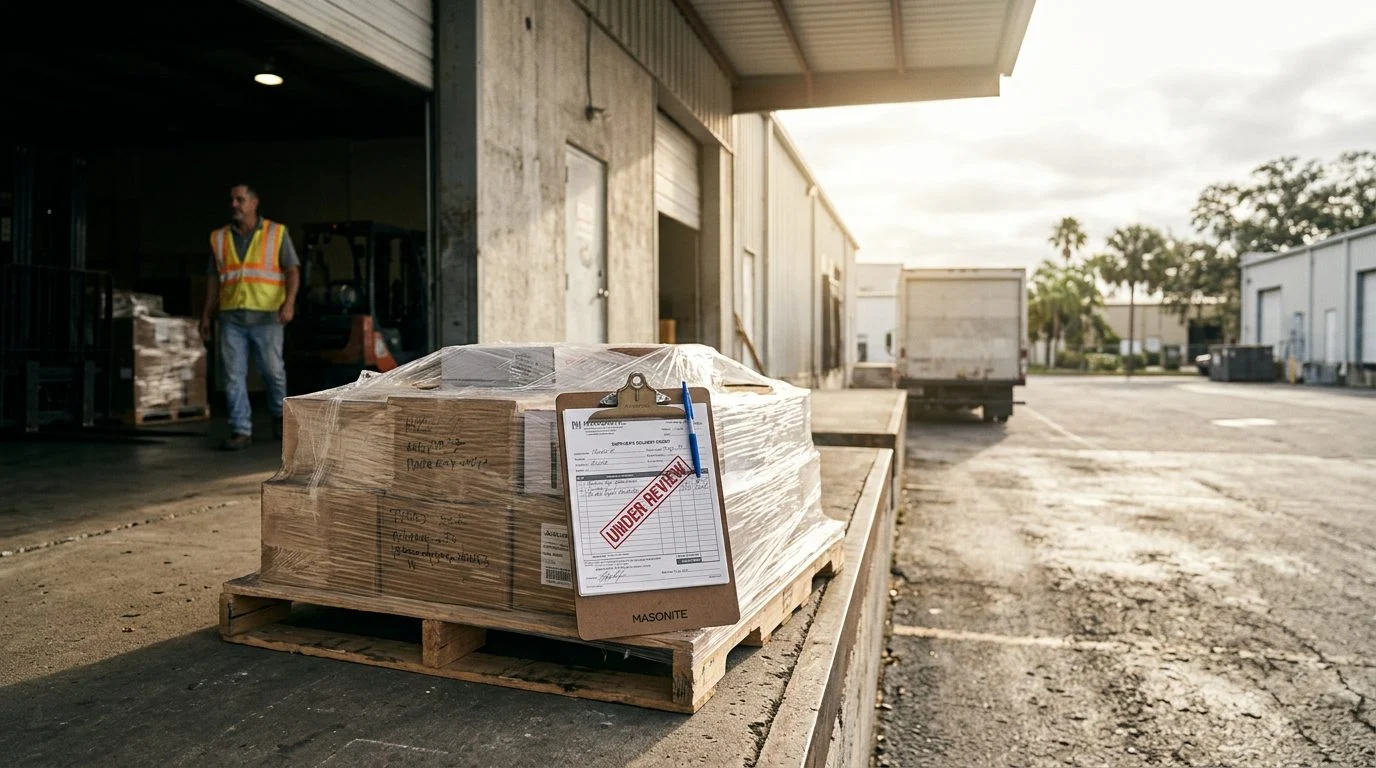
If you’ve received a notice to owner on a commercial building in Tampa, someone who worked on or supplied your property may be claiming payment. Whether a notice is valid depends on the facts of each dispute.
Florida’s construction lien law, Chapter 713 of the Florida Statutes, covers notices to owner, claims of lien, and lien foreclosure. Here is what the notice means and what to check first.
What a Notice to Owner Is on a Commercial Building
It tells you that party may have a lien claim for that work.
It is part of the construction lien process under Chapter 713. It shows that the sender is connected to your project.
Look for the sender’s name, the property address, and a description of the work or materials. Those details let you match the notice to your own records.
Don’t confuse it with a code enforcement notice. City of Tampa and Hillsborough County inspectors send notices about violations, permits, and unsafe conditions. Those come from a different process and are not lien notices.
If a notice like this has reached your building, you don't have to sort out the dates and claims alone, so reach out to Ayala Law PA to talk through what it says. Talk it through with our team — we can walk you through how a situation like yours is usually handled and what your options are.
Is a Notice to Owner Required in Florida?
Chapter 713 sets the rules, so whether a notice was needed depends on the facts of your project.
The key questions are who sent the notice, what contract that party had, and when its work or deliveries began. The facts of each situation are part of that review.
Don’t set the notice aside because you’re unsure it was required. It is often the first written sign of a payment dispute on a project, so read it closely and keep it with your records.
How a Notice to Owner Is Served in Florida
A Notice to Owner is delivered to the owner in writing. Chapter 713 governs the form and timing of the notice, so read the statute’s requirements against the notice you received.
Dates tied to that work are the ones people compare when they ask whether a notice came on time.
Check the delivery details too. Confirm who received the notice, the address used, and whether it matches the owner of record. Save the envelope, email, or delivery receipt.
Why the Notice Matters for Your Commercial Property
A notice can lead to a recorded lien, a title problem, or a lawsuit if the claim is not resolved. Each step has its own rules and deadlines.
A judgment becomes a lien on real property in a county when a certified copy is recorded in that county’s official records, as long as the lienholder’s address is included, under Fla. Stat. § 55.10. Fla. Stat. § 55.10 reads: “(1) A judgment, order, or decree becomes a lien on real property in any county when a certified copy of it is recorded in the official records or judgment lien record of the county, whichever is maintained at the time of recordation, provided that the judgment, order, or decree contains the address of the person who has a lien as a result of such judgment, order, or decree or a separate affidavit is recorded simultaneously with the judgment, order, or decree stating the address of the person who has a lien as a result of such judgment, order, or decree.” Fla. Stat. § 55.10 reads: “A judgment, order, or decree does not become a lien on real property unless the address of the person who has a lien as a result of such judgment, order, or decree is contained in the judgment, order, or decree or an affidavit with such address is simultaneously recorded with the judgment, order, or decree.” That is one way an unresolved dispute can reach your property records.
Florida also sets time limits for lawsuits. Under Fla. Stat. § 95.11, an action founded on the construction of an improvement to real property generally must begin within 4 years. That time generally runs from the certificate of occupancy, certificate of completion, or abandonment of construction, with a different rule for latent defects. Fla. Stat. § 95.11 reads: “(3) WITHIN FOUR YEARS.— … (b) An action founded on the design, planning, or construction of an improvement to real property, with the time running from the date the authority having jurisdiction issues a temporary certificate of occupancy, a certificate of occupancy, or a certificate of completion, or the date of abandonment of construction if not completed, whichever date is earliest; except that, when the action involves a latent defect, the time runs from the time the defect is discovered or should have been discovered with the exercise of due diligence.”
What you may owe depends on your contract, your payment history, and any amounts held back. Keep those records together.

What to Check First in the First Few Days
Start by writing down the dates and the sender. Then pull your contract and payment records.
- Record the dates. Note when you received the notice and any date printed on it. Under Fla. Stat. § 95.031, a cause of action generally begins to run when its last element occurs, so tie each date to the work.
- Identify the sender. Is it the general contractor, a subcontractor, or a supplier? Did that party contract with you or with the contractor?
- Pull your paperwork. Gather the original contract, change orders, draw requests, and payment records. Note every amount already paid.
- Check the public record. Search the Hillsborough County Clerk of the Circuit Court’s Official Records for any recorded claim against the property, and note its recording date.
- Hold off on releases. Don’t sign releases or make new payments on the disputed amount until you understand what the notice claims.
Tampa and Hillsborough County Records to Review
The records that tell the story are usually the recorded deed, any recorded Notice of Commencement, recorded liens, and the building permit file.
The Clerk of the Circuit Court keeps the Official Records where liens and judgments are recorded in Hillsborough County. A title search there shows what has been filed against the property.
Code enforcement and permit records are separate. Review them on their own. A code violation doesn’t establish a lien claim, and a lien filing doesn’t mean the building has a code problem.
Bring this file to your first conversation so the dates line up.
Not sure what your next step is?
Talk it through with our team — we can walk you through how a situation like yours is usually handled and what your options are.
When to Talk With a Construction Litigation Lawyer
Talk with a construction litigation lawyer when a notice points to a disputed amount, a claim that doesn’t match your records, or a lien that could block a sale or refinance.
If a lien is already holding up a deal, read about title companies and construction liens. For the wider picture, see the real estate litigation resources.
Is a Notice to Owner required in Florida?
Chapter 713 sets the rules, and whether one was needed depends on the project’s facts.
Is a Notice to Owner the same as a code violation notice?
No. Code notices come from city or county inspectors, while a Notice to Owner comes from someone who worked on or supplied your building.
Can a recorded lien affect a sale?
It can complicate a sale or refinance, so the title search matters early.
Ayala Law PA handles construction litigation, including lien foreclosure, from its office at 1646 W Snow Ave, Tampa, FL 33606. Eduardo A. Maura is the lawyer responsible for this page. To talk through your notice, the dates, and the records to bring, call (813) 414-5715 or use the contact page.



