
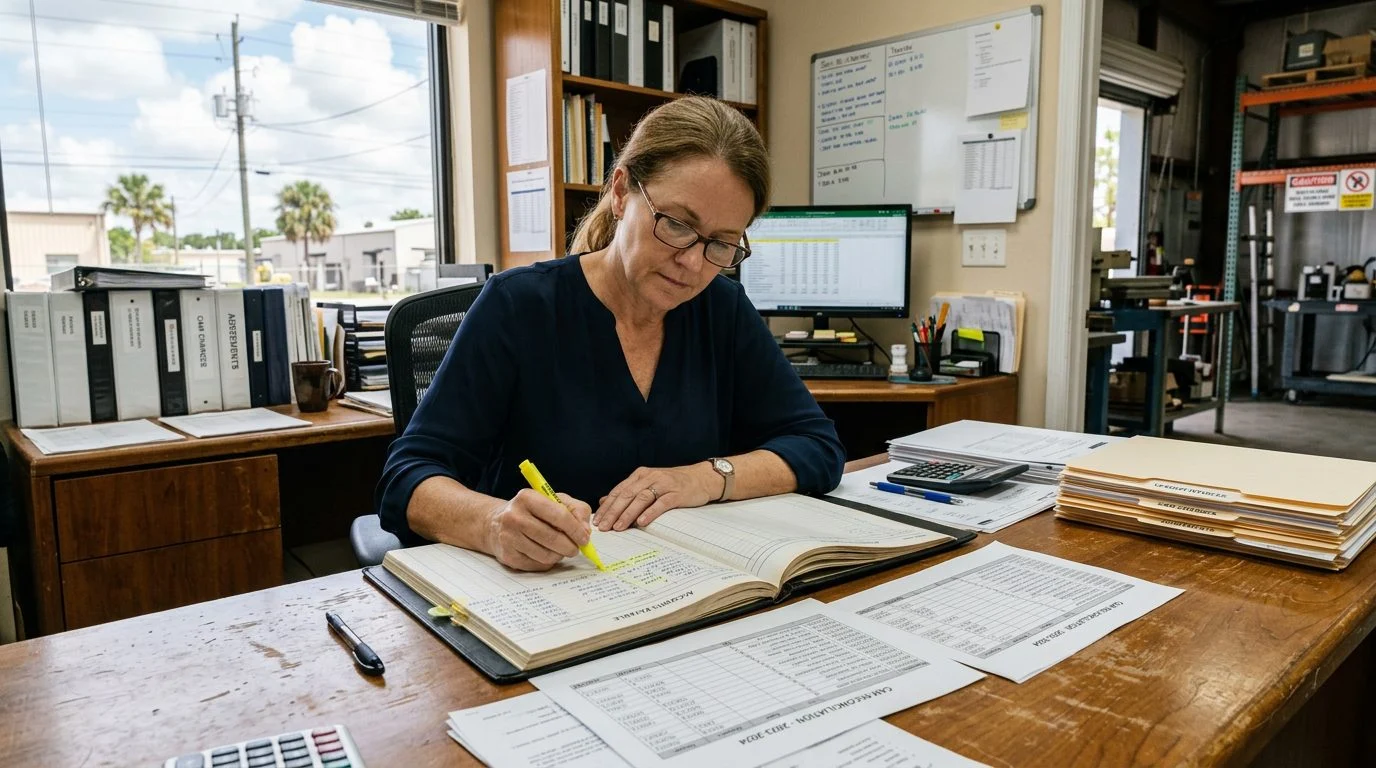
Your lease says you pay a share of the building’s shared costs, and this year’s bill jumped. Can I get CAM charges back in Tampa? Sometimes, yes. A business can recover CAM charges the lease does not allow, or amounts billed wrong, but the lease and the records decide the answer.
This guide walks through how a Tampa business tenant can check a CAM bill, which Florida contract rules matter, and which dates to watch.
What Are CAM Charges and Why Do Tenants Pay Them?
CAM charges are a tenant’s share of the cost to run the shared parts of a commercial property. CAM stands for common area maintenance.
In a commercial building, the landlord pays for things everyone uses. Those costs include parking lot repairs, landscaping, janitorial work in hallways and restrooms, and insurance. Sometimes property taxes are included too. Many leases pass these costs on to tenants. The ICSC’s CAM guide describes CAM charges as generally the tenant’s share of common area operating costs.
Most tenants pay a monthly estimate. At year’s end, the landlord sends a reconciliation statement. It compares the estimates with actual costs. If you paid too much, the statement should show a credit or refund. If you paid too little, you owe the difference.
Your share is usually a pro rata percentage. That is generally your square footage divided by the building’s total leasable area. The lease sets the exact formula, so check its words.
If your CAM reconciliation jumped and the lease's review window is running, you don't have to sort it out alone. Call Ayala Law PA at (813) 414-5715 to talk through your lease. Talk it through with our team — we can walk you through how a situation like yours is usually handled and what your options are.
Does the Lease Decide Whether a CAM Charge Can Be Recovered?
Yes. The lease is the starting point. A CAM charge can be challenged when it falls outside what the lease lets the landlord pass through.
Four parts of the lease usually decide a challenge. The first is the definition of CAM. The second is the list of exclusions, such as capital improvements, leasing commissions, and the landlord’s own overhead, where the lease names them. The third is any cap on management fees. The fourth is any cap on how fast annual costs can rise.
A charge can fit the definition and still be wrong. It may be an excluded cost, or it may push past a cap. Tenants often find these errors when they read the reconciliation line by line against the lease.
Whether a given charge can be recovered depends on the facts. That includes the exact lease wording and the records that show what was billed. A later amendment, side letter, or signed written agreement can also change the rules, so pull the full file first.
What Florida Contract Law Applies to a CAM Dispute?
A commercial lease is a written contract.
In a CAM case, the breach might be billing excluded costs or refusing an audit the lease allows.
Florida’s time limit for an action on a written contract is five years, under Fla. Stat. § 95.11. The lease’s own notice and dispute deadlines can be much shorter, and you must follow them. Florida also makes void a contract term that sets a shorter time to sue than the statute allows, under Fla. Stat. § 95.03.
Florida courts also do not favor treating a lease step as a condition precedent. In Covelli Family, L.P., the court stated that “as a general rule, conditions precedent are not favored, and courts will not construe provisions to be such, unless required to do so by plain, unambiguous language or by necessary implication.” The same case treated a minor missed step as a technical breach, not a material one.
The Florida Supreme Court has recognized two limitations on claims under the implied covenant of good faith and fair dealing: such a claim does not apply where it would contravene the express terms of the agreement, and it cannot stand where there is no accompanying action for breach of an express term of the agreement. Still, a claim based on that duty can fail if it would contradict the lease’s express terms, or if no claim for breach of an express term comes with it, as the court explained in QBE Ins. Corp. v. Chalfonte.
Which Records Should You Gather Before Disputing a CAM Bill?
Start with the signed lease and every amendment. Then collect each year’s estimates, reconciliation statements, and backup.
- Lease documents: the signed lease, all amendments, exhibits that define your space and your share, and any side letters.
- Billing records: monthly estimate invoices, annual reconciliation statements, and your full payment history.
- Backup: the landlord’s vendor invoices and the ledger for common area accounts, if you can get them.
- Correspondence: landlord notices, earlier disputes, requests for backup, and any estoppel certificate you signed.
Build a simple year-by-year chart. List each billed category, the lease section that allows or excludes it, and the amount. A discrepancy is easy to show when it sits in one row, side by side with the clause it breaks.
How Do Audit Rights and Notice Deadlines Work Under a Lease?
Your lease sets the audit window and the method for sending a dispute notice. Those terms often decide whether your challenge counts.
Many commercial leases let the tenant inspect or audit the landlord’s CAM records within a set time after a reconciliation statement arrives. That window can be short. Find the start and end dates in your lease, and mark them on a calendar the day the statement arrives.
Notice is the second trap. A written dispute notice, sent the way the lease requires, may be a required step for keeping your claim. Florida courts read these steps narrowly. A plain notice requirement in the lease can still be enforced, though. A casual email to the property manager may not count, even if the manager reads it.
Send a specific, dated request for backup to the notice address in the lease. Name the year, the expense category, and the line item you question. Keep proof of delivery.
What Can a CAM Recovery Look Like, and What Can Go Wrong?
A CAM dispute usually ends in a refund, a credit against future CAM payments, or a corrected reconciliation for a later year. The lease and the parties’ agreement decide which form fits. No amount can be promised before the records are reviewed.
The biggest mistake is withholding payments on your own. Stopping rent or CAM payments without the lease’s authority can give the landlord its own claims, such as late fees or default remedies.
Florida law also limits how a landlord takes back space. Under Fla. Stat. § 83.05, for land or premises other than a dwelling unit, a landlord recovers possession only through a court action where possession is decided, after the tenant surrenders the space, or after the tenant abandons it. Part I of Chapter 83 covers nonresidential tenancies and all tenancies not governed by Part II, as Fla. Stat. § 83.001 states.
While a dispute is pending, keep paying the amounts you do not dispute. Do that unless the lease clearly says otherwise.
Not sure what your next step is?
Talk it through with our team — we can walk you through how a situation like yours is usually handled and what your options are.
When Does a CAM Disagreement Become a Lawsuit?
A CAM disagreement usually becomes a lawsuit only after a written dispute, a backup request, negotiation, and a demand letter fail to settle it.
Some leases require mediation or arbitration before a suit. Read the dispute clause closely at this stage. Florida’s court-ordered mediation rule, Fla. Stat. § 44.102, has exceptions. One covers certain landlord and tenant disputes that do not include a personal injury claim.
If the lease has no arbitration clause and talks fail, a tenant may file a breach of contract action. Venue follows Fla. Stat. § 47.011. That statute requires suit to be brought only in the county where the defendant resides, where the cause of action accrued, or where the property in litigation is located, and it does not apply to actions against nonresidents. For a Tampa property, that often means Hillsborough County.
Check the lease’s fee clause too. If a contract lets a party recover fees for enforcing it, Fla. Stat. § 57.105 lets the court award reasonable fees to the other side when that side prevails, but only for contracts entered into on or after October 1, 1988.
Expect the landlord to look at its own claims, such as unpaid rent or other lease defaults. Review the full account balance before you file anything.
Common Questions About CAM Charges and Refunds
Here are short answers to common questions about getting CAM charges back in Tampa.
Can I get CAM charges back in Tampa if I paid without objection?
Possibly. The lease’s waiver language and the reason you paid both matter.
Can I dispute CAM charges from a prior year?
Maybe. It turns on the lease’s audit and dispute windows, your payment history, and the five-year limit for written contracts.
Is a new owner bound by the old lease’s CAM terms?
Often the lease carries over to a new owner. Check the ownership records and the lease terms that passed with the property.
Does a signed estoppel certificate affect a CAM dispute?
It can. An estoppel certificate may state amounts you accept as owed, so read it carefully before you sign.
Talk With Ayala Law PA About Your Tampa CAM Bill
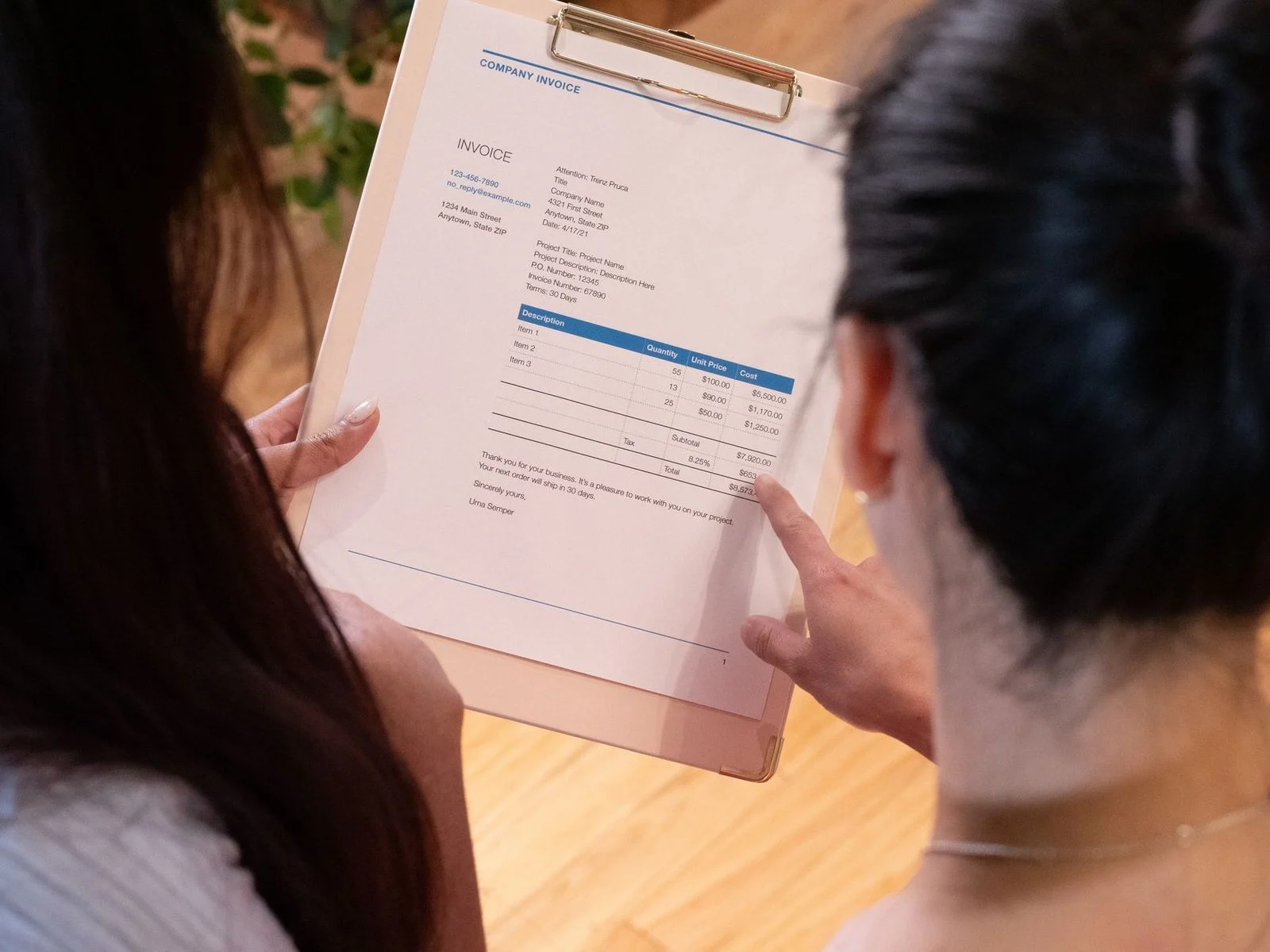
If your CAM bill looks higher than the lease allows, the practical next step is a conversation about your lease and your records.
You may be facing a reconciliation that jumped from last year, a line item the lease seems to exclude, or an audit window that is closing. Those situations need the lease in hand and the dates checked quickly.
Call Ayala Law PA at (813) 414-5715, or contact the firm online. The Tampa office is at 1646 W Snow Ave, Tampa, FL 33606. Fees and costs are discussed when you call, before you decide whether to hire the firm. Bring the lease, the reconciliation statements, and your payment history.
Eduardo A. Maura is the responsible attorney for this page. Ayala Law PA serves Tampa, Hillsborough County, and the Tampa Bay area from its Tampa office.



