
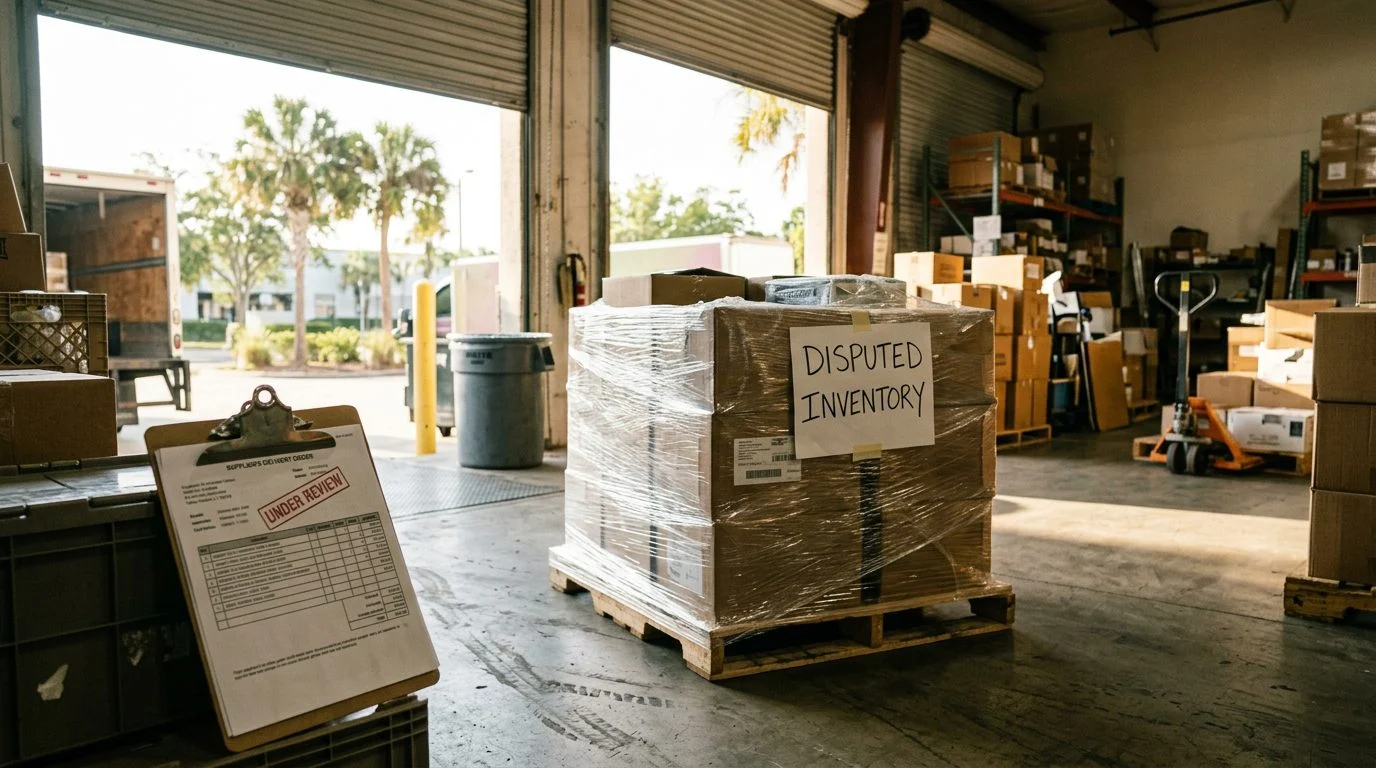
You paid your contractor in full, yet a construction lien still sits on your commercial property in Tampa. That is confusing, and it can stall a sale or a loan.
Paying the general contractor does not always clear the building. Subcontractors and material suppliers can have their own lien rights, and those rights run on their own notice and payment timelines.
Why a Lien Can Stay on a Commercial Building After You Paid
A lien can stay on your building because the claim belongs to anyone who furnished labor, materials, or services for the project, not only to your contractor. A construction lien is a recorded claim against the property that secures payment for that work.
Florida’s Chapter 713 construction lien law covers notices to owner, claims of lien, deadlines, and lien foreclosure.
Here is the common problem. You paid the general contractor, but the contractor did not pay the drywall company or the electrician. Those subcontractors can still record a claim against your building. Your payment to the contractor may never reach them.
A paid invoice does not remove a recorded claim by itself. The lien usually stays on the record until someone releases it, moves it to security, resolves it, or the claim fails on its own terms.
If a lien is still recorded on your Tampa commercial building after you paid, you do not have to sort out the paperwork alone. Call Ayala Law PA at (813) 414-5715 to talk through your documents. Talk it through with our team — we can walk you through how a situation like yours is usually handled and what your options are.
What to Pull First: The Recorded Lien and Your Payment Trail
Start by pulling the recorded claim of lien from the county’s official records. Compare it with your own payment history. The claim shows the claimant’s name, the amount claimed, the property description, and the recording date.
Next, gather your paper trail. Collect the original contract, change orders, draw schedules, invoices, canceled checks, and any lien waivers you received. If a Notice of Commencement was recorded for the project, pull that too. The Pinellas County lien law information page explains Notice of Commencement requirements and how releases and waivers are obtained.
Then build a one-page timeline. List every payment, its date, and who received it. Timing matters because each party’s rights depend on when the work was done and when it was paid.
Check the contractor’s license as well. Florida’s construction industry licensing records let you verify license status. A license check will not settle a lien. It does show you who you were dealing with.
How Notices and Payment Timing Affect Your Exposure
Whether you still owe anything depends on when each payment was made and when each notice reached you. Notices are at the core of the analysis on a commercial project.
On many commercial jobs, subcontractors and suppliers must send notices within set deadlines to keep their lien rights. A notice to owner tells you that someone worked on the project and has not been paid. If you received one, write down the date and how it was delivered.
Payments made before a notice arrived can lead to different results than payments made after. That is why the dates on your timeline matter. A payment made after you knew of an unpaid supplier is a different fact than one made before any notice.
Retainage is the next question. Retainage is the part of each payment that an owner holds back until the job is finished. When a final payment was withheld, unpaid retained amounts often become the subject of subcontractor claims. Check whether the contract held back retainage and whether it was ever released.
Florida Deadlines That Limit How Long a Lien Can Stand
Lien enforcement deadlines come from Chapter 713, so the dates on your recorded claim are the starting point. A claim on the record is not the same as a claim that can still be enforced.
Florida’s general rule is that a time limit runs from when a cause of action accrues. A cause of action accrues when its last element occurs. Fla. Stat. § 95.031 states this rule for limitations periods.
Construction lawsuits have their own limits. For a fraud claim, including constructive fraud, the time runs instead from when the facts behind the claim were discovered or should have been discovered with the exercise of due diligence. Even then, a fraud action must be begun within 12 years after the alleged fraud was committed, no matter when it was or should have been discovered.
Don’t assume a lien has expired because it is old. Check the dates against the current statute and your timeline. Waiting too long to respond can cost you options.
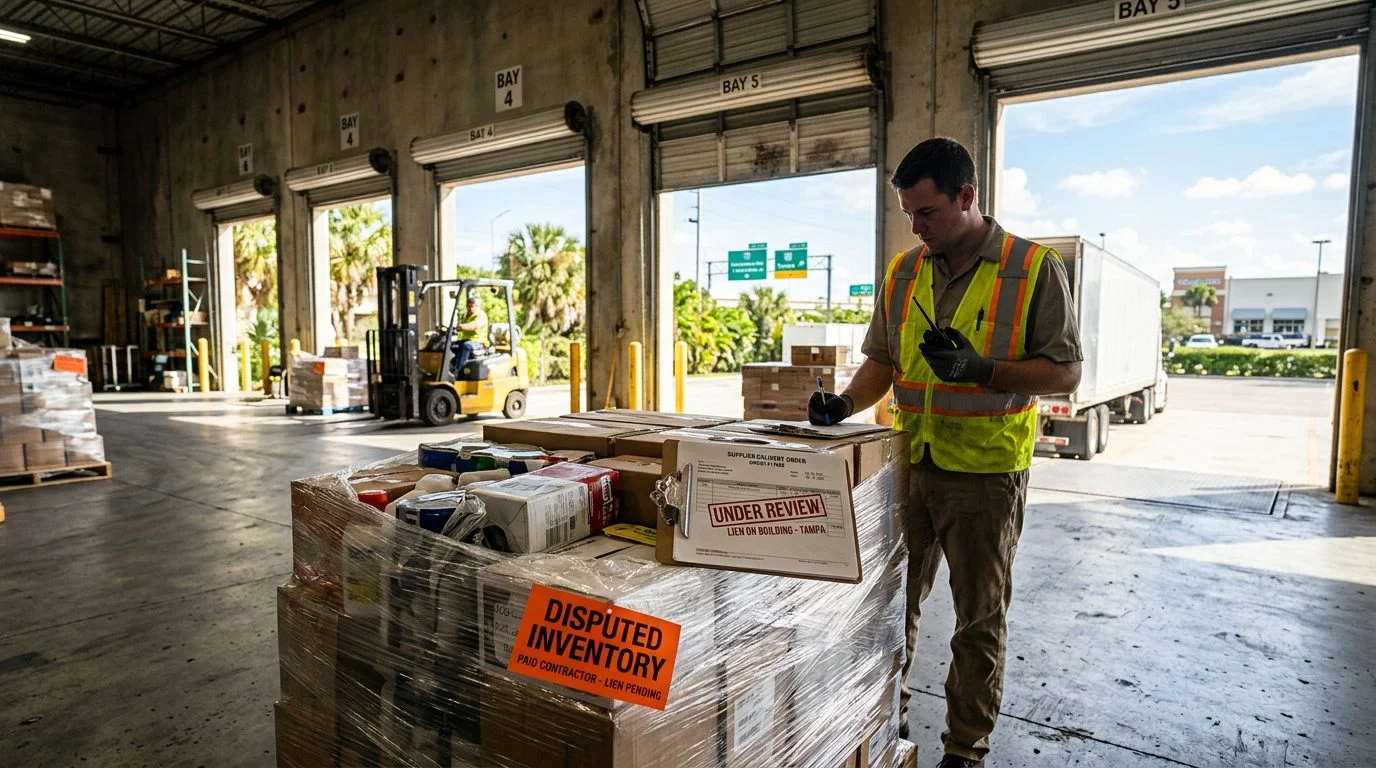
Ways a Lien on a Paid Commercial Project Can Be Cleared
A lien on a paid project is usually cleared by a recorded release, a dispute, a substitute bond or other security, or a court action. Which route fits depends on the facts and the claimant’s position.
A release is the simplest path. Once the claimant is paid or settles in writing, ask for a recorded release. A letter alone does not clear the public record, so the release has to be recorded.
Reviewing the amount claimed, the payment history, and the notices that were sent can help a business understand where a lien dispute stands. Disputes turn on documents, so the timeline you built matters here.
Another route is to move the lien off the building and onto a bond or other security. Florida law allows certain liens to be transferred this way, and the amount and terms are set by statute.
Court action is the last route when negotiation fails. A court can decide whether the lien is valid and whether it should be cancelled. No route comes with a promised outcome.
Your claim against the contractor is a separate question. Where a written contract covers the same work, Florida courts have said that claims arising from that contract generally will not support an unjust enrichment claim, as in Williams v. Johnson. Your claim usually runs through the contract terms.
What a Title Company or Lender May Require Before a Sale or Refinance
A title company or lender may hold a sale or refinance until a recorded lien is released, bonded, or otherwise resolved. Requirements vary by company, so ask early.
A title insurer may list a recorded construction lien as an exception, which means the policy will not cover that claim. Insurers often ask for a release, a bond, or an indemnity before closing. Lenders may require a lien release before they fund a refinance, and that can delay the deal.
If you plan to sell or refinance soon, raise the lien with the title company now. Waiting until closing week leaves little time for every step. For how this often plays out, see what happens when a title company refuses to close.
Not sure what your next step is?
Talk it through with our team — we can walk you through how a situation like yours is usually handled and what your options are.
Questions to Answer Before You Decide What to Do Next
Before you choose a route, answer four questions with your documents. Who was paid, and when? What does the claim cover? Did the owner get any notice? Is a sale or loan pending?
Look at the written terms for each payment. Check whether the lien covers the whole building or part of it. See whether it names the owner, a tenant, or only the general contractor. Note whether the building is financed, listed for sale, or tied to a lease with its own deadlines.
If you have just received a notice, the timing questions become more urgent. See what a notice to owner means for a Hillsborough County building.
Common questions
Can a subcontractor still record a lien if I paid the general contractor?
Yes. A subcontractor or supplier can record a claim even when the owner paid the general contractor.
How long does a construction lien last in Florida?
Chapter 713 sets lien deadlines. The recording date on the claim is the starting point for checking them.
Does paying my contractor in full clear the lien?
Not automatically. The payment may not reach the subcontractor or supplier, so the lien can stay until it is released or resolved.
Talk Through Your Lien With Eduardo A. Maura at Ayala Law PA
Eduardo A. Maura is the responsible lawyer for this page at Ayala Law PA. The firm focuses on business litigation, construction litigation, and real estate litigation in Florida courts and arbitration.
The firm’s only office is at 1646 W Snow Ave, Tampa, FL 33606. It serves Tampa and Hillsborough County businesses and property owners from that office.
If a recorded lien still sits on a commercial building you paid for, you may be juggling a sale, a loan, and a stack of invoices at once. Call (813) 414-5715 with the recorded claim and your payment records in hand, or use the contact page, so the lien can be reviewed. Call (813) 414-5715 to ask about fees before you book a case evaluation.



