
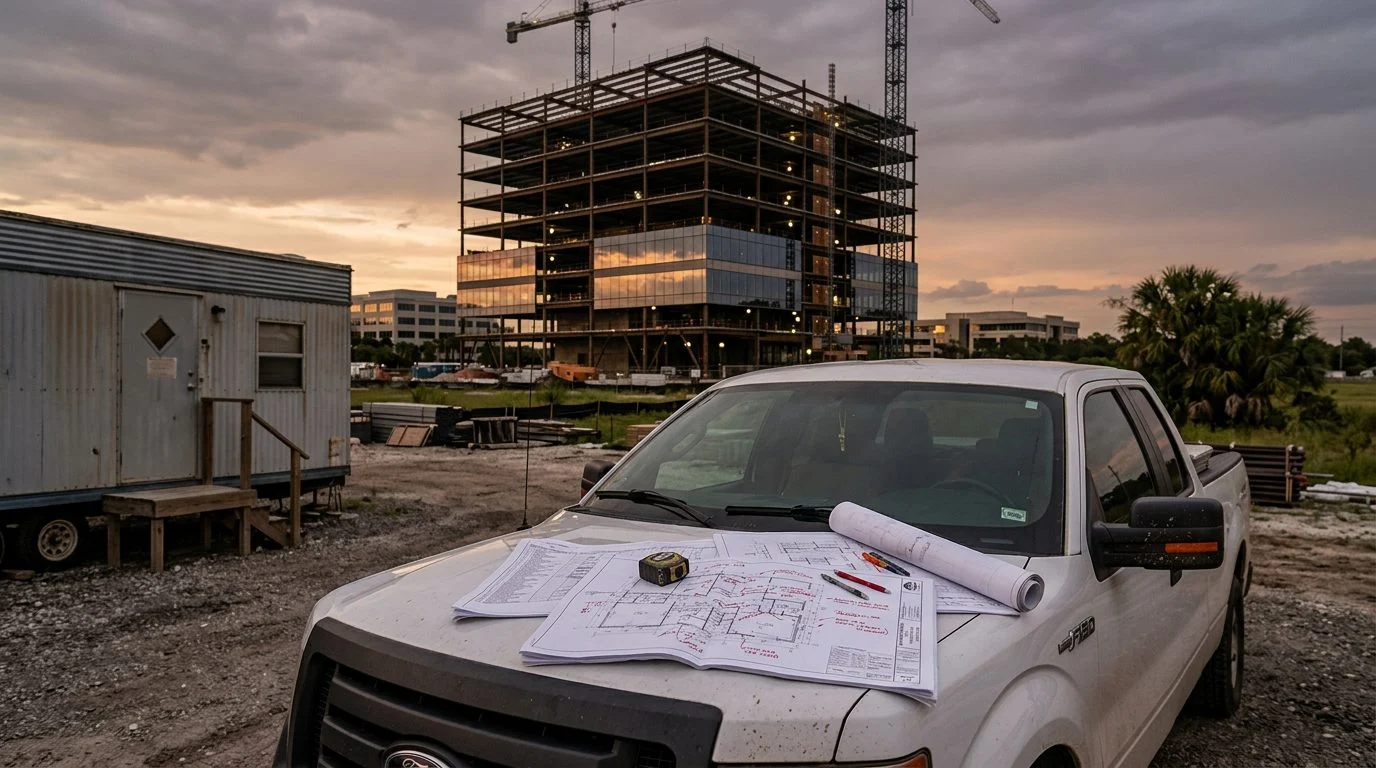
If you’re selling a commercial building in Tampa and a construction lien has been recorded against it, the first question is whether the sale can still close. A recorded lien doesn’t cancel a sale on its own. It does create a title problem that buyers, lenders and title insurers usually want solved before closing. This page explains how that works in Florida, which dates and records matter, and what owners and buyers can consider next.
What is a construction lien on commercial property in Florida?
A construction lien is a legal claim against a property by someone who was not paid for work or materials that went into it. Lienors can include contractors, subcontractors, material suppliers and others who improved the building. Fla. Stat. § 95.11 sets time limits for actions other than for recovery of real property.
The lien attaches to the real estate itself, not only to the owner’s contract with the contractor. That matters in a sale. Liens on a property can affect a sale, so it is worth reviewing them early in any transaction.
A title search will pick it up. Owners often first learn about it when the title company raises it during closing preparation.
Not sure what your next step is?
Talk it through with our team — we can walk you through how a situation like yours is usually handled and what your options are.

Can a recorded lien stop a commercial sale?
A recorded lien usually doesn’t stop a sale outright, but it must be handled before the title can pass cleanly. Buyers, lenders and title insurers typically want the lien paid, released, moved to a bond or covered by money held at closing.
Think of the lien as a cloud on the title. Until it is removed or dealt with, the title company may list it as an exception and decline to insure over it. The buyer’s lender may also refuse to fund the loan. Those two issues often stall a closing.
A sale can still happen with the right terms. The parties can agree to pay the lienor from closing proceeds, hold back an agreed amount in escrow, or move the closing date while the claim is resolved. Whether any of those fits depends on the facts. The key questions are how much is claimed, whether the lien was properly noticed and recorded, and what the sale contract says about title and liens.
What deadlines decide whether a construction lien is valid?
Construction lien matters involve several steps, from notices sent during a project to recording a claim and filing suit to enforce it. Missing a required step can affect whether the lien stands, so the dates matter as much as the amount.
Start by pulling the project timeline. Check whether a Notice of Commencement was recorded, and whether the lienor sent a notice to owner. Then compare the date of the lienor’s last work or material delivery with the date the claim of lien was recorded. Those dates are the starting point for checking the lien.
Construction-related lawsuits also fall under a separate limitations rule. Fla. Stat. § 95.11 sets a clock for claims tied to the design or construction of an improvement to real property. That clock generally starts from the earliest certificate of occupancy, certificate of completion, or date construction was abandoned. Fla. Stat. § 95.11 reads: “(3) WITHIN FOUR YEARS.— … (b) An action founded on the design, planning, or construction of an improvement to real property, with the time running from the date the authority having jurisdiction issues a temporary certificate of occupancy, a certificate of occupancy, or a certificate of completion, or the date of abandonment of construction if not completed, whichever date is earliest; except that, when the action involves a latent defect, the time runs from the time the defect is discovered or should have been discovered with the exercise of due diligence.” Check that rule separately from the Chapter 713 lien deadlines.
How does a lien show up in a Tampa commercial closing?
A recorded lien usually appears in the title commitment, the document the title company prepares before closing. The title company lists it as an item that must be cleared or accepted before it will issue the title policy.
Expect a few requests. The title company may ask for a payoff letter from the lienor and a recorded release or satisfaction of lien. The buyer’s lender may ask for proof that the lien is resolved or secured. The buyer may ask for a price adjustment, a holdback, or more time.
Timing is where deals get stressed. A lien disclosed late can push the closing date, tie up earnest money and trigger contingencies in the purchase contract. Earnest money is the deposit a buyer puts down to show commitment to the deal. Whether a buyer can walk away turns on what the contract says about title, liens and deadlines.
What paths can move a sale forward when a lien is recorded?
Most sales move forward through one of a few routes. The right one turns on the lien’s amount and its paperwork.
- Pay the lienor. Get a written payoff figure, pay it from closing proceeds, and get a recorded release. This is the cleanest route when the amount is accurate.
- Section 55.10 of the Florida Statutes covers liens created by recorded judgments, orders, and decrees on real property, and it allows any lien claimed under that section to be transferred from the property to other security by depositing money or filing a surety bond with the clerk’s office, § 55.10. For such a judgment lien, any person having an interest in the real property upon which the lien is imposed may transfer it from the property to other security, either by depositing a sum of money in the clerk’s office or by filing a bond executed as surety by a surety insurer licensed to do business in Florida.
- Hold funds in escrow. The closing agent sets aside the disputed amount. The purchase agreement should spell out who controls that money and when it is released.
- Review the lien. The facts behind a lien claim and how it was recorded are worth examining with counsel.
Payoff talks have their own rule. Fla. Stat. § 90.408 keeps offers to compromise a disputed claim out of evidence when offered to prove liability or the claim’s value. Both sides can discuss numbers without those talks becoming trial evidence.
When does a lis pendens or lien foreclosure suit affect the sale?
A pending lien foreclosure suit can make a sale much harder. Buyers and title insurers look closely at any lawsuit tied to the property.
Where the case is filed also matters. Fla. Stat. § 47.011 says an action is brought in the county where the defendant resides, where the cause of action accrued, or where the property in litigation is located. The statute has an exception for suits against nonresidents. Because the property sits in Tampa, Hillsborough County is one of the likely venues for a lien dispute on that property.
Some commercial disputes can also be filed in federal court. The U.S. District Court for the Middle District of Florida publishes its own local rules for those cases.
Ayala Law PA handles real estate litigation and construction litigation, including lien foreclosure, in Florida courts and arbitration. If a notice is already on your property, read about how to remove a lis pendens for Tampa owners. For the broader picture, see our real estate litigation overview.
Not sure what your next step is?
Talk it through with our team — we can walk you through how a situation like yours is usually handled and what your options are.
What documents should you gather before you reach out about a lien?
Having the right papers in hand lets an attorney check dates and amounts quickly. Gather these before you call:
- The purchase or sale contract, including the closing date and any title or lien clauses.
- The title commitment and every exception it lists.
- The recorded claim of lien and any notice to owner you received.
- The Notice of Commencement, the construction contract and any change orders.
- Payment records, draw schedules, invoices, lien waivers and correspondence with the lienor.
Keep originals and copies together. Write down the date you received each document. A simple timeline shows the gaps that matter most. These papers help an attorney review the timeline and the amounts claimed, which drive most lien questions.
Talk with Ayala Law PA about a construction lien on your Tampa property
Ayala Law PA represents businesses and entrepreneurs in construction and real estate litigation in Florida courts and arbitration. The firm serves businesses in Tampa, Hillsborough County and the Tampa Bay area from its Tampa office.
Frequently asked questions
Can a construction lien stop a commercial property sale in Florida?
A recorded lien usually doesn’t cancel a sale by itself. It must be paid, released, bonded or covered at closing before title can pass cleanly.
Will a construction lien show up on a title commitment?
Usually, yes. A recorded lien typically appears in the title commitment as an item the title company must clear or accept.
Where is a lien foreclosure lawsuit filed in Tampa?
Florida’s venue statute points to the county where the defendant resides, where the claim arose, or where the property is located, with an exception for nonresidents.
If a lien is already on your Tampa commercial property and your closing date is coming up, call Ayala Law PA at (813) 414-5715 or use our contact page. The firm’s office is at 1646 W Snow Ave, Tampa, FL 33606. Fee terms are explained when you make contact. Eduardo A. Maura is the responsible lawyer for this page.



