
Litigation in real estate means resolving a property dispute through a lawsuit in court or, where the parties agreed, through arbitration. It covers fights over contracts, ownership, boundaries, construction work and property held by businesses. A dispute can exist long before anyone files a case. Many start with a demand letter, a failed closing or a lien notice.
This guide explains the term in plain language and walks through the Florida steps that may follow. It is written for property owners, buyers, sellers, contractors and business owners in Tampa and Hillsborough County.
What litigation means in real estate
Litigation is the formal process of making and contesting legal claims. In real estate, those claims involve land, buildings or the rights people hold in them. The parties can include buyers, sellers, lenders, landlords, developers, contractors, neighbors and business entities.
Not every real estate fight becomes a lawsuit. Many start with a written demand saying one side believes the other broke a promise or owes money. A party may also send a notice of default or a title objection. If the matter cannot be settled, a complaint may be filed in court.
Arbitration is the other forum. It is a private process in which a neutral decision-maker decides the dispute. It applies only when the parties agreed to it.
If a failed closing, a title defect or a lien notice has you stuck, our team can talk through your options with you whenever you are ready. Talk it through with our team — we can walk you through how a situation like yours is usually handled and what your options are.

Common types of real estate disputes
Most real estate disputes fall into a few groups. Each group raises its own legal questions.
- Breach of a purchase or sale contract. One side says the other failed to close or wrongly keeps the earnest money.
- Title disputes. Two parties claim ownership of the same property. A quiet title action asks a court to confirm ownership or clear a competing claim.
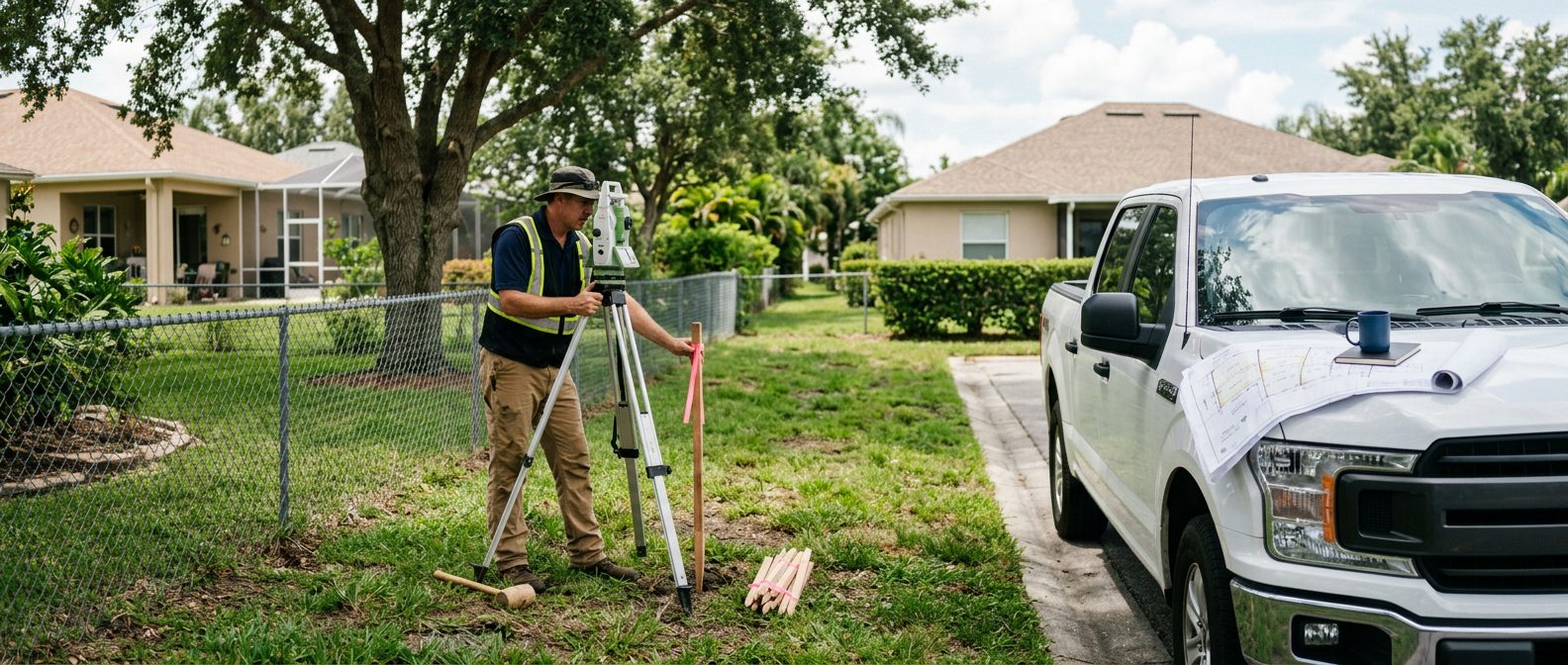
- Boundary and easement disputes. Neighbors disagree about where a line sits or who may cross a strip of land.
- Construction disputes. Contractors and subcontractors disagree over payment, scope or defects. These can lead to lien foreclosure.
- Misrepresentation. A buyer or seller claims the other side made a false statement about a property. Under Frutafino, S.A.S. v. Dole Chile, S.A., a promise of future action can be fraud if the promisor had no intention of performing it.
- Commercial property. Leases, development agreements and property held by partnerships or companies.
A contract can sometimes be undone for mutual mistake. Under Waterside at Boynton Homeowners’ Ass’n v. Southern Homes of Palm Beach, LLC, the mistake must be mutual, and it must concern a fact that goes to the essence of the contract.
How a real estate lawsuit moves through Florida courts
A Florida real estate lawsuit starts with a complaint filed in the proper county. Venue matters. Under Fla. Stat. § 47.011, actions must be brought in the county where the defendant resides, where the cause of action accrued, or where the property in litigation is located. That rule does not apply to actions against nonresidents.
After filing, the other side is served and responds with an answer or motions. Discovery follows. Discovery is the exchange of documents, written questions and depositions.
Many civil cases also go to mediation. Under Fla. Stat. § 44.102, on one party’s request a court must refer a filed civil action for monetary damages to mediation. Under Fla. Stat. § 44.102, a court must, upon one party’s request, refer a filed civil action for monetary damages to mediation if the requesting party is willing and able to pay the costs of the mediation or the costs can be equitably divided between the parties, unless an exception listed in the statute applies. The statute lists exceptions to mandatory referral, including actions filed for the purpose of collecting a debt (Fla. Stat. § 44.102).
If the case does not settle, it moves toward trial or a judge’s decision, then judgment and possible appeal. The pace varies from case to case.
Mediation, arbitration, and settlement as alternatives
Settlement is an agreement the parties reach at any stage. It can come after a demand letter or during discovery. Mediation is one structured way to get there. A neutral mediator helps the parties talk, and the parties decide whether to settle.
Arbitration works differently. Under Fla. Stat. § 682.02, a written agreement to arbitrate a dispute is valid and enforceable, unless a ground exists to revoke a contract. If a party refuses to arbitrate, Fla. Stat. § 682.03 lets the court order arbitration when an enforceable agreement exists.
Section 682.03 does not address mediation talks; under it, on a motion alleging a refusal to arbitrate, the court shall order the parties to arbitrate if an enforceable agreement exists. Under Fla. Stat. § 44.405, mediation communications are confidential, except as that section provides. A signed written settlement agreement is not confidential unless the parties agree otherwise.
Under Fla. Stat. § 45.061, an offer to settle stays open 45 days unless withdrawn sooner by a writing served on the offeree before acceptance, and an offer that is neither withdrawn nor accepted within 45 days is deemed rejected. The section does not apply to causes of action that accrue after the effective date of the act, so whether it applies to a given dispute depends on when its cause of action accrued (Fla. Stat. § 45.061). Fla. Stat. § 45.061 reads: “The offer shall remain open for 45 days unless withdrawn sooner by a writing served on the offeree prior to acceptance by the offeree.” An offer under that section that is neither withdrawn nor accepted in that time is deemed rejected, though the section does not apply to causes of action that accrue after its effective date.
Whether settling or litigating makes sense depends on the facts, the contract terms and the costs each side faces. No one can predict how any path will end.
Why documentation matters in a real estate dispute
A court or arbitrator decides a dispute largely on the records. Keep the purchase contract and every addendum, closing statements, title commitments, surveys, permits, lien notices, emails, texts and payment records. Keep them in original form and in date order. Save them early, before a phone is replaced or an inbox is cleared.
Useful categories include:
- communications with the other party
- signed agreements and amendments
- payment and receipt records, including earnest money
- inspection and construction reports
- dated photographs
- notices sent or received
Do not alter, discard or selectively edit records. Raise questions about a record with a lawyer before you act on it.
Timing matters too. Under Flaherty v. Flaherty, ratification occurs when a party entitled to rescind a voidable contract fails to do so after discovering the facts that warrant rescission.
Consider a hypothetical buyer whose file holds a signed contract, a dated email from the seller about a title defect and a closing statement showing a deposit. Those records build a clear timeline. Without the email, the same deal could look very different.
What to expect when working with a real estate litigation firm
Ayala Law PA handles real estate litigation alongside business litigation, commercial and contract disputes, shareholder and partnership disputes, construction litigation and international trade disputes. The firm works in Florida courts and arbitration. The firm’s only office is at 1646 W Snow Ave in Tampa. It serves businesses and property owners in Tampa, Hillsborough County, Brandon, Riverview, Plant City, Temple Terrace and the wider Tampa Bay area. Eduardo A. Maura is the lawyer responsible for this page.
For the broader practice, read the real estate litigation overview. Local readers can also review the Tampa business litigation page, the Hillsborough County page and the Brandon page.
The firm reviews the facts, documents and deadlines in a dispute and explains the options available. Questions about fees are best raised directly with the firm when you reach out.
Frequently asked questions
Is a real estate dispute always a lawsuit?
No. Many disputes start with a demand letter or a failed closing and are resolved without a filed case.
Where can a Florida real estate lawsuit be filed?
Under Fla. Stat. § 47.011, actions must be brought only in the county where the defendant lives, where the claim arose, or where the property is located. This section does not apply to actions against nonresidents.
Can an arbitration clause be enforced in Florida?
Generally yes, under Fla. Stat. § 682.02, unless a legal ground exists to revoke the contract.
Not sure what your next step is?
Talk it through with our team — we can walk you through how a situation like yours is usually handled and what your options are.

Talk with the firm about your dispute
If you received a notice of breach, a buyer’s closing stalled over a title defect, a contractor faces a lien, or you are handling a property dispute for a relative or partner, you may be unsure what comes next. When you are ready, you can reach the firm through its contact page or by phone at (305) 570-2208 to describe the dispute and the documents involved.



