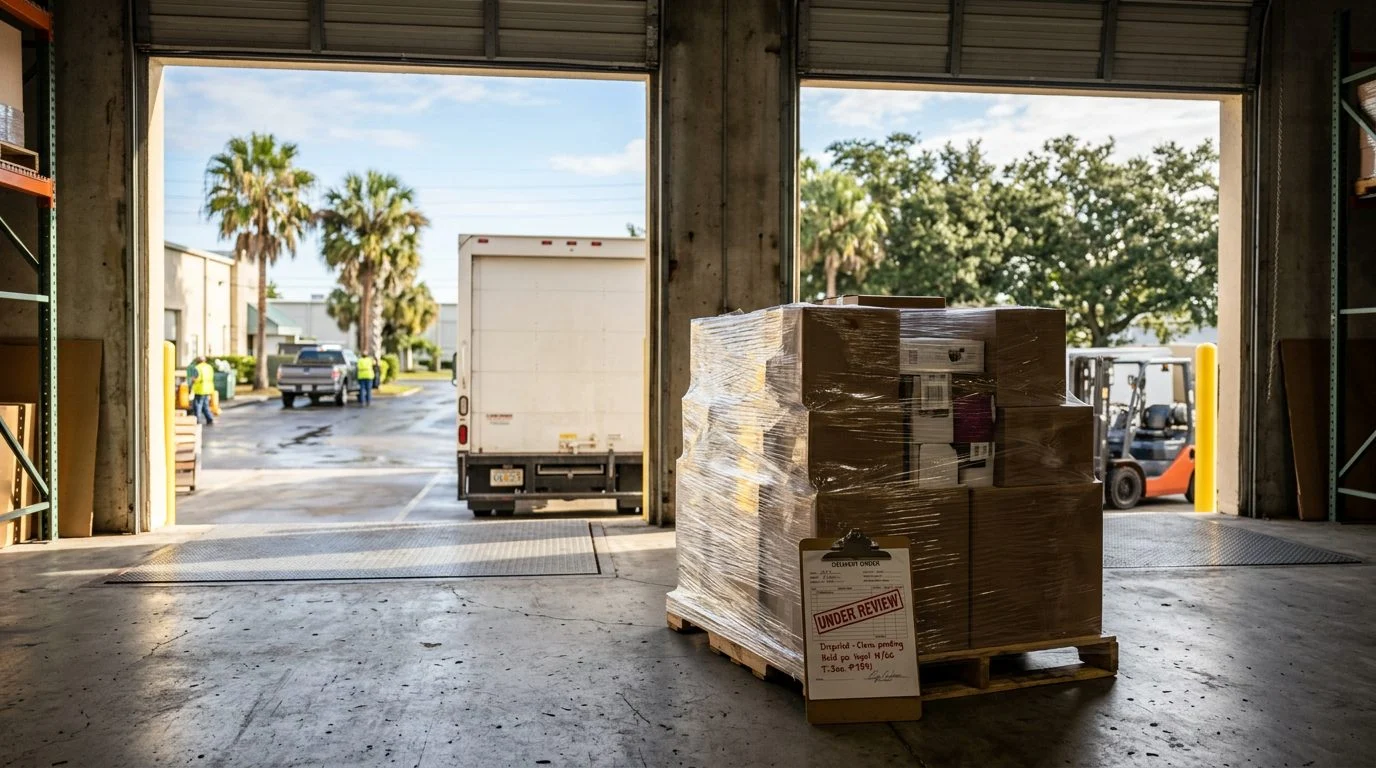
A title problem on commercial property can derail a sale, a loan or a plan to expand. A commercial title insurance claim asks your insurer to cover a covered defect in ownership or in the property’s public record. If the insurer denies the claim or the problem stays open, the dispute may move into court or arbitration.
This guide explains how these claims work, what to do first, and when a claim becomes a lawsuit.
What a Commercial Title Insurance Claim Is and Who It Affects
A commercial title insurance claim asks your insurer to pay for or fix a covered title problem that existed when the policy was issued. Title insurance protects against certain defects, liens and other title problems. Two policy types matter most:
- Owner’s policy: protects the buyer or owner of the property.
- Lender’s policy: protects the lender that holds a mortgage on the property.
The two policies protect different interests, so they may not cover the same losses. A tenant, landlord or developer can also have a stake when a recorded lease, easement or construction lien is in question.
Commercial owners, businesses that refinanced, developers facing a construction lien, and landlords whose easement rights are challenged often face these claims. Keep one point clear: a title claim is a contract dispute with your insurer. A title defect lawsuit is a separate court action against the parties involved or against the outcome of the claim.
If a title defect has turned a commercial closing or loan into a denied claim, you don't have to work through it alone. Our team can review the policy and your options with you. Talk it through with our team — we can walk you through how a situation like yours is usually handled and what your options are.
What a Commercial Title Policy Typically Covers and Excludes
A commercial title policy covers listed problems and leaves others out. The written wording decides most early questions.
Problems that are often covered include:
- forged signatures or deeds
- recording errors
- undisclosed liens or judgments
- prior mortgages
- boundary or encroachment problems
- unknown heirs or defective conveyances
Schedule A lists the insured party, the insured amount and the legal description. Schedule B lists specific exceptions and requirements. Read Schedule B before a dispute starts, because exceptions can narrow what the policy pays.
Common limits include matters the insured party created, known matters disclosed at closing, zoning and environmental issues, and the policy amount cap. Compare the actual policy, the title commitment and the closing file. A general summary is not enough.
What to Do in the First Days After You Find a Title Defect
Send written notice to the title insurer as soon as you learn of the defect. Keep proof that the notice arrived.
- Gather the owner’s and lender’s policies, the title commitment, the closing statement and recorded documents.
- Save leases, correspondence with the title agent, payoff letters and lien records.
- Avoid informal agreements or admissions with lienholders, neighbors or the title agent until the coverage position is clear.
- Write down the date of each step you take.
Timing matters. Under Fla. Stat. § 95.031, a cause of action accrues when the last element of it occurs. The start date for a claim is not always the closing date. For an action founded on fraud, including constructive fraud, the time runs from when the facts giving rise to the cause of action were discovered or should have been discovered with the exercise of due diligence, but in any event the action must be begun within 12 years after the date of the commission of the alleged fraud, regardless of the date the fraud was or should have been discovered, under Fla. Stat. § 95.031. Policy notice terms can also apply, so act early.
How the Title Claim Process Usually Works
A title claim usually moves from submission to investigation to a written coverage decision.
- Submit the claim. Include the policy number, a description of the defect and supporting records.
- Wait for the investigation. The insurer may request more documents or a title search, then issues a written coverage position.
- Review the decision. If the claim is accepted, the insurer may fix the defect, pay a covered loss or defend the title, depending on the policy.
- Respond to a denial. If the claim is denied or partly denied, compare the written reasons with the policy language. Then decide whether to ask for reconsideration or escalate.
Each step can take time. The pace depends on how complex the defect is and what the records show.
When a Title Defect Lawsuit Becomes the Path Forward
A title defect lawsuit becomes a likely path when a denied claim, an unresolved defect or a competing claim to the property cannot be settled. Common court actions in this area include:
- a breach of title insurance contract claim
- a declaratory judgment on coverage
- a quiet title action, which asks a court to settle who owns the property
- defense of a lien or foreclosure claim
Judgment liens also matter. A judgment becomes a lien on real property when a certified copy is recorded in the county, as long as the lienholder’s address is contained in the judgment or in an affidavit with that address is simultaneously recorded with the judgment. Under Fla. Stat. § 55.10, that lien lasts an initial 10 years for judgments first recorded on or after July 1, 1994.
Quiet title cases also face time limits. Under Fla. Stat. § 95.12, no action to recover real property may be maintained unless the person seeking recovery, or a predecessor, was seized or possessed of the property within 7 years before the action began.
If a policy or contract calls for arbitration, Fla. Stat. § 682.02 treats an agreement in a written record to arbitrate as valid, enforceable, and irrevocable, except upon a ground that exists at law or in equity for the revocation of a contract. Under Fla. Stat. § 682.03, a court may not refuse to order arbitration because the claim lacks merit. Under Fla. Stat. § 44.102, a court must, upon one party’s request, refer to mediation any filed civil action for monetary damages, provided the requesting party is willing and able to pay the costs of the mediation or the costs can be equitably divided between the parties. This does not apply if any of the following is true: the action is a landlord and tenant dispute that does not include a claim for personal injury; the action is filed to collect a debt; the action is a medical malpractice claim; the action is governed by the Florida Small Claims Rules; the court determines the action is proper for referral to nonbinding arbitration; the parties have agreed to binding arbitration; the parties have agreed to an expedited trial under s. 45.075; or the parties have agreed to voluntary trial resolution under s. 44.104. Fla. Stat. § 44.102 reads: “(2) A court, under rules adopted by the Supreme Court: (a) Must, upon request of one party, refer to mediation any filed civil action for monetary damages, provided the requesting party is willing and able to pay the costs of the mediation or the costs can be equitably divided between the parties, unless: 1.”
Under Fla. Stat. § 47.011, actions must be brought in the county where the defendant resides, where the cause of action accrued, or where the property is located. This section does not apply to actions against nonresidents. A typical case moves through pleadings, discovery of the title chain and claim file, motions, mediation and, if needed, trial. No result can be predicted in advance.
How This Firm Approaches Commercial Title and Real Estate Litigation
The firm focuses on business litigation, commercial and contract disputes, construction litigation and real estate litigation. Title defect disputes fall within the real estate litigation work.
Eduardo A. Maura is the responsible lawyer for this page. The firm’s support staff assist with office work on these files.
The firm’s only office is at 1646 W Snow Ave, Tampa. This page serves businesses in Tampa, Hillsborough County, Brandon, Riverview, Plant City, Temple Terrace and the wider Tampa Bay area, in Florida courts and arbitration.
Fee terms are explained directly before you commit to anything. The policy language, the facts and the applicable law shape every matter, so no outcome is promised.
Not sure what your next step is?
Talk it through with our team — we can walk you through how a situation like yours is usually handled and what your options are.
Common Questions About Commercial Title Claims in Florida
Does title insurance cover problems I didn’t know about at closing?
Coverage turns on the policy wording. Matters disclosed at closing are often excluded.
Do I need a lawyer to file a title claim?
Many claims go straight to the insurer. Legal help becomes more important when a claim is denied, delayed or headed to court.
How long do I have to act?
Policy notice terms and Florida time limits can both apply. Act early and keep written proof of every step.
Can a lender’s policy help a buyer?
Lender and owner policies protect different interests. A lender’s policy usually does not cover a buyer’s own losses.
What if the insurer offers to fix the defect?
Read the offer against the policy language before you accept it. Ask for the scope of the fix in writing.
What should I bring to a first conversation?
Bring the policy, the title commitment, the closing file, the defect notice and all correspondence with the insurer.
Next Step: Bring Your Title Problem to the Firm
If a title defect has turned a commercial closing, refinance or lien into a denied claim on property your business relies on, you don’t have to sort it out alone. Gather the documents listed above first. Then contact the firm at (305) 570-2208 or request a case evaluation.