
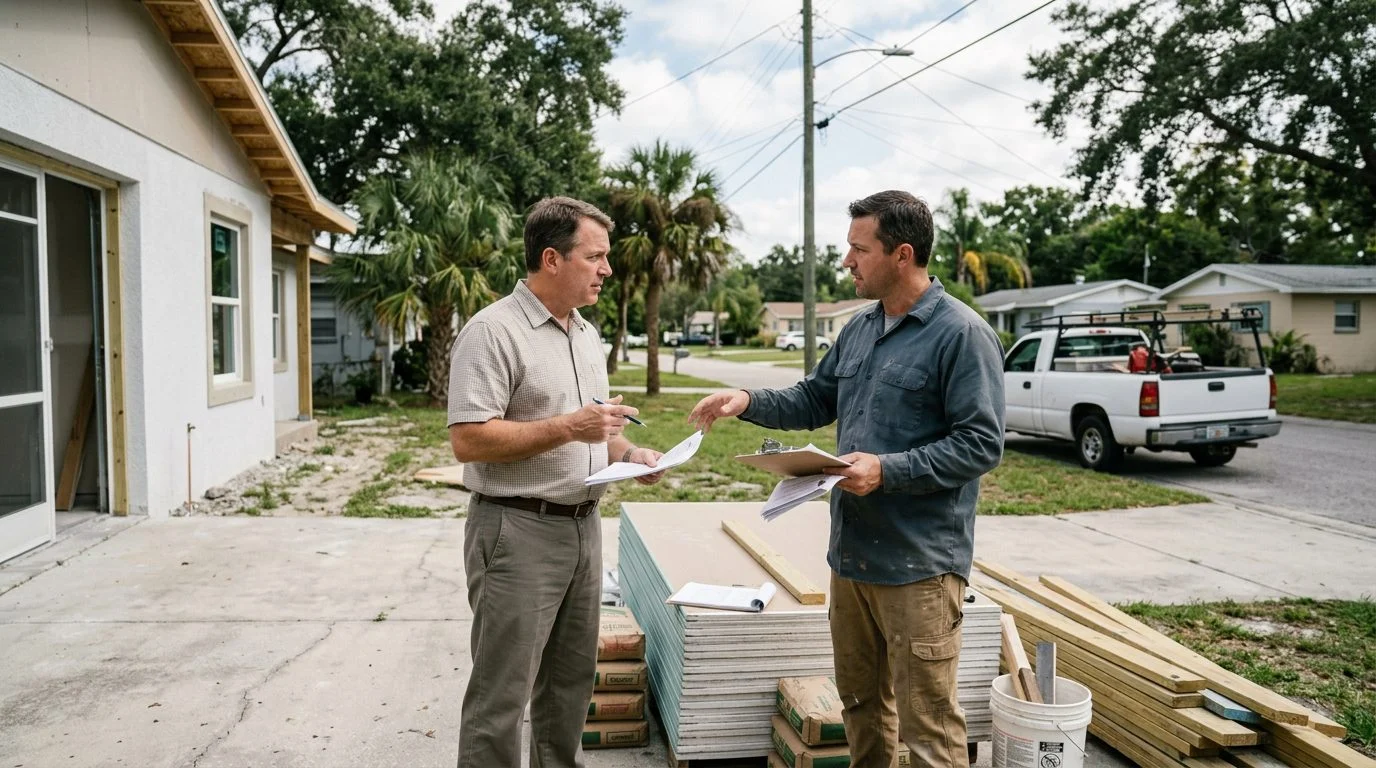
You’ve been handed a notice, a lien, or a lawsuit over a building you own or manage, and the people who sent it say they weren’t paid. That’s a hard place to be, especially if you already paid the general contractor.
If you are caught in a construction payment dispute, these disputes often involve several parties, including owners, general contractors, subcontractors and suppliers, and each party’s rights depend on the facts of the project and the contracts involved. If a payment claim has reached your property, the paperwork usually shows whether the owner actually owes the amount.
What a Subcontractor or Supplier Payment Claim Against an Owner Is
A subcontractor or supplier payment claim is a demand that the property secure payment for work or materials the general contractor never paid for.
Rights and notice steps vary. Parties who contracted directly with the general contractor usually have a more direct path. Parties further down the chain often face extra steps.
Three things get confused:
- A claim of lien is a recorded claim that the property secures an unpaid amount.
- A lien foreclosure lawsuit asks a court to enforce that lien against the property.
- A breach of contract or unjust enrichment claim asks for payment from the owner.
Unjust enrichment requires a benefit the claimant gave the owner, the owner’s appreciation of it, and keeping it in circumstances that make non-payment unfair (Pincus v. American Traffic Solutions). Claims arising from an express contract covering the same subject will not support that claim (Williams v. Johnson).
If a subcontractor's lien or lawsuit has landed on property you own or manage, you don't have to work through it alone; call Ayala Law PA at (813) 414-5715 to talk it through. Talk it through with our team — we can walk you through how a situation like yours is usually handled and what your options are.

How Commercial Owners in Tampa End Up Named in These Disputes
Most of these disputes start when money reaches the contractor but never reaches the people who did the work.
Common patterns include:
- The general contractor stops paying subs and suppliers after collecting draws from the owner.
- Retainage (money held back from each payment until closeout) is withheld or released in ways the subs dispute.
- Lien waivers (signed statements that a party was paid) were never collected at each payment, or they cover the wrong amounts.
- The job stalls or is abandoned mid-build, leaving unpaid invoices and recorded liens behind.
- Tenant improvements and renovations in Tampa often put several tiers of subs and suppliers on one site at once.
A Notice of Commencement is a recorded document that identifies the project and the owner. The Pinellas County lien law guide explains its role and how lien releases and waivers work.
The common mistake is assuming the contractor’s payment settles everything. Without records showing each tier was paid, the owner has less proof to answer the claim.
What an Owner Defense Covers
An owner defense tests whether a lien or lawsuit was properly preserved, is supported by the paperwork, and is correct in amount.
- Reviewing the lien, notices, payment records, and contract, step by step.
- Challenging the lien’s amount, timing, and form, including amounts above what the owner actually owes.
- Raising offsets for backcharges, defective work, delay, or payments the owner already made to the contractor.
- Looking at whether a lien can be moved onto a bond, where the facts support that step.
- Defending lien foreclosure suits in Hillsborough County circuit court and raising counterclaims where appropriate.
- Responding to a lien that appears unsupported.
Owner Defenses That Turn on the Paperwork
The paperwork decides which defenses are open, so gather it before anyone responds.
- Notice to owner: Whether the claimant sent a notice in time, and whether you paid the contractor before or after receiving it.
- Notice of commencement: Whether one was recorded, and what it says about the project and the owner.
- Lien waivers: Which waivers were signed at each draw, and whether they name the claimant and cover the disputed amount.
- Retainage: What was held back and what was released. These records change the math on what remains owed.
- Dates: When work last happened, when the lien was recorded, and when any suit was filed.
- Permits and licensing: The contractor’s license and permit records, which show who did the work and when.
Each project’s records tell a different story, so no outcome can be predicted from a general outline.
What Happens After an Owner Is Sued: Timeline and Steps
After an owner is sued, the case usually moves from document review to pleadings, discovery, settlement efforts, and then trial or arbitration if needed.
- Intake and document review. Gather the lien, notices, draws, waivers, and contract in one place.
- Response. Court rules set deadlines for responding to a complaint, so act quickly after service. Defenses, counterclaims, and claims against the general contractor are raised at this stage.
- Discovery. Both sides exchange payment records, change orders, and messages with the contractor and claimants.
- Mediation and settlement offers. On request, a court must refer civil actions for monetary damages to mediation if the requesting party is willing and able to pay the costs of mediation or the costs can be equitably divided between the parties, unless an exception applies (§ 44.102). Section 45.061 sets a 45-day period for a written settlement offer unless it is withdrawn sooner, but subsection (6) provides that the section does not apply to causes of action that accrue after the act’s effective date (ch. 90-119) (§ 45.061).
- Trial or arbitration. If the case isn’t resolved, it moves toward trial or arbitration. Timing varies with the court calendar and how complex the case is.
Florida also sets different time limits for different claims.
Suits generally must be brought in the county where the defendant resides, where the cause of action accrued, or where the property in litigation is located, but this rule does not apply to actions against nonresidents (§ 47.011).
What Ayala Law PA Focuses On for Owners in Tampa
Ayala Law PA focuses its practice on business litigation, commercial and contract disputes, construction litigation, and real estate litigation in Florida courts and arbitration.
- The firm’s only office is at 1646 W Snow Ave, Tampa, FL 33606. It serves Tampa, Hillsborough County, and the Tampa Bay area from that office.
- Eduardo A. Maura is the lawyer responsible for this page. The firm’s lawyers and support staff handle construction and real estate matters from the Tampa office.
- Construction litigation at the firm covers contractor and subcontractor disputes, lien foreclosure, and construction contract fraud.
- Each matter turns on its own documents and facts. No outcome is predicted or promised.
Not sure what your next step is?
Talk it through with our team — we can walk you through how a situation like yours is usually handled and what your options are.
Questions Commercial Owners Ask About Subcontractor Payment Claims
Do I still owe the subcontractor if I already paid the general contractor?
The answer turns on when you received notice and which lien waivers you collected. Gather those records before you decide how to respond.
Can a subcontractor take my building if the contractor disappeared?
Enforcing a lien against property generally requires a lawsuit in court.
Should I just pay the claim to make it go away?
Paying without reviewing the amount, the notices, and any offsets can mean paying more than you owe. Review the paperwork first.
What if the lien is for more than the contract price?
The amount is often the central issue, not just whether a lien exists. Compare the claim to the contract, draws, and payments already made.
How long do I have to respond once I’m served?
Court rules set response deadlines, so don’t wait. Act quickly after you receive the papers.
Can I bring the general contractor into the case?
A party may often bring the general contractor in through a third-party claim, if the facts support it.
Talk to Ayala Law PA About Your Property and the Claim
If a lien or lawsuit about property you own or manage just arrived, you don’t have to sort through it alone. Gather the lien, notices, draws, waivers, and contract, then call Ayala Law PA at (813) 414-5715 or request a case evaluation through the contact page. The Tampa office is at 1646 W Snow Ave, Tampa, FL 33606.
Eduardo A. Maura is responsible for this page. This page has not been approved by The Florida Bar. No outcome is promised or predicted.



