
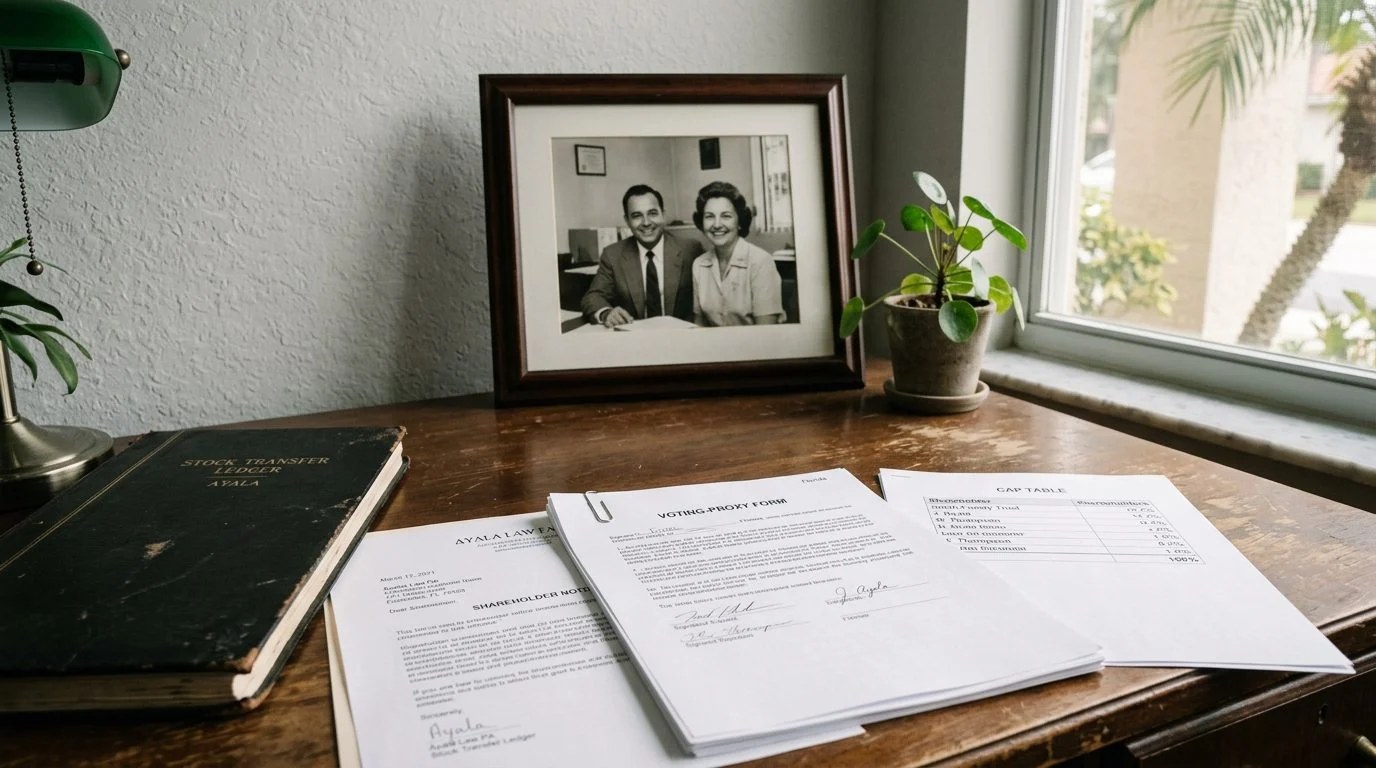
If you signed a letter of intent and now want out, or the other side says you’re already bound, you need a clear answer. A letter of intent (LOI) is a document parties often use to outline the main terms of a deal before a final contract is drafted.
Whether your letter of intent binds you in Florida turns on three questions a court weighs: which terms both sides actually accepted, whether each side intended to be held to them, and whether the essential terms are definite enough for a court to enforce. Even while the price is still open, certain clauses in the letter often bind on their own, so review them before you walk away from negotiations.
Short Answer: Is a Letter of Intent Binding in Florida?
Three questions drive that answer. Did both sides intend to be bound? Are the essential terms stated clearly enough? And did the parties make specific provisions binding?
The title on the document matters, but it does not end the analysis. A deal can fail for lack of definite terms even when both sides signed something called a letter of intent. Each question gets a closer look below.

What Makes a Contract Enforceable in Florida
A Florida contract needs an offer, an acceptance, consideration, and essential terms stated clearly enough. The Florida Supreme Court applied these basics to an oral agreement in St. Joe Corp. v. McIver. The court said an oral contract is subject to “the basic requirements of contract law such as offer, acceptance, consideration and sufficient specification of essential terms.”
Signing an LOI does not automatically make it a contract. Courts check whether the parties actually agreed on the points that matter, such as price, payment timing, and what each side must do.
Missing terms are one common reason a deal fails this test. A letter that says the parties will “work toward” a deal may describe hopes, not promises. Ask whether the document says who does what, for how much, and by when. If the core terms are missing, the LOI may be a framework rather than a contract.
How Courts Read ‘Non-Binding’ Language
A clear “non-binding” statement is strong evidence that the parties did not mean to be bound yet.
Watch for phrases such as “subject to a definitive agreement,” “subject to due diligence,” and “subject to financing.” These words tell a reader that more steps remain before anyone is committed. They point toward a deal that is not final.
Conduct matters too. A party that keeps acting as if the deal is closed can create confusion about what was agreed. Examples include sharing confidential files, making payments, starting work for the other side, or telling staff and vendors the deal is done. Those steps can support an argument that the parties treated the LOI as binding, even if the paper says otherwise.
If your LOI says non-binding but your emails say “we’re locked in,” the other side may point to the emails. Read your own messages the way a judge would read them.
Provisions That Often Bind Even in a Non-Binding LOI
Confidentiality, exclusivity, expense allocation, governing law, and dispute resolution clauses are often written to bind, even when the rest of an LOI does not. Some drafters label these terms “binding.” Others leave the label off, so read each clause on its own.
Exclusivity, sometimes called a no-shop clause, surprises many business owners. It can stop you from talking with other buyers or investors for a set period, even if the price is still open. Check how long the period lasts and what kinds of contact it prohibits.
Confidentiality clauses can require you to keep the other side’s information private. Expense clauses decide who pays for appraisals, due diligence, or legal work if the deal ends. Florida treats an arbitration agreement contained in a record as valid, enforceable, and irrevocable, except on grounds that exist to revoke a contract (Fla. Stat. § 682.02). If your LOI sends disputes to arbitration, that clause can matter as much as the price.
Do not assume a clause is harmless because it is short. One sentence can create duties the business did not expect.
Open Terms and Changes in the Final Contract
Open terms are the clearest sign that the deal is not final.
Price, payment schedule, closing conditions, and key promises about the business are common open items. When these stay unsettled, both sides are still negotiating. Phrases like “to be determined” or “subject to review” should prompt a question, not a shrug.
Whether a change creates liability depends on which terms bound the parties. If an exclusivity or confidentiality clause was binding, changes to those points carry more risk. Changes to non-binding price terms generally carry less.
Keep a record of each version. Note what was agreed, what was dropped, and who made each change. A clean history of drafts shows what was final and what was not.
Texts, Emails, and Conduct That Can Create a Binding Deal
Yes, texts and emails can form or change a binding agreement in Florida when they show an offer, an acceptance, and definite terms. Florida’s electronic records rules help make that possible.
Florida’s electronic signature statute says that “unless otherwise provided by law, an electronic signature may be used to sign a writing and shall have the same force and effect as a written signature” (Fla. Stat. § 668.004). The Uniform Electronic Transaction Act adds that a contract “may not be denied legal effect or enforceability solely because an electronic record was used in the formation of the contract.”
Those rules do not decide a case by themselves. A court still asks whether the messages show a real agreement. A thread full of “sounds good, let’s do it” can look very different from one that says “let’s talk next week.” The exact words and their order both matter.
Partial performance can also matter. Payments, handing over work product, or starting services can support an argument that both sides acted as if they were bound. Keep copies of every message and every payment record.
Statute of Frauds and When a Writing Is Required
Florida’s statute of frauds requires a signed writing for certain agreements, including some that cannot be performed within one year.
Fla. Stat. § 689.01 governs the creation, transfer, or release of interests in real property by signed instrument. The writing rule for real property is in Fla. Stat. § 689.01. That section requires an estate or interest of freehold, or for a term of more than 1 year, in real property to be created or transferred only by an instrument signed in the presence of two subscribing witnesses by the party creating or transferring it or by that party’s lawfully authorized agent, unless made by will or other testamentary appointment duly made according to law; an assignment or surrender may also occur by operation of law. No subscribing witnesses are required for a lease of real property.
Parties cannot skip these rules by pointing to promises. The Florida Supreme Court held in DK Arena, Inc. v. EB Acquisitions I, LLC that promissory estoppel may not be used to get around the statute of frauds.
An LOI may be the only writing in the file. Its wording then decides what it can prove. A vague letter may fail to show the key terms, while a clearly drafted one may become the main proof.
Walking Away From a Letter of Intent: What to Review First
Before you stop negotiating, pull every document that touches the deal and read the binding clauses closely. Walking away is easier to explain when the record is complete.
Gather the signed LOI, every amendment, all term sheets and drafts, and emails and texts with the other side. Add records of payments, expenses, and any work you handed over. Those records show what each side did and when.
Read the binding clauses first. Exclusivity, confidentiality, and expense terms are the ones most likely to carry consequences if you stop. Check dates, notice requirements, and whether a clause survives termination. A clause that continues after the deal ends can still apply.
Think about timing and wording too. A short written notice that says the company will not proceed can be clearer than silence. How and when you communicate the decision can shape how the other side describes the deal later. Keep the message factual, and avoid language that suggests the deal is still alive if it is not. A reviewing lawyer weighs the clauses, the record, the conduct, and the notice together.
When the Other Side Says You Are Bound
If that clause was clear and was breached, the claim is straightforward. The dispute then turns on what the clause says and what happened.
Promissory estoppel is a second theory. As noted above, Florida’s Supreme Court has held that it cannot be used to enforce a promise the statute of frauds requires in a signed writing. Fraudulent inducement is a third. Florida courts require a false statement concerning a material fact, the speaker’s knowledge that it is false, an intention that the other party act on it, and consequent injury to that party (Frutafino, S.A.S. v. Dole Chile, S.A.).
A Florida appellate court has held that claims arising from an express contract covering the same subject matter “will not support a claim for unjust enrichment” (Williams v. Johnson). Keep each theory separate when you review the file.

Next Steps for Businesses With a Stalled or Disputed Deal
A letter of intent dispute usually turns on a short set of documents and a few key clauses. An early, organized review makes the next steps clearer.
Under Florida’s American Rule, each party generally bears its own attorneys’ fees unless a contract or statute provides otherwise (Price v. Tyler). That rule matters when you budget for any dispute. Consultations are paid, and the firm explains its fee and cost terms directly when you make contact.
Frequently Asked Questions
Is a letter of intent always binding?
No. An LOI is not binding just because it was signed or titled that way.
Can a text message make a deal binding?
It can, when the messages show an offer, an acceptance, and definite terms.
Does a letter of intent need to be in writing?
Some agreements must be in a signed writing under Florida’s statute of frauds. Whether one applies turns on the terms.
Can I walk away from a letter of intent?
That turns on which provisions bind you, so review them before you send any notice.
Eduardo A. Maura is the responsible lawyer for this page. Ayala Law PA’s only office is at 1646 W Snow Ave, Tampa, Florida. The firm serves businesses in Tampa, Hillsborough County, and the Tampa Bay area.
If you signed a letter of intent and the deal has stalled, or the other side now says you’re already bound, our team can review the documents with you. Call (305) 570-2208 or request a case evaluation.



