
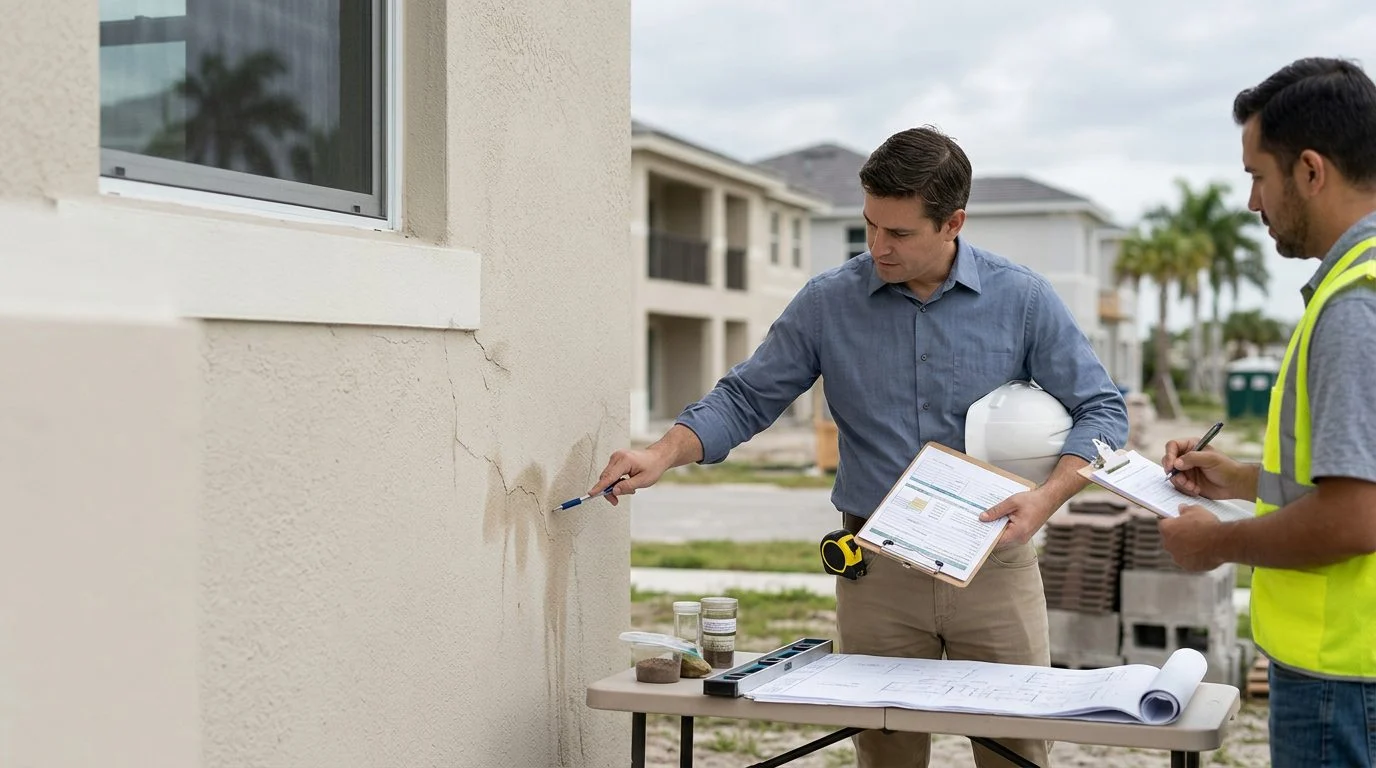
Florida generally gives four years to sue over construction defects, but the clock may not start on the day you first notice a problem. A seven-year outer limit can also end a claim, even if the defect was hidden.
Ayala Law PA focuses on business litigation, including construction litigation and contract disputes. Eduardo A. Maura is the lawyer responsible for this page. The firm’s only office is in Tampa, at 1646 W Snow Ave, and it serves clients in Tampa and Hillsborough County from that office.
Two Different Clocks: Statute of Limitations and Statute of Repose
A statute of limitations sets how long you have to file suit after a claim begins (Florida Rules of Civil Procedure). A statute of repose sets an outer deadline that runs from a fixed event, such as completion of the project. It can end a claim even before anyone finds the problem.
Florida’s construction rules use both ideas together. The limitations period is the shorter countdown. The repose limit is the longer outer cutoff. Neither one replaces the other, so you can’t assume a single date controls your case.
Florida law says a cause of action accrues when the last element of that claim occurs (Fla. Stat. § 95.031). For construction defects, the key dates appear in Fla. Stat. § 95.11. Read the current text yourself, because statutes change.
If a defect has you counting dates on a project you never expected to fight over, our team can talk through your timeline with you. Talk it through with our team — we can walk you through how a situation like yours is usually handled and what your options are.
The Four-Year Limitations Period for Construction Defects
Florida gives four years to sue over the design, planning, or construction of an improvement to real property. That countdown usually starts from a project milestone, not from the day you first see a problem.
The statute names the milestone. The countdown runs from the earliest of these dates: a temporary certificate of occupancy, a certificate of occupancy, a certificate of completion, or the date construction was abandoned if the work was never finished (Fla. Stat. § 95.11).
This is where many owners go wrong. They count from move-in day, the closing date, or the first leak. The statute looks at the certificate or completion date instead.
Repairs don’t reset the clock. For work within the scope of a duly issued building permit and certificate, correcting or repairing completed work does not extend the deadline, even when the repair is made under warranty.
Two more rules matter on larger projects. If a project includes multiple buildings, each building counts as its own improvement. A newly built single-dwelling home used as a model home starts its clock when a deed first transfers title to another party.
The Seven-Year Statute of Repose and Why It Matters
The outer limit is seven years from the same certificate or abandonment date. Suit must be filed within seven years of that date, even if the four-year period has not yet expired (Fla. Stat. § 95.11).
People often search for the “seven year property law” in Florida. It is not a separate property law.
Here is a neutral example with placeholder dates. Suppose a certificate of occupancy issued on June 1, 2020. Suppose the owner found a hidden leak in March 2024. The four-year period would run from discovery. But the seven-year limit still ends on June 1, 2027, and the earlier date controls. Your real dates depend on your permits, certificates, and inspection records.
Latent Defects, Patent Defects, and How Discovery Fits In
Discovery of a hidden defect can start the four-year clock later. It does not remove the seven-year outer limit.
A patent defect is visible when the work is finished, such as an uneven floor or a missing railing. A latent defect is hidden inside the work, such as a failed waterproofing membrane behind a finished wall.
For a latent defect, the statute says time runs from when the defect is discovered or should have been discovered with due diligence. Each side may argue about when a reasonable owner would have noticed the problem.
Discovery also matters for fraud claims. Deadlines for filing a fraud claim are set by statute and depend on the facts of each case, so timing should be reviewed early.
Don’t wait to test these questions. A reader who finds a hidden problem late may still face a closed window.
What the 12-Month Defects Liability Period Does and Does Not Do
A 12-month defects period is usually a contract term. It does not automatically set your deadline to sue. Its wording matters, so read it closely.
Florida law voids any contract provision that sets a shorter time to sue than the statute allows (Fla. Stat. § 95.03). Under Fla. Stat. § 95.03, a provision in a contract that fixes a period to begin an action arising out of the contract, when that period is shorter than the one the applicable statute of limitations provides, is void.
A warranty may still require you to report problems within a set window. Check that notice language carefully. Keep copies of every written notice, the date you sent it, and any reply.
Warranty repairs also do not restart the statutory clock, as explained above.
Chapter 558 Pre-Suit Notice Before You File
Confirm whether it applies to your project before you assume you can file right away.
The pre-suit steps can take time. Their notice and inspection requirements are technical, and their effect on deadlines depends on the project and the claim. Don’t assume the ordinary timing covers you without checking.
Waiting until a deadline is close can leave little room to finish the pre-suit steps. Start the review early, while records are still available.
Not sure what your next step is?
Talk it through with our team — we can walk you through how a situation like yours is usually handled and what your options are.
Contract Claims and Other Claims Against a Contractor
Claims beyond the construction defect rule can carry different deadlines. One number may not cover every claim you have.
Construction defect claims follow the four-year limitations period discussed above under Fla. Stat. § 95.11. Contract claims have their own periods under the same statute, and those can differ from construction defect timing. How a claim is framed can change which period applies.
Arbitration can pause the clock. Whether a pending arbitration affects a filing deadline depends on the facts of the case, so timing should be reviewed early.
Lien rights follow a separate track. Under Fla. Stat. § 95.11, an action on a legal or equitable claim founded on a written contract is generally commenced within five years, but an action to enforce a claim against a payment bond is governed by other applicable provisions, including s. 713.23(1)(e). Keep contracts, invoices, and change orders together from the start.
Talk with Ayala Law About Your Project’s Dates
If you’re trying to work out how much time is left, start with the certificate, completion, and discovery dates on your project. Those three dates drive most of the analysis.
You may be a property owner, an HOA board member, a business owner, or a contractor who found a defect you didn’t expect. Whatever brought you here, the dates and the paperwork matter.
Ayala Law PA’s only office is in Tampa, and the firm serves clients in Tampa, Hillsborough County, Brandon, Riverview, Plant City, Temple Terrace, and the wider Tampa Bay area from that office. Its work includes construction litigation, contract disputes, and business and real estate matters in Florida courts and arbitration.
To talk through your project’s dates, call (305) 570-2208 or send a message through the contact page. You can also read more about construction litigation.
Common Questions
How long do I have to sue a contractor for construction defects in Florida?
Florida generally allows four years, measured from a certificate, completion, or abandonment date. Discovery of a hidden defect can change when the four years start.
What is the seven year property law in Florida?
It usually refers to the seven-year outer limit for construction defect claims in § 95.11. That limit applies even when a defect was hidden.
Does a warranty repair restart the deadline?
No. For work within a duly issued permit and certificate, repair does not extend the limitations period.
Can a contract clause shorten my time to sue?
Under Fla. Stat. § 95.03, a contract provision that sets a shorter time to begin an action than the applicable statute of limitations provides is void.
This page is general information, not legal advice. Results depend on the facts of each matter and cannot be predicted. Eduardo A. Maura is the lawyer responsible for this page.



