

When a foreign customer refuses to pay, your first move is to gather the contract, the shipping records and every message about the invoice. Then send a clear written demand and track every deadline. This page walks through those steps in order for Florida businesses.
This is general information, not legal advice. Your options turn on your contract, what was shipped, and what the customer says went wrong.
Why a Foreign Customer Stops Paying
A customer usually stops paying for one of two reasons: a real dispute or money trouble. Sort out which one you face before you act.
A real dispute might involve product quality, a late delivery, a short shipment or a disagreement over price. Money trouble means the customer may want to pay but cannot. The two call for different responses.
Write down the customer’s stated reason in their own words. Add the date and the channel they used, such as email, text or phone. That note is your first record of the dispute.
Whether a missed payment amounts to a breach of contract depends on the wording of the agreement and the surrounding circumstances, so the contract language is worth reviewing with a lawyer. Florida law says a buyer must pay the contract rate for goods it has accepted (Fla. Stat. § 672.607). So whether the buyer accepted the goods is a key question.
If your overseas customer has an unpaid invoice and has gone quiet, our team can review your contract and shipping records with you, so reach out through our contact page or call (305) 570-2208. Talk it through with our team — we can walk you through how a situation like yours is usually handled and what your options are.
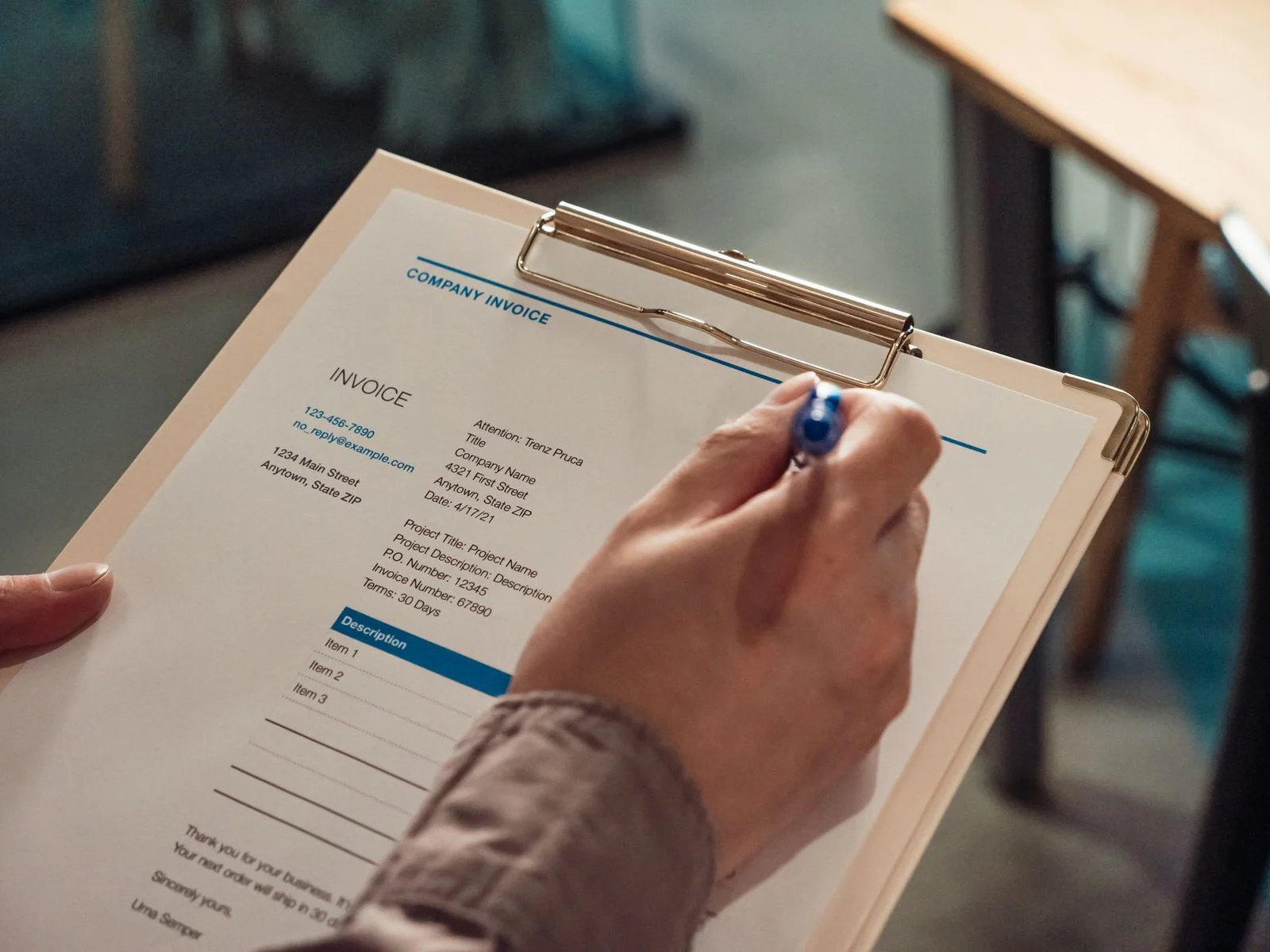
Step 1: Pull and Review the Sales Contract and Terms
Start with the signed contract. If there isn’t one, start with the purchase orders, invoices, quotes and emails that set out the deal.
Check the payment amount, the due date, the payment method, the delivery terms, any inspection or acceptance clause, and any late fee or interest rate.
With an overseas buyer, two clauses matter most. The governing law clause says which state’s law applies.
The forum clause says whether a dispute goes to court or to arbitration.
If there’s no signed contract, check the statute of frauds. For goods priced at $500 or more, a contract generally is not enforceable unless there is a record sufficient to show that a sale was made, signed by the party against whom enforcement is sought or by that party’s authorized agent or broker, but exceptions apply, including for goods that have been received and accepted (Fla. Stat. § 672.201). Between merchants, a written confirmation can count if it is received within a reasonable time and the receiving party has reason to know its contents, unless that party objects in writing within 10 days after receiving it.
Step 2: Document Shipments and Proof of Delivery
Gather every record that shows what shipped, when it left, and who received it.
Useful records include bills of lading or air waybills, commercial invoices, packing lists, tracking history and signed proof of delivery. Export paperwork and customs entries also help show what was sent and when.
Acceptance matters. Under Florida law, a buyer accepts goods after a reasonable chance to inspect them when the buyer says they conform, keeps them, fails to reject them effectively, or does any act inconsistent with the seller’s ownership (an act wrongful against the seller counts only if the seller ratifies it), and accepting part of a commercial unit is acceptance of that entire unit (Fla. Stat. § 672.606).
Shipping delays or customs holds can stretch your timeline. Note every date those events occurred.
Step 3: Preserve All Communications
Keep every message with the customer in its original form. Don’t delete, edit or reorganize anything.
That includes email, texts, chat apps, voicemail and call notes. Keep messages written in another language too, along with any translations you used. Save originals with their dates and headers. Screenshots alone can be harder to verify.
Focus on what was promised and when. A clear note of a promised payment date or a shipping commitment often matters more than the number of messages.
Your records also show what the buyer said about the goods. If the customer claims the goods were wrong, note when they first raised it. Where a buyer has accepted goods, Florida law requires the buyer to notify the seller of breach within a reasonable time after discovering or should have discovered it, or the buyer may be barred from any remedy (Fla. Stat. § 672.607).
Step 4: Contact the Customer and Send Written Notice
Start with a calm, factual follow-up. Then send a written demand that states the amount owed, the due date and the contract basis.
Keep the tone professional, not threatening. A demand should list the invoice numbers, the amount due, the due date, the contract term that supports payment, and a reasonable date to pay or respond.
Send the notice the way the contract says. Use the notice address or email listed in the agreement. Keep proof that it was sent and received.
If the customer says the goods don’t conform, you may have a right to fix the problem. Florida law lets a seller whose delivery was rejected notify the buyer of its intent to cure, then deliver conforming goods within the contract time (Fla. Stat. § 672.508). Acting quickly matters here.
Step 5: Note Deadlines, Notice Periods and Limitation Periods
Track every contract deadline and the legal time limit to file a claim. Delay can cost you the claim, even when the debt is clear.
The contract may require notice, a cure period or a dispute step before you can sue or arbitrate. Follow those steps in order.
Florida law sets time limits for filing suit (Fla. Stat. § 95.11). A cause of action accrues when its last element occurs, and the time limit runs from that point (Fla. Stat. § 95.031).
Florida’s laches rule can also bar a claim brought too late. It applies even if the other side did not know you would sue.
Calendar the invoice due date, the date of the last payment or written acknowledgment, each contract deadline, and any date the customer promised to pay. Because these rules interact, review the timing early.
Not sure what your next step is?
Talk it through with our team — we can walk you through how a situation like yours is usually handled and what your options are.
Can a Florida Business Sue a Foreign Customer for Non-Payment?
Often, yes. A Florida business can pursue an unpaid price in court or in arbitration when the contract and the facts support the claim.
Florida courts can reach an out-of-state party when the contract chose Florida law and the party agreed to Florida court jurisdiction (Fla. Stat. § 685.102). Florida courts can also reach a party that breached by failing to perform acts the contract required in Florida (Fla. Stat. § 48.193). Which route applies turns on how the contract was written.
Mediation is another option. The American Arbitration Association states that mediation may be used to resolve cross-border commercial disputes involving international contracts (American Arbitration Association). Florida’s court system also publishes a handbook on arbitration options, including voluntary binding arbitration (Florida State Courts System ADR Resource Handbook).
Collecting a judgment in another country is a separate step, with its own rules.

When to Contact a Business Litigation Attorney
Reach out to a business litigation lawyer once routine follow-up stops working. Several signs point that way.
The customer disputes the debt in writing. The customer stops responding. The amount is significant to your business. A contract deadline is approaching.
Eduardo A. Maura is the responsible lawyer for this page. Our office is at 1646 W Snow Ave in Tampa, Florida, and we represent businesses in Tampa and Hillsborough County. Our team focuses on business litigation, commercial litigation, contract disputes, shareholder disputes, construction litigation, real estate litigation and international trade litigation. We serve businesses in Tampa, Hillsborough County, Brandon, Riverview, Plant City, Temple Terrace and the wider Tampa Bay area.
Case evaluations are a fee-based service. Fees are discussed when you make contact.
Frequently Asked Questions
Can a business sue a foreign customer for non-payment?
Often, yes, in court or arbitration, when the contract and facts support the claim.
Does a sale of goods need a written contract?
For goods priced at $500 or more, Florida generally requires a record sufficient to show a sale was made, signed by the party against whom enforcement is sought, unless an exception in the statute applies (Fla. Stat. § 672.201).
How long do I have to sue?
Florida sets time limits for suits in Fla. Stat. § 95.11, so review yours early.
Should we mediate or arbitrate?
Mediation may be used for cross-border commercial disputes, according to the American Arbitration Association.
What if the customer says the goods were defective?
Save every complaint and your reply, and check whether Florida’s cure rule applies (Fla. Stat. § 672.508).
If your overseas customer has an unpaid invoice and has gone quiet, our team can talk through your contract and shipping records with you. Reach out through our contact page or call (305) 570-2208.



