
International Trade Litigation Riverview | Ayala Law PA
Business owners in Riverview who buy or sell across borders sometimes need international trade litigation to settle a payment or delivery dispute. In plain terms, it means taking a deal that crosses a border to a Florida court or to arbitration when the other side won’t pay, deliver, or perform. Ayala Law PA focuses on business litigation, commercial litigation, contract disputes, shareholder disputes, construction litigation, real estate litigation, and international trade litigation. The firm serves businesses in Riverview, Brandon, Plant City, Temple Terrace, and the wider Tampa Bay area. Eduardo A. Maura is the responsible lawyer. The firm’s only office is at 1646 W Snow Ave, Tampa, Florida.
If an overseas buyer has stopped paying for goods you already shipped, you may have a claim worth reviewing, and our team can talk it through with you. Talk it through with our team — we can walk you through how a situation like yours is usually handled and what your options are.
What International Trade Litigation Covers for Riverview Businesses
International trade litigation covers business disputes tied to a cross-border deal. The deal might involve a foreign buyer, a foreign supplier, an overseas distributor, or a shipping party. The core question is usually simple: did one side break the contract, and what can the other side do about it?
For a Riverview company, the stakes are often cash flow and customer relationships. A late payment can strain payroll. A late shipment can cost a key account. Acting early, with the right paperwork, keeps your options open.
Where the case lands depends on what the parties agreed. Some contracts send disputes to a Florida court. Others require arbitration. Florida courts and arbitrators both read the contract closely, so the wording matters from the first draft.
Common Cross-Border Disputes Riverview Companies Face
Most cross-border disputes involve money, goods, or a partner that stopped performing. Four patterns are common:
- Unpaid or short-paid invoices from an overseas buyer, sometimes after the goods were accepted.
- Delivery fights, such as late, damaged, or wrong shipments and disagreements over who bore the risk of loss.
- Broken distribution or supply agreements, like a foreign agent who sells outside its assigned territory.
- Letter of credit problems, when bank documents don’t match the contract terms.
One mistake can cost a buyer its remedy: staying silent. Where Florida’s sales-of-goods rules apply, a buyer that has accepted goods must notify the seller of a breach within a reasonable time after discovering it. Otherwise, the buyer may be barred from any remedy.
Acceptance can happen without a signed document. It does not occur until the buyer has had a reasonable chance to inspect the goods.
Why Local Trade Flows Matter in Hillsborough County
Local shipping adds parties to many Hillsborough County deals. Port Tampa Bay sits in Hillsborough County, and many Riverview companies move equipment, materials, or finished goods through Tampa Bay ports. Each shipment can involve a freight forwarder, a carrier, a customs broker, a bank, and the buyer. When something goes wrong, each party may point to another. The first step is mapping every party in the chain and reading each agreement to see who owes what.
Venue is a separate question. Florida law says an action must be brought in the county where the defendant resides, where the cause of action accrued, or where the property in litigation is located. [Fla. Stat. § 47.011] That rule does not apply to actions against nonresidents, so a deal with a foreign party may call for a different venue analysis.
Florida Courts or Arbitration: How the Contract Decides
The contract usually decides whether a dispute goes to court or to arbitration. A written arbitration provision in a contract involving commerce is valid and enforceable. The only exceptions are grounds that allow any contract to be revoked. Under Florida’s arbitration code, an agreement contained in a record to submit to arbitration any existing or subsequent controversy arising between the parties to the agreement is valid, enforceable, and irrevocable, except upon a ground that exists at law or in equity for the revocation of a contract.
A court decides whether an arbitration agreement exists. A court may not refuse to order arbitration only because the claim lacks merit.
The parties can also choose the governing law. When a deal has a reasonable relation to Florida and to another nation, they may agree that either one’s law governs.
Some cross-border contracts name the ICC 2021 Arbitration Rules, which set procedures for international commercial arbitration. [ICC 2021 Arbitration Rules] Many international sale-of-goods contracts also fall under the UNCITRAL CISG text, a United Nations treaty.
The exact wording matters. A clause naming a Florida court reads differently than one naming an arbitration seat and rules. Which path fits depends on the facts and the contract language.
Documents to Gather Before Contacting the Firm
Gather the paper that shows what was promised, shipped, paid, and said. A complete file lets the review move faster. Bring:
- The signed contract, purchase orders, quotes, and any amendments or change orders.
- Invoices, payment records, and any letter of credit or bank documents tied to the deal.
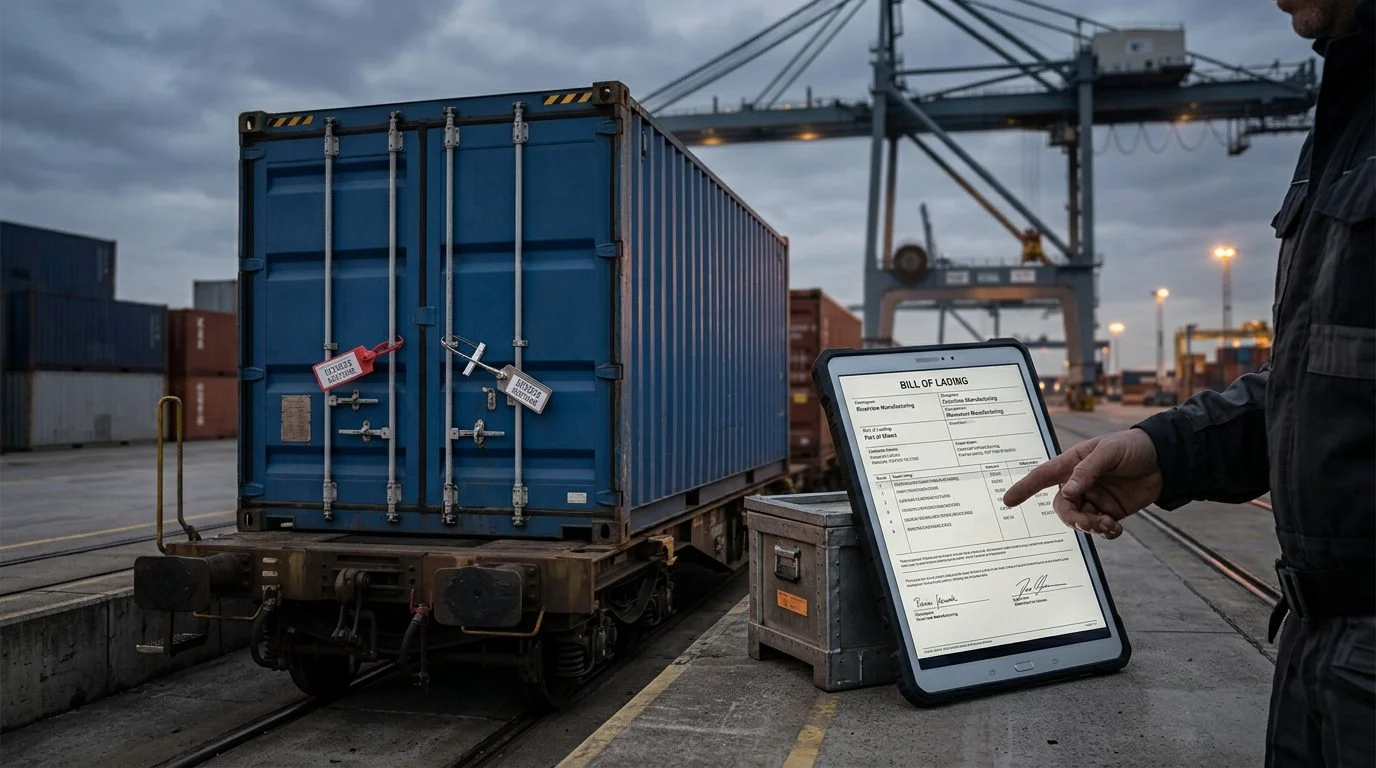
- Bills of lading, delivery receipts, customs entries, and inspection or acceptance records.
- Emails and letters with dates, including any notice of breach you sent and the replies you got.
- A short written timeline of key events, from the first order to the last payment.
Dates carry weight. A timeline showing when you found a problem and when you told the other side can matter under the rules above.
Not sure what your next step is?
Talk it through with our team — we can walk you through how a situation like yours is usually handled and what your options are.
How a Trade Dispute Typically Moves Forward
A dispute often starts with a written demand or a notice the contract requires. Talks, negotiation, or mediation may follow. Florida has a mediation rule too. On request, a court must refer a filed civil action for money damages to mediation, if the requesting party is willing and able to pay its share. Under Florida law, when one party asks, a court generally has to send a filed lawsuit seeking money damages to mediation if the party asking can pay for the mediation or its costs can be fairly split between the sides. There are exceptions, including suits brought to collect a debt and cases where the parties have agreed to binding arbitration.
Time limits matter. Florida sets deadlines for filing a lawsuit. In Florida, a lawsuit based on the design, planning, or construction of an improvement to real property generally has a four-year filing deadline. For actions founded on the design, planning, or construction of an improvement to real property, the time runs from the date the authority having jurisdiction issues a temporary certificate of occupancy, a certificate of occupancy, or a certificate of completion, or the date of abandonment of construction if not completed, whichever date is earliest, under Fla. Stat. § 95.11. For a latent defect, the clock starts when the defect is discovered or should have been discovered with due diligence. Even then, the suit must be filed within 7 years of that earliest date. Waiting can use up time you may need.
If a case proceeds in federal court in Tampa, the Middle District of Florida local rules apply. Timelines and costs vary by forum and by complexity, and no two disputes move the same way.
Working With Ayala Law PA on a Riverview Trade Dispute
Ayala Law PA reviews Riverview trade disputes with the client, starting with the contract and the paperwork. Eduardo A. Maura is the responsible lawyer for this page. Our team, including office and support staff, helps organize documents, scheduling, and deadlines. Its only office is at 1646 W Snow Ave in Tampa, Florida. Case evaluations carry a fee.
What is international trade litigation?
It is a court or arbitration case over a business deal that crosses a border. Examples include an unpaid overseas invoice or a broken supply contract.
Can a Florida court hear a claim against a foreign company?
Sometimes. Florida law reaches a party that breaches a contract by failing to perform acts the contract required in Florida.
Does my contract have to go to arbitration?
Only if it contains a valid arbitration agreement. When it does, Florida and federal law generally enforce that agreement.
If a payment or shipment is stuck right now, call (305) 570-2208 or use our contact page to book a case evaluation.



