

Does a business contract need to be notarized in Florida? For most agreements, no. If you’re holding a deal nobody notarized, the missing stamp may feel like a serious problem. Usually it isn’t. Florida’s writing rules ask for a signature, not a notary.
The Short Answer: Florida Business Contracts Generally Do Not Need a Notary
Enforceability usually turns on the basics of contract law. Florida’s Supreme Court has said an oral contract still needs an offer, an acceptance, consideration, and enough detail on the essential terms (St. Joe Corp. v. McIver). A notary stamp is not on that list. That is the starting point for most agreements. If the deal falls under a writing rule, the signed writing is what counts.
Some agreements have a stricter rule. Under Fla. Stat. § 725.01, an action on certain agreements is barred unless the agreement, or a memorandum of it, is in writing and signed by the party to be charged. Fla. Stat. § 725.01 reads: “unless the agreement or promise upon which such action shall be brought, or some note or memorandum thereof shall be in writing and signed by the party to be charged therewith or by some other person by her or him thereunto lawfully authorized.” The statute requires a signature.
The answer also changes for certain agreements, such as a contract for the sale of lands, tenements or hereditaments. The sections below cover them.
If a counterparty now says your agreement never bound them, or a notary step was skipped, you don't have to sort it out alone; our team can talk through the facts with you. Talk it through with our team — we can walk you through how a situation like yours is usually handled and what your options are.
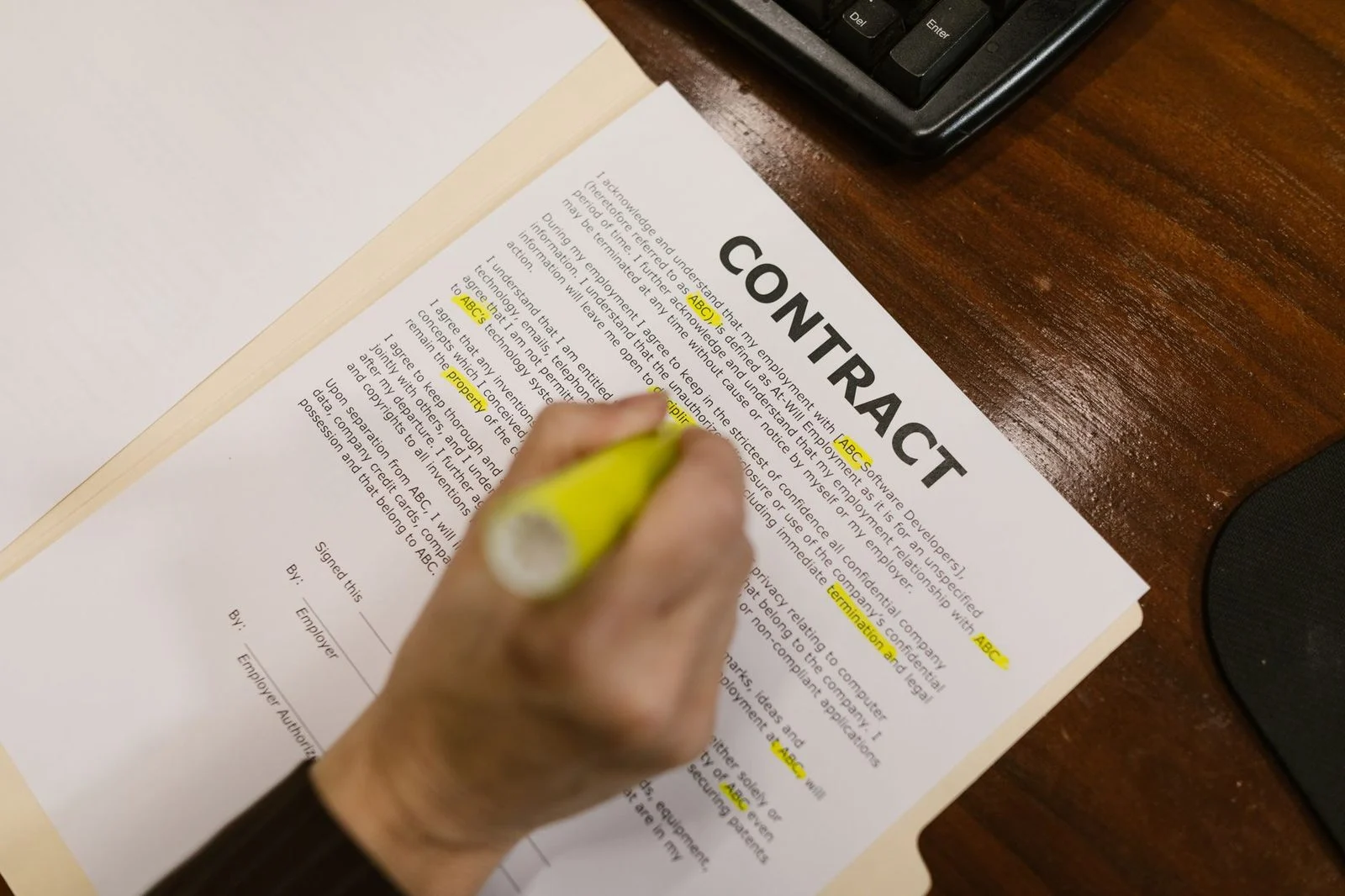
Is a Contract Legal If It Is Notarized?
Notarizing a contract does not make it legal by itself. A notary confirms who signed and that the signing happened in front of the notary. The agreement still needs the basics of a contract.
Florida’s notary law defines “in the presence of” to include seeing and hearing someone through audio-video technology (Fla. Stat. § 117.201). That definition covers how a signing can take place, not whether the deal is valid.
The practical benefit is proof. If someone later denies signing, a notarized signature can be easier to prove.
Notarization also has limits. It does not fill in missing terms such as price, scope, or payment. Quoting its earlier decision in Greater N.Y. Corp. v. Cenvill Miami Beach Corp., Florida’s Third District Court of Appeal has restated that “a meeting of the minds of the parties on all essential elements is a prerequisite to the existence of an enforceable contract, and where it appears that the parties are continuing to negotiate as to essential terms of an agreement, there can be no meeting of the minds” (Sandalwood v. Estevez).
When Florida Law Requires a Writing and Signature Instead of a Notary
Florida’s core writing rule is the statute of frauds, and it asks for a signed writing, not a notary. Under Fla. Stat. § 725.01, those agreements include a contract to sell land, a lease longer than one year, and an agreement that cannot be performed within one year. The writing must be signed by the party to be charged, meaning the person being held to the deal, or by some other person that party lawfully authorized.
Courts won’t use a fairness workaround to avoid that rule. In DK Arena v. EB Acquisitions, the Florida Supreme Court held that promissory estoppel, a fairness doctrine, may not be used to circumvent the statute’s writing requirements.
A non-compete is another example. Under Fla. Stat. § 542.335, a court shall not enforce a restrictive covenant unless it is in a writing signed by the person against whom enforcement is sought.
The common thread is a signature. Which rule applies depends on the facts, so look at the type of agreement before assuming no writing is needed.
Documents Where a Notary, Witnesses, or a Sworn Statement Is Required
Real estate deeds are the clearest example of a witness rule. Under Fla. Stat. § 689.01, no estate or interest of freehold, or for a term of more than 1 year, in real property may be created, made, granted, transferred, or released in any manner other than by instrument in writing, signed in the presence of two subscribing witnesses by the party or the party’s lawfully authorized agent, unless by will and testament or other testamentary appointment duly made according to law, and no subscribing witnesses are required for a lease of real property or any such instrument pertaining to a lease of real property. Under Fla. Stat. § 689.01, a freehold interest in Florida real property, an interest for a term of more than one year, or an uncertain interest must generally be created, transferred, released, assigned or surrendered only by a written instrument. That instrument must be signed in front of two subscribing witnesses by the party making the transfer or by that party’s lawfully authorized agent. The exceptions are a will or other testamentary appointment duly made according to law and, for an assignment or surrender, the act and operation of law. No subscribing witnesses are needed for a lease of real property or an instrument pertaining to one. The statute also allows the two-witness requirement to be met by witnesses who are present through audio-video communication technology, as defined in s. 117.201, and who sign electronically.
If a deed is part of your deal, read its signing block before recording anything.
Witnesses are a different test from a notary stamp. A sworn filing is different again. Some construction and recording forms are signed under oath, and the rules for each form come from the statute that governs it. A notarized contract and a sworn filing should not be treated as the same thing.
When the Parties Agree to Require Notarization
Many owners assume a notary is always needed. The notary step is often one the parties add themselves. If the contract itself requires notarization, that step becomes part of the deal.
If the notary step is skipped, a dispute can arise over whether the condition was met.
Two details matter. First, the wording. A clause that says “notarized” differs from one that says “in writing.” Second, the timing. Find out before work starts, payment goes out, or the deal closes whether the step was done.
Read any notary language before you sign or accept performance. A useful question for the other side is whether the clause makes notarization a condition, and what happens if it is not done.
Common Questions About Notaries and Business Documents in Florida
Most of these questions come down to a signature, a witness, or a sworn statement. The short answers below cover the rules in this article.
Is a contract enforceable in Florida without a notary?
Generally yes, if it has the basic contract elements and meets any signed-writing rule.
What does Florida require for a deed?
Under Fla. Stat. § 689.01, a deed that transfers a lasting interest in land must be signed in the presence of two subscribing witnesses. Fla. Stat. § 689.01 reads: “unless by will and testament, or other testamentary appointment, duly made according to law; and no estate or interest, either of freehold, or of term of more than 1 year, or any uncertain interest of, in, to, or out of any messuages, lands, tenements, or hereditaments, shall be assigned or surrendered unless it be by instrument signed in the presence of two subscribing witnesses by the party so assigning or surrendering, or by the party’s lawfully authorized agent, or by the act and operation of law; provided, however, that no subscribing witnesses shall be required for a lease of real property or any such instrument pertaining to a lease of real property.”
Can an oral agreement be enforced in Florida?
Some can, if they meet the basic requirements of contract law.
Not sure what your next step is?
Talk it through with our team — we can walk you through how a situation like yours is usually handled and what your options are.
How a Missing Notary Can Affect a Dispute
A missing notary stamp does not decide a dispute on its own, but it can make proof harder.
When a deal is challenged, a court looks at the whole record. Signed writings, emails, invoices, payment records, and witness testimony can all show whether a contract was formed and what it required. Keep every signed page, draft, and message about the deal in one place.
Some disputes turn on what the parties did, not what they signed. For work done with no written deal, unjust enrichment may come up. That claim requires a benefit conferred, the other side’s appreciation of it, and its acceptance and retention in circumstances that make keeping it without payment inequitable (Pincus v. American Traffic Solutions).
Performance disputes raise a separate issue. Florida contracts carry an implied covenant of good faith and fair dealing. That claim can fail if applying it would contradict the contract’s express terms (QBE Ins. Corp. v. Chalfonte).

Talk With Ayala Law PA About Your Agreement
When an agreement’s status is unclear, a conversation about the facts is the useful next step. You may have a half-signed deal from a partner, a notary request you did not expect, or a counterparty who now says the agreement never bound them. Those situations can move quickly, and the paper you have right now matters. Reach out to Ayala Law PA by phone at (305) 570-2208 or through the contact page.
This page is the responsibility of Eduardo A. Maura at Ayala Law PA. The firm’s only office is at 1646 W Snow Ave in Tampa, Florida. The firm handles business and contract disputes for clients in Tampa, Hillsborough County, and the Tampa Bay area. No result can be promised in any matter.



