

Forum Selection Clause Florida Business Contract: Where Your Dispute Gets Heard
A forum selection clause names the court or arbitration body where disputes under a contract must be brought. In a Florida business contract, that clause can send a dispute to another state, and Florida law still reviews whether the clause holds up. If you’re reading a forum selection clause in a Florida business contract, start with the exact signed words.
Not sure what your next step is?
Talk it through with our team — we can walk you through how a situation like yours is usually handled and what your options are.
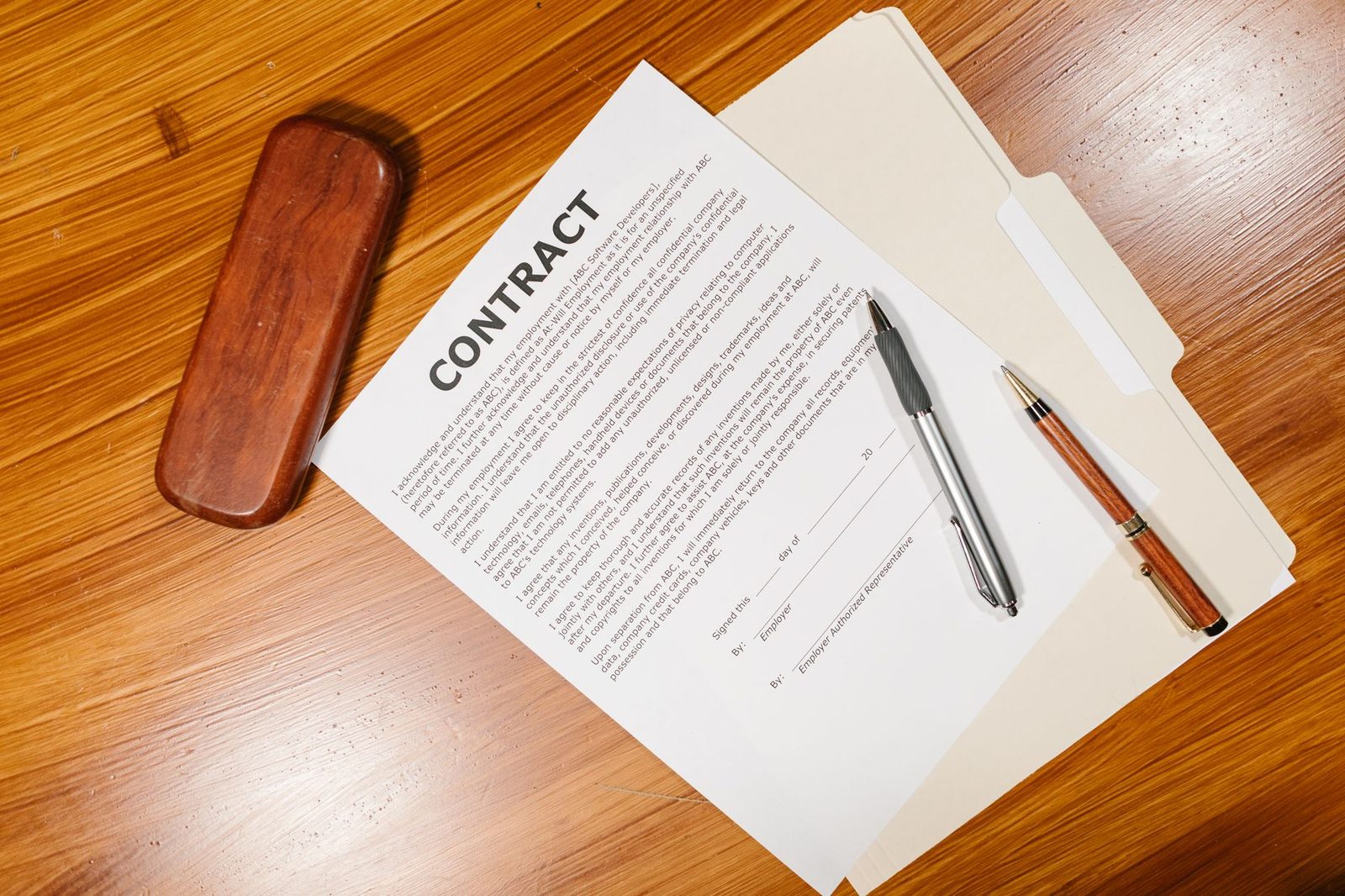
What a Forum Selection Clause Does in a Florida Business Contract
A forum selection clause tells the parties where a lawsuit or arbitration must happen. It’s usually one short paragraph in the boilerplate near the end of the agreement, next to the notice address and signature lines. Many owners sign it without a second look.
Don’t confuse it with two related terms. A choice-of-law clause picks which state’s law governs the contract. An arbitration clause sends disputes to a private arbitrator instead of a court. One contract can contain all three, and each works differently once a dispute starts.
Here’s a common situation. A Brandon contractor signs a supply agreement with an out-of-state vendor. The contract says disputes go to the vendor’s home-state court and that state’s law applies. Years later, a payment fight may have to happen in that other state, unless a court finds the clause does not control.
How Florida Courts Review Forum Selection Clauses
Florida courts look at the contract’s language, how the agreement was made, and whether its terms are fair. One clear framework comes from the Florida Supreme Court. A court refusing to enforce a term as unconscionable (grossly unfair) must find both procedural unfairness and substantive unfairness. Basulto v. Hialeah Automotive says both must be present, though not to the same degree, and the court weighs them together.
That case involved an arbitration agreement and applied general Florida contract law. Its logic still shows what courts look for: how the deal was made, and how one-sided the terms are.
Florida’s arbitration statute adds another step. Fla. Stat. § 682.02 says a court decides whether an agreement to arbitrate exists. An arbitrator decides some later questions, such as whether a condition to arbitration was met. Facts about how the agreement was signed matter early, so gather them before the first hearing.
Mandatory Versus Permissive Language: Reading the Wording
Mandatory language requires disputes to be filed in the named place. Permissive language only allows filing there, or states that a party agrees to that court’s authority. Words like “shall” and “exclusive” lean mandatory. Words like “may” and “consent to jurisdiction” lean permissive.
The details change the meaning. Ask these questions about your own agreement:
- Does the clause name a state, a county, a city, or a specific court?
- Does it cover all claims, or only claims “arising under” the agreement?
- Does it name a place your business can reach for witnesses and records?
Florida’s default venue rule also matters. Fla. Stat. § 47.011 says actions must be brought in the county where the defendant resides, where the cause of action accrued, or where the property in litigation is located. That section does not apply to actions against nonresidents, so an out-of-state party needs a separate analysis.
Compare the exact signed words, including every amendment, rather than a summary or memory.
When a Clause Points to Another State or Arbitral Forum
A clause naming a court in another state, or an out-of-state arbitrator, can move where a Tampa Bay business must defend a claim. Florida law also sets when a Florida court can hear a dispute with an out-of-state party.
The history note for Fla. Stat. § 685.102 lists only s. 2, ch. 89-135.
Florida’s long-arm statute also lists acts that bring a person under Florida courts’ jurisdiction. Those include operating a business in Florida and breaching a contract by failing to perform acts the contract requires in Florida. Fla. Stat. § 48.193 lists these acts.
A distant forum clause doesn’t settle every claim on its own. Whether any of these rules fits your contract depends on the facts.
Florida-Side Options When a Dispute Is Filed Elsewhere
A business sued in another forum can raise its contract’s forum and arbitration terms in that court. If the contract requires arbitration, Florida’s arbitration statute gives a clear route.
Under Fla. Stat. § 682.03, a party that shows an arbitration agreement and a refusal to arbitrate can ask the court to order arbitration. If the other side doesn’t oppose, the court orders arbitration. If it opposes, the court decides the issue quickly and orders arbitration unless it finds no enforceable agreement exists. The court also cannot refuse arbitration just because the claim lacks merit. When a claim goes to arbitration, the court must stay the related court proceedings on just terms, although if the arbitrable claim is severable, the court may limit the stay to that claim.
Federal law adds a route. Under 9 U.S.C. § 4, a party aggrieved by another party’s alleged failure, neglect, or refusal to arbitrate under a written arbitration agreement may petition any United States district court that, save for that agreement, would have jurisdiction under title 28 for an order directing that the arbitration proceed in the manner the agreement provides, and five days’ notice in writing of the application must be served on the party in default. The hearing takes place in the district where the petition is filed. Under 9 U.S.C. § 4, a party aggrieved by another party’s failure, neglect, or refusal to arbitrate under a written arbitration agreement may petition a United States district court for an order directing that arbitration proceed in the manner the agreement provides.
Timing matters. Court deadlines to respond can run quickly, so an early review is important. Also, a contract cannot cut the time to sue below the statute allows. Under Fla. Stat. § 95.03, a contract provision fixing a shorter period than the applicable statute of limitations is void.
Not sure what your next step is?
Talk it through with our team — we can walk you through how a situation like yours is usually handled and what your options are.
Construction and Real Estate Contracts in Hillsborough County
Construction and property contracts often carry forum terms in master agreements, subcontracts, and supply orders. The forum question and the deadline question are separate, and both need attention.
Property matters too. Section 47.011 allows an action to be brought in the county where the property in litigation is located, but this section does not apply to actions against nonresidents. A lien or land dispute tied to Hillsborough County property can therefore raise a venue question apart from any forum clause.
Drafting Checklist for Tampa Bay Business Owners
Before you sign, check these items:
- The exact named forum, including state, county, and court.
- Whether the forum language is mandatory or permissive.
- The governing law clause.
- Whether arbitration is required, and which rules apply.
- Which claims the clause covers.
Ask whether the named place is practical for your witnesses, records, and staff. A forum far from your operations can raise costs and complicate the case later.
Under Fla. Stat. § 685.101, the Florida choice-of-law option applies to deals involving at least $250,000 in aggregate. A smaller deal may need a different analysis.
Keep every signed version, redline, and email that discusses dispute terms. Review the forum language again when a contract is renewed, amended, or signed with an out-of-state partner.
Talk With Ayala Law PA About Your Contract
Ayala Law PA focuses on business litigation, commercial litigation, contract disputes, shareholder disputes, construction litigation, real estate litigation, and international trade litigation in Florida courts and arbitration.
Frequently Asked Questions
Is a forum selection clause enforceable in Florida?
Florida courts review the contract language and how the agreement was made. Each clause is reviewed on its own facts.
Can a Florida business be sued in Florida under an out-of-state contract?
It may be possible.
Can a contract shorten the time to sue?
No. A contract provision that sets a shorter period than the applicable statute of limitations is void under Fla. Stat. § 95.03.
The firm’s only office is at 1646 W Snow Ave in Tampa, Florida. It serves businesses in Hillsborough County, Brandon, Riverview, Plant City, Temple Terrace, and the wider Tampa Bay area, with its only office located in Tampa. Eduardo A. Maura is the responsible lawyer for this page. This page is general information about Florida law, not advice about your contract, and your facts may differ.
If a lawsuit or arbitration demand from another state has reached your business, or you’re about to sign a contract naming a distant court, call (305) 570-2208 or use the contact form and bring the signed agreement.



